
Towering walls
Up to 182 m.
Diego Delso — CC BY-SA 3.0 · ChrisYunker — CC BY 2.0 · hikinginjordan — CC BY-SA 3.0 · Mappo — CC BY-SA 4.0 · Michael Gunther — CC BY-SA 3.0 · Adeeb Atwan — CC BY 3.0 · Arian Zwegers — CC BY 2.0 · Dennis G. Jarvis — CC BY-SA 2.0
The rock passage into the Nabataean city of Petra, winding about 1.2 km between sandstone walls 91 to 182 m high and narrowing in places to about 3 m. It is not a canyon carved by water but a geological fault split apart by earth movements and only later smoothed by water. Along its sides run channels cut into the rock that carried water to the city, the worn relief of a camel caravan and carved sacred stones. At the entrance stands a dam rebuilt on the lines of the Nabataean one that turned floodwater away from the passage, and the remains of a great arch that once spanned it. The rock shifts from pink to red to ochre with the light, and then the Siq opens suddenly onto the façade of the Treasury, one of the great moments of any trip to Jordan. The walk is easy and gently downhill, about half an hour from the end of the Bab as-Siq path. Petra opens at 6 am, and arriving early means a quieter Siq and softer light.
Up to 182 m.
Cut by the Nabataeans.
Of the Treasury.
Entrance to Petra, Wadi Musa
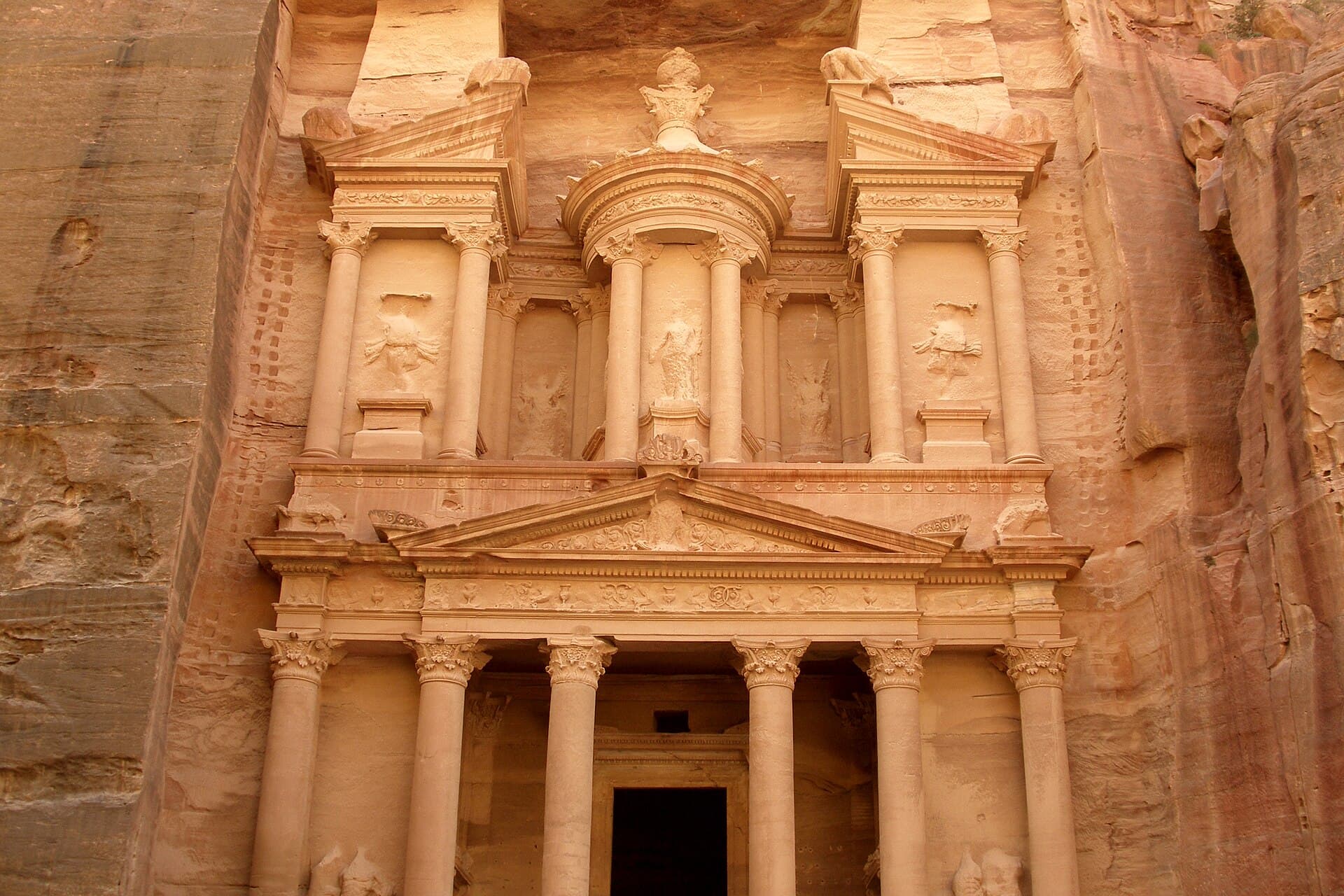 Al-Khazneh (The Treasury)Petra's most famous monument and its most elaborate rock-cut tomb, carved by the5 minutes walk4.9
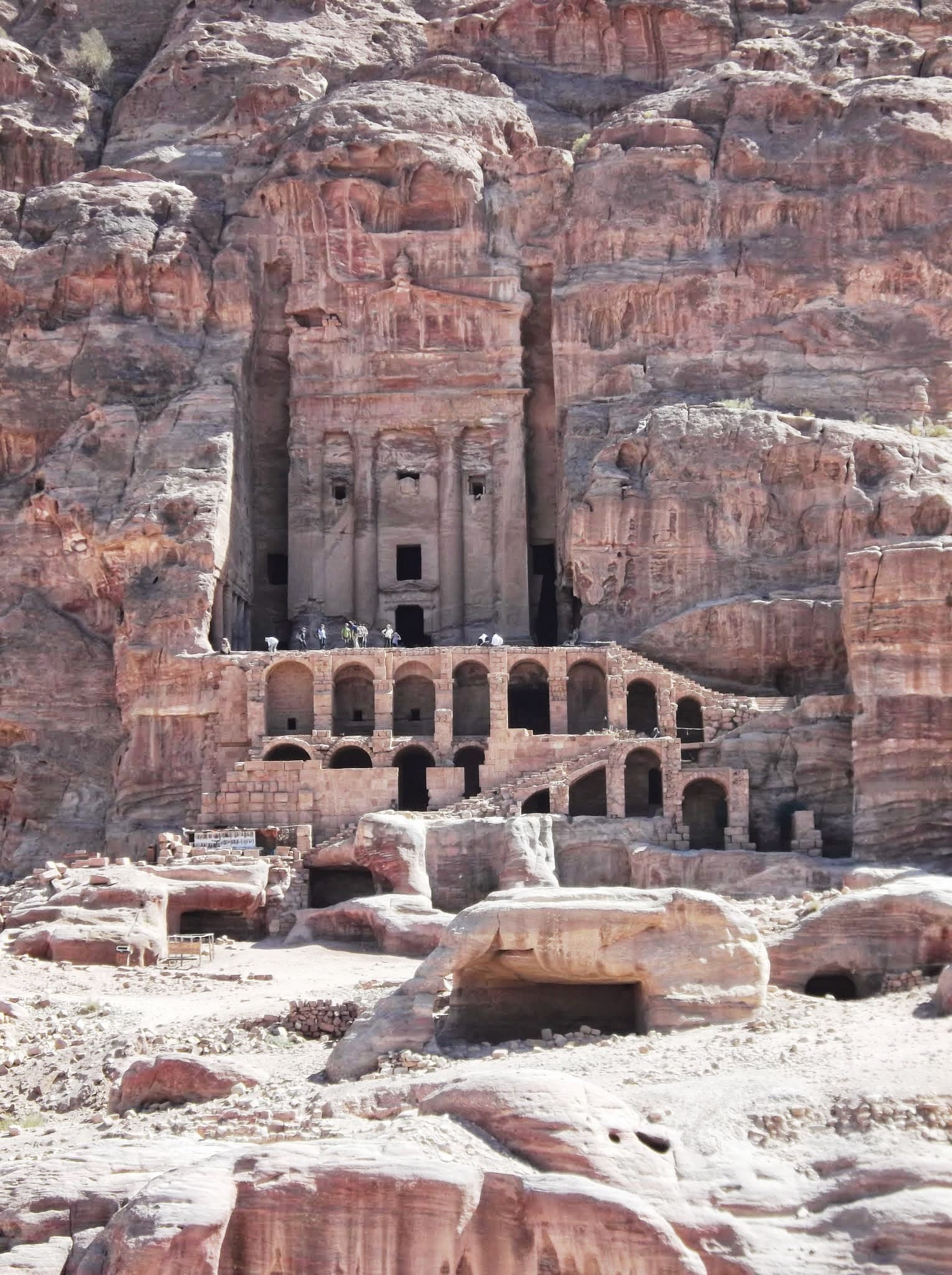 Royal Tombs of PetraA row of huge façades carved into the flank of Jabal al-Khubtha, looking over th11 minutes walk4.7
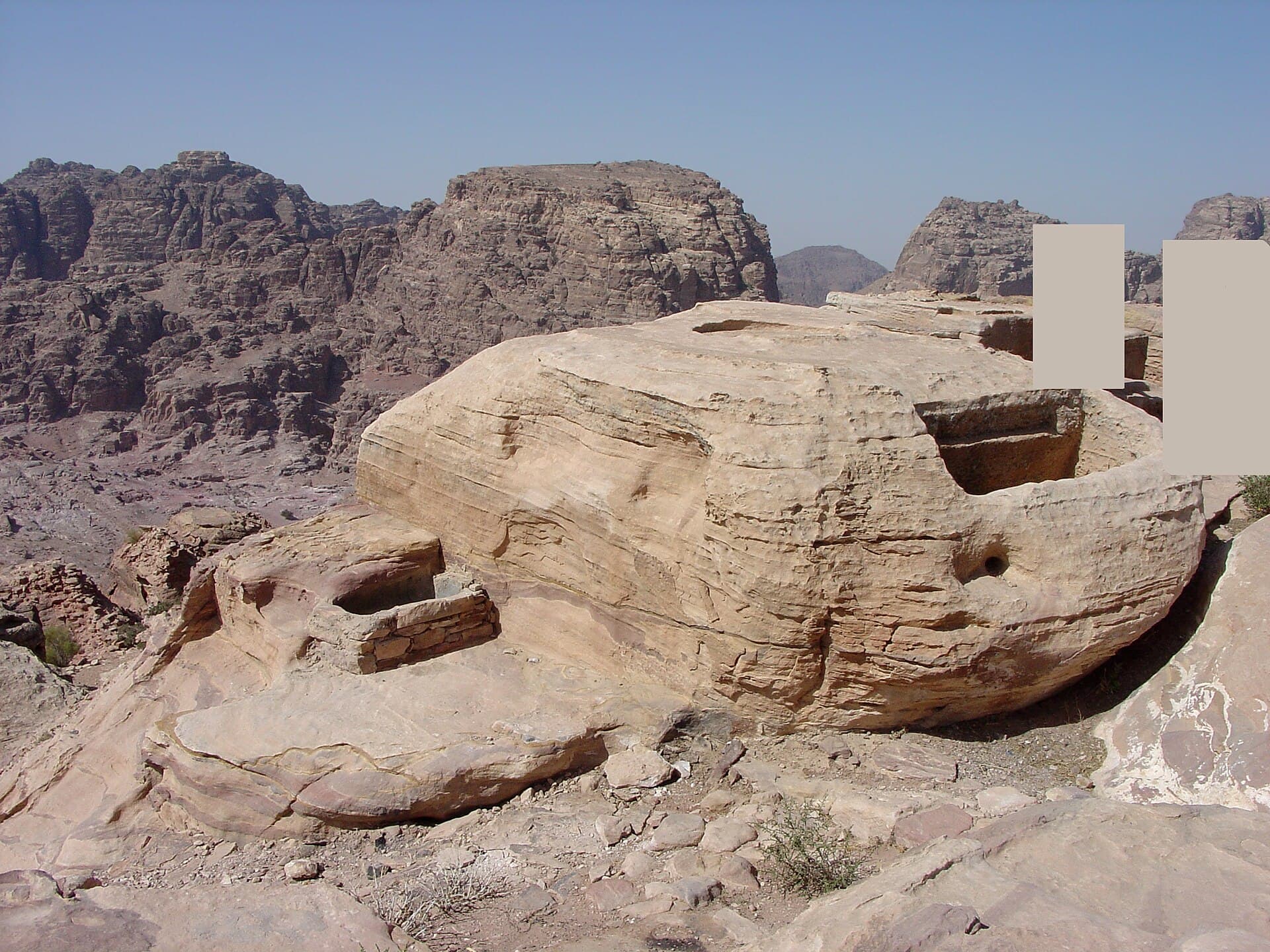 High Place of SacrificeA Nabataean ritual platform on the summit of Jabal al-Madhbah above central Petr11 minutes walk4.7
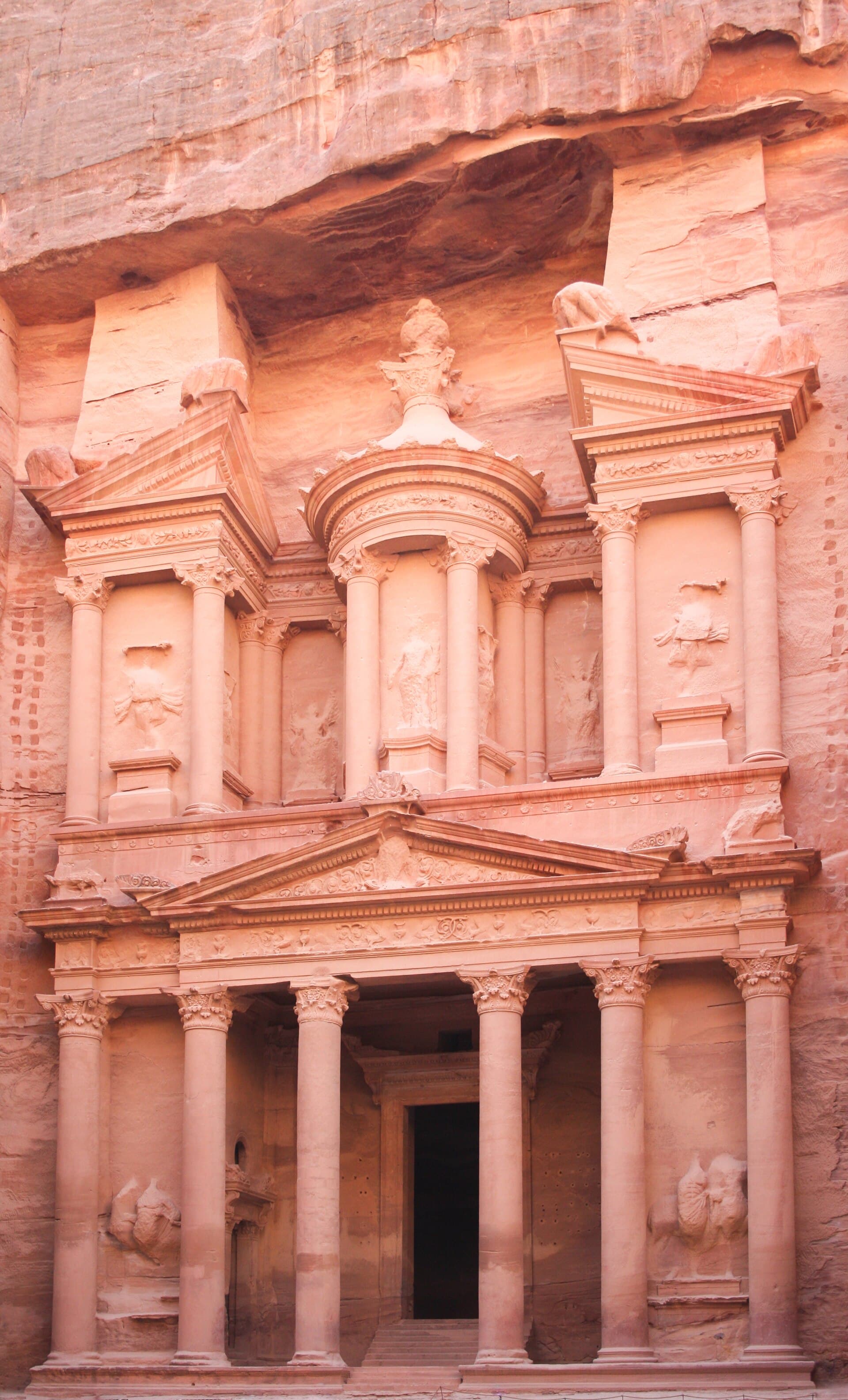 PetraThe Nabataean capital carved into rose sandstone in southern Jordan, and one of 16 minutes walk4.9
About half an hour at an easy pace for its 1.2 km, gently downhill, plus roughly a quarter of an hour from the visitor centre along Bab as-Siq.