
Fatima al-Fihri
The founder.
Jorge Franganillo — CC BY 2.0 · Momed.salhi — Public domain · Ahmed.magdy — CC BY-SA 4.0 · Unknown — Public domain · Ideophagous — CC BY-SA 4.0 · RACHID BAYA — CC BY-SA 4.0 · Samira hiba — CC BY 4.0 · Robert Prazeres — CC BY-SA 4.0
One of the oldest and most famous mosques of the Islamic world, founded by Fatima al-Fihri between 857 and 859 AD, which became one of the leading centres of learning of the Islamic Golden Age. UNESCO and Guinness World Records cite it as the oldest continually operating institution of higher learning in the world. The mosque was enlarged many times, most of all under the Almoravids in the twelfth century, making it one of Morocco's largest. At its centre is a courtyard paved in black and white zellij, with two pavilions on slender columns under wooden domes at either end, added by the Saadians in the style of the Court of the Lions in the Alhambra. Al-Qarawiyyin has an ancient library founded by the Marinid sultan Abu Inan in the fourteenth century, holding rare manuscripts, restored and reopened in 2016. Madrasas and souks cluster around the mosque, the heart of Fes el Bali. The mosque is open to Muslims for prayer; non-Muslims may not enter but can see the courtyard through the open doors. The finest view of its green roofs is from the roof of the neighbouring Attarine Madrasa or from rooftop cafés.
The founder.
Two Saadian pavilions.
Rare manuscripts.
Heart of Fes el Bali, near Seffarine Square
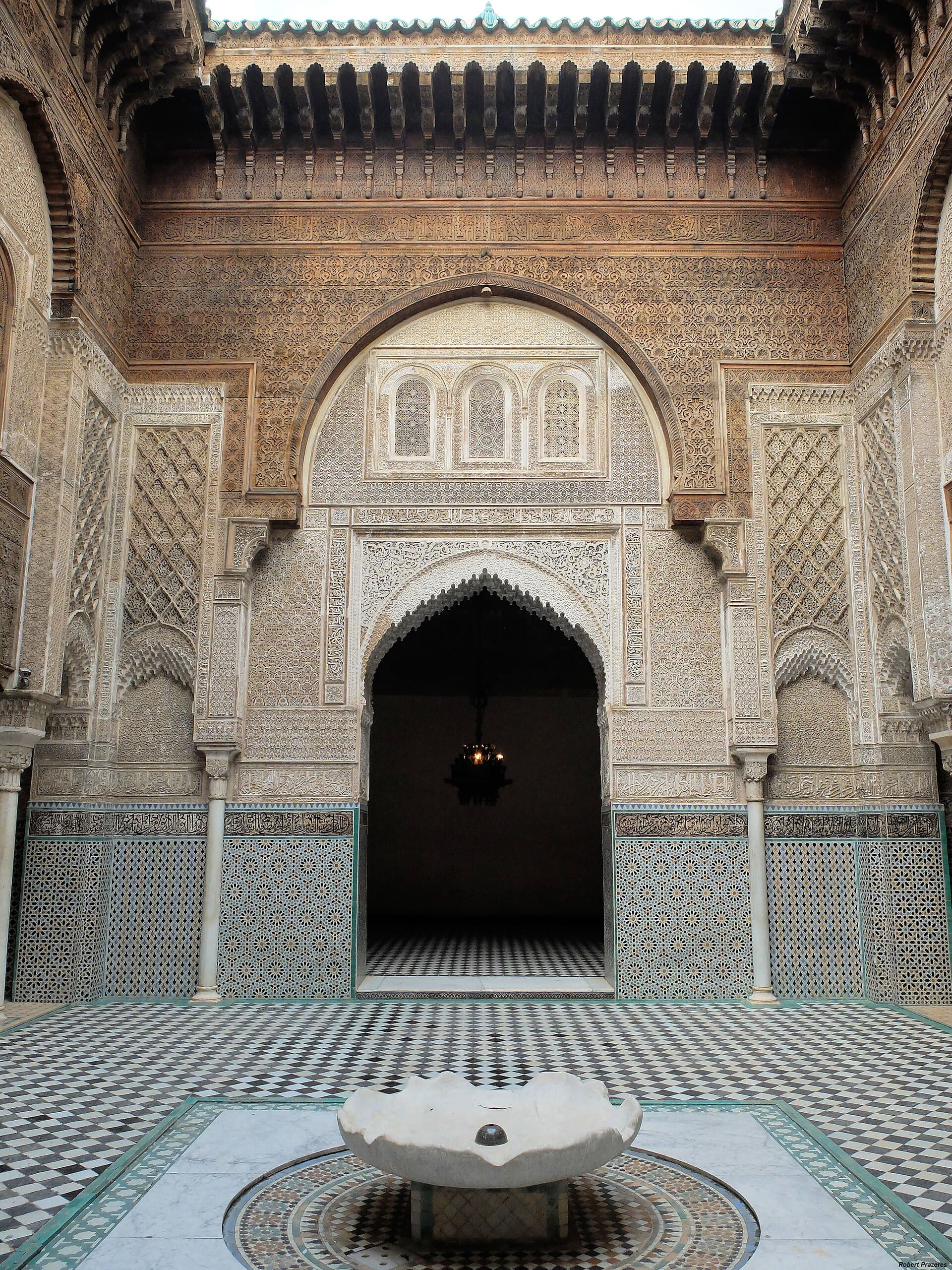 Al-Attarine MadrasaA small, exquisite madrasa built by the Marinid sultan Abu Said Uthman II betwee1 minute walk
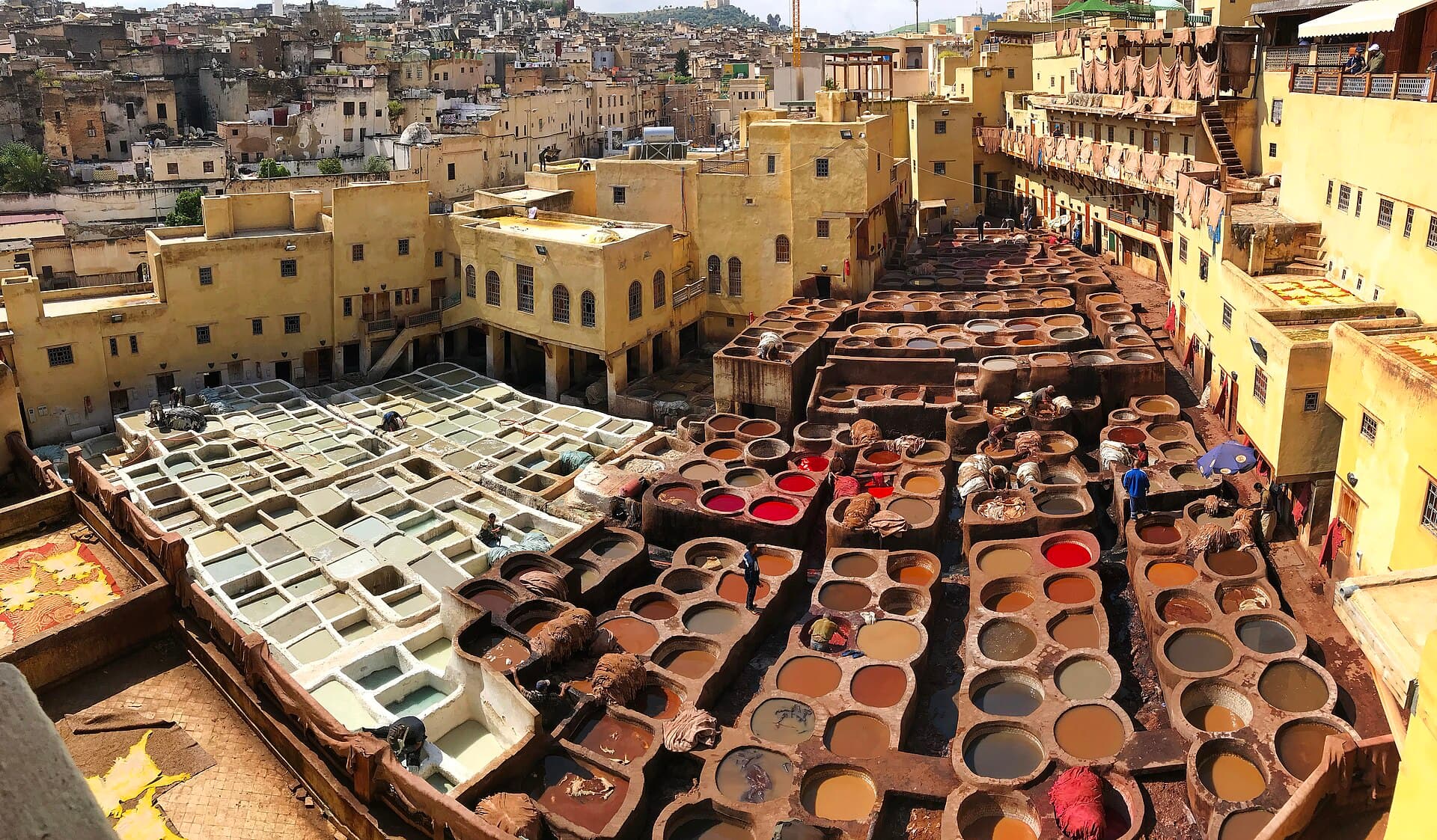 Chouara TanneryThe largest and one of the oldest of the three tanneries of Fes, on the bank of 3 minutes walk
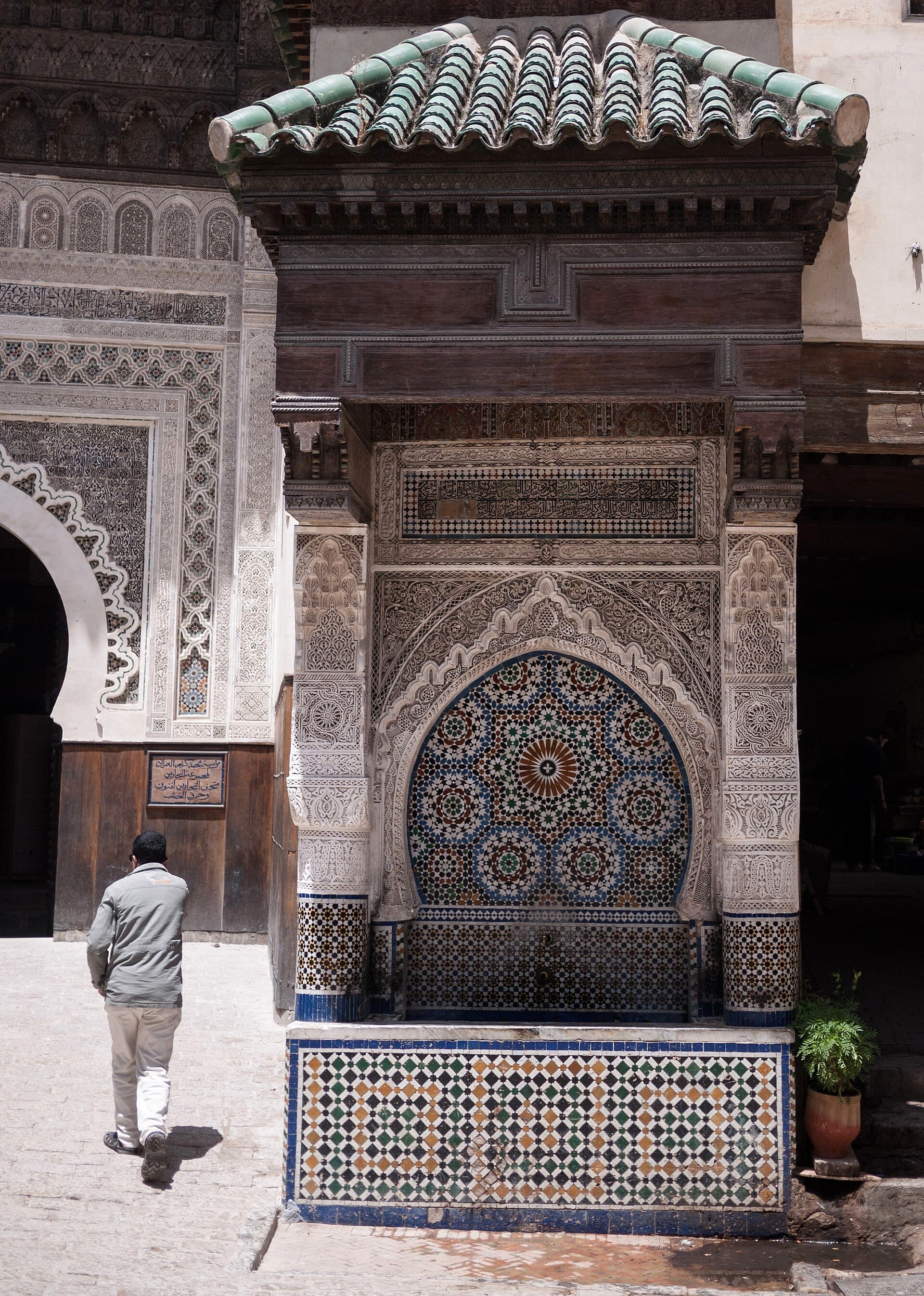 Nejjarine Museum of Wooden ArtsA historic funduq, an inn for merchants and travellers, in the heart of Fes el B3 minutes walk
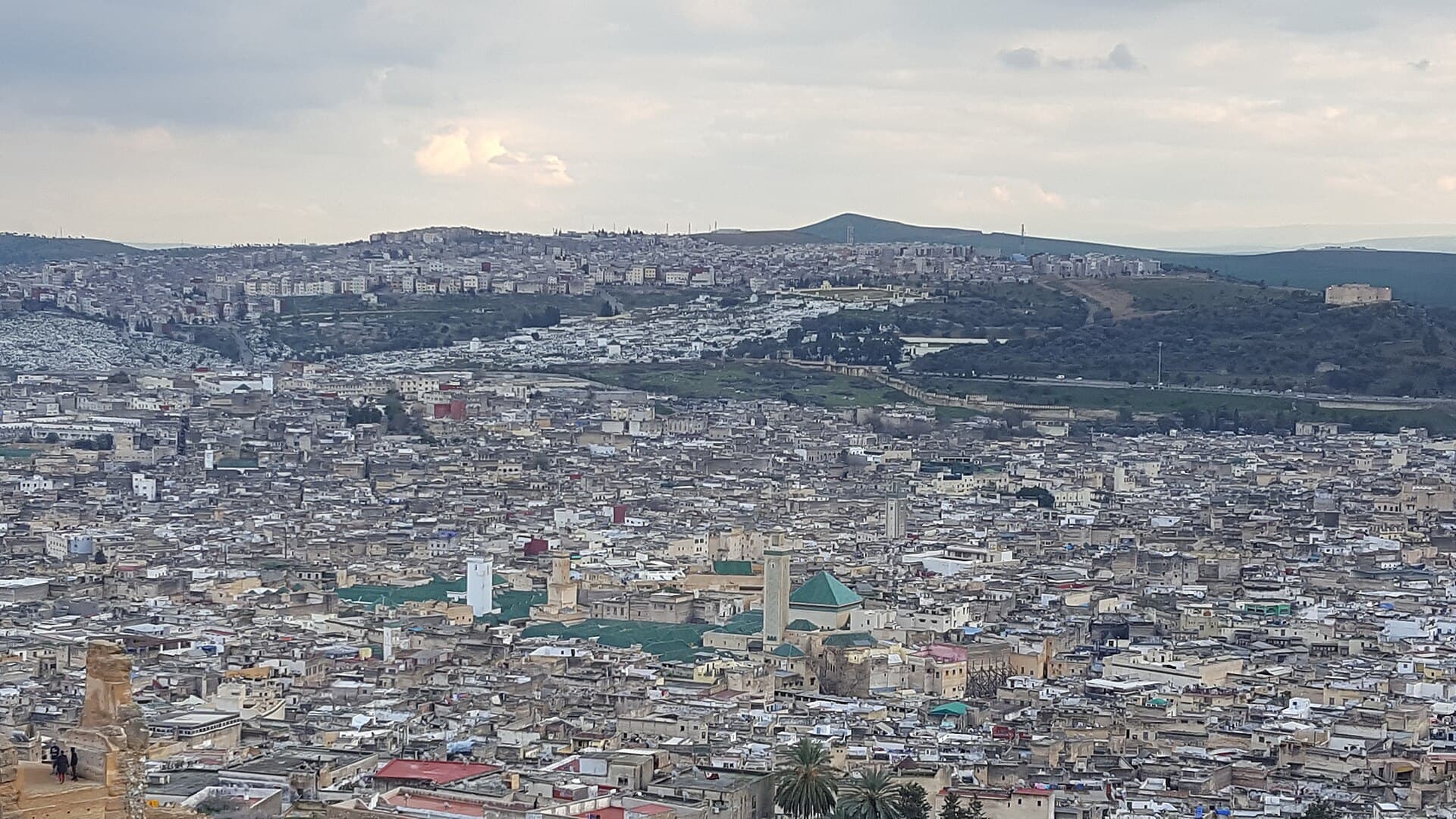 Fes el Bali (Old Medina)The oldest part of Fes, founded by the Idrisids as their capital between 789 and5 minutes walk
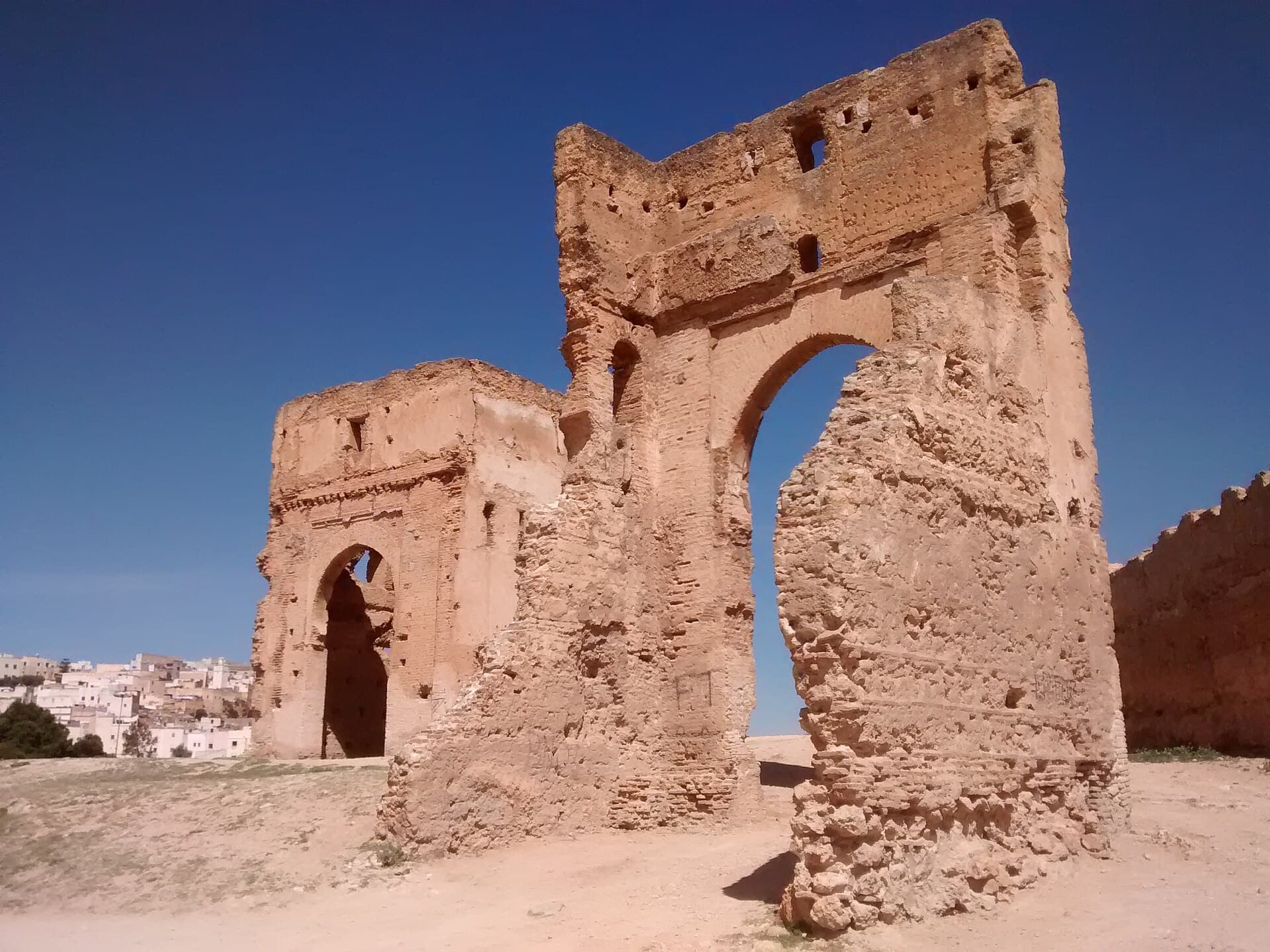 Marinid TombsThe ruins of monumental tombs on a hill looking down on Fes el Bali from the nor10 minutes walk
No, entry is for Muslims only as at most Moroccan mosques, but the courtyard can be seen through the open doors.