
The carved dome
Shells, palmettes and lobed arches in stucco.
Michal Osmenda from Brussels, Belgium — CC BY-SA 2.0 · R Prazeres — CC BY-SA 4.0 · Mike Finn from Worcester, United Kingdom — CC BY 2.0 · Adam Harangozó — CC BY-SA 4.0 · Michal Osmenda from Brussels, Belgium — CC BY-SA 2.0
The Almoravid Koubba, or Qubbat al-Barudiyyin, is a small domed pavilion in the northern medina, one of very few buildings left in Marrakech by the Almoravids, the city's founding dynasty. Barely 7.4 by 5.5 metres, it sheltered a basin, most likely for ablutions at the mosque of the emir Ali ibn Yusuf (r. 1106-1143). Its inscription names him but has lost its year: 1117 or, more likely, 1125. After the Almohads took the city in 1147, most Almoravid buildings were destroyed and Ali's mosque was later rebuilt. Rising ground and later buildings buried over half of the pavilion under 7-8 m of debris until French scholars documented it from 1947 and excavated it, rebuilding nothing. Its dome recalls those of Córdoba's Great Mosque, and its four corner cupolas carry some of Morocco's earliest muqarnas. Steps lead down into the sunken site. Outside, crenellations crown the walls, and intersecting arches and zigzag bands climb the dome to a star. Inside, above a worn inscription band, eight lobed arches alternate with pendentives carved in stucco with shells, palmettes, pine cones and acanthus, rising to a rosette at the apex. Around it lie a triple-arched fountain with troughs, a vaulted cistern that fed fountain and basin through bronze pipes, and latrines, possibly later additions. It stands on Place Ben Youssef beside the Marrakech Museum, about 100 m from the Ben Youssef Madrasa, so the three make one visit; Jemaa el-Fnaa is about 650 m south as the crow flies. The dome is visible free through the iron railing; the interior needs a ticket.
Shells, palmettes and lobed arches in stucco.
Among the earliest in Morocco.
A fountain, troughs and a vaulted cistern.
Place Ben Youssef, beside the Marrakech Museum, northern medina, Marrakech
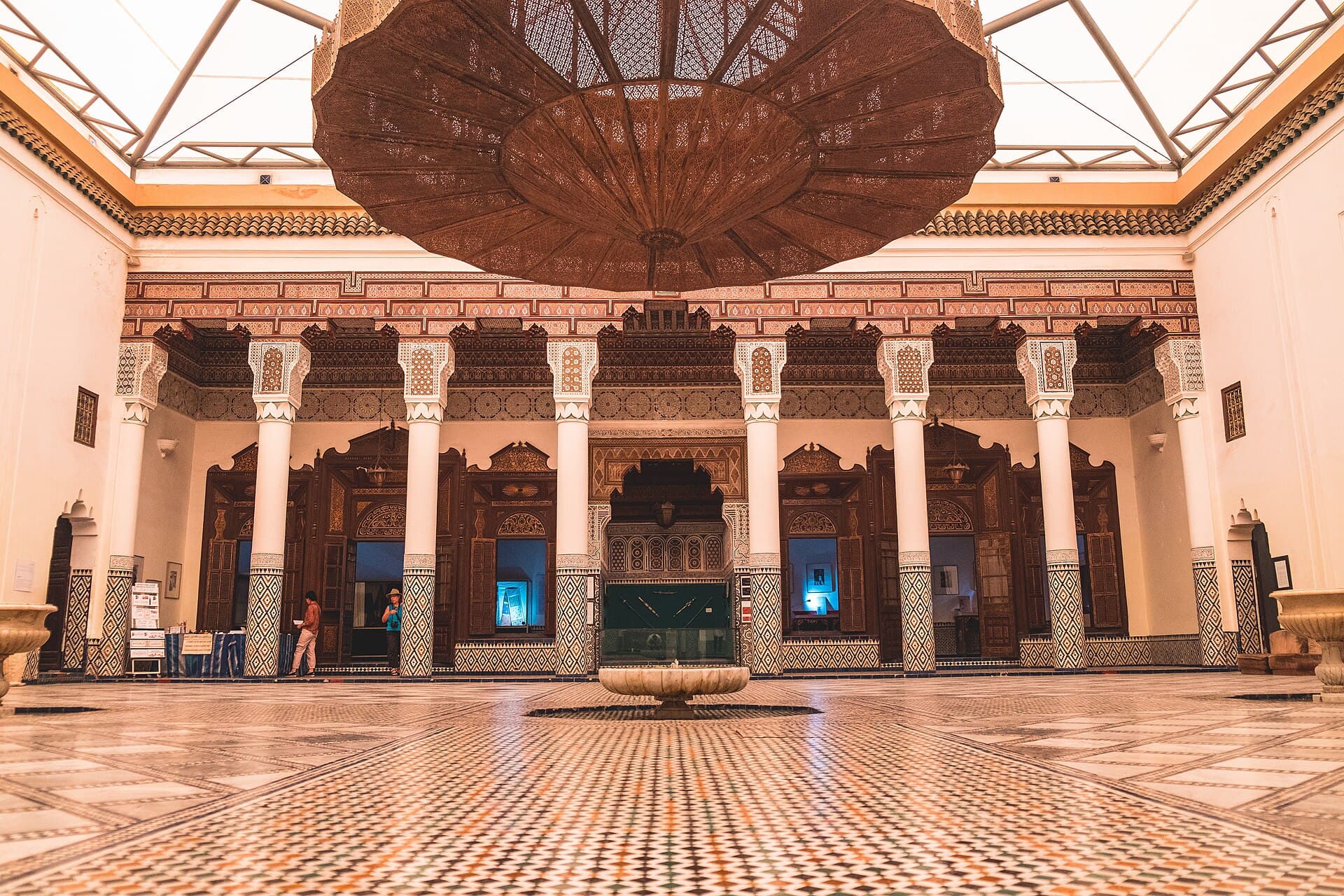 Marrakech MuseumThe Marrakech Museum occupies Dar Menebhi, a palace in the northern medina built1 minute walk
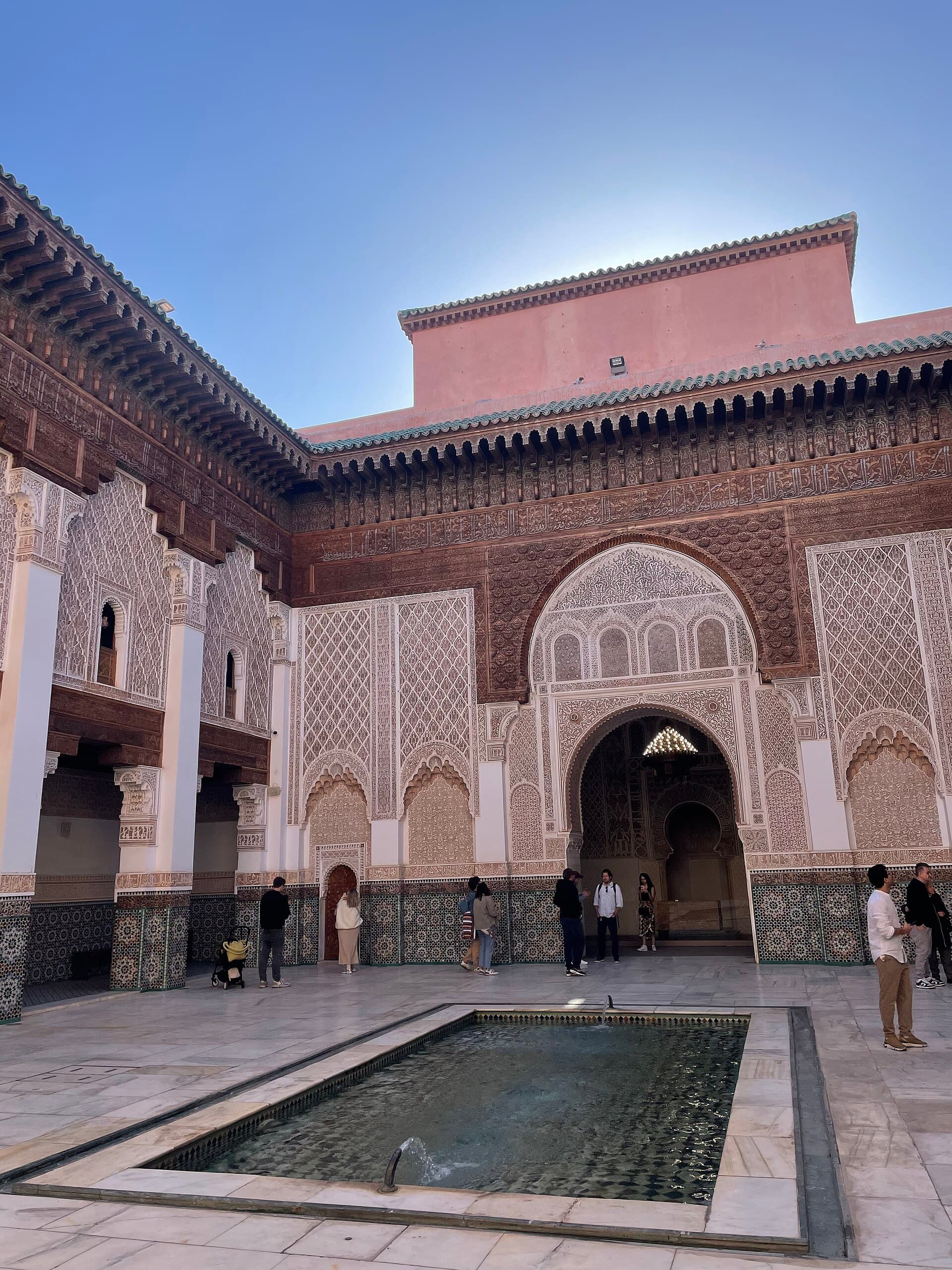 Ben Youssef MadrasaA historic Islamic college in the north of Marrakech's medina, named after the n1 minute walk4.8
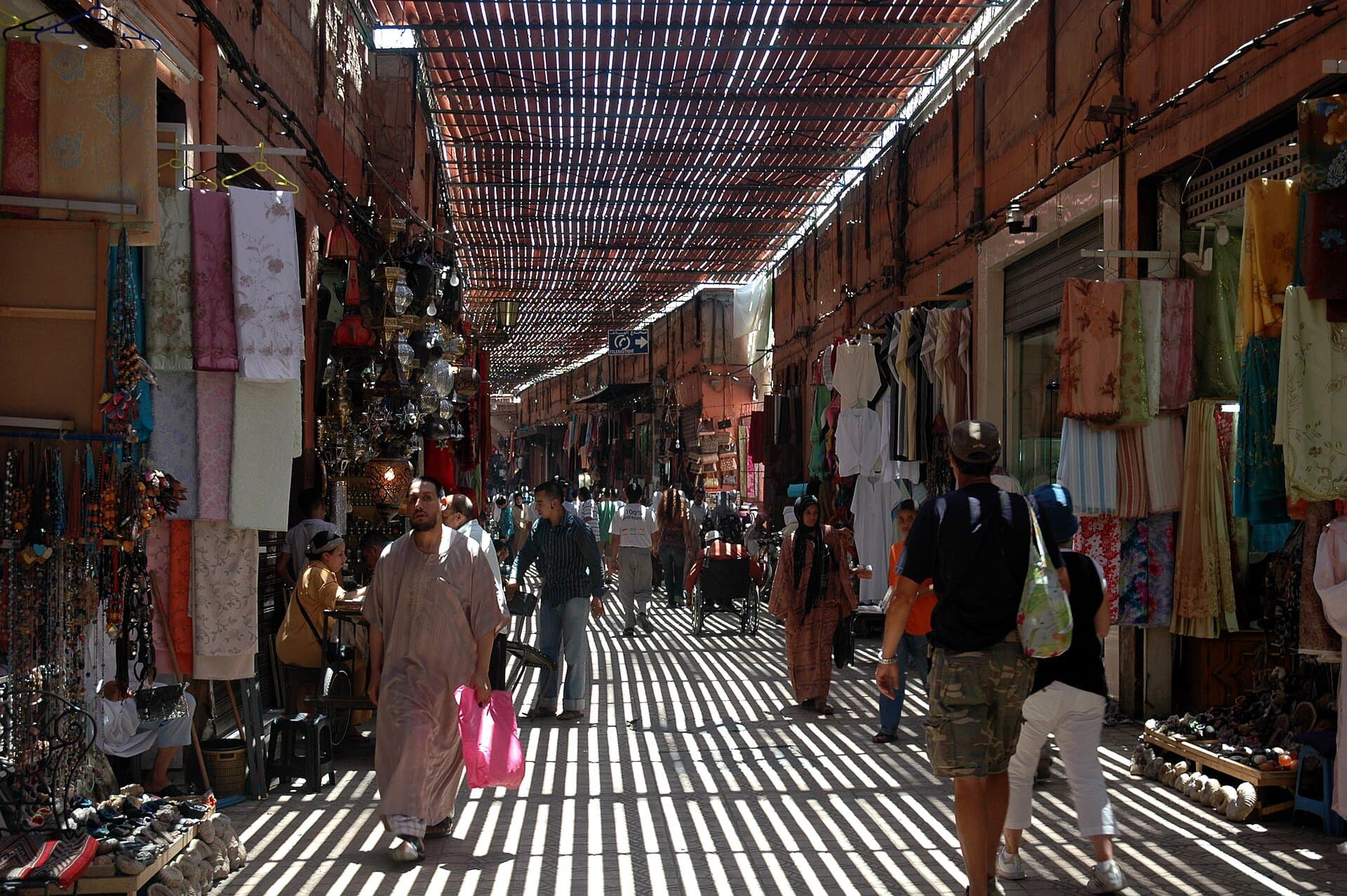 Souks of MarrakechThe Souks of Marrakech are the covered lanes of the old city between Jemaa el-Fn5 minutes walk
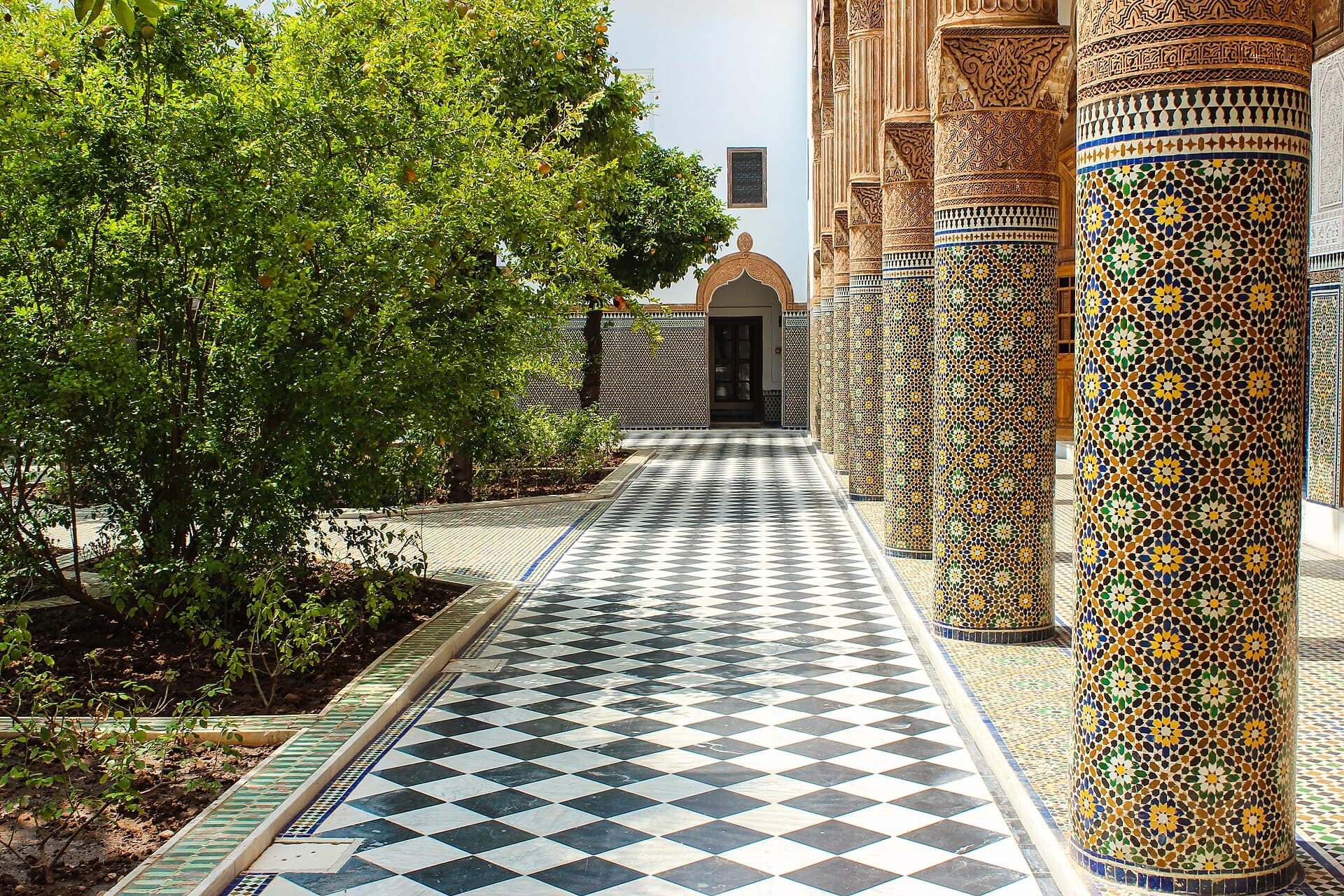 Dar El Bacha (Marrakech)Dar El Bacha, the House of the Pasha, is a palace in the Marrakech medina built 6 minutes walk
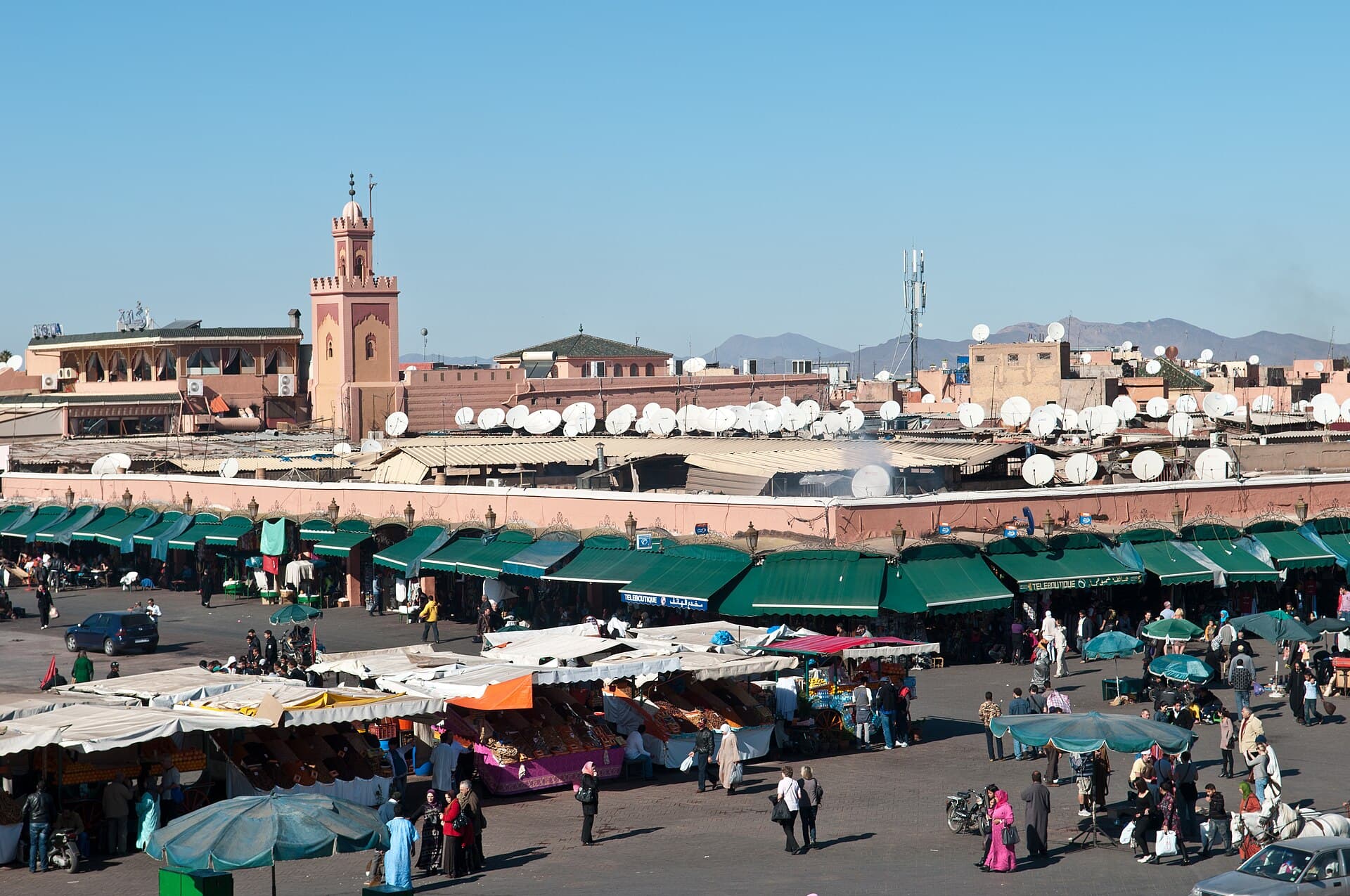 Jemaa el-FnaaThe great square of Marrakech's old city and its beating heart for centuries, wh8 minutes walk4.4
French scholars first recorded it in 1947, and the architectural historian Boris Maslow published it in 1948. Fuller excavations by Charles Allain and Jacques Meunié, with Henri Terrasse, followed in the early 1950s and were published in that decade.
Non-Muslims may not enter it. When it is open, Muslims may pray there in modest dress covering shoulders and knees, women with their hair covered, and the lanes around it are best avoided during Friday midday prayer.