
Rahba Kedima (Marrakech)
Spice square with baskets and knitted hats.
DimiTalen — CC0 · Petar Milošević — CC BY-SA 4.0 · Feliciano Guimarães from Guimarães, Portugal — CC BY 2.0 · Jakub Hałun — CC BY 4.0 · R Prazeres — CC BY-SA 4.0
The Souks of Marrakech are the covered lanes of the old city between Jemaa el-Fnaa and the Ben Youssef Mosque, some 700 m apart as the crow flies. Their main artery, Souk Semmarine, named after its former farriers, runs under wooden slats past textiles, kaftans and slippers, then forks into Souk el-Kebir and Souk el-Attarine. The souk axis goes back to the Almoravid city, founded in 1070–72: market streets grew along the route from their fortress, north of today's Koutoubia, to their great mosque on the Ben Youssef site. Each trade had its own lane and an amin to settle disputes. Some were kissarias, gated shop blocks locked at night. Rahba Kedima, the Old Square, hosted auctions of wool, carpets, weapons and, historically, enslaved people. UNESCO listed the medina, souks included, in 1985. Rahba Kedima, east of Semmarine and known to visitors as the spice square, now sells baskets, perfumes and knitted hats; just north-east, the Criée Berbère (Berber Auction) offers dark rugs. Souk el-Attarine, once the spice and perfume street, now glints with brass and copper lanterns. Seek babouches in Souk Smata, leather in Souk Cherratine, ironwork in Souk Haddadine, and the dyers' souk, with dyed wool drying overhead. Wandering is free; prices are rarely marked, so bargain. Mornings from 9 to 11 are quieter, and on Fridays some shops open late or close around the midday prayer. The Almoravid Koubba, Marrakech Museum and Ben Youssef Madrasa lie 480 to 560 m north of Semmarine's southern end, Dar El Bacha some 600 m north-west, as the crow flies.
Spice square with baskets and knitted hats.
Dyed wool drying above the lane.
Berber rugs just off Rahba Kedima.
Souk Semmarine, north of Jemaa el-Fnaa, medina, Marrakech
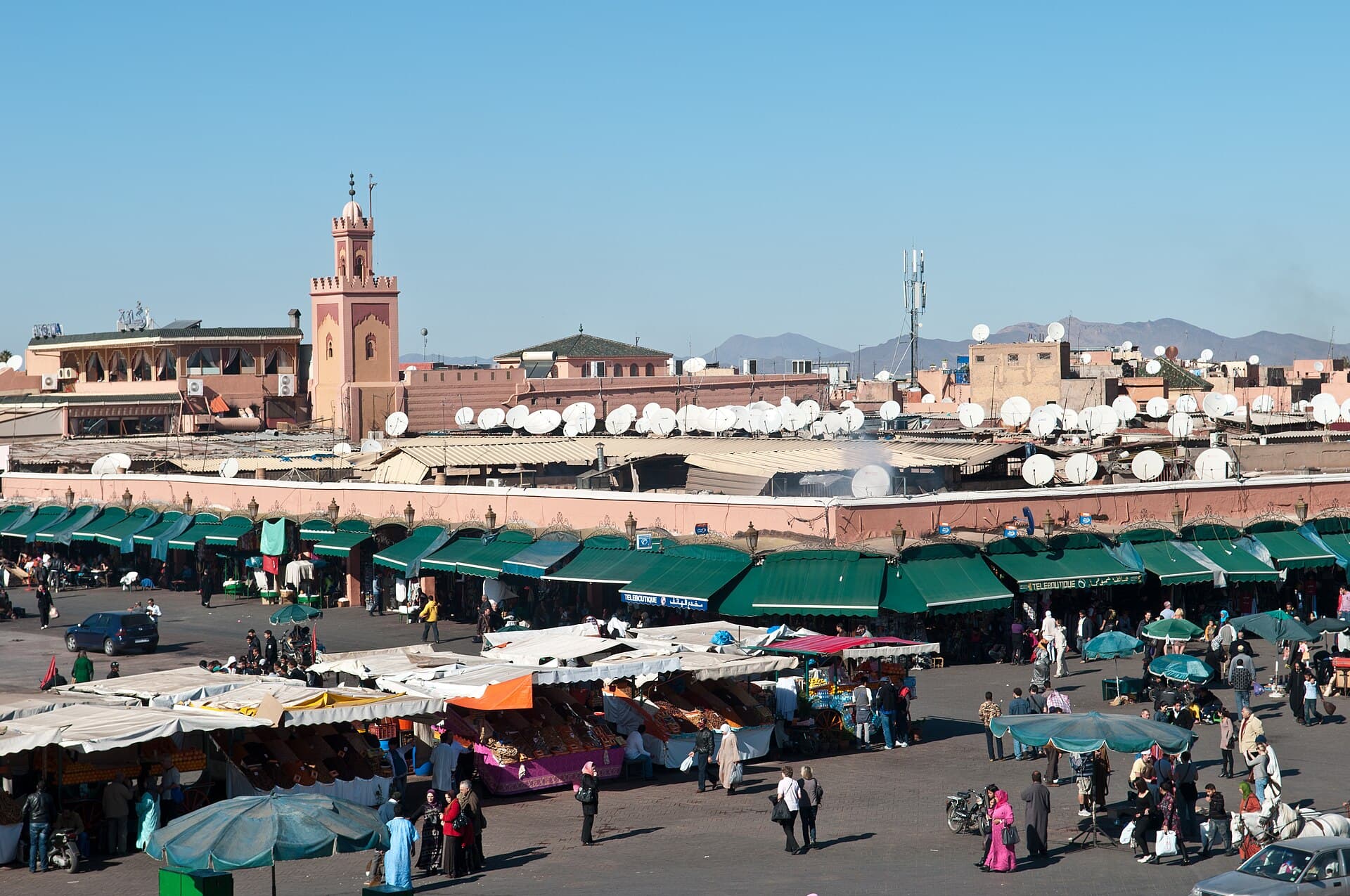 Jemaa el-FnaaThe great square of Marrakech's old city and its beating heart for centuries, wh3 minutes walk4.4
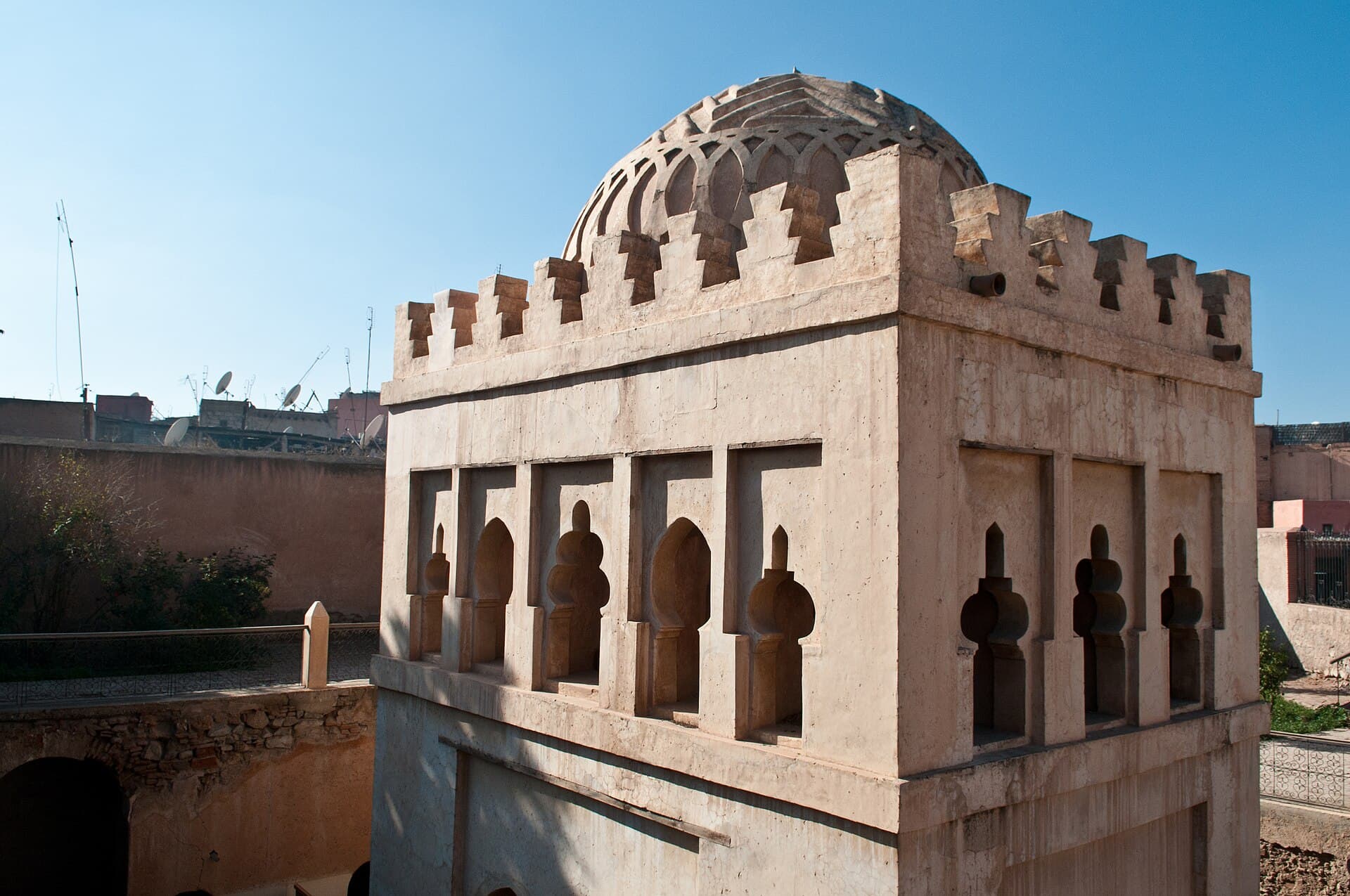 Almoravid KoubbaThe Almoravid Koubba, or Qubbat al-Barudiyyin, is a small domed pavilion in the 5 minutes walk
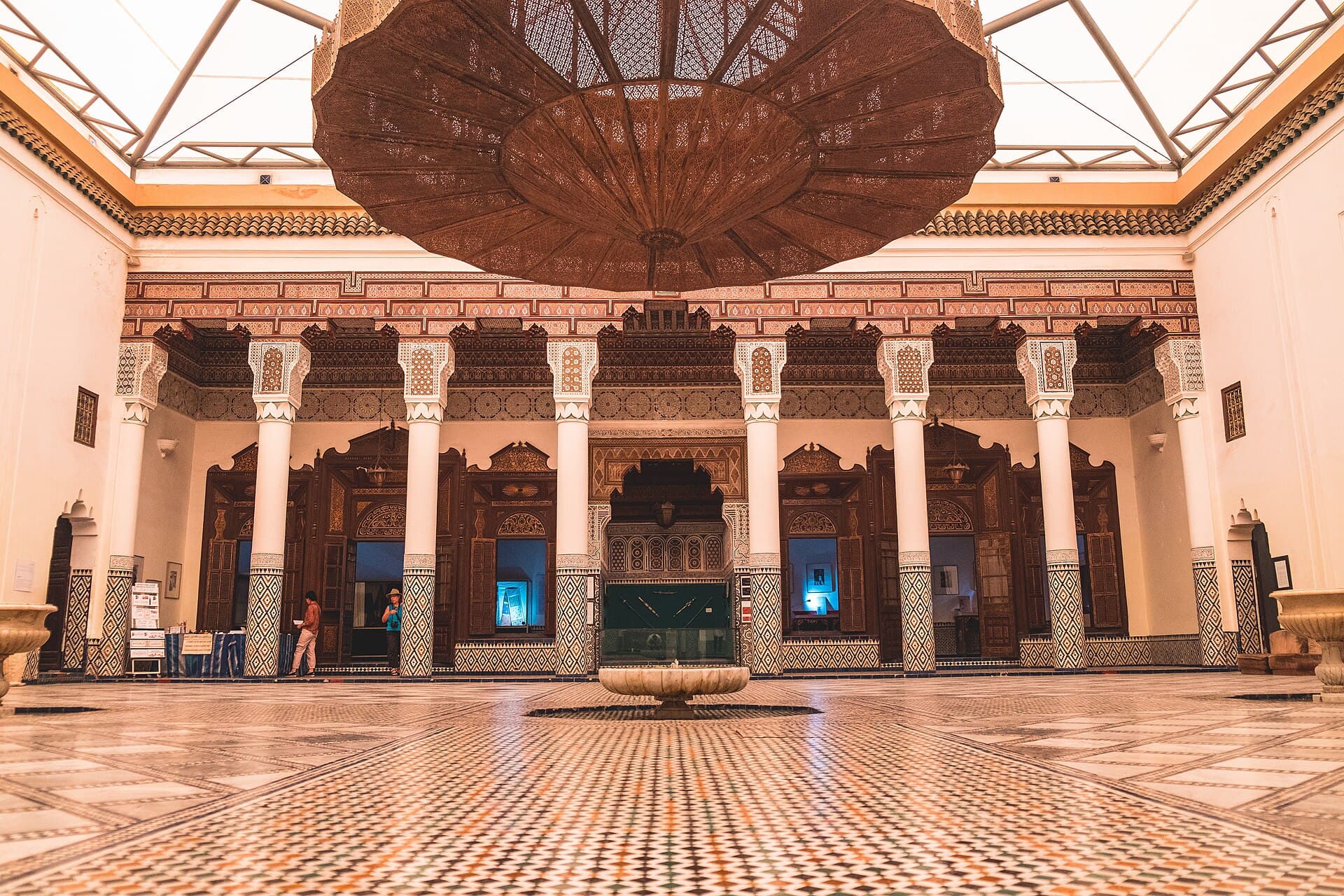 Marrakech MuseumThe Marrakech Museum occupies Dar Menebhi, a palace in the northern medina built5 minutes walk
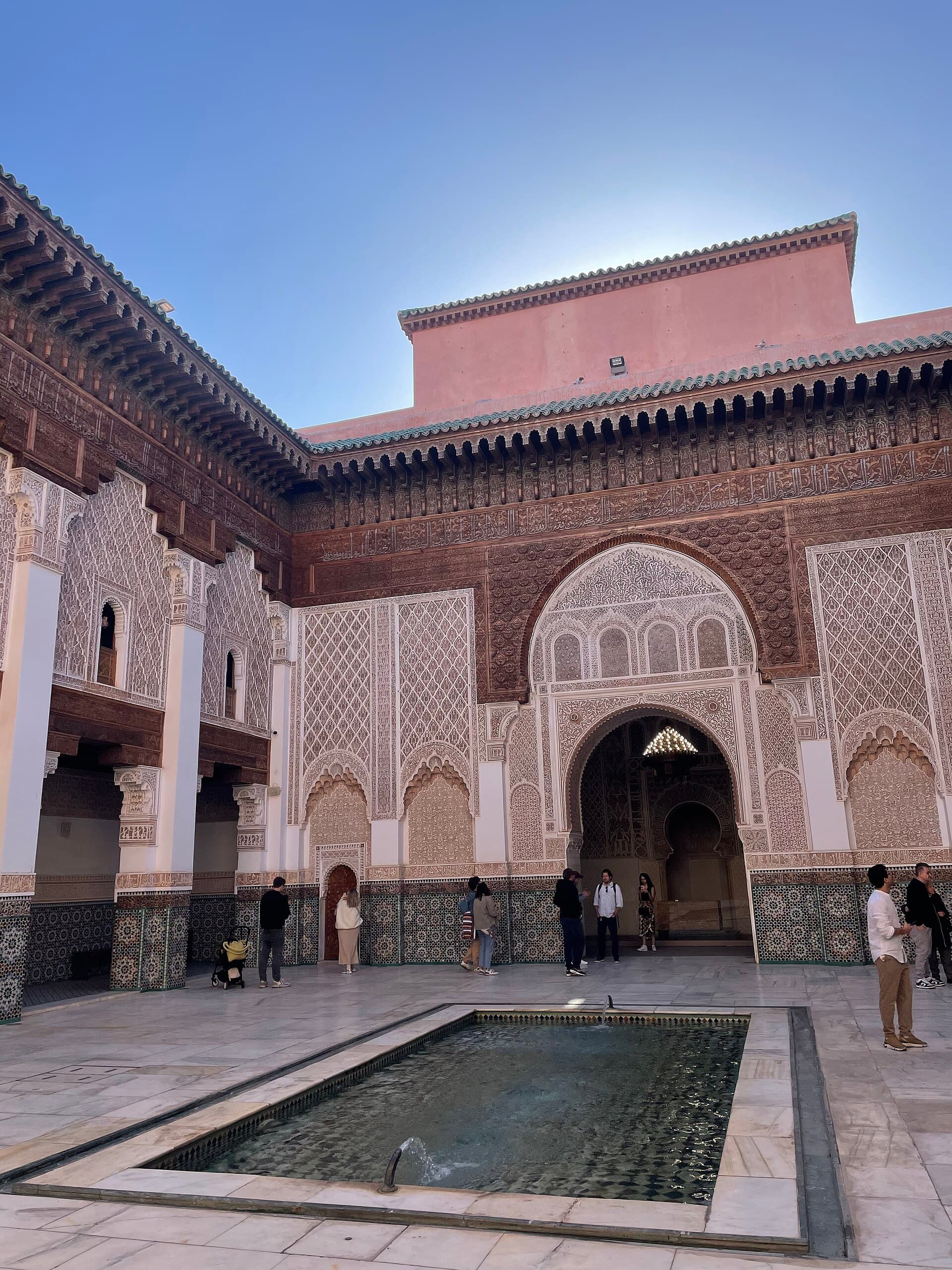 Ben Youssef MadrasaA historic Islamic college in the north of Marrakech's medina, named after the n6 minutes walk4.8
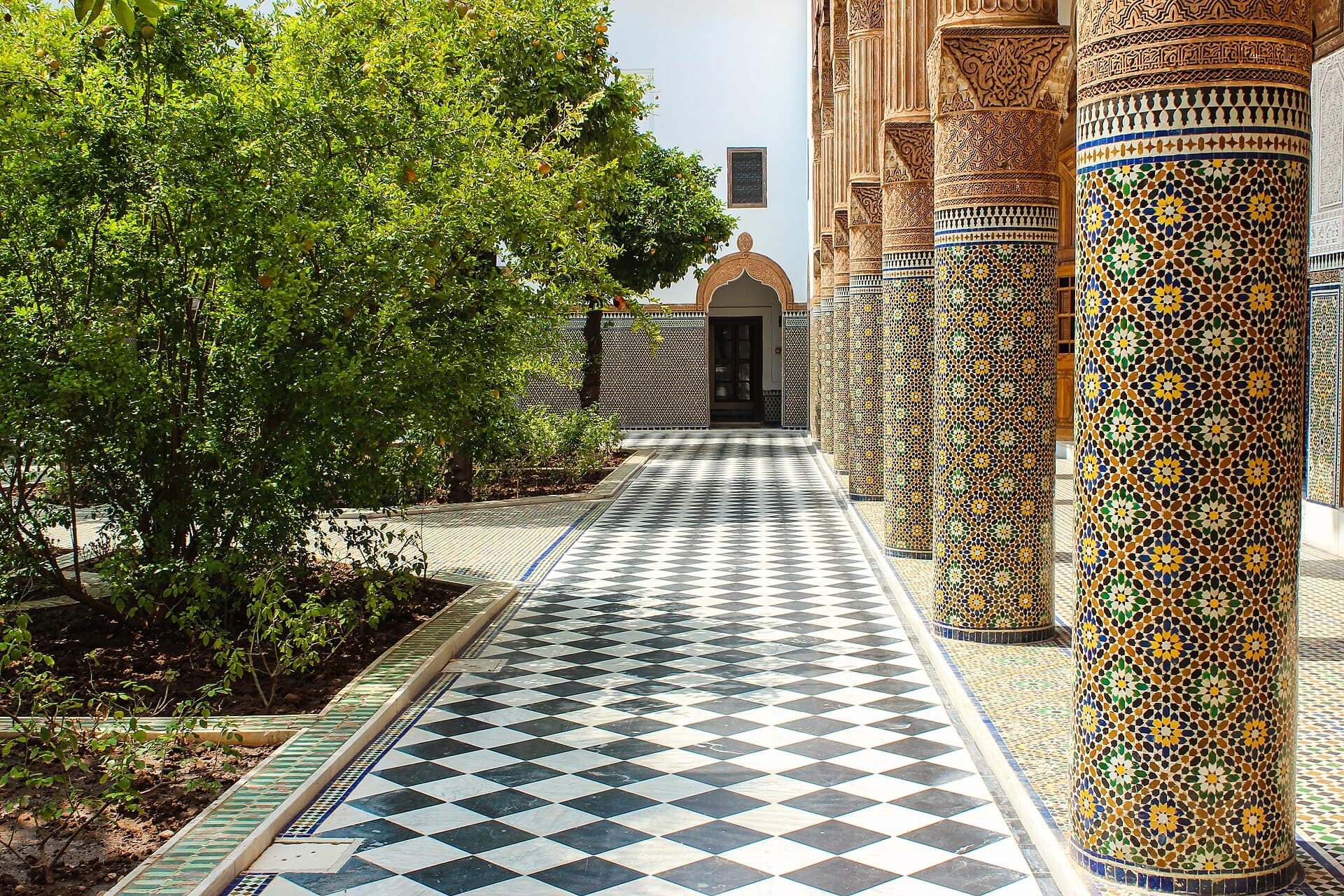 Dar El Bacha (Marrakech)Dar El Bacha, the House of the Pasha, is a palace in the Marrakech medina built 7 minutes walk
No, you can explore alone. If you hire one, choose a licensed guide with an official badge, and ignore strangers who say a lane or sight is closed and offer to lead you elsewhere, a common ploy that usually ends in a shop.
Traditionally a crier, the dallal, took the seller's carpet, offered it to each trader in turn and told the seller the highest bid. If the seller was not a souk trader, the dallal asked for a guarantor from the market, and he recorded such guarantees that the goods were the seller's own and not stolen.