
The Temple of Hercules
Columns on the lip of the hill, beside the marble hand of a colossus never finished.
David Bjorgen — CC BY 2.5 · Berthold Werner — CC BY-SA 3.0 · Lama Sakhnini — CC BY-SA 4.0 · Lama Sakhnini — CC BY-SA 4.0
The highest of Amman's seven original hills, where every layer of the city stands stacked on one site — the best place to understand Amman before descending into it. The hill has been occupied almost without a break since the Bronze Age, passing from the Ammonites to the Greeks, Romans, Byzantines and Umayyads. What stands today is three great buildings from three eras, metres apart: the Roman Temple of Hercules with its surviving columns, the Byzantine church, and the Umayyad palace with its domed audience hall. The Temple of Hercules is the familiar image — columns standing on the lip of the hill, visible from downtown below. Beside it lie the remains of a colossal marble hand from a statue estimated to have stood over twelve metres had it been completed. The Umayyad palace is architecturally the most important thing here and the least known: an eighth-century domed audience hall with its dome restored, and carved ornament still standing inside. The small archaeological museum on site is worth entering, holding objects from other Jordanian sites — among them some of the oldest human statues known anywhere. The view over the Roman Theatre and downtown from the edge of the hill is what stays with people, and it is best in the two hours before sunset.
Columns on the lip of the hill, beside the marble hand of a colossus never finished.
An eighth-century domed audience hall — the site's most important and least known building.
Objects from across Jordan, including some of the oldest human statues known anywhere.
Jabal al-Qala'a, Downtown, Amman
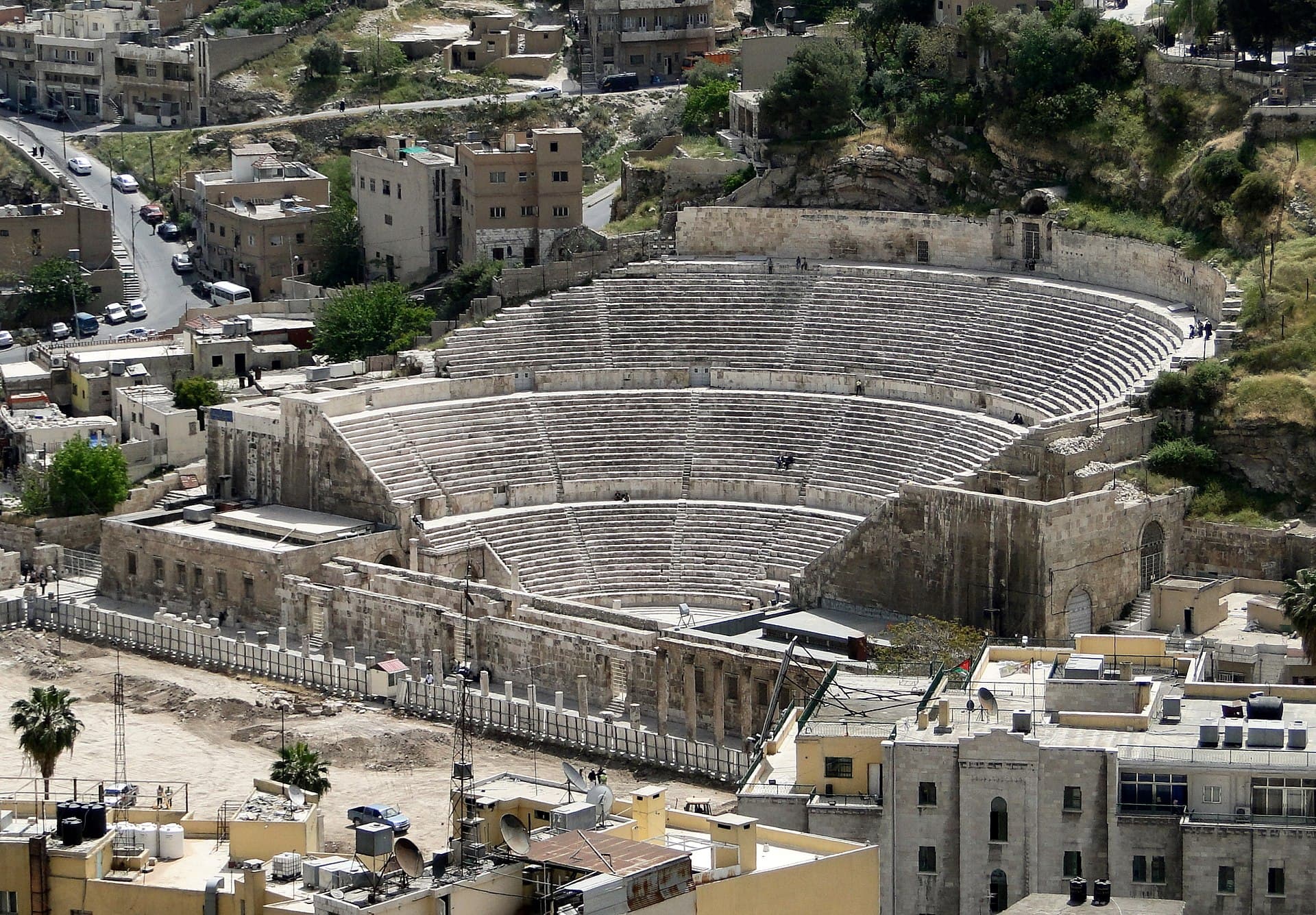 Roman TheatreA Roman theatre cut into the hillside in the middle of downtown, seating six tho5 minutes walk4.6
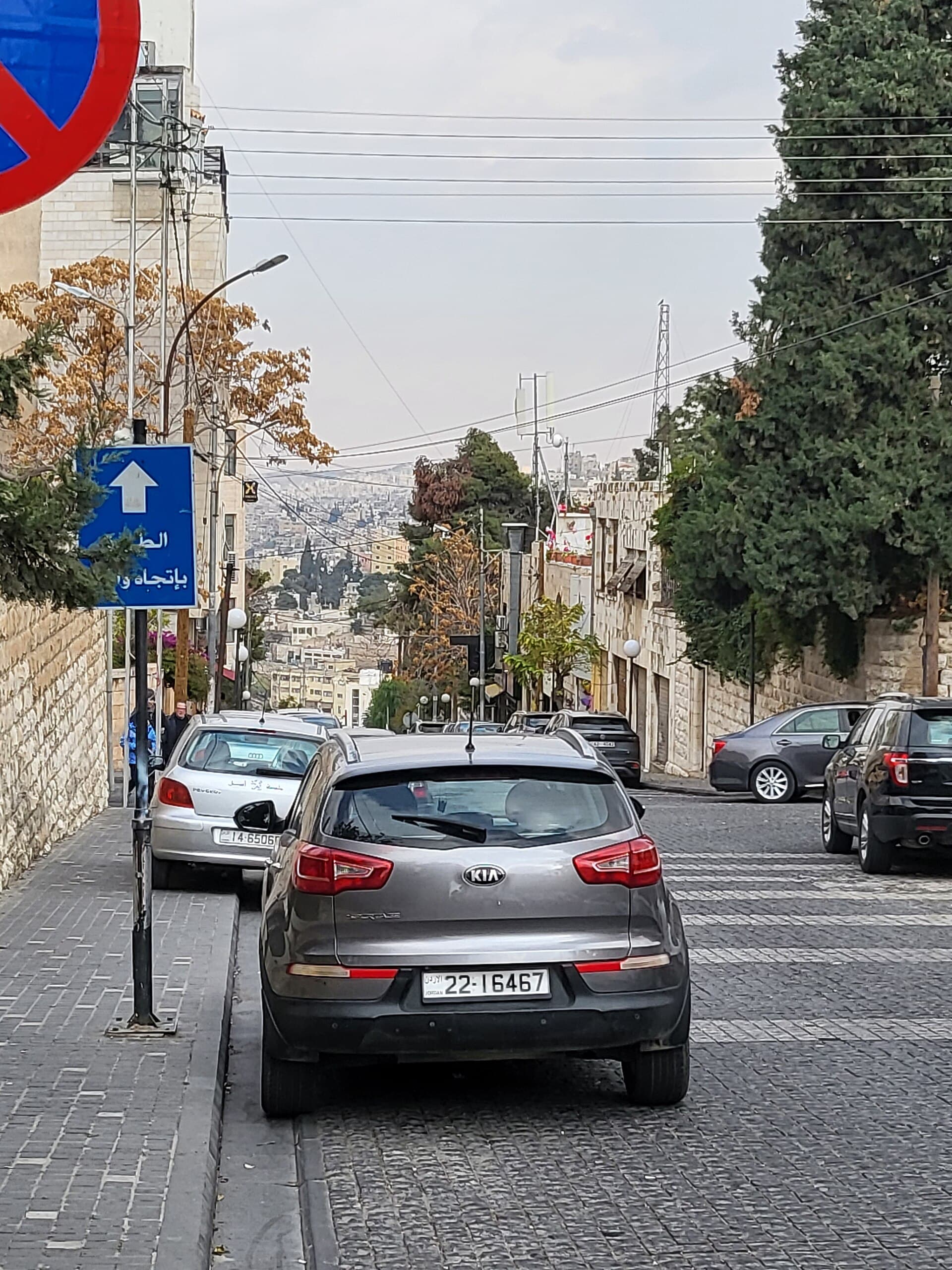 Rainbow StreetA single street in Jabal Amman between the First Circle and downtown, and the pl13 minutes walk4.4
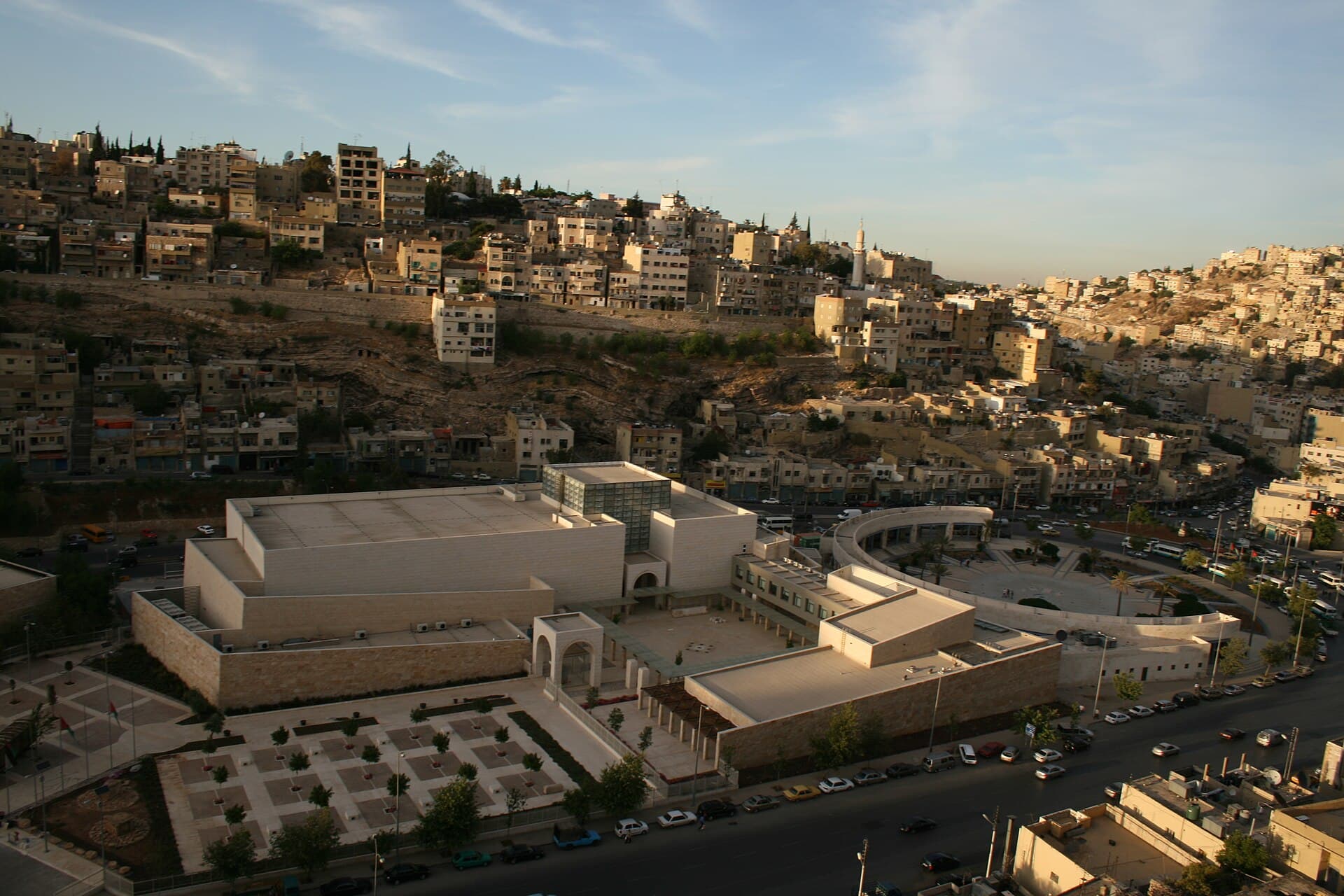 The Jordan MuseumJordan's national museum, holding two objects with no equal in any museum anywhe16 minutes walk4.3
If you are going to Petra, without hesitation — it covers the entry visa fee, Petra itself and more than forty sites including the Citadel, Jerash, Ajloun and Umm Qais, and saves a substantial amount. It must be bought online before arriving in Jordan, not after.
The theatre lies directly below and is visible from the edge, but walking down is steep and uncomfortable. It is easier to drive up to the Citadel and then drive down to the theatre — minutes apart. Together they make a comfortable half-day.