
The double inscription
A political statement in stone: where Athens ends and Rome begins.
A.Savin — CC BY-SA 3.0 · George E. Koronaios — CC BY-SA 4.0 · George E. Koronaios — CC BY-SA 4.0 · Giles Laurent — CC BY-SA 4.0
A lone marble arch about eighteen metres high standing at the roadside between the **Acropolis** and the **Temple of Olympian Zeus**. It was built around **AD 131** in honour of the emperor **Hadrian**, at the dedication of the Temple of Zeus, which he finished after centuries of abandonment. Its most interesting feature is the pair of **inscriptions**. On the face towards the Acropolis and the old city it reads: *"This is Athens, the ancient city of Theseus."* On the opposite face, towards the temple and the new quarter: *"This is the city of Hadrian, and not of Theseus."* So the arch is a **boundary marker** between two cities: ancient Greek Athens behind you, and the new Roman Athens Hadrian built in front. It is a political statement carved in marble more than a decoration. ⚠ Its setting today is less dignified than it deserves: it stands on a small island between the carriageways of the fast **Amalias Avenue**, fenced and surrounded by heavy traffic. ⚠ The visit is **from outside only** — you cannot enter or walk beneath it.
A political statement in stone: where Athens ends and Rome begins.
The same marble as the Acropolis, from Mount Penteli.
From the temple side, both appear in one frame.
Leoforos Vasilisis Amalias, 10557 Athens
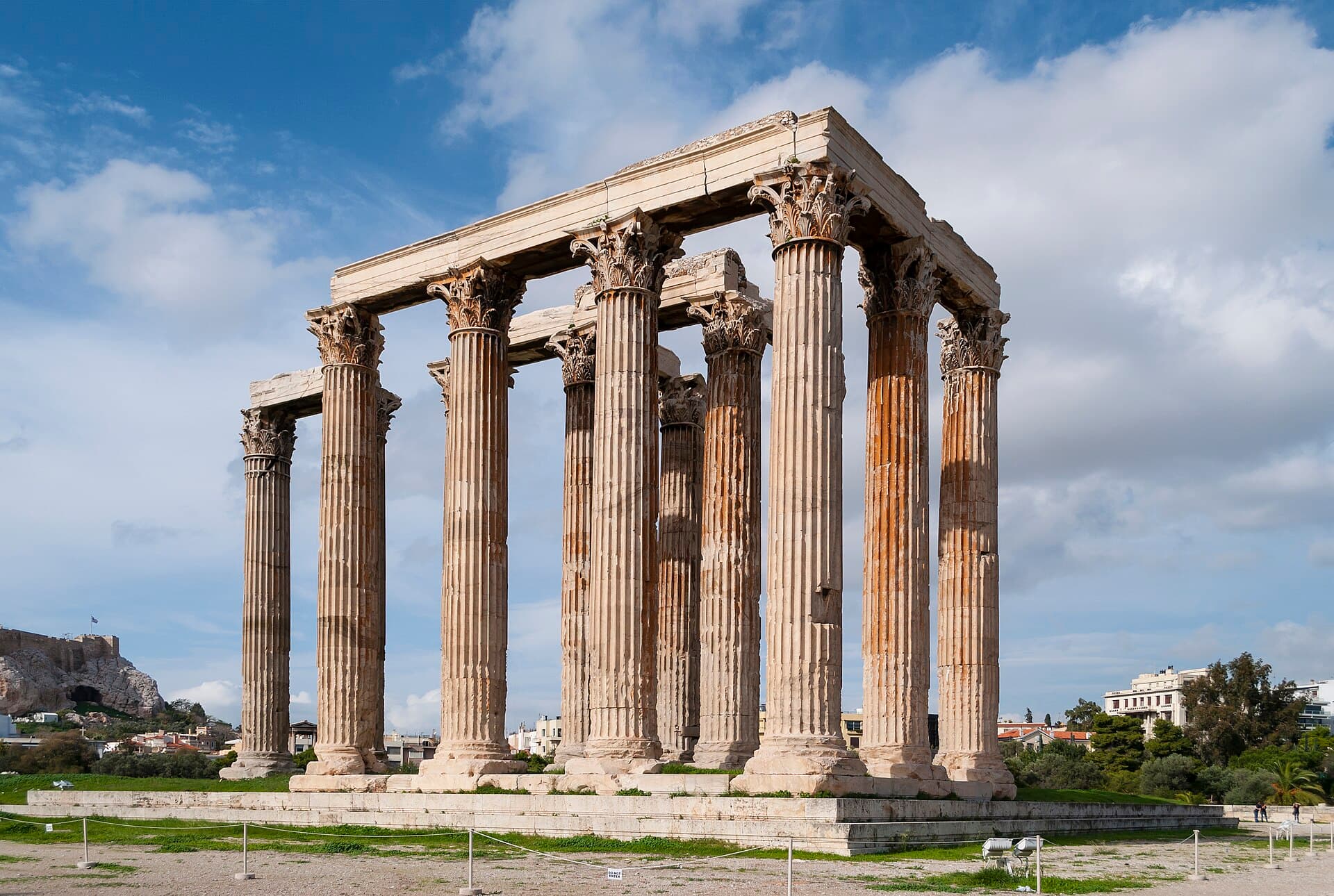 Temple of Olympian Zeus & Hadrian's ArchThe Olympieion was the largest temple in all Greece — and its longest labour: be2 minutes walk4.3
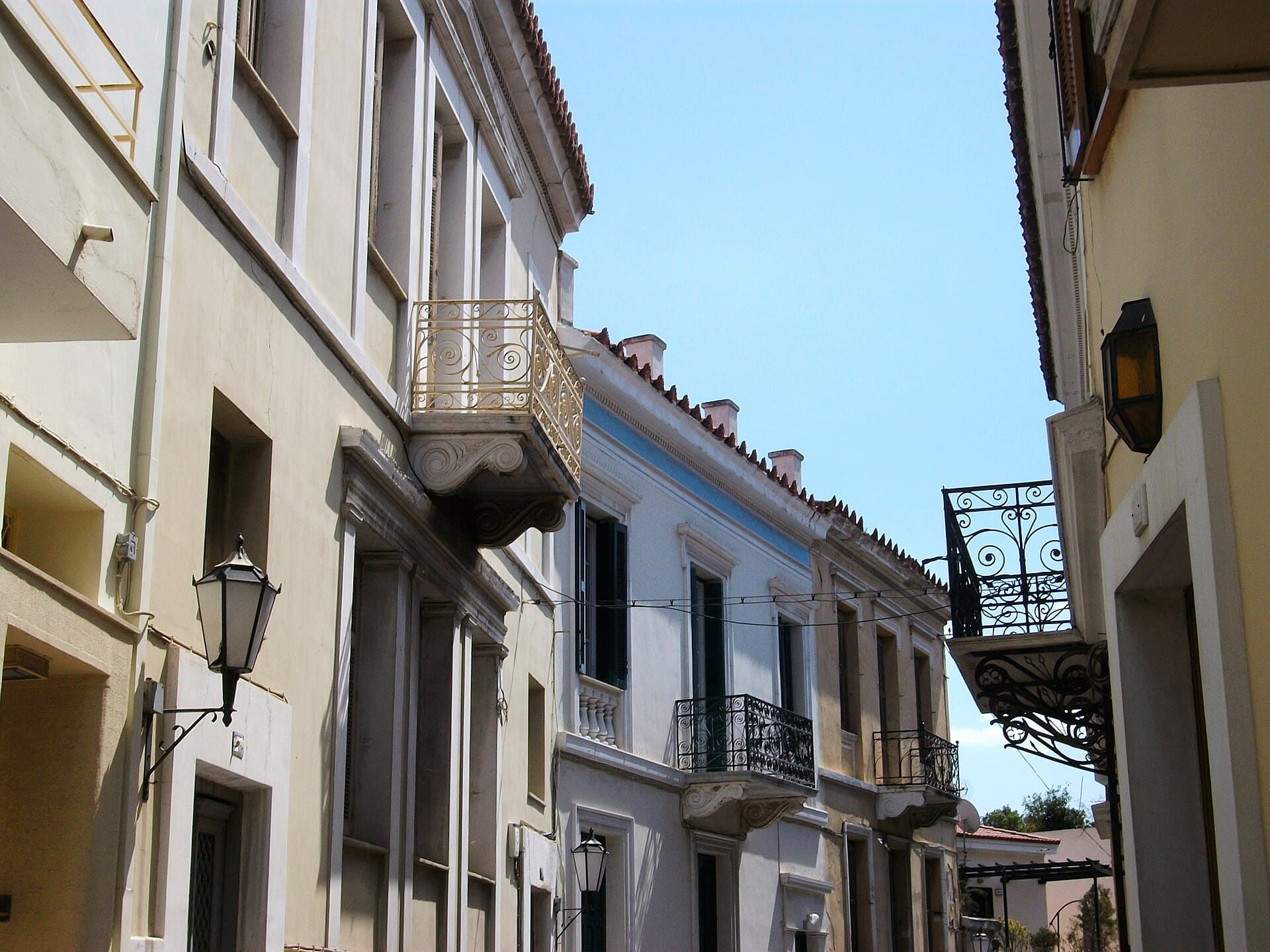 PlakaThe oldest continuously inhabited quarter of Athens, called "the neighbourhood o3 minutes walk
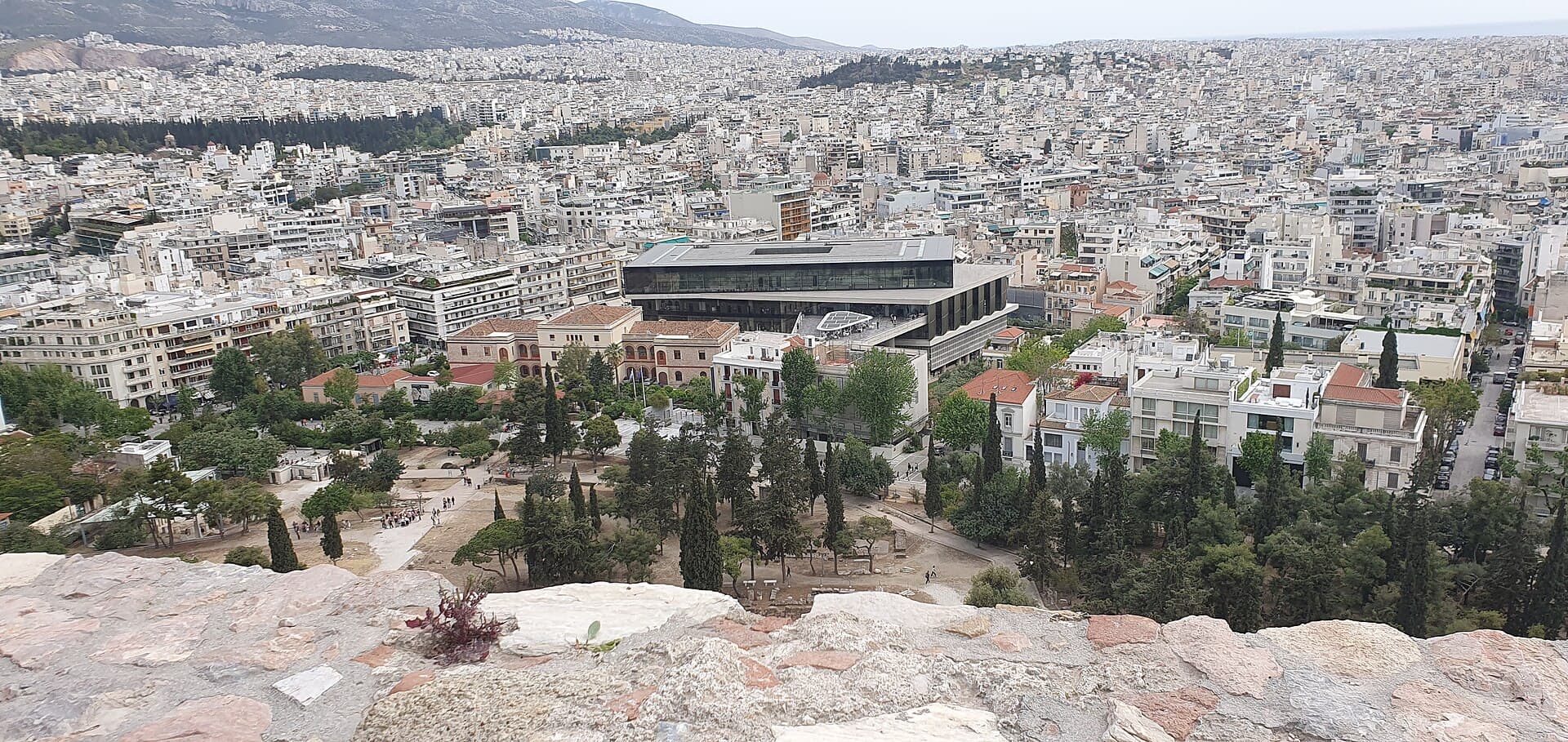 The Acropolis MuseumThe Acropolis Museum ranks with the new millennium's greatest: glass and light a5 minutes walk4.8
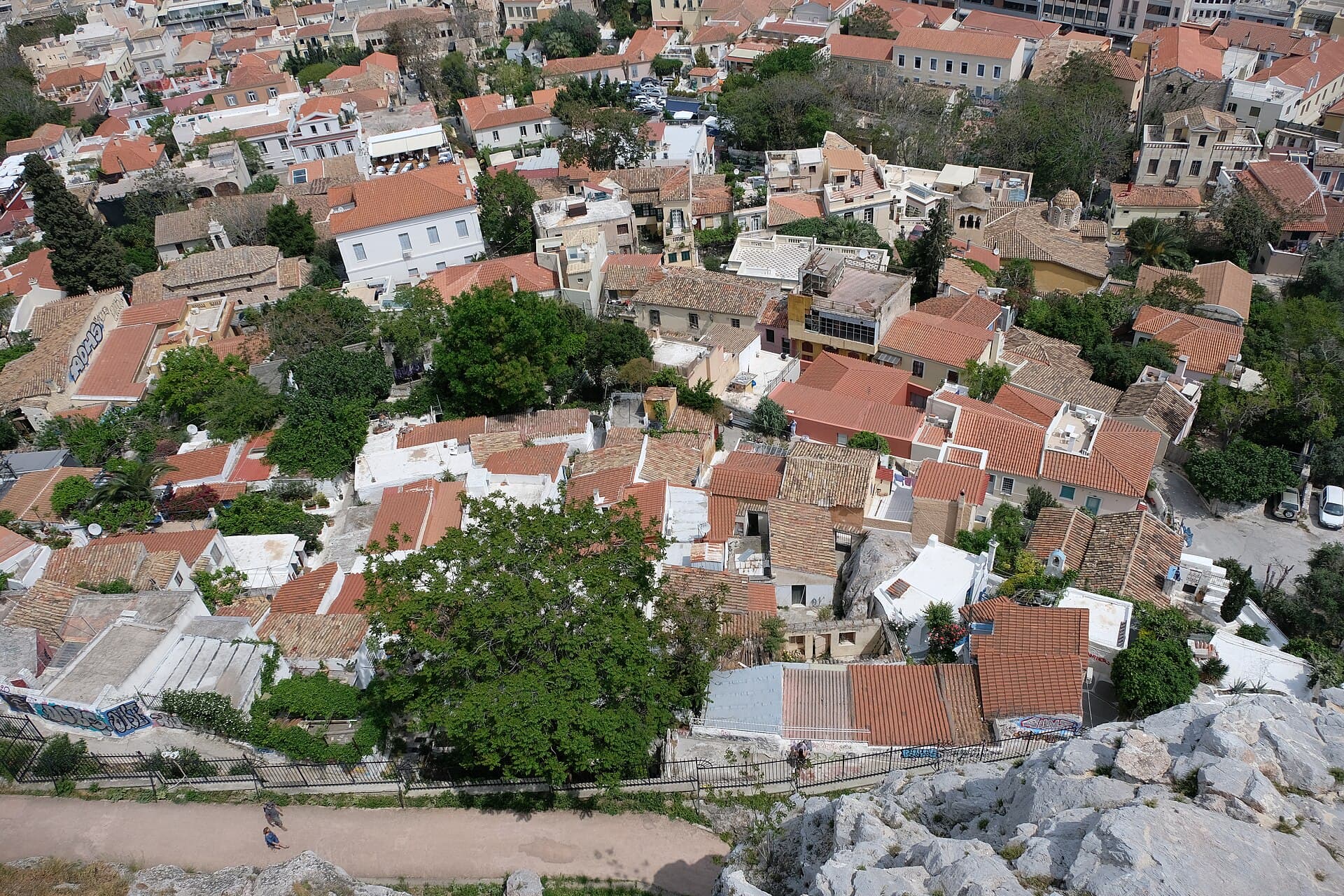 AnafiotikaA complete Greek island village hidden beneath the Acropolis rock, two minutes f5 minutes walk
 The Ilias Lalaounis Jewellery MuseumA jewellery museum on the southern slope of the Acropolis devoted to the work of6 minutes walk4.6
They are a **declaration of a boundary**. On the north-western face towards the Acropolis: "This is Athens, the ancient city of Theseus" — meaning that behind the arch lies the old Greek city with its myths. On the opposite face: "This is the city of Hadrian, and not of Theseus" — meaning that ahead lies a new quarter the emperor built. Scholars differ: was the arch **flattery** by Athenians towards an emperor who had been generous to them, or a **Roman assertion** that the city was now his? The inscription bears both readings, which is part of its interest.
Don't allot it time — **pass it**. It stands on Amalias Avenue between the **Akropoli** metro station and the entrance to the **Temple of Olympian Zeus**, on the natural path of anyone going from the Acropolis to the temple or back. The logical route: the Acropolis and its museum in the morning, down to the arch, then the Temple of Zeus (separate or combined ticket), then the National Garden and Syntagma Square. The arch is ten minutes of all that, and free.