Lake Nasser
Water to the horizon.
Ad Meskens — CC BY-SA 3.0 · David Berkowitz from New York, NY, USA — CC BY 2.0 · René Hourdry — CC BY-SA 4.0 · Ad Meskens — CC BY-SA 3.0 · Chabe01 — CC BY-SA 4.0
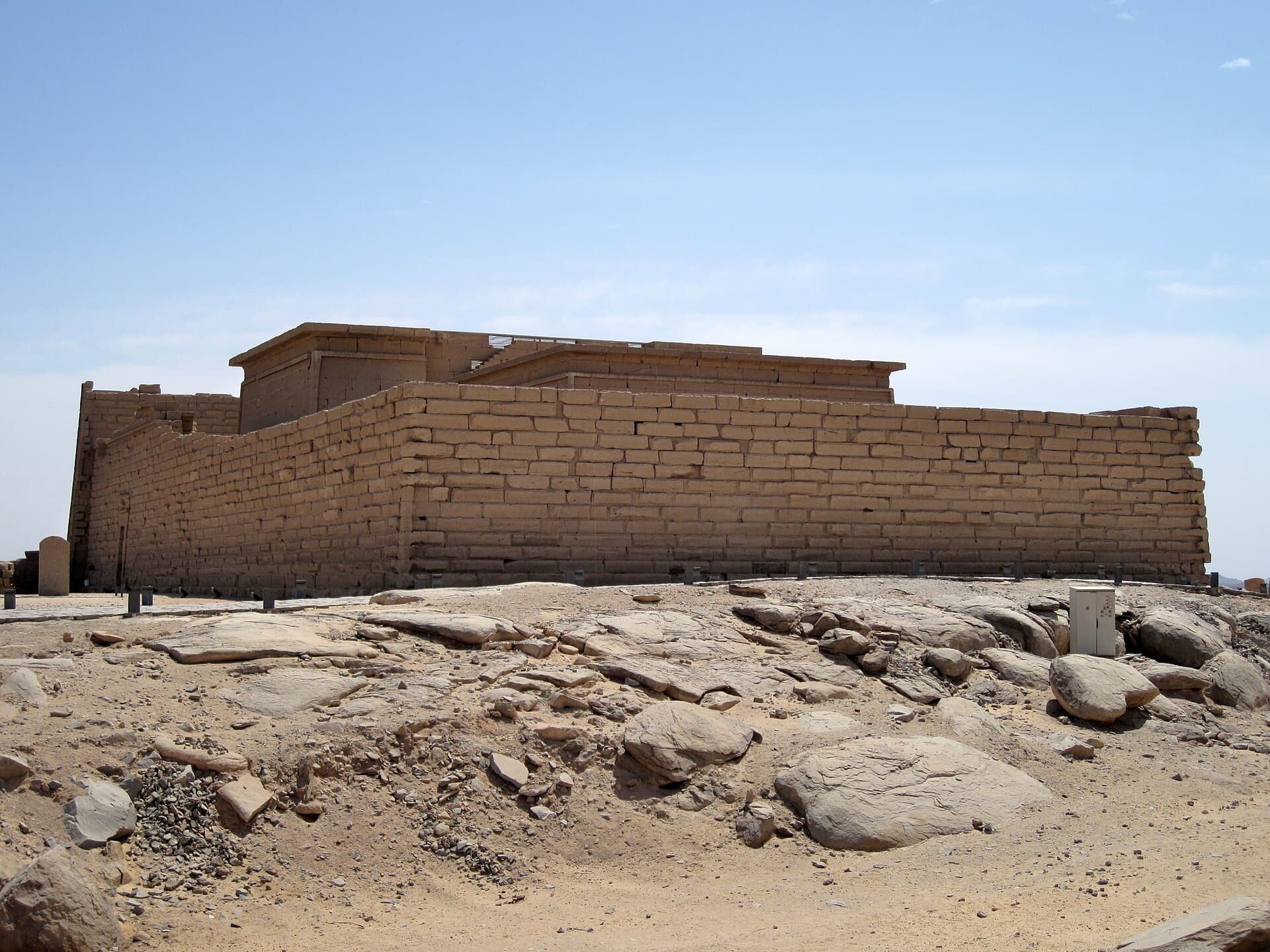
One of the largest embankment dams in the world, built across the Nile south of Aswan between 1960 and 1970 with Soviet help, to protect Egypt from floods and droughts, store water for irrigation and generate electricity. Behind it formed Lake Nasser, one of the largest man-made lakes in the world, stretching hundreds of kilometres south into Sudan. Visitors stand on the dam on a long road across its crest, with the wide lake stretching to the horizon on one side and the Nile flowing north towards Aswan on the other. Near the dam is the Egyptian-Soviet Friendship Monument, a soaring concrete tower in the form of a giant lotus flower. The dam changed the face of Egypt, ending the annual flood and supplying power for generations, but it drowned the old Nubian villages and threatened their monuments, so UNESCO launched its international campaign to rescue and move the temples of Nubia, among them Abu Simbel, Philae and Kalabsha. A visit to the dam costs a foreigner about two hundred Egyptian pounds according to recent guides, and it is usually part of an Aswan tour with Philae Temple and the Unfinished Obelisk. Photography is generally allowed from the viewpoints, though security may prevent stopping in some places.
Water to the horizon.
A lotus-shaped tower.
Why the temples were moved.
South of Aswan, on the Nile at the head of Lake Nasser
A short visit of about half an hour, worthwhile to understand the story of Nubia and its rescued temples and for the view over Lake Nasser; most tours pair it with Philae.