
The theatres
Lit marquees.
Horacio Cambeiro — CC BY-SA 4.0 · Néstor Carrasco from Santiago, Chile — CC BY-SA 2.0 · Taken by the uploader, w:es:Usuario:Barcex — CC BY-SA 3.0 · User:Barcex — CC BY-SA 3.0 · Unknown authorUnknown author — Public domain
Avenida Corrientes is Buenos Aires's great avenue of theatres and the heart of its cultural and night life, closely tied to tango and to the city's identity. Its old theatres and cafés were where tango and Argentine theatre took shape in the late nineteenth century, and Carlos Gardel, the most famous tango singer of all, lived on the avenue between 1904 and 1918. Widened in the 1930s, it runs 69 blocks from the port area to Chacarita, but its liveliest stretch lies between Florida street and Callao, crossing Avenida 9 de Julio at the Obelisco: a row of theatres and big musical stages, the San Martín cultural complex, bookshops open late and long-established pizzerias and cafés. It is known as «the street that never sleeps». Walking it is free, best in the evening when the theatre marquees light up; show tickets are sold at each box office.
Lit marquees.
Open late.
The city's symbol.
From the Obelisco along the theatre stretch, San Nicolás
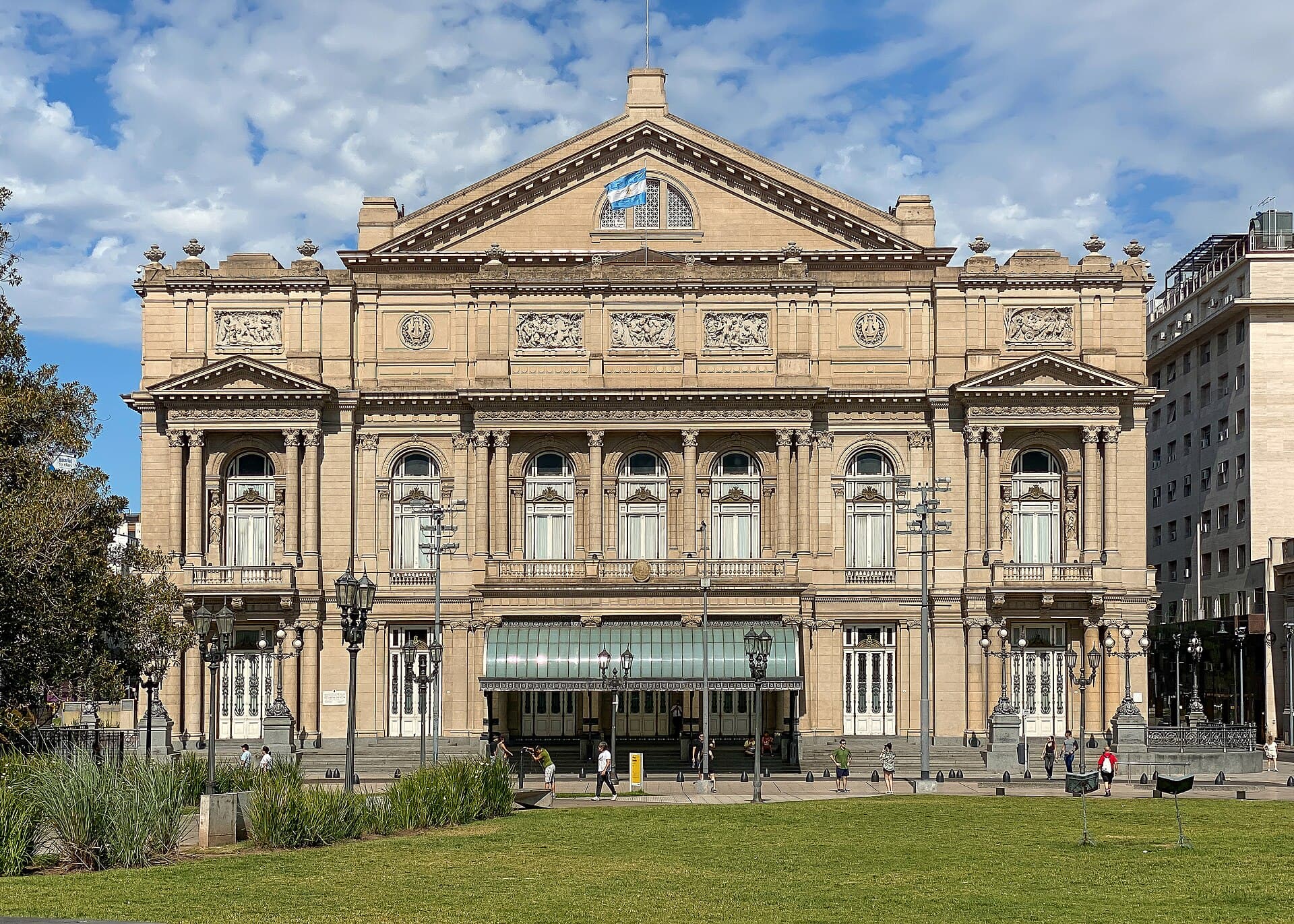 Teatro ColónThe Teatro Colón is Buenos Aires's great opera house and one of the finest-sound5 minutes walk4.7
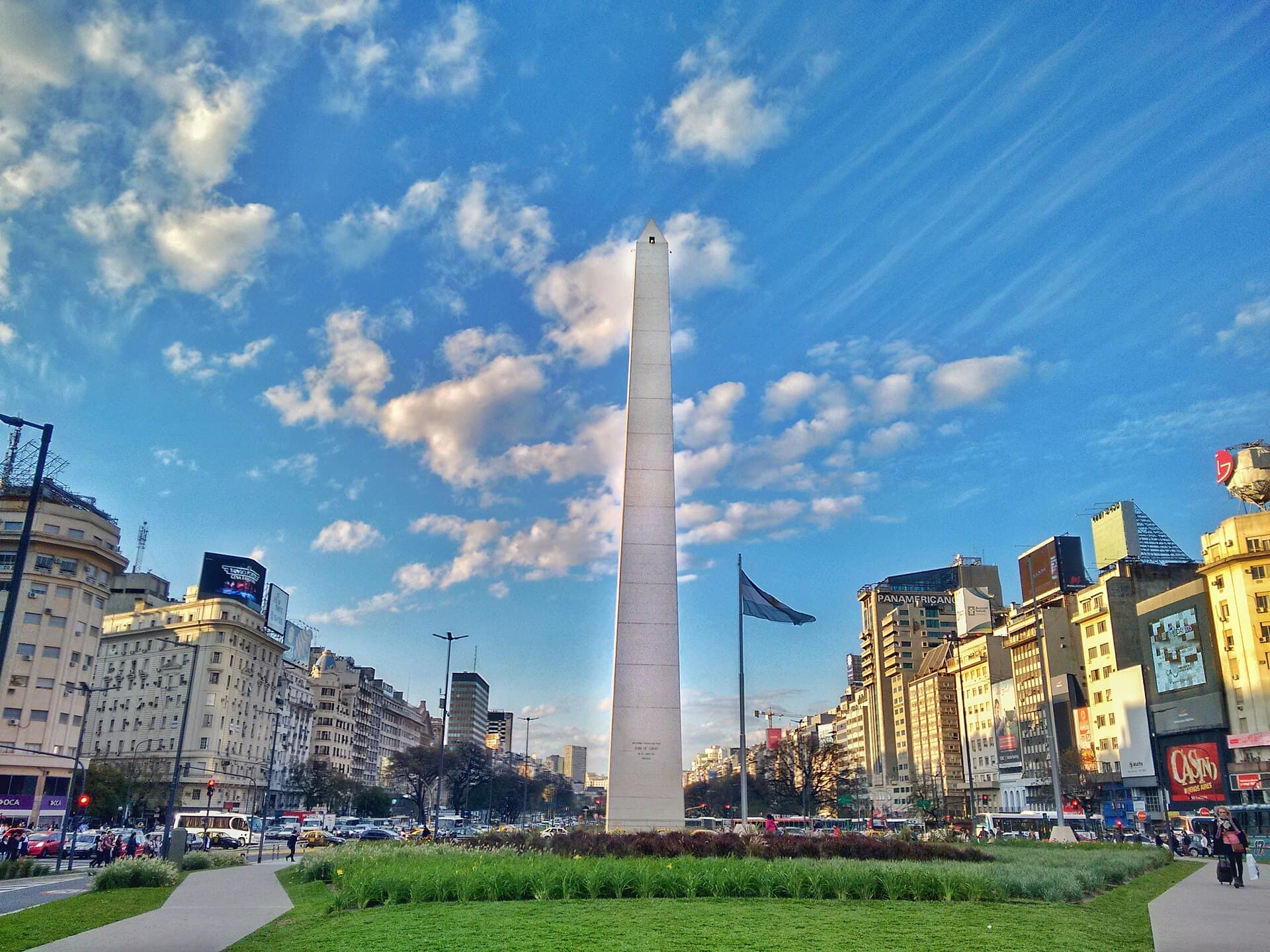 Obelisco de Buenos AiresThe Obelisco is the symbol of Buenos Aires, a white obelisk 67.5 metres high whe5 minutes walk4.5
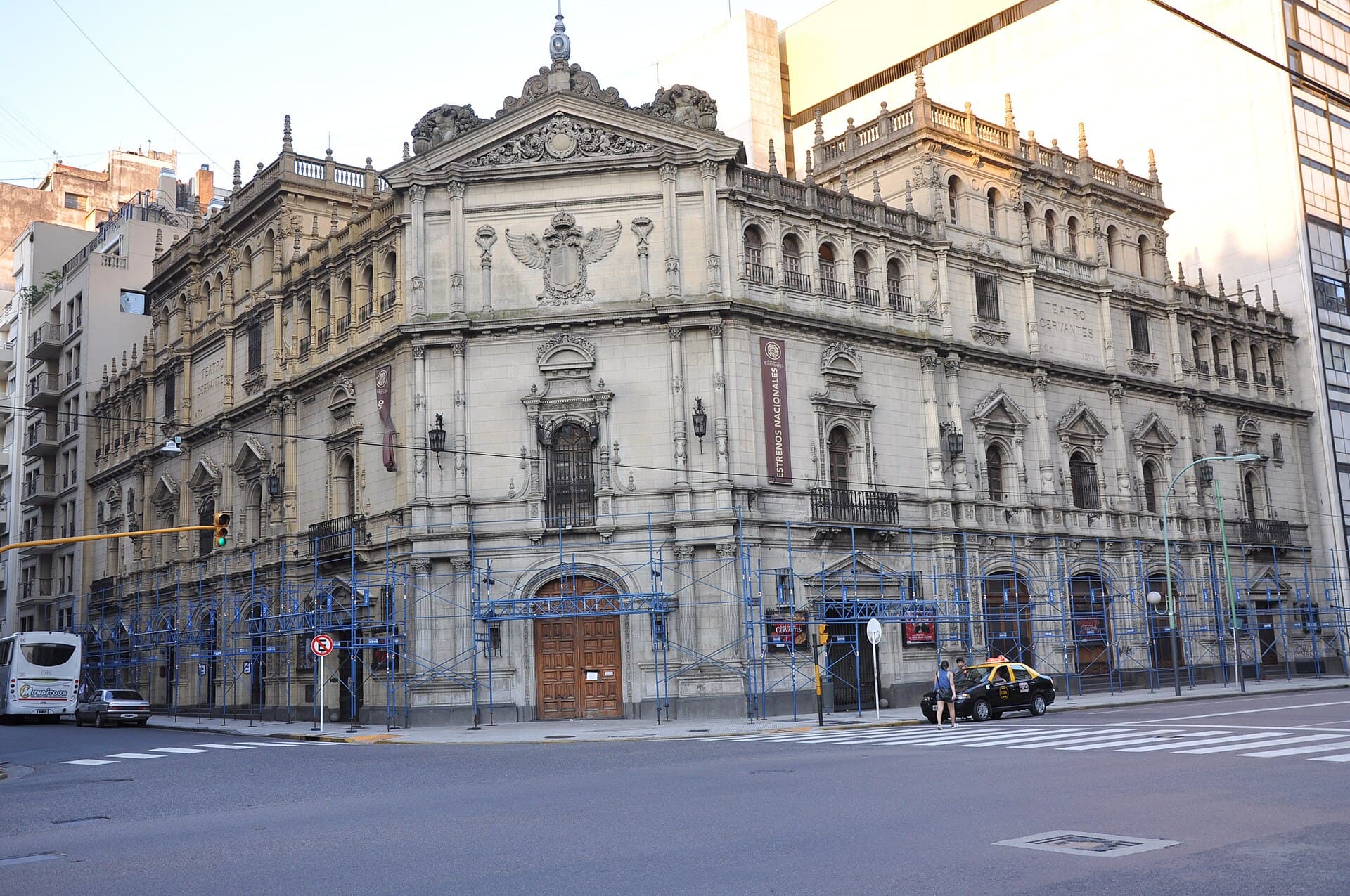 Teatro Nacional Cervantes (Cervantes Theatre)The Cervantes is Argentina's only national theatre, founded by the celebrated Sp8 minutes walk
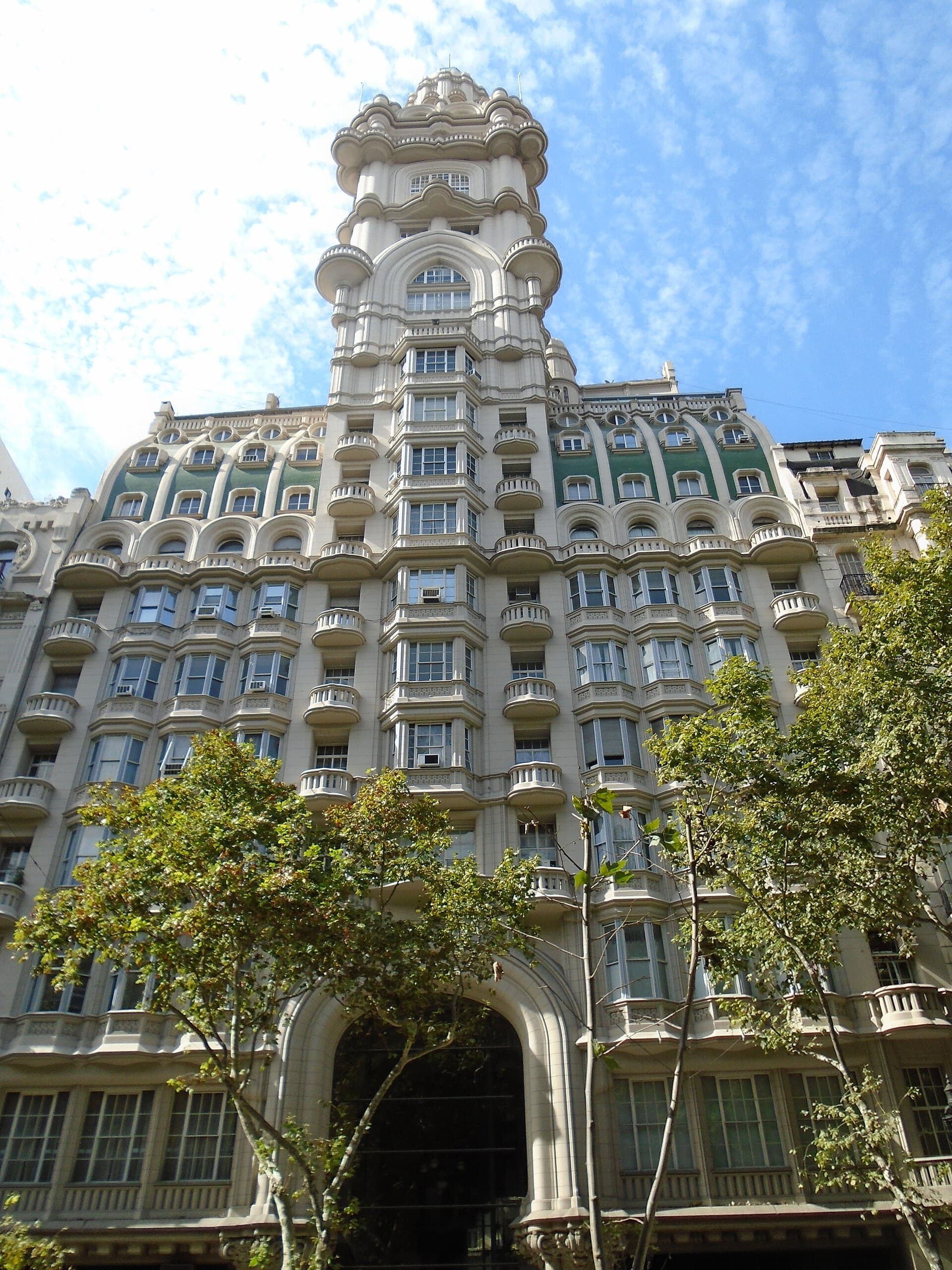 Palacio BaroloPalacio Barolo is an office building on Avenida de Mayo that was, on completion 8 minutes walk4.7
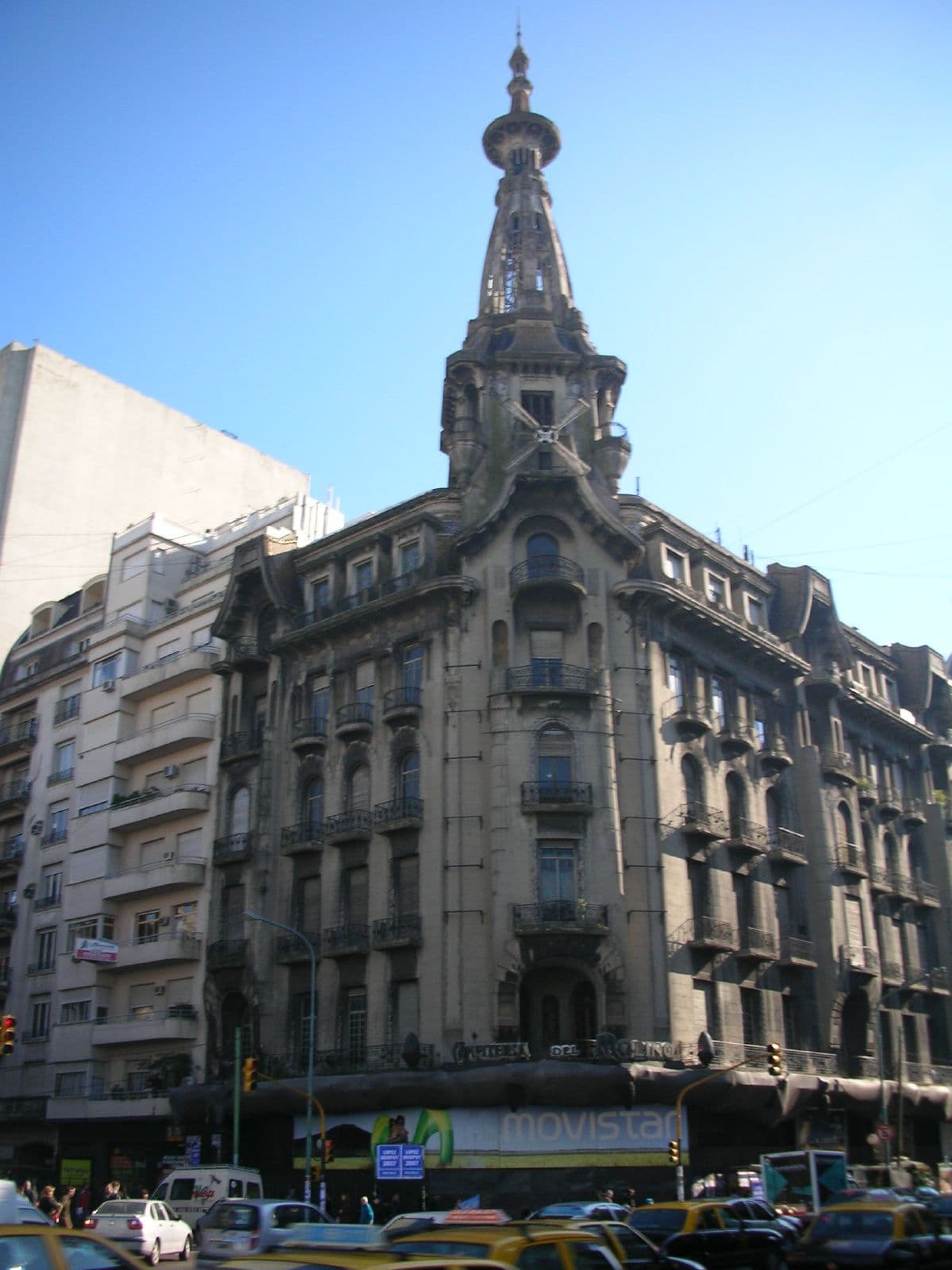 Confitería del MolinoThe Confitería del Molino, the «Mill Patisserie», was Buenos Aires' most famous 10 minutes walk
In the evening, when the theatre marquees light up and the bookshops and cafés fill with people.