The inscribed gateway
The red-stone entrance carries the 1889 foundation plaque in Ottoman Turkish and Hebrew script, the best-preserved piece of the original building.
Bahar — CC BY-SA 3.0 · Dardanel17 — CC BY-SA 4.0 · Bahar — CC BY-SA 3.0 · Serragok — CC BY-SA 4.0
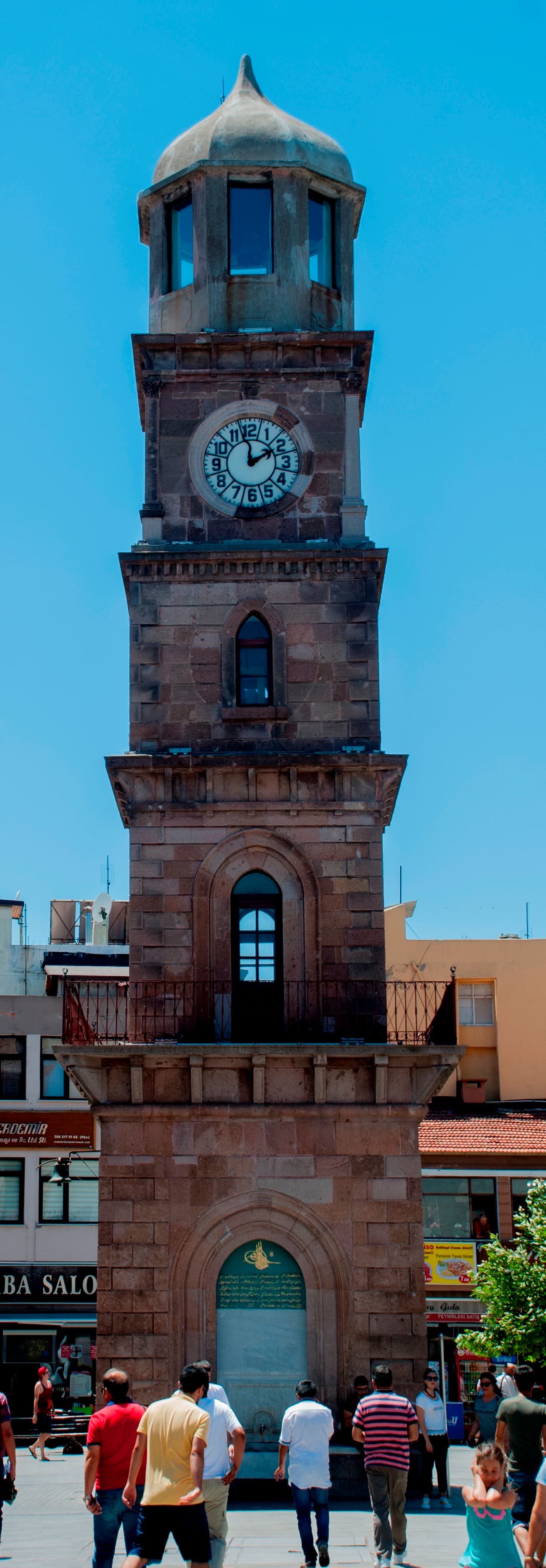
This is perhaps the most sung-about bazaar in Türkiye, and nobody visits it for the shopping. Every Turk knows the name Aynalı Çarşı, the Mirrored Bazaar, because it is the opening line of the Çanakkale folk song, sung whenever the Dardanelles campaign is remembered. The bazaar itself is a single covered arcade you can walk end to end in under a minute. Arrive expecting exactly that and it will not disappoint. It was built in 1889, under Sultan Abdülhamid II, by the Jewish merchant İlya Halyo as a pocket-sized copy of Istanbul's Egyptian Bazaar, with around fourteen shops; its official name was Passage Hallio. The red-stone gateway still carries his foundation plaque in Ottoman Turkish and Hebrew script, the best-preserved piece of the original building. Allied naval shells hit it in 1915, British occupying troops used it as a stable from 1918 to 1921, and it stood derelict until the municipality restored it in 1967, with a further refurbishment in 2007. The mirrors that flanked the entrance and gave it its name are long gone, though locals trade other explanations for the name. Inside, a few dozen shoulder-to-shoulder stalls sell much the same things: Çanakkale ceramics, prayer beads, Trojan horses in every size and material, small paintings of the battle, towels, magnets and the local cheese halva. Prices are fair and gentle haggling is fine, but there are no craftsmen at work and nothing you will not find elsewhere in town. It is a gift stop, not a market. It sits a few minutes' walk from the clock tower and the ferry pier, so fold it into a stroll to the waterfront or the evening after Gallipoli rather than making a trip of it. The floor is level with no steps, pushchairs roll through easily, and fifteen minutes covers it, including the photo under the gateway whose name is in the song.
The red-stone entrance carries the 1889 foundation plaque in Ottoman Turkish and Hebrew script, the best-preserved piece of the original building.
The decorated jugs and bowls the town has been known for since the eighteenth century, sold here at fair prices.
A photo under the gate is why most Turkish visitors come; the bazaar is the opening line of the Çanakkale folk song.
Çarşı Caddesi, Kemalpaşa Mahallesi, central Çanakkale
No. It is one short arcade of near-identical gift stalls, and its value lies in the name and the history rather than the goods. Pass through on the way between the clock tower and the waterfront and give it fifteen minutes; for real shopping the surrounding streets are bigger and cheaper.