The temple plain
Red spires above trees.
KX Studio from Shanghai — CC BY 2.0 · calflier001 — CC BY-SA 2.0 · Jakub Hałun — CC BY-SA 4.0 · Jakub Hałun — CC BY-SA 4.0 · calflier001 — CC BY-SA 2.0
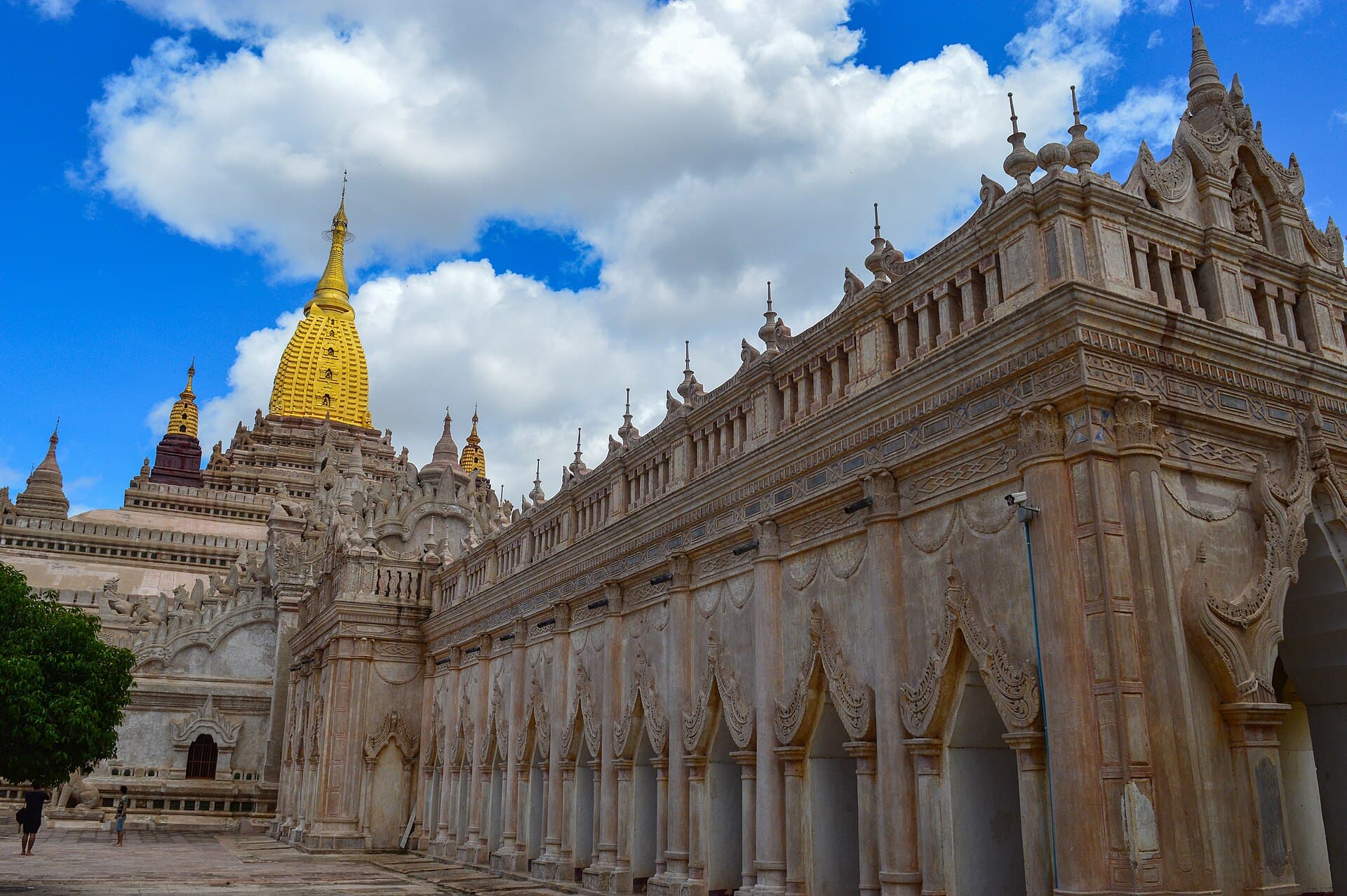
The Bagan Archaeological Zone is an ancient city in Mandalay Region, a UNESCO World Heritage Site and one of the most astonishing sights in Asia. Between the 11th and 13th centuries more than 10,000 temples, pagodas and monasteries were built on its plains, and over 2,300 survive. Today they spread in brick tones across a wide green plain out to the far hills. From the 9th to the 13th centuries it was the capital of the Pagan Kingdom, the first to unify the regions that later became Myanmar. Its present name is the modern Burmese form of Pugan, and its classical Pali name means the city that tramples on enemies. It is a dry, very hot zone, and one of its old names means parched land. From above you see pointed spires of red brick rising from green trees and farmland, wrapped in morning mist. On the ground red dirt tracks link the temples, with carts and horses. The best known is the white Ananda Temple, but the real pleasure is wandering among small temples where no one else is about, above all in the light of dawn and dusk. Ananda Temple is under 1 km from Old Bagan, and Mount Popa about 50 km away in a straight line. Beware of the heat, wear a hat and take off your shoes at temples. Climbing most buildings has been banned, so follow the rules. November to February suits best. The UK Foreign Office advises against all but essential travel to this area, so read the current advice before you plan.
Red spires above trees.
Mist among the buildings.
Among quiet temples.
Nyaung-U, Mandalay Region, Myanmar
Two to three, as the zone is wide, and it is best to go out at dawn and late in the day.
Most are now off limits, so ask locally about permitted viewpoints.