The great niche
55 m tall.
EFarid — CC BY-SA 4.0 · EFarid — CC BY-SA 4.0 · EFarid — CC BY-SA 4.0 · Sgt. Ken Scar — Public domain · Sgt. Ken Scar — Public domain
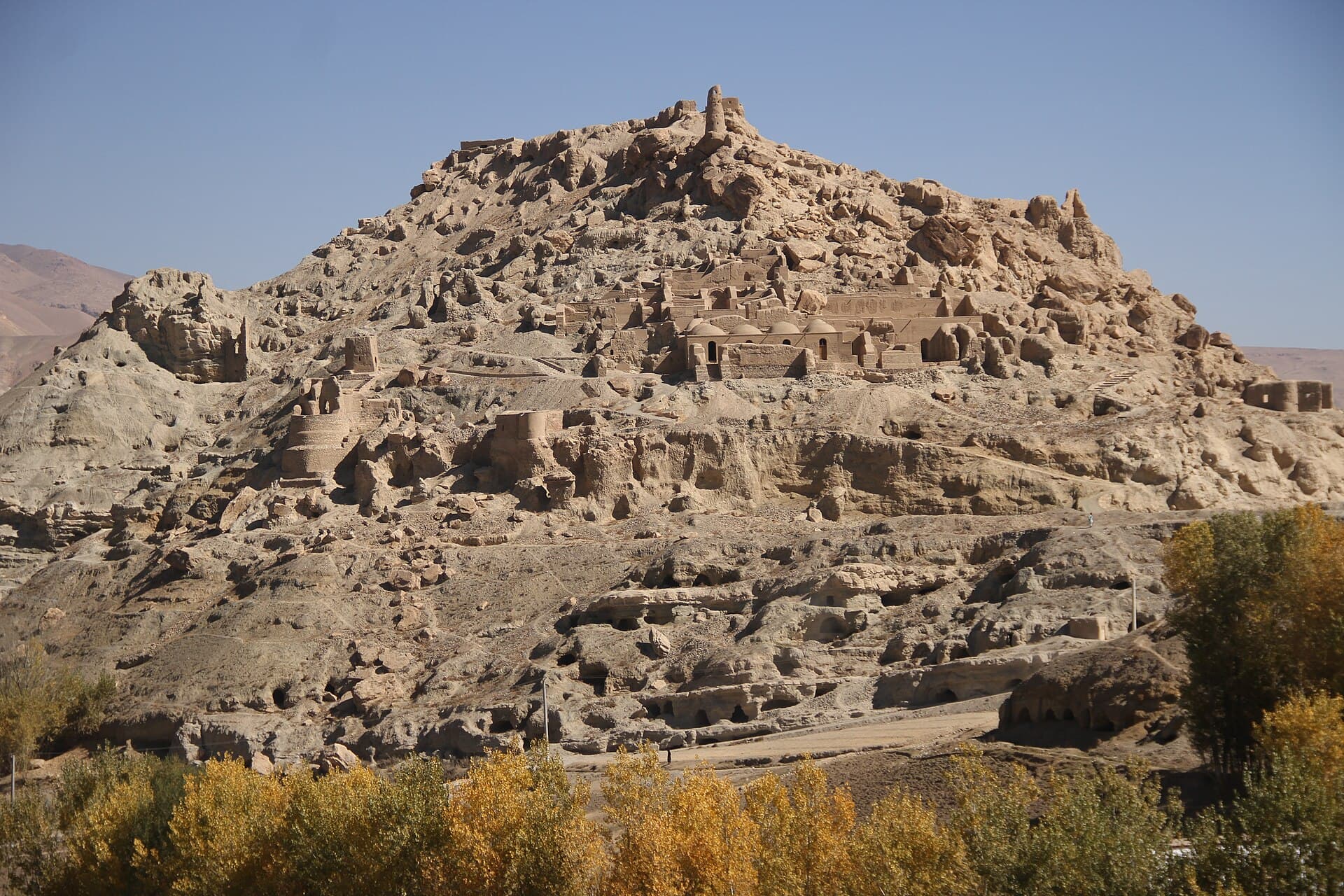
The Niches of Bamiyan are two huge hollows in a cliff of the Bamiyan Valley, at about 2,500 m, which once held two giant Buddhist statues. The statues were destroyed in March 2001, while the niches remain. They are part of the Bamiyan Valley site on the UNESCO World Heritage List since 2003, and the green farmland below the cliff gives them an unforgettable presence. Carbon dating suggests that the smaller eastern statue, 38 m tall, was made about 570, and the larger western statue, 55 m tall, about 618, in the time of the Hephthalites. The valley was a stop on caravan routes between South and Central Asia, and Buddhist monasteries grew up here with rooms cut into the rock. You see the long sand-coloured cliff, pitted with hundreds of small caves and the two great empty niches. Below are fields and poplars whose colours turn in autumn. Some caves once held wall paintings, most of them now damaged. From nearby Shahr-e Gholghola you see the whole cliff at once, so do not miss that view. They are about 1 km in a straight line from central Bamiyan and about 127 km from Kabul. The ground at the base is uneven, so wear comfortable shoes. Do not enter fenced areas, as local limits may apply. The UK Foreign Office currently advises against all travel to Afghanistan, and access may not be possible, so check official guidance before making any plans.
55 m tall.
Monks' rooms in the rock.
Poplars turning in autumn.
Bamiyan Valley, Bamyan Province, Afghanistan
No, they were destroyed in March 2001, while the niches and caves remain.
Do not count on it, and check official guidance first, as the UK Foreign Office advises against all travel to Afghanistan.