
The Ascension mosaic
A vast gold ground blazing in the afternoon sun.
Myrabella — Public domain · Myrabella — CC BY-SA 3.0 · Ingo Mehling — CC BY-SA 4.0 · Assianir — CC BY-SA 4.0
**A church with an enormous gold mosaic on its front that catches fire in the afternoon sun** — north of central Lucca, and unique in Tuscany. ⚠ **The mosaic is unusual here**: **most Tuscan church fronts are carved marble**. **San Frediano carries a huge gold mosaic** of the 13th century showing the **Ascension of Christ** with the apostles beneath — **a Byzantine-Roman technique** rather than a Tuscan one, ✅ **and it genuinely blazes when the afternoon sun reaches it**. ✅ **Inside is a Romanesque basilica on reused ancient columns** taken from Roman buildings. ✅ It holds a **12th-century font** carved with scenes of Moses, **and the preserved body of Saint Zita** — patron of domestic servants — displayed in a reliquary. ⚠ **The church is far quieter** than the cathedral.
A vast gold ground blazing in the afternoon sun.
A 12th-century font carved with scenes of Moses.
Ancient Roman columns carrying the nave.
Piazza San Frediano, 55100 Lucca, Italy
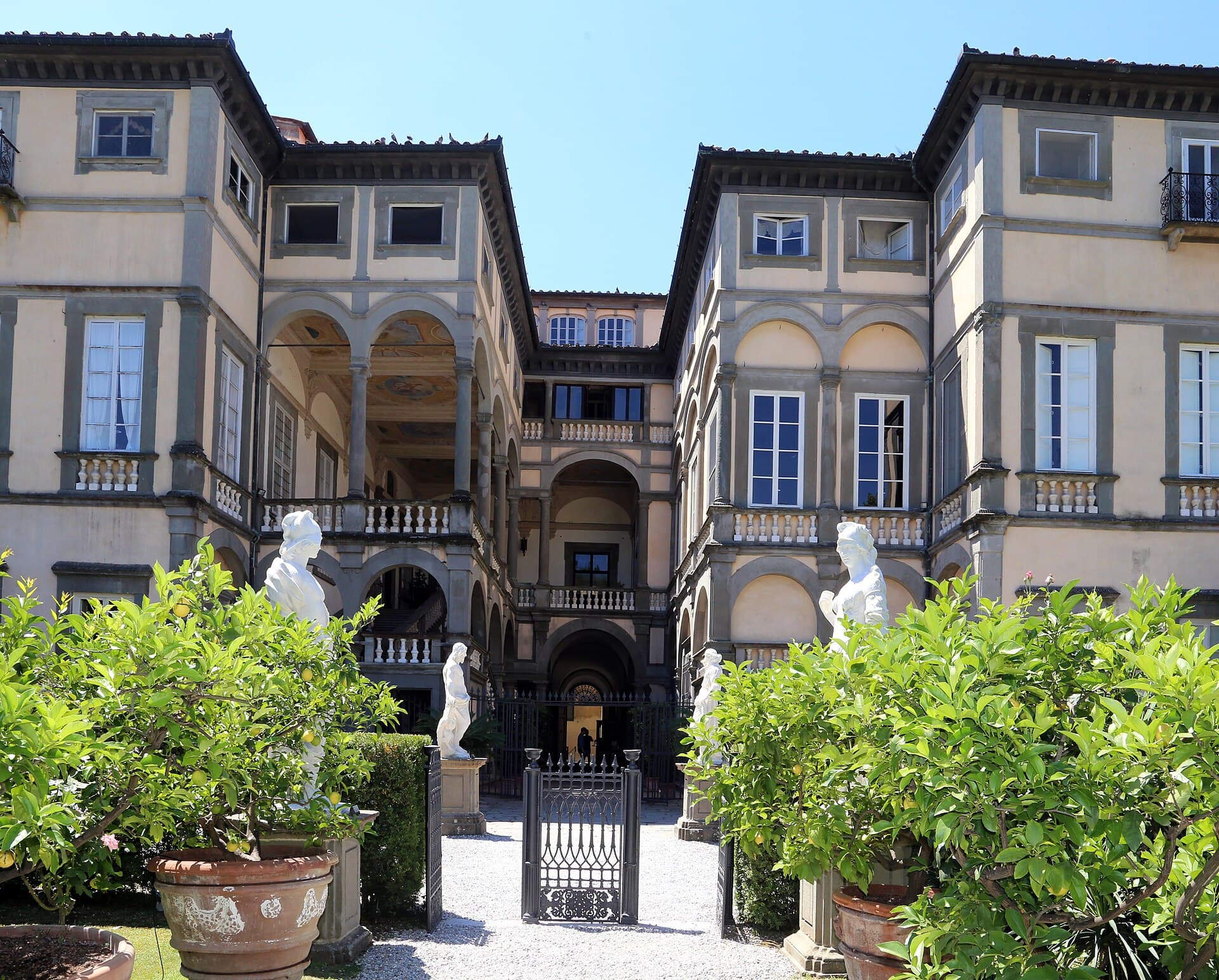 Palazzo Pfanner**A 17th-century palace with a statue-lined Baroque garden, visible free from th1 minute walk4.5
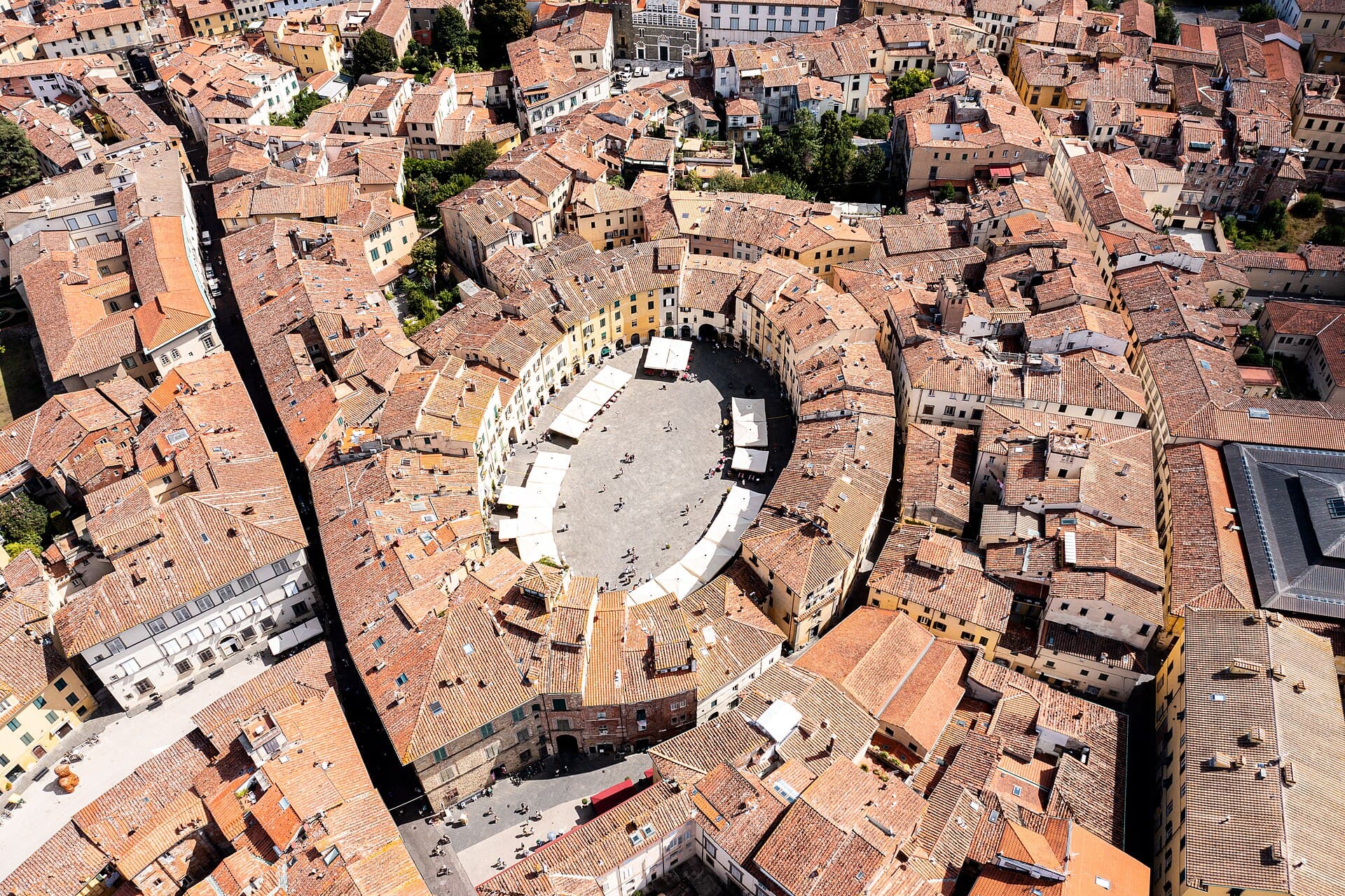 Piazza dell'Anfiteatro**A completely enclosed oval square whose shape is a Roman amphitheatre, with ho2 minutes walk4.5
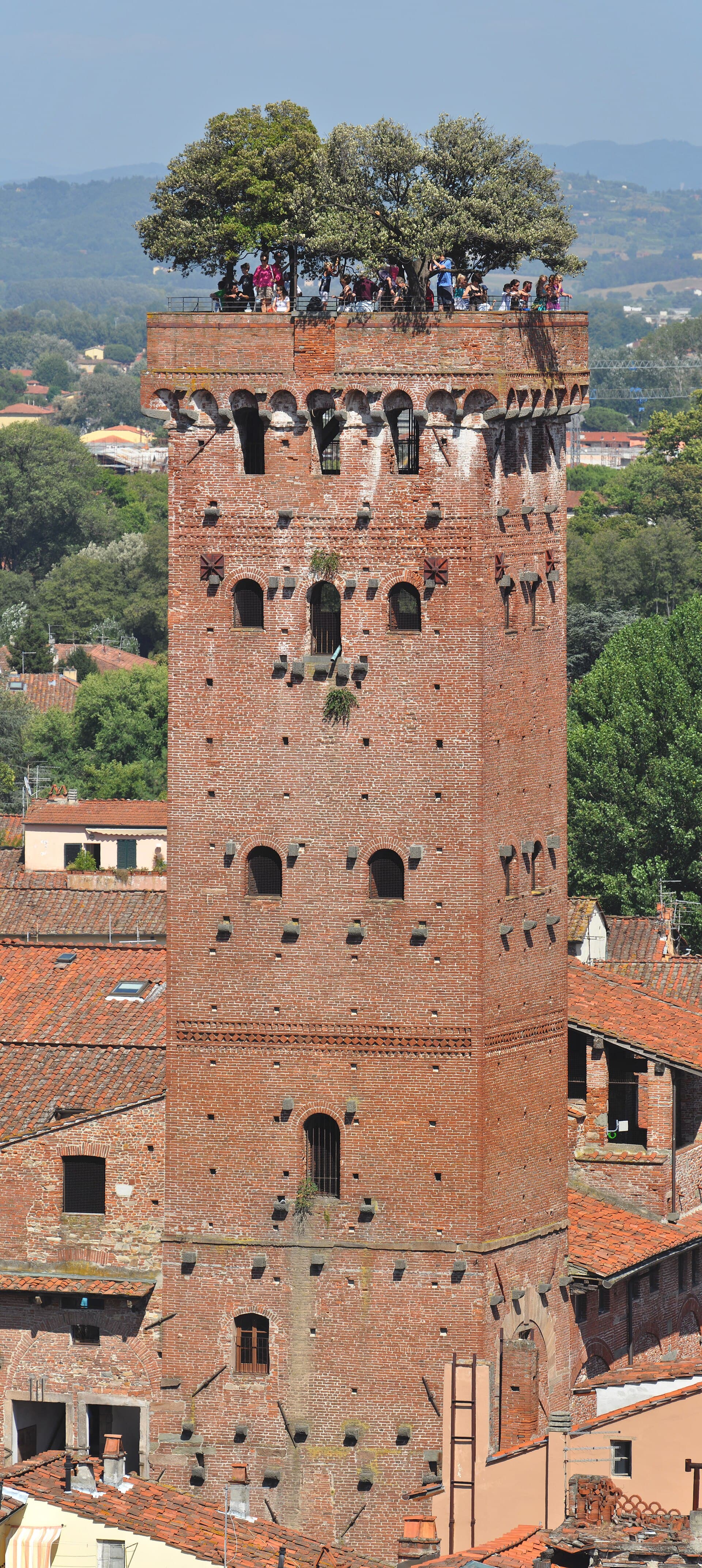 The Guinigi Tower**A medieval tower with seven full-grown oak trees on its roof** — in the middle4 minutes walk4.5
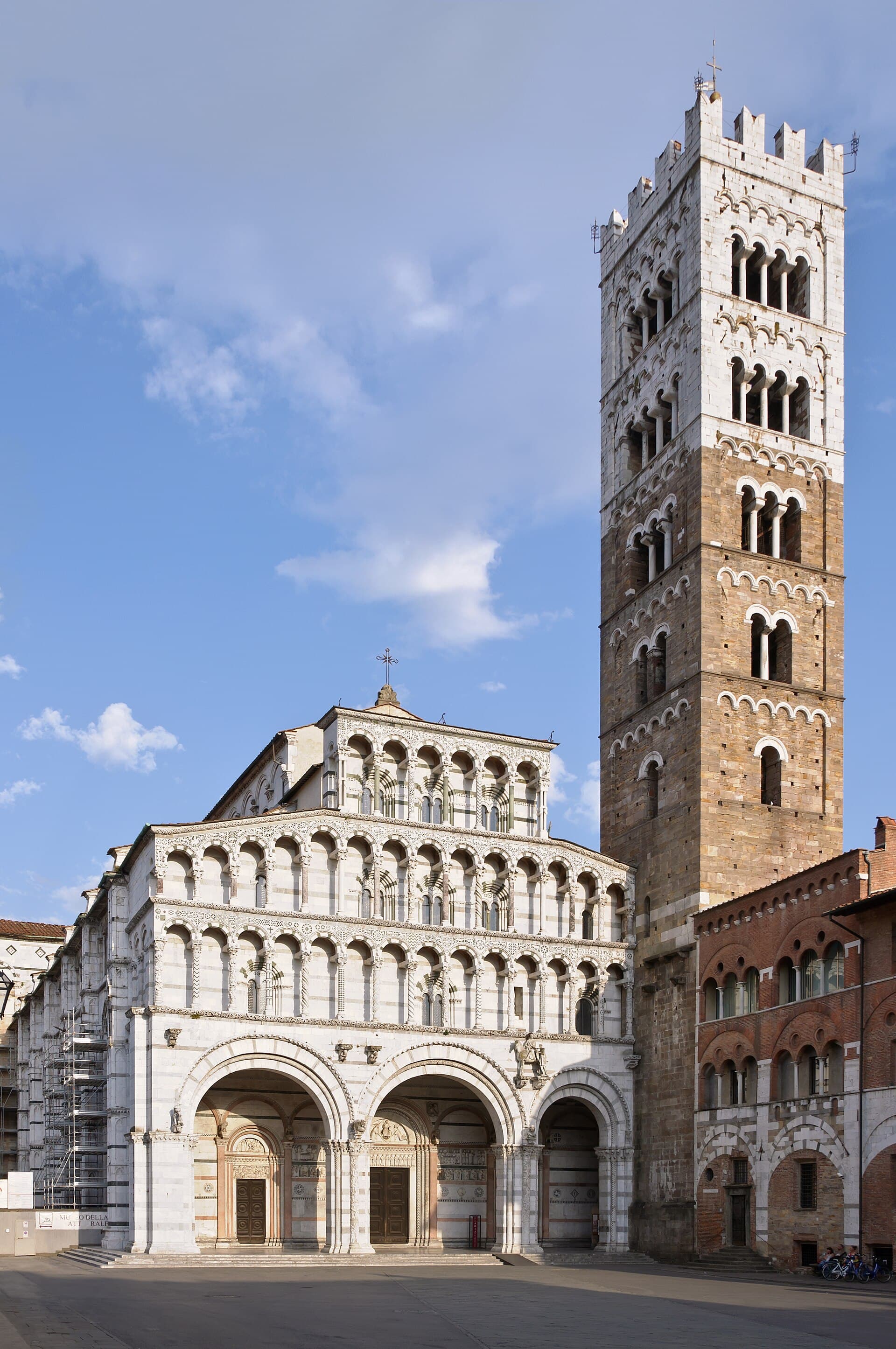 San Martino Cathedral**A cathedral whose façade is deliberately asymmetric because the bell tower was8 minutes walk4.5
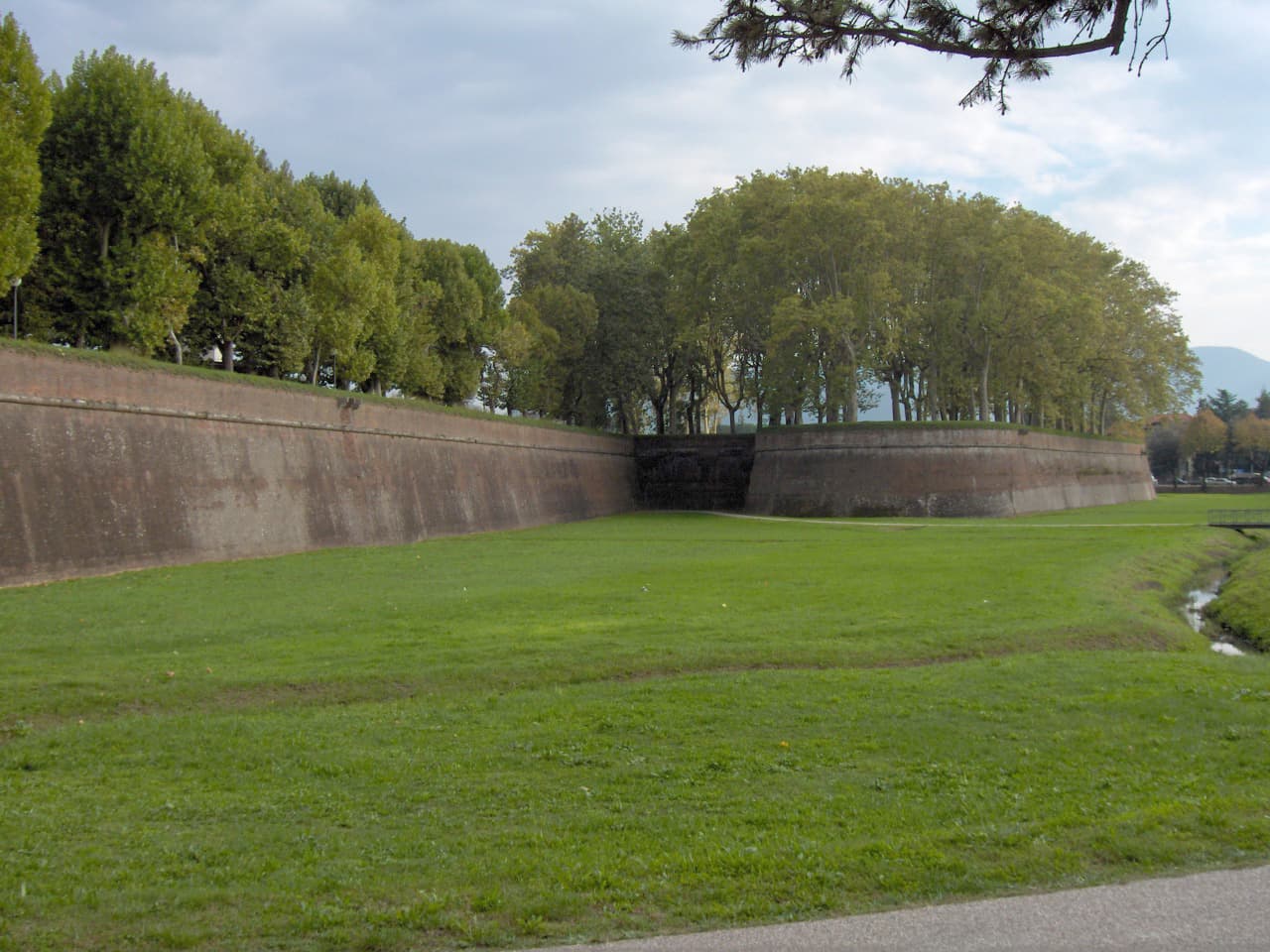 The Walls of Lucca**A complete Renaissance wall four kilometres round, turned into a public park y11 minutes walk4.7
**Because making a marble column was far harder than moving an existing one — and the practice has a name: spolia.** ✅ **The cost**: **carving a monolithic marble column** requires **a working quarry, skilled craftsmen and heavy transport over distance** — **and all of that collapsed with the western Roman Empire**. ⚠ **So early medieval Europe could no longer produce them at the same quality or in the same numbers.** ✅ **And the supply was abundant**: **abandoned Roman temples, baths and basilicas** filled Italy's cities — **full of ready-made, precisely carved columns**. **So they were taken and reused.** ✅ **The name**: reused pieces are called **spolia** — «spoils». ⚠ **The visible effect**: **you notice in these churches that the columns do not match** — differing in height, thickness, marble and capital; **so they are cut down or raised on plinths to level them**. **This is not carelessness but the reality of the available material.** ✅ **There is a symbolic dimension too**: **incorporating a pagan temple's columns into a church** read as **Christianity's triumph over what preceded it** — **so spolia is not only economy but a statement**.