
The cycle circuit
A flat 4.2 km around the city in about 25 minutes.
No machine-readable author provided. JoJan assumed (based on copyright claims). — CC BY-SA 3.0 · Francesco Tosoni — CC BY-SA 4.0 · Holger Uwe Schmitt — CC BY-SA 4.0 · Francesco Tosoni — CC BY-SA 4.0
**A complete Renaissance wall four kilometres round, turned into a public park you walk and cycle** — encircling the whole of Lucca. It was built between **1504 and 1650** in the modern bastioned manner: **low, thick walls** with eleven bastions — **a defence against artillery** rather than against ladders. ⚠ **It was never attacked**, ✅ **which is why it survives complete**: **one of the few Renaissance circuits in Europe to survive entire** — not demolished as most cities' walls were in the 19th century. ✅ **In the 19th century its top was planted with trees and turned into a public promenade** — **so it became a raised linear park**, wide enough for a footpath and a cycle track, **shaded by a double row of plane trees**. ✅ **A full circuit is 4.2 km**, with the city on one side and the countryside on the other.
A flat 4.2 km around the city in about 25 minutes.
A double row of trees shading the whole circuit.
Eleven projecting bastions, now green spaces.
Mura Urbane, 55100 Lucca, Italy
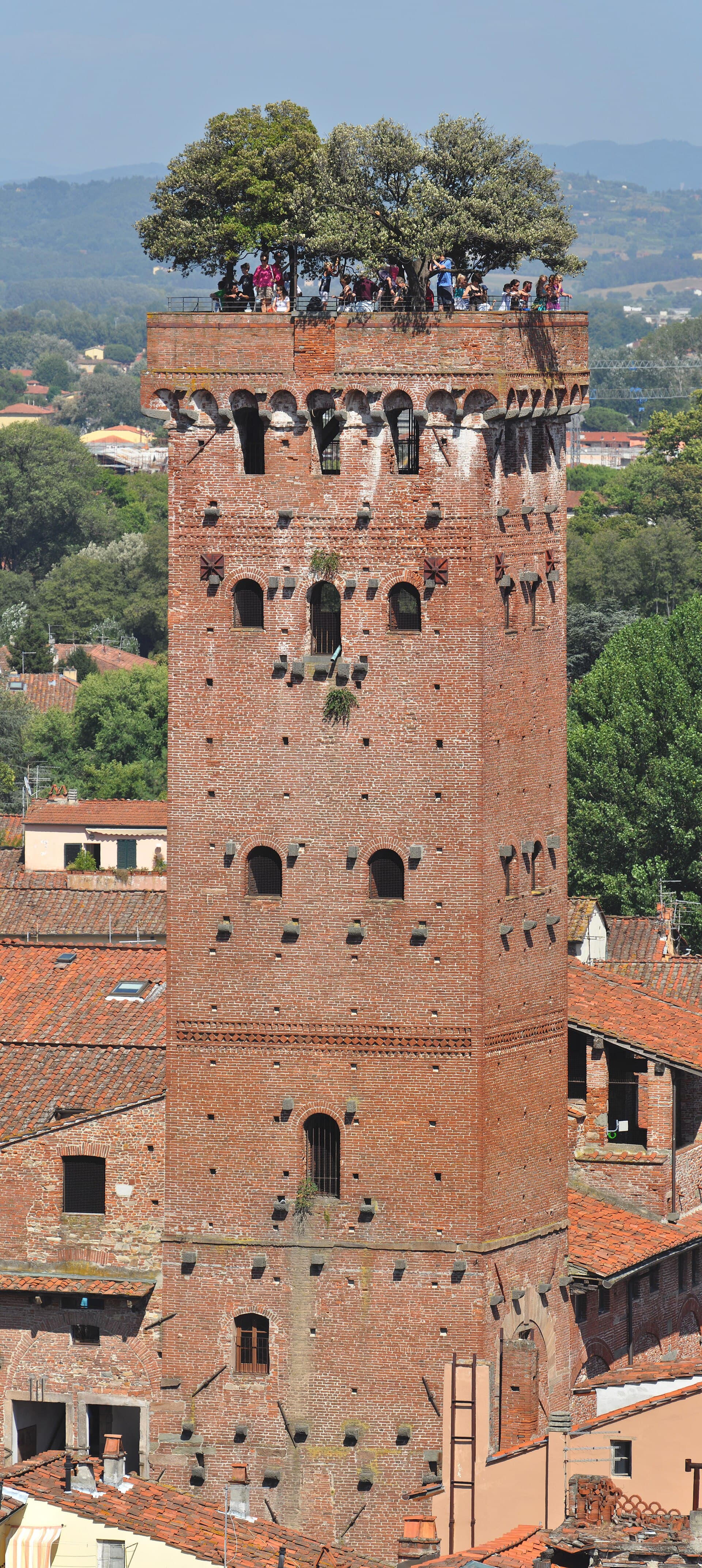 The Guinigi Tower**A medieval tower with seven full-grown oak trees on its roof** — in the middle8 minutes walk4.5
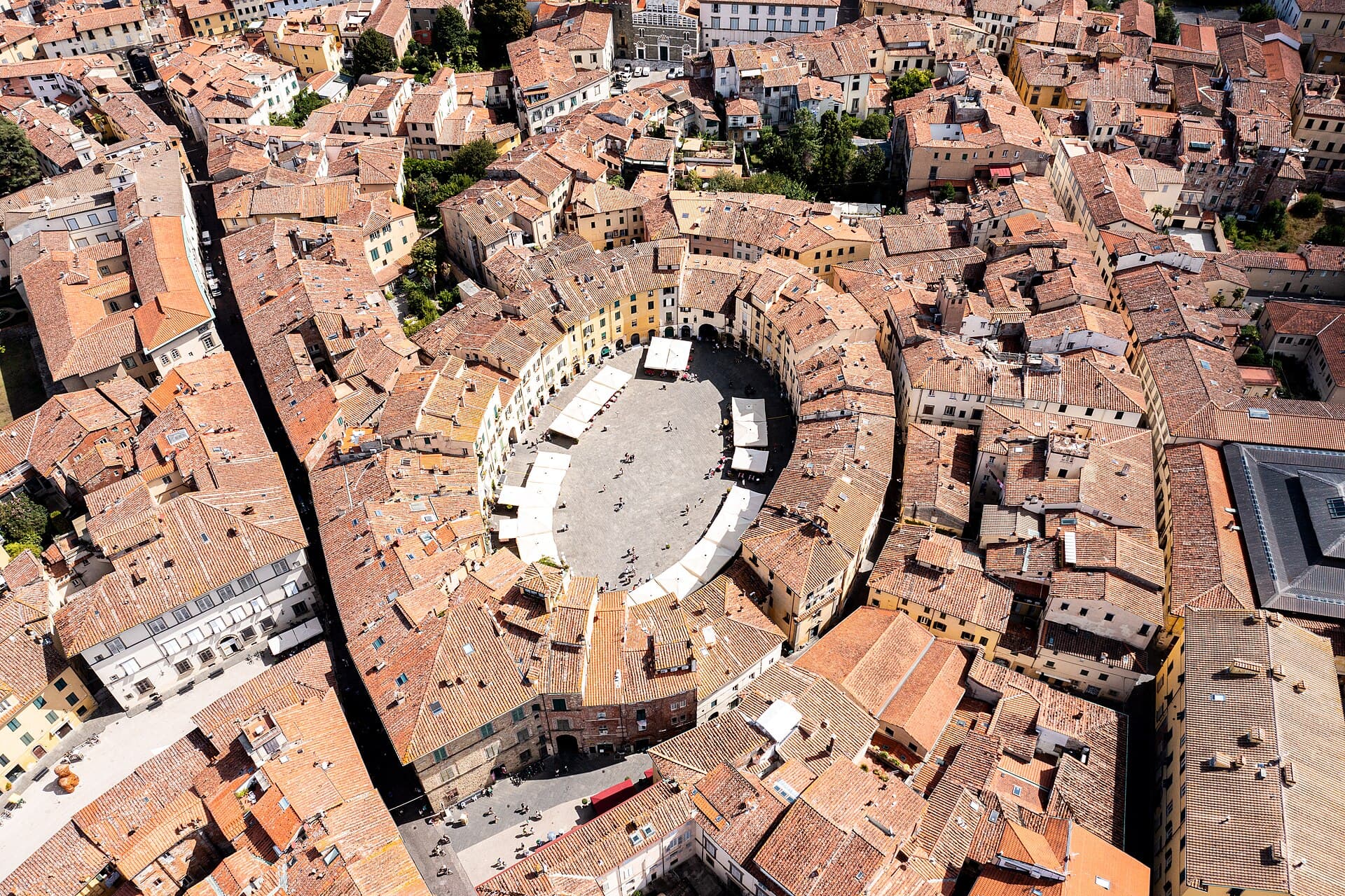 Piazza dell'Anfiteatro**A completely enclosed oval square whose shape is a Roman amphitheatre, with ho9 minutes walk4.5
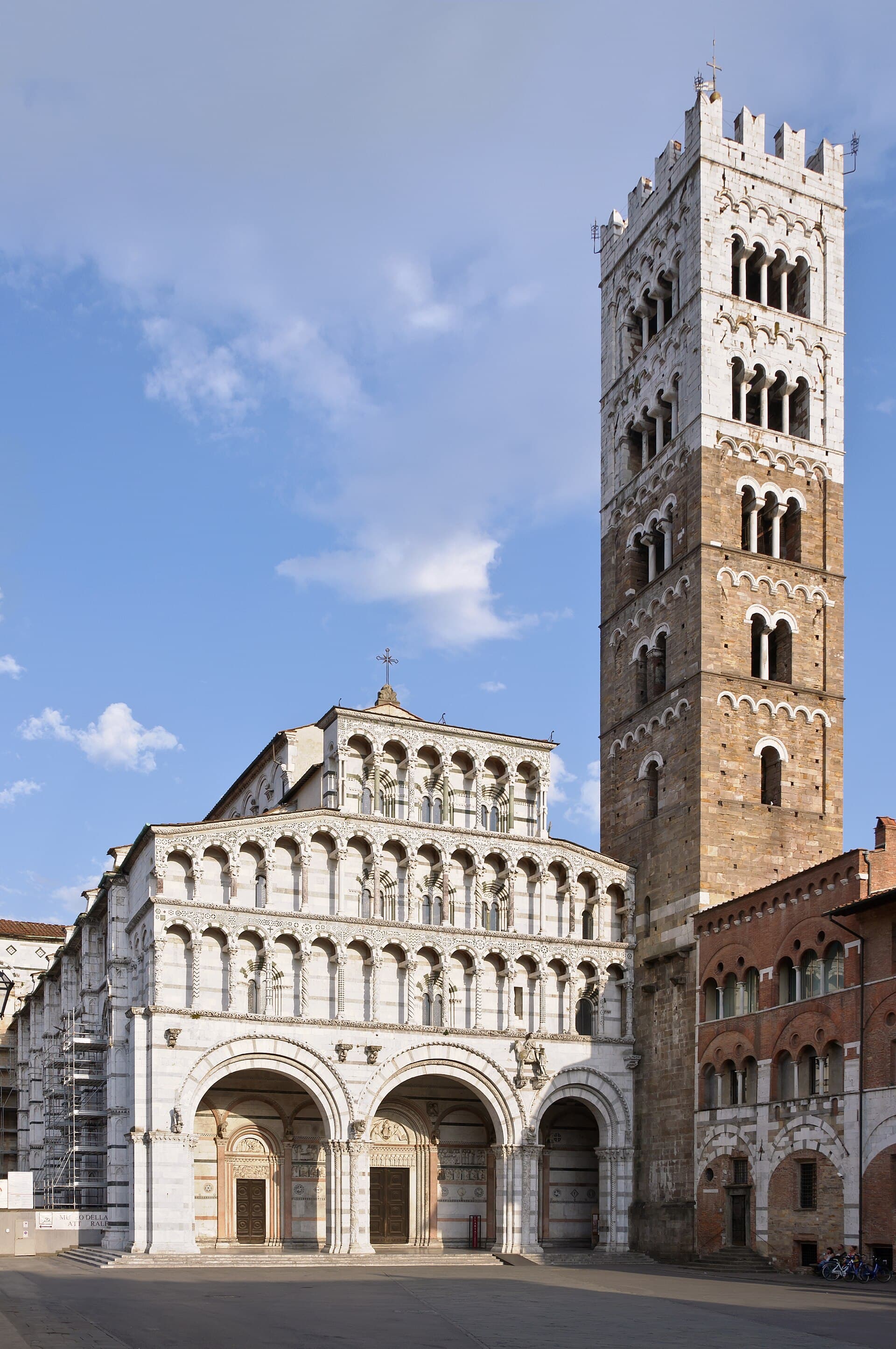 San Martino Cathedral**A cathedral whose façade is deliberately asymmetric because the bell tower was10 minutes walk4.5
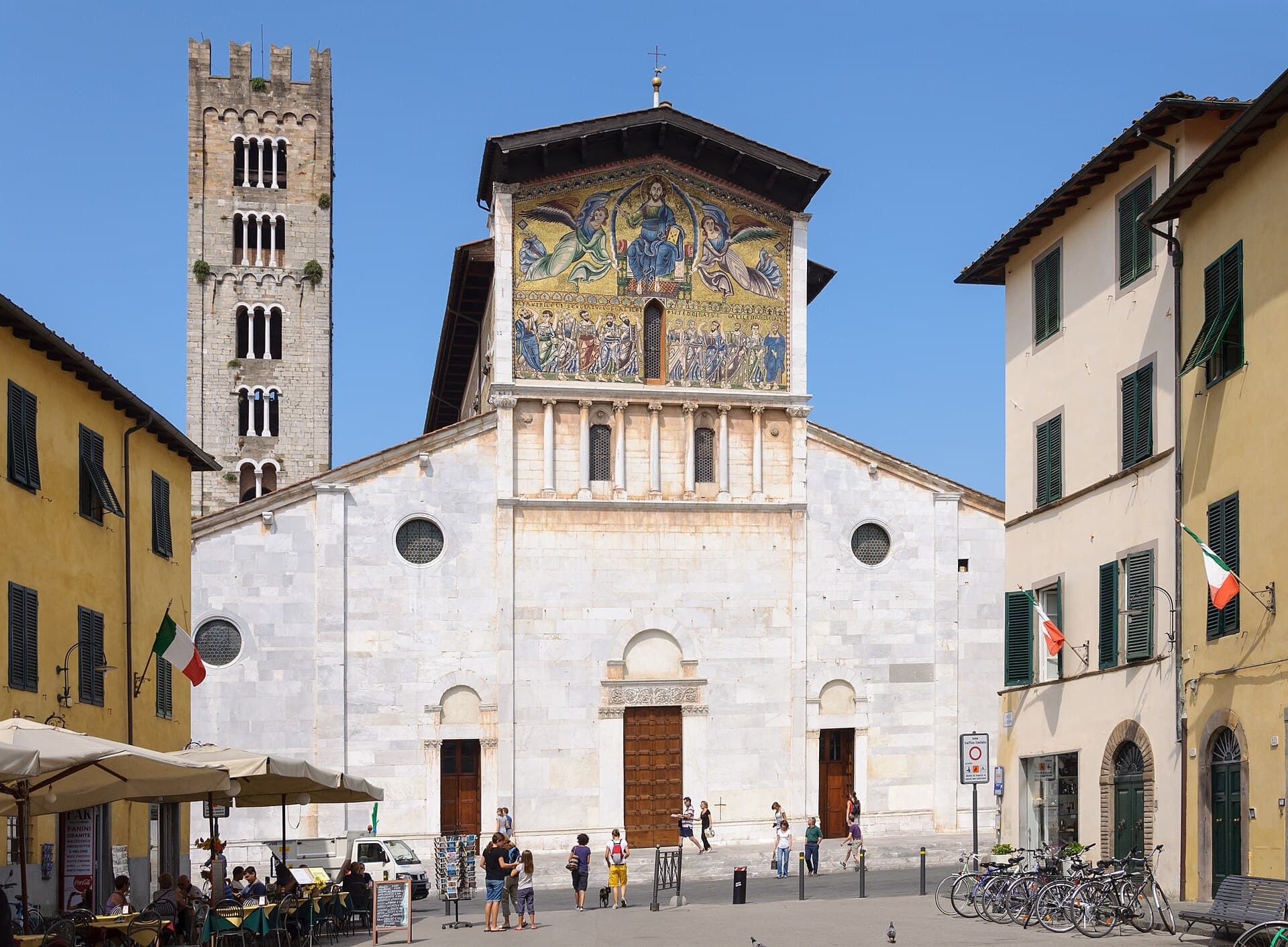 Basilica of San Frediano**A church with an enormous gold mosaic on its front that catches fire in the af11 minutes walk4.6
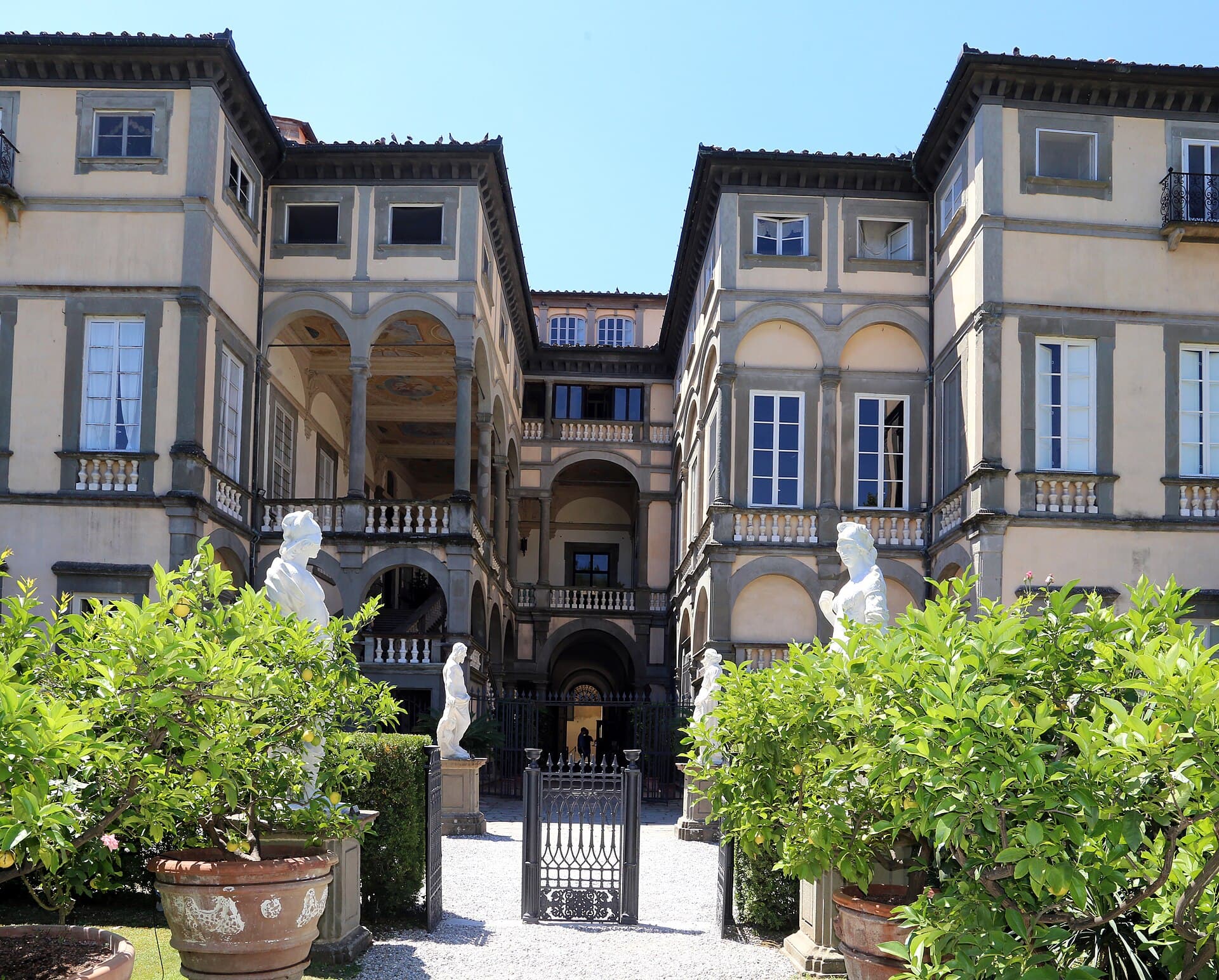 Palazzo Pfanner**A 17th-century palace with a statue-lined Baroque garden, visible free from th12 minutes walk4.5
**Because it was never used in war, and then because the city turned it into a park instead of pulling it down.** ✅ **First — it was never attacked**: the wall was built between 1504 and 1650 in the **modern bastioned manner** — low, thick and sloped to absorb artillery. ⚠ **But Lucca kept its independence by political manoeuvre and payment rather than fighting** — **so the wall was never besieged or bombarded**, **and no part of it was destroyed in war**. ✅ **Second — a 19th-century decision**: most European cities demolished their walls in that century because they **had become militarily useless and were strangling urban growth** — **and turned them into ring roads** (as Vienna did). ⚠ **Lucca chose otherwise**: **the top was planted with trees under Maria Luisa di Borbone** and turned into a **public promenade** — **so it acquired a new civic use instead of becoming an obstacle**. ✅ **That is the essential point**: **a structure that finds a new function survives; one that does not is demolished**. ✅ **The result today**: **a 4.2 km raised park** the city uses daily — for running, cycling and family walks, **not only for visitors**.