
The Justinian panel
The emperor and his court in gold on the sanctuary wall.
José Luiz — CC BY-SA 4.0 · Rabe! — CC BY-SA 4.0 · Petar Milošević, edited by MenkinAlRire — CC BY-SA 4.0 · shakko — CC BY-SA 4.0
**The greatest surviving Byzantine mosaic outside Istanbul — with Justinian and Theodora facing each other across the sanctuary** — Ravenna's most important building and a World Heritage site. It was completed in **547**, ⚠ **and it is not a Latin-plan church**: **octagonal** with a central dome and an ambulatory — **a Constantinopolitan design** rather than a western Roman one. ✅ **Its mosaics are almost complete**: the **sanctuary vault** with Christ on the globe, **prophets and apostles**, and **Old Testament scenes**. ⚠ **The famous pair face each other**: **the Emperor Justinian** and his court on one wall, **the Empress Theodora** and hers opposite — **and neither ever set foot in Ravenna**. **The panels are a political statement**: a declaration that the empire is present here. ✅ **The colours have not faded** in fifteen hundred years.
The emperor and his court in gold on the sanctuary wall.
The empress and her women on the facing wall.
Christ on the globe between angels, among flowers and birds.
Via San Vitale 17, 48121 Ravenna, Italy
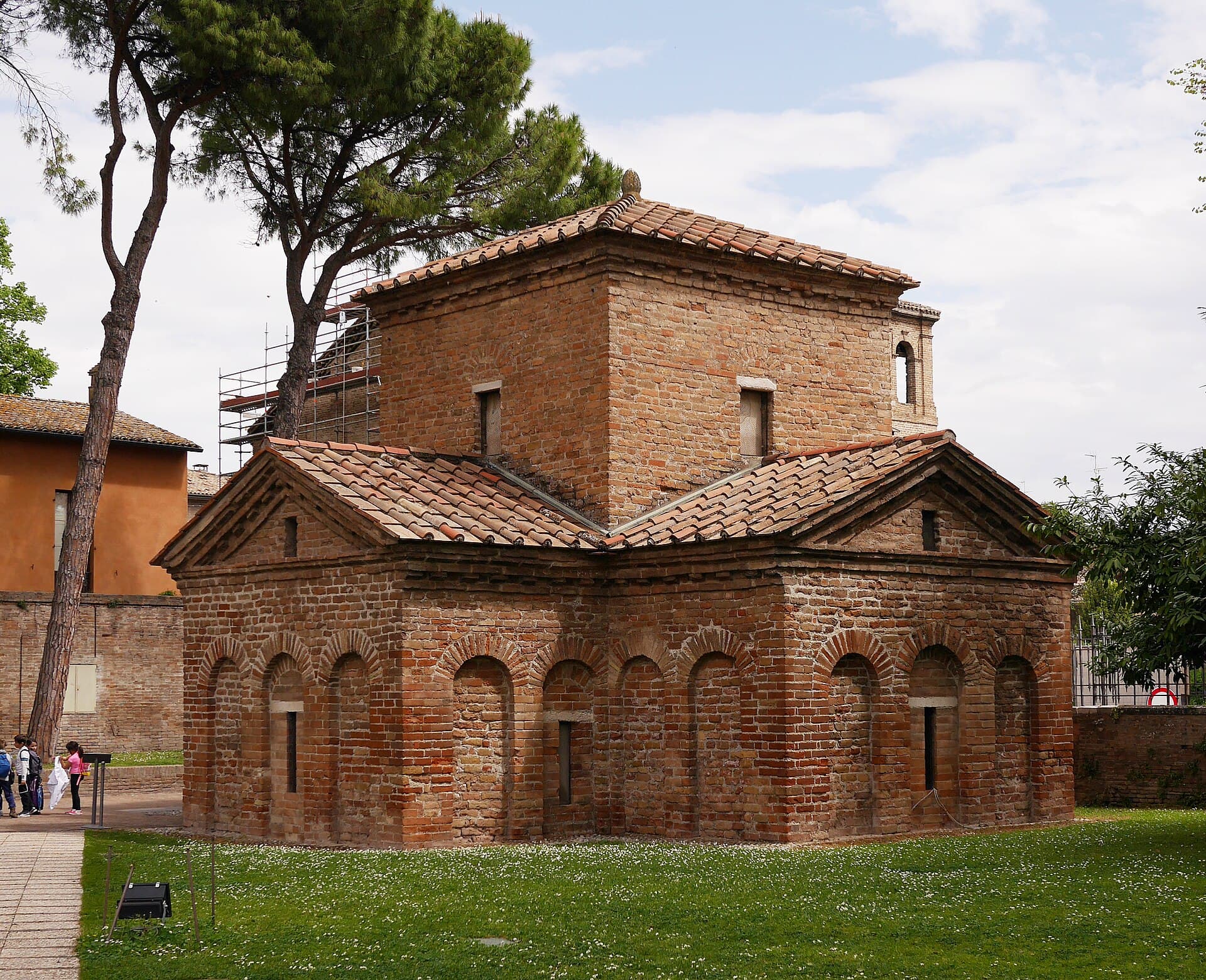 Mausoleum of Galla Placidia**A small room whose vault is a night sky of eight hundred gold stars on deep bl1 minute walk4.7
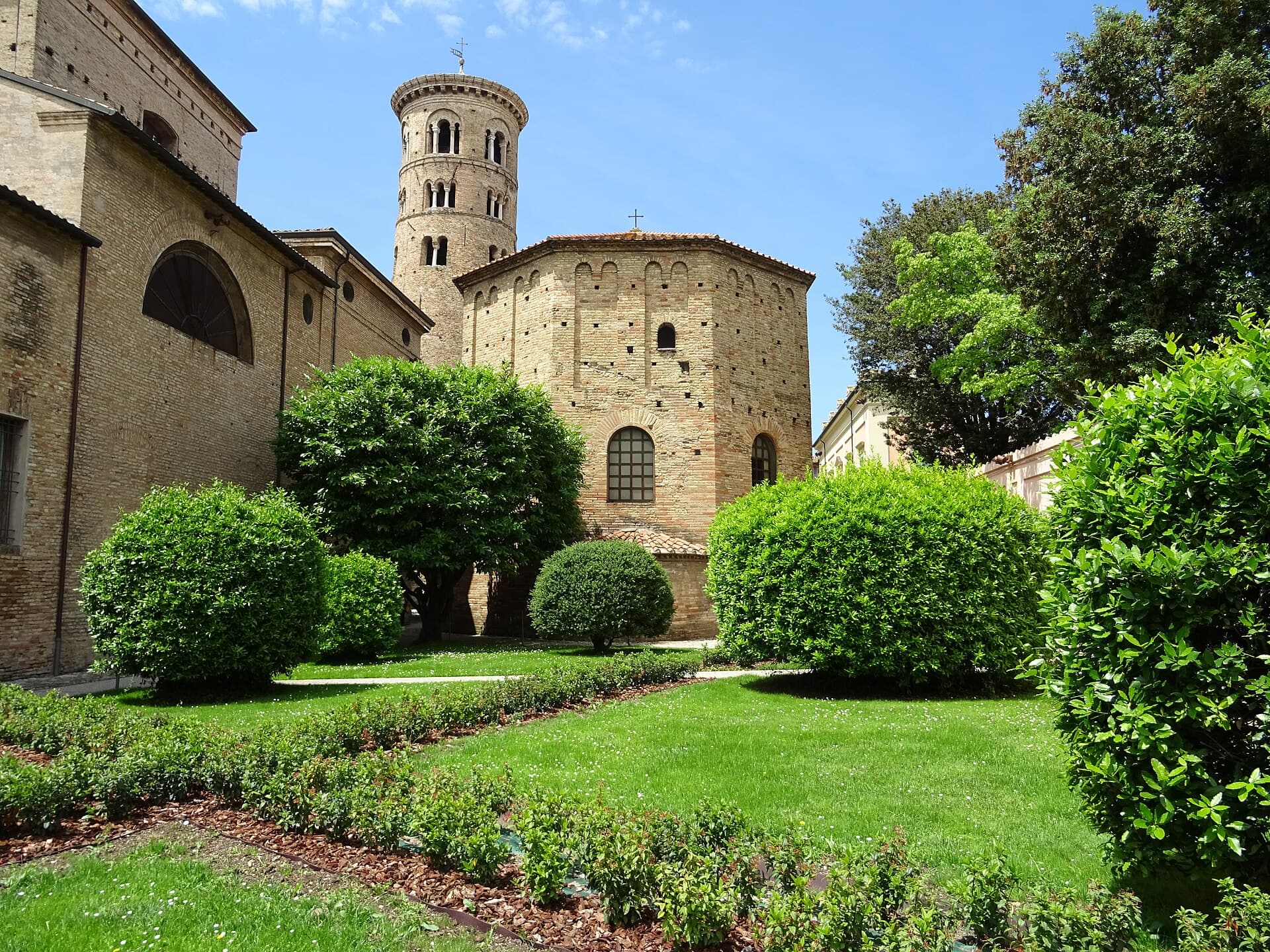 The Neonian Baptistery**A small octagonal building whose dome is a mosaic of Christ's baptism ringed b7 minutes walk4.7
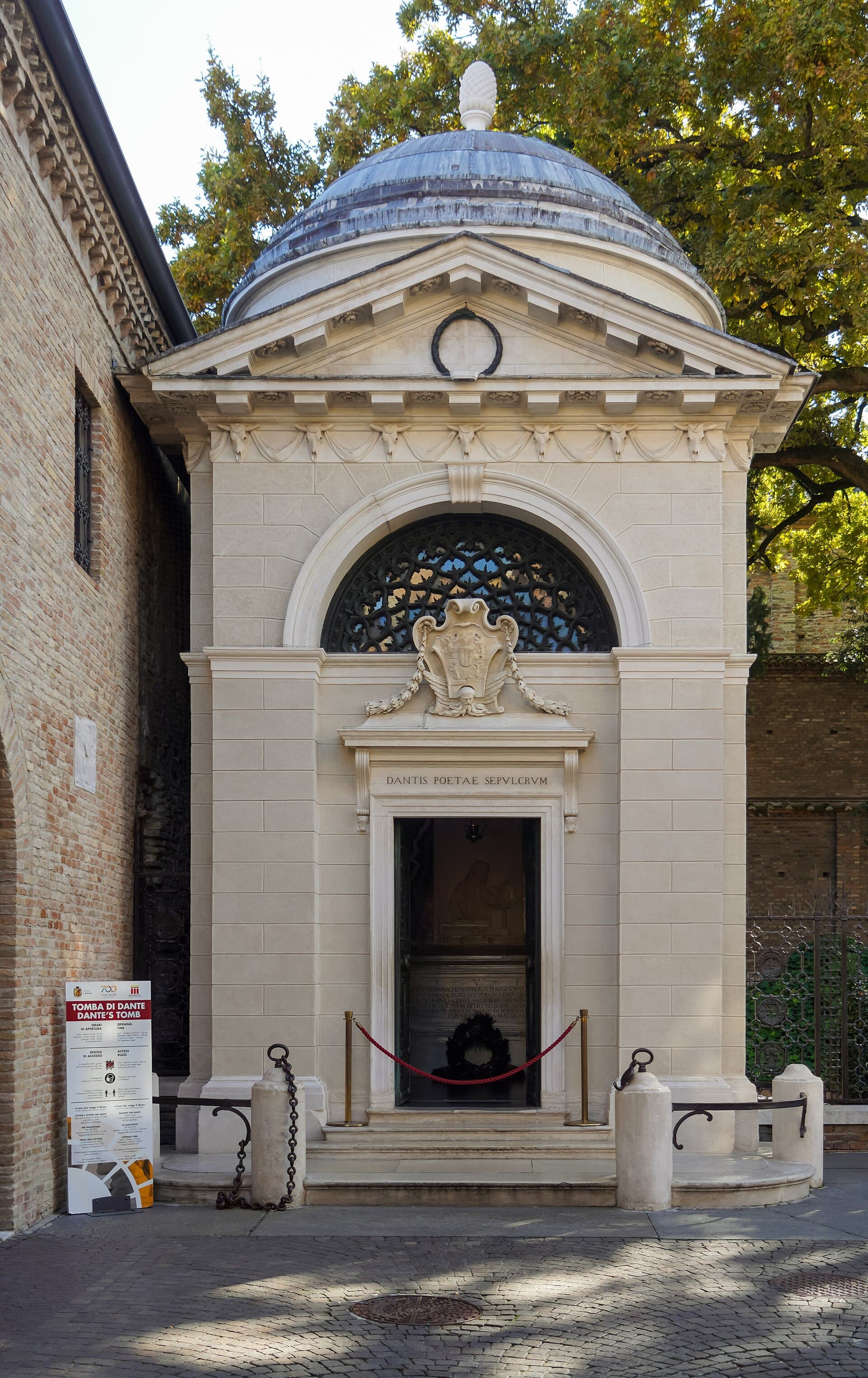 Dante's Tomb**The tomb of Italy's greatest poet in the city Florence exiled him to — and Flo8 minutes walk4.6
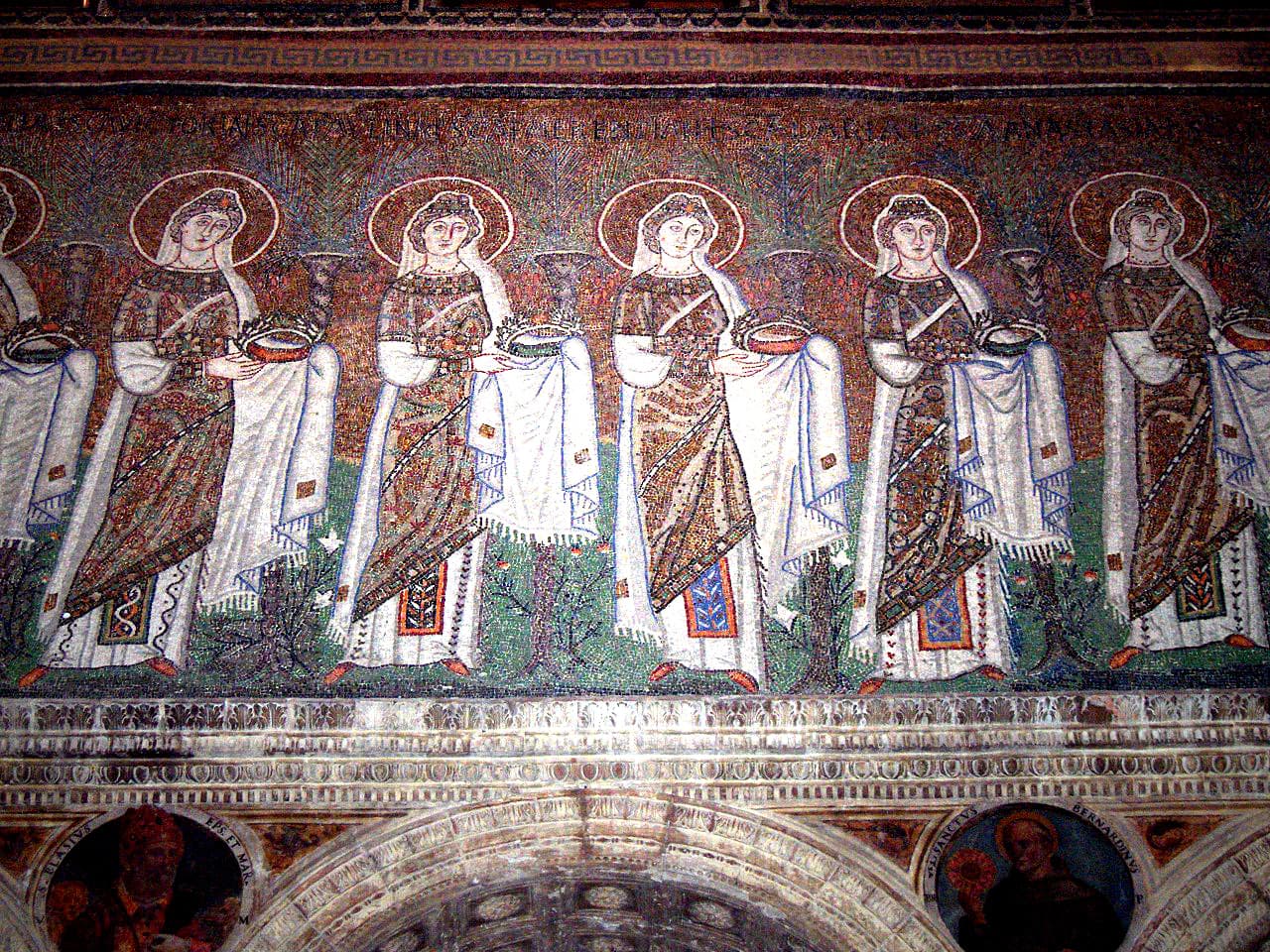 Sant'Apollinare Nuovo**Two bands of mosaic running the length of the church — a procession of saints 10 minutes walk4.6
**Because Ravenna became the empire's capital and then Byzantium's capital in Italy — and Rome was neither.** ✅ **Step one — 402**: the emperor **Honorius** moved the capital of the western Roman Empire **from Milan to Ravenna**. ⚠ **The reason was purely military**: **Ravenna was surrounded by marshes** an army could barely cross, **and had a port (Classe)** allowing escape or supply by sea. **Rome was exposed, and it fell in 410.** ✅ **Step two — the Goths**: after the western empire fell, **Theodoric the Goth** ruled from Ravenna and built there too. ✅ **Step three — 540**: **the Byzantine emperor Justinian reconquered Italy**, **and Ravenna became the seat of the Byzantine governor (the exarch)** — **Byzantium's western capital for two centuries**. ⚠ **This is when the mosaics were made**: with imperial money, **by artists and with materials from Constantinople** — **gilded glass and imported marble**. ✅ **Why they survived**: **Ravenna declined afterwards and never mattered again** — ⚠ **so nothing was torn down to build something grander**, as happened repeatedly in Rome. **Poverty preserved it.**
**An empress who rose from the bottom of society to the throne — and her panel places her level with the emperor.** ✅ **Who she was**: **Theodora** (about 500–548), wife of the emperor **Justinian**. ⚠ **Her origins were extraordinary**: **the daughter of a bear-keeper in the circus**, **and an actress by profession** — **then among the lowest social ranks**, ⚠ **so much so that the law forbade a patrician to marry an actress**, **and the law was changed specifically** to allow the marriage. ✅ **Her influence was real**: she is credited with the decisive part in the **Nika riots of 532**, when Justinian was on the point of fleeing the capital **and she persuaded him to stay** — the account has her saying that purple makes a fine shroud. **He stayed, the revolt was crushed, and his reign survived.** ✅ **She shaped legislation**: laws improving women's position in divorce and property, and protections against trafficking. ⚠ **Her panel here is a statement**: **she is placed exactly opposite Justinian**, **haloed as he is**, **and carries the chalice** as he carries the paten — **a parallel liturgical role**; **an unprecedented position for a woman** in imperial imagery.