
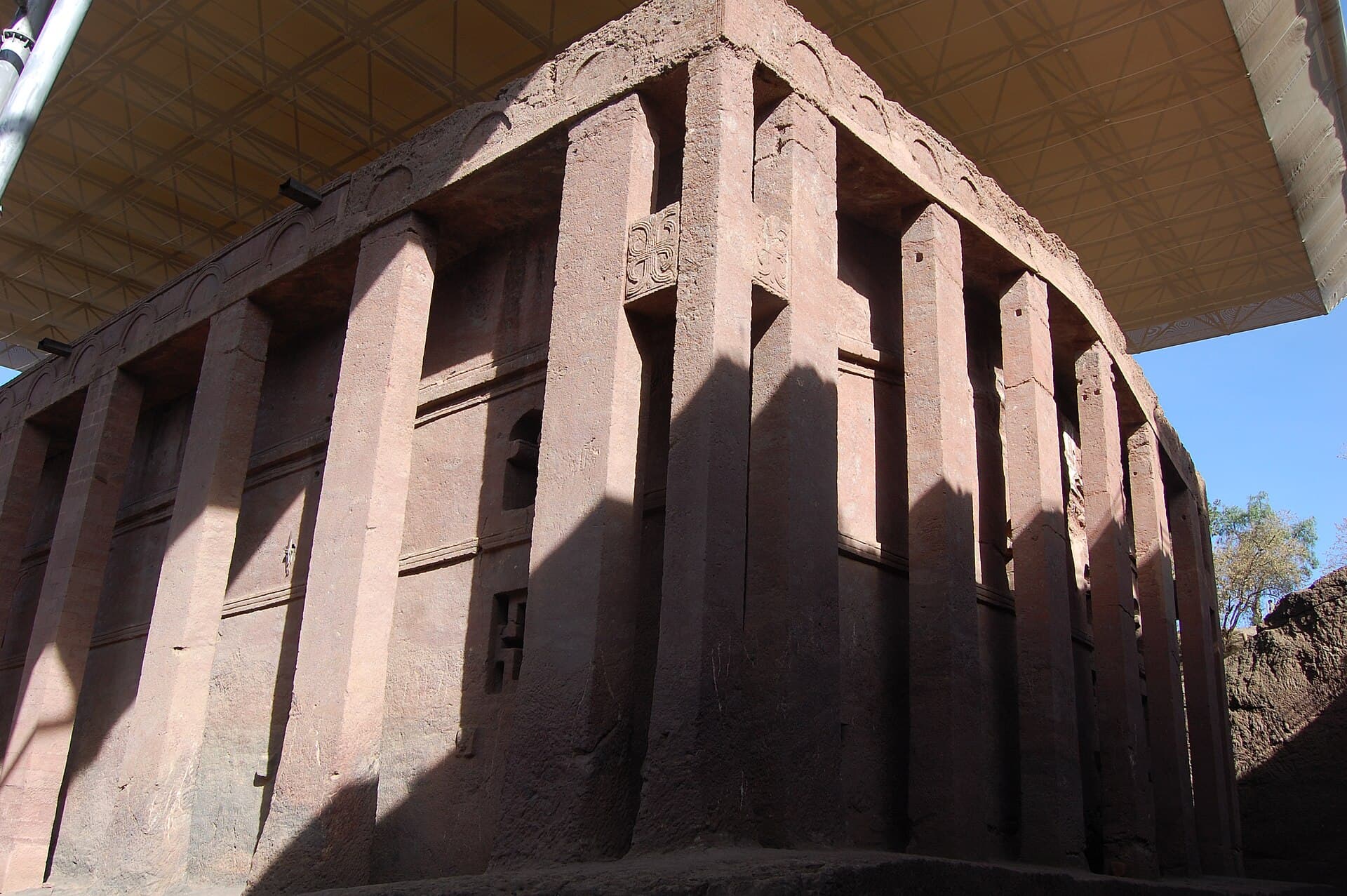
Banded walls
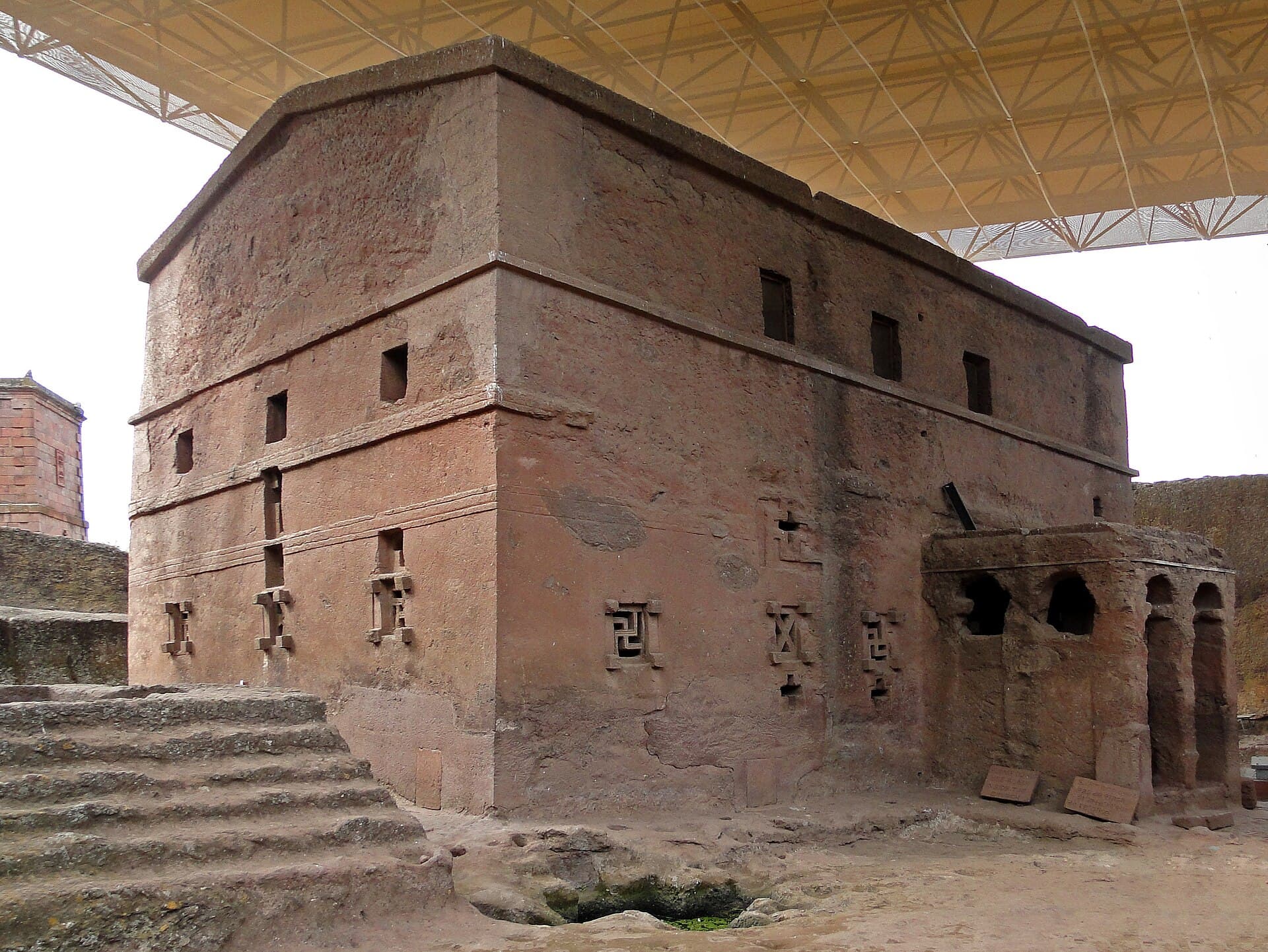
Wood-and-stone style.
BluesyPete — CC BY-SA 3.0 · Sailko — CC BY 3.0 · Radosław Botev — CC BY 3.0 pl · Radosław Botev — CC BY 3.0 pl · Sailko — CC BY 3.0
Bete Amanuel is a church carved from a single block of red rock in Lalibela and one of its most finely cut. It stands in a deep pit, its walls divided by projecting and recessed horizontal bands, raised on a stepped base. It is the second largest of the Lalibela monolithic churches. Its facade is a clear example of the Aksumite style: the projecting and recessed bands imitate the layers of wood and stone in the old buildings of Axum. Some scholars think it may have been a royal chapel. It is part of the Lalibela churches UNESCO World Heritage Site. You walk around it in the trench to see the windows carved on three levels, each level with a different window style, and the whole church can be seen from the rim of the pit. Basins and openings are cut into the rock of the courtyard. It is about 250 m in a straight line from central Lalibela, in the eastern group of churches. Take off your shoes to enter and watch the uneven steps. The UK Foreign Office currently advises against all travel to the Amhara region, and access may not be possible, so check official guidance before making any plans.
Wood-and-stone style.
Each one different.
Under the church.
Eastern group of rock-hewn churches, Lalibela, Amhara region
 Bete Medhane AlemBete Medhane Alem, the «House of the Saviour of the World», is a whole church ca4 minutes walk
 Bete MaryamBete Maryam is a small church carved from a single block of rock inside a sunken4 minutes walk
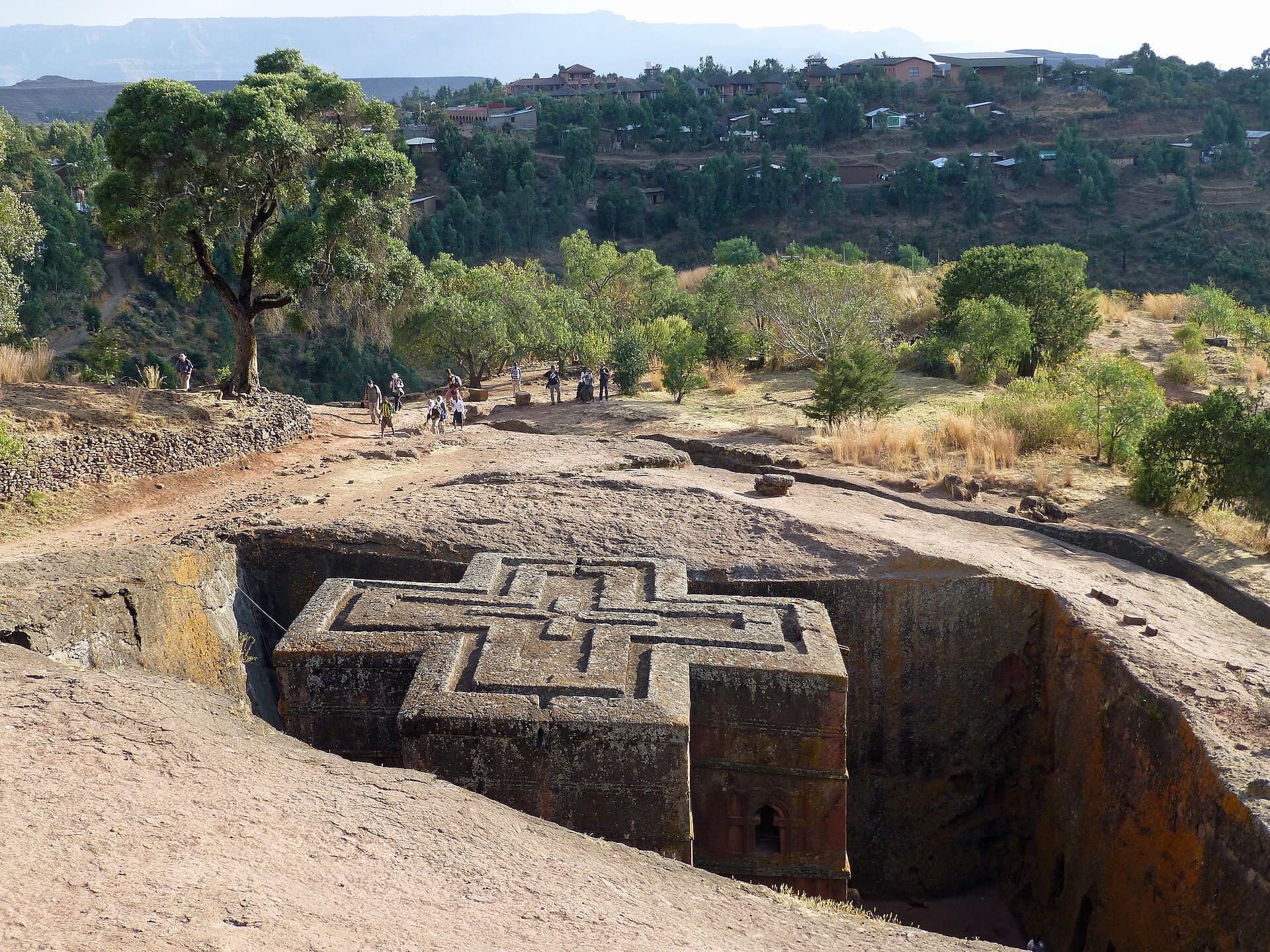 Church of Saint GeorgeThe Church of Saint George, known as Bete Giyorgis, is one of eleven rock-hewn c6 minutes walk
In the eastern group of churches.
Usually the Lalibela churches ticket.