
Rows of pillars
Around the walls.
Katie Hunt from St Albans, UK — CC BY 2.0 · Bernard Gagnon — CC BY-SA 3.0 · CC BY 2.0 · MarcD. — CC BY-SA 3.0 · Bernard Gagnon — CC BY-SA 3.0
Bete Medhane Alem, the «House of the Saviour of the World», is a whole church carved from a single block of red volcanic rock in Lalibela. It stands in a deep trench cut around it, ringed by rows of square pillars and topped by a gabled roof shaped from the same stone. It is the largest monolithic church in the world, about 33.5 m long, 23.5 m wide and 11 m high. Thirty-four pillars surround it outside, many of them replacements for the originals. The Lalibela churches are traditionally credited to King Lalibela of the Zagwe dynasty in the late 12th and early 13th centuries and are a UNESCO World Heritage Site. This church keeps the famous Lalibela Cross. You walk down into the trench and around the walls to see the pillars and carved windows, then carry on through a rock passage to neighbouring Bete Maryam. A modern protective roof on metal poles stands over the church. It is about 500 m in a straight line from central Lalibela. Take off your shoes to enter, keep quiet and do not photograph worshippers without permission. The UK Foreign Office currently advises against all travel to the Amhara region, and access may not be possible, so check official guidance before making any plans.
Around the walls.
Around the church.
To Bete Maryam.
Northern group of rock-hewn churches, Lalibela, Amhara region
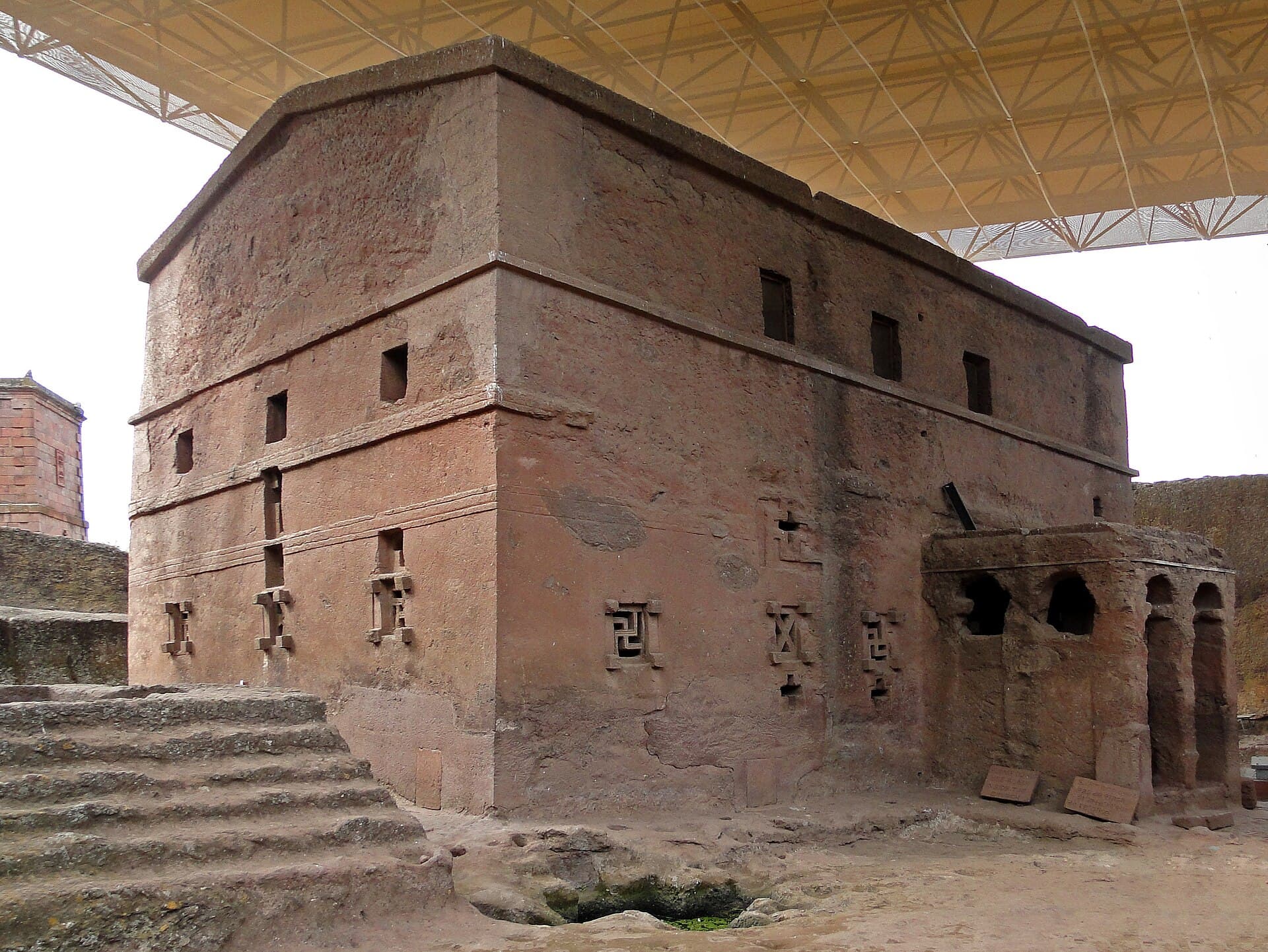 Bete MaryamBete Maryam is a small church carved from a single block of rock inside a sunken1 minute walk
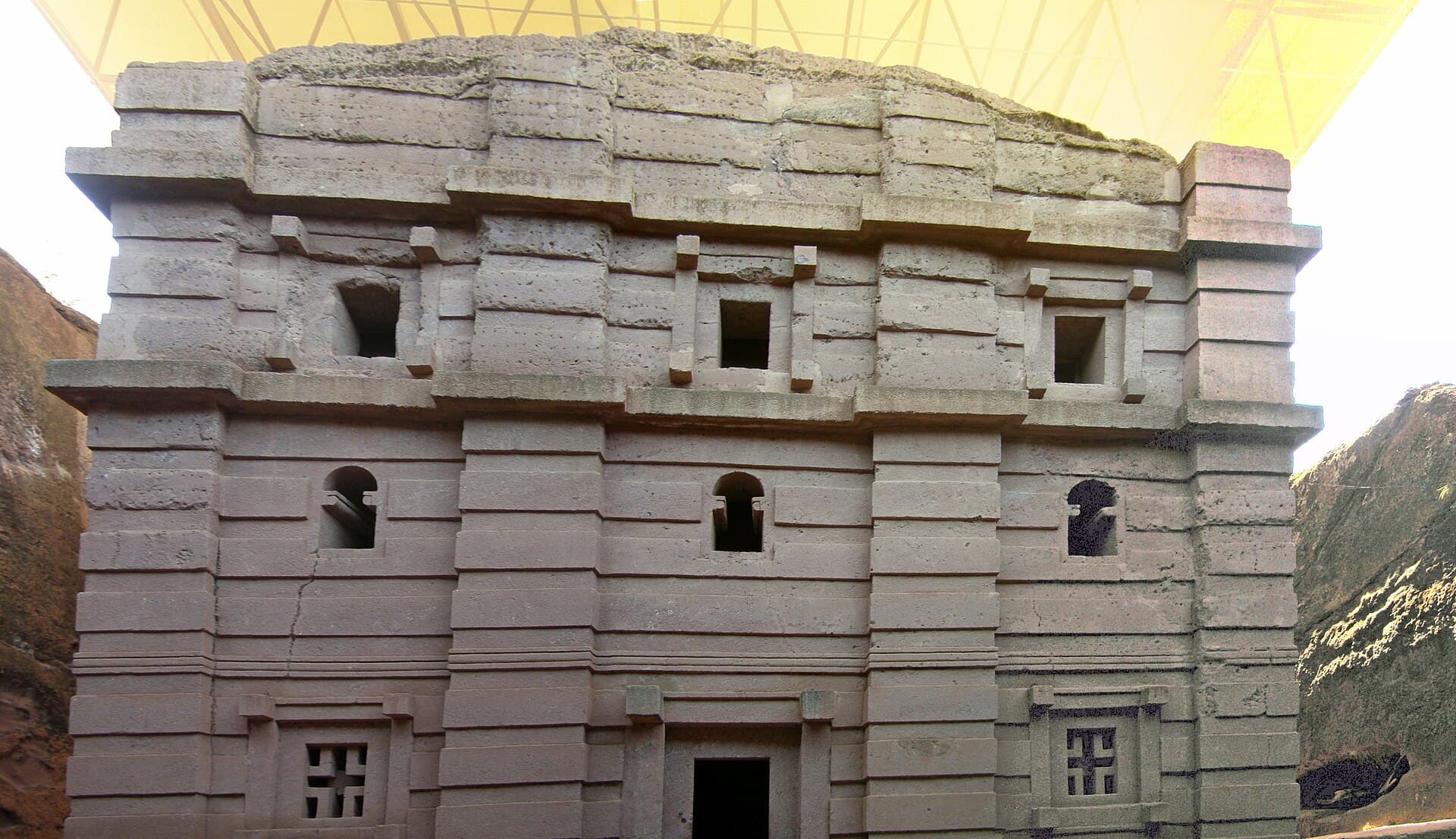 Bete AmanuelBete Amanuel is a church carved from a single block of red rock in Lalibela and 4 minutes walk
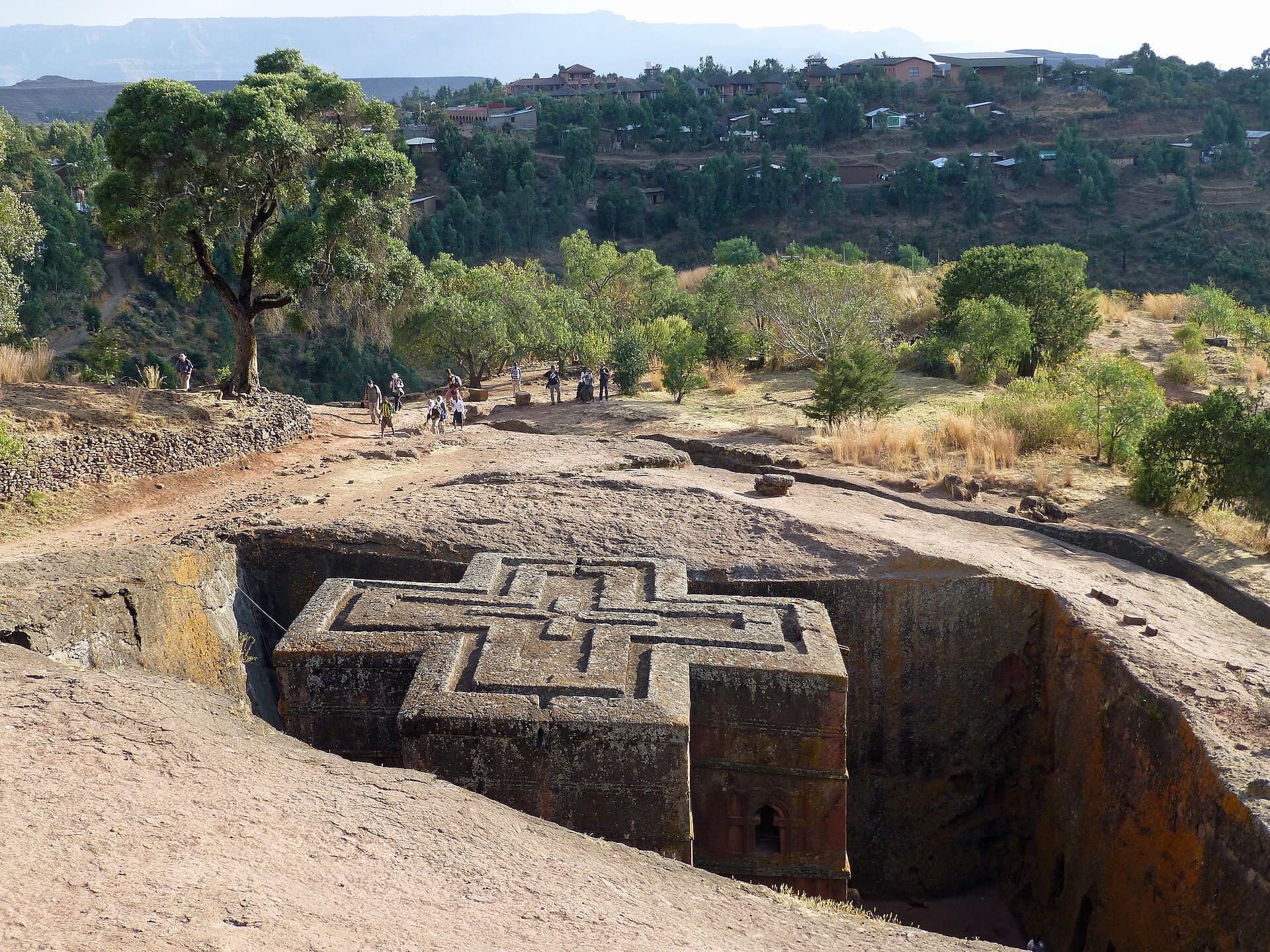 Church of Saint GeorgeThe Church of Saint George, known as Bete Giyorgis, is one of eleven rock-hewn c5 minutes walk
One ticket usually covers the Lalibela churches.
Yes, to enter the church.