The coloured facades
Blue and yellow.
Joehawkins — CC BY-SA 4.0 · Joehawkins — CC BY-SA 4.0 · Joehawkins — CC BY-SA 4.0 · Laércia Valeriana Insali — CC BY 4.0 · (WT-en) Pis bus at English Wikivoyage — Public domain
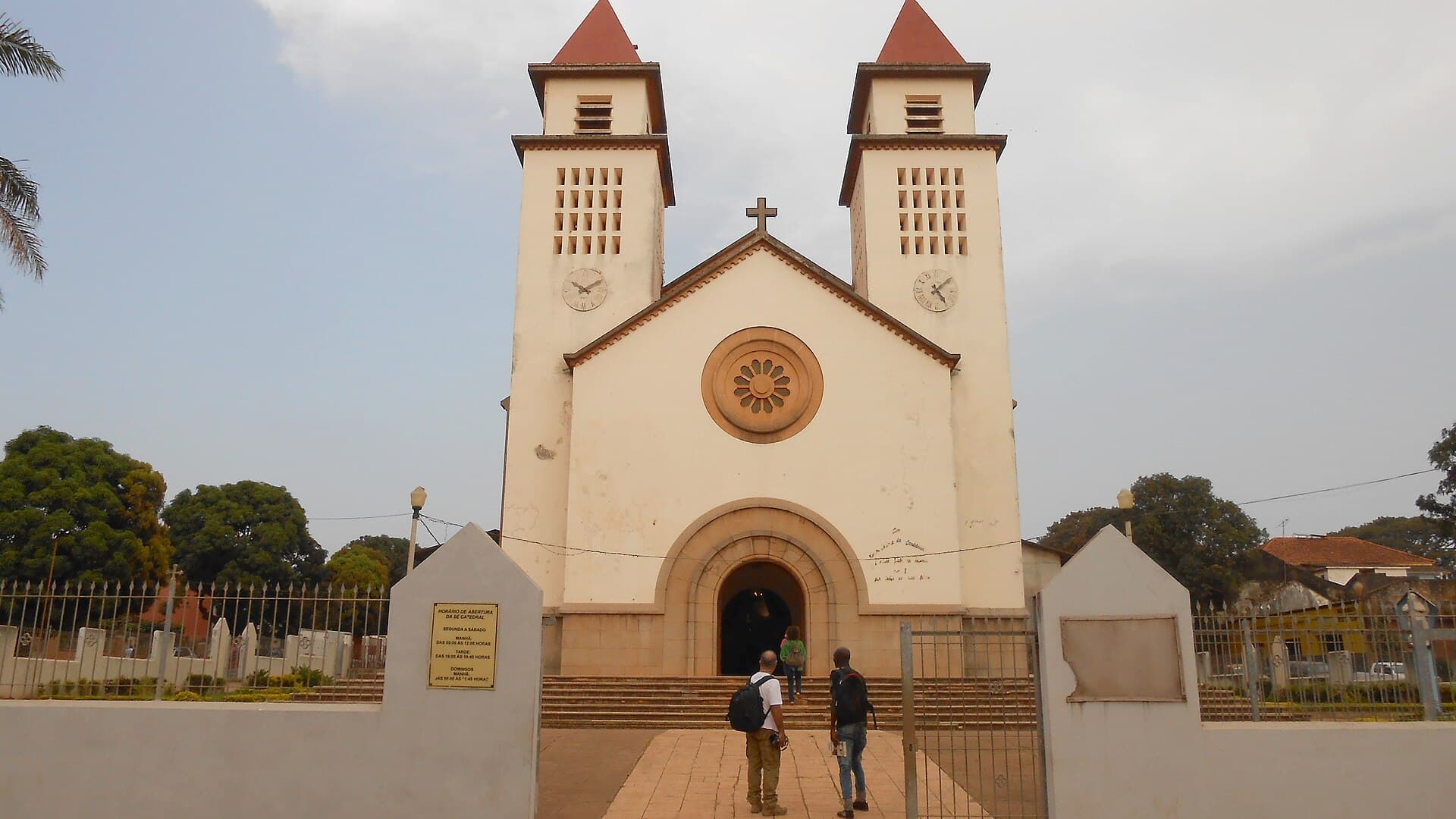
Bissau Velho, Old Bissau, is the historic quarter of Guinea-Bissau's capital, near the port on the Geba River estuary. It has houses and shops from the Portuguese era with wooden balconies and coloured facades, some restored and many crumbling. It is the best place to get a feel for the old city on foot. Before the Europeans and up to the early 20th century, Bissau island was a kingdom ruled by the Papel people. A Portuguese trading post grew up around the fort and port and became the core of the city. Bissau became the capital and is today the country's largest city and main port, with about half a million people. You walk narrow streets between two-storey buildings in blue, yellow and pink, with iron and wooden balconies and tall windows. Some walls carry old patterned tiles. You pass an old hotel with a big sign, small shops on the ground floor and houses with worn arches. At the end of the streets the river comes into view. Bissau Cathedral is about 300 metres away in a straight line. The quarter is near official buildings, so do not photograph them. Ask people before photographing them, and watch your belongings in crowded spots.
Blue and yellow.
Wood and iron.
On the walls.
Near the port, Bissau, Guinea-Bissau
On foot, in the morning before the heat.
The cathedral and the port.