Abylai Khan Glade
And its stele.
Intero Tillen — CC BY-SA 4.0 · Talgautb — CC BY-SA 4.0 · Kejurim — CC BY-SA 4.0 · Intero Tillen — CC BY-SA 4.0 · Tsoy AG — CC BY-SA 4.0 · Ivan ideia — CC BY-SA 4.0 · Воробьев Кирилл Романович — CC BY-SA 4.0 · Ivan ideia — CC BY-SA 4.0
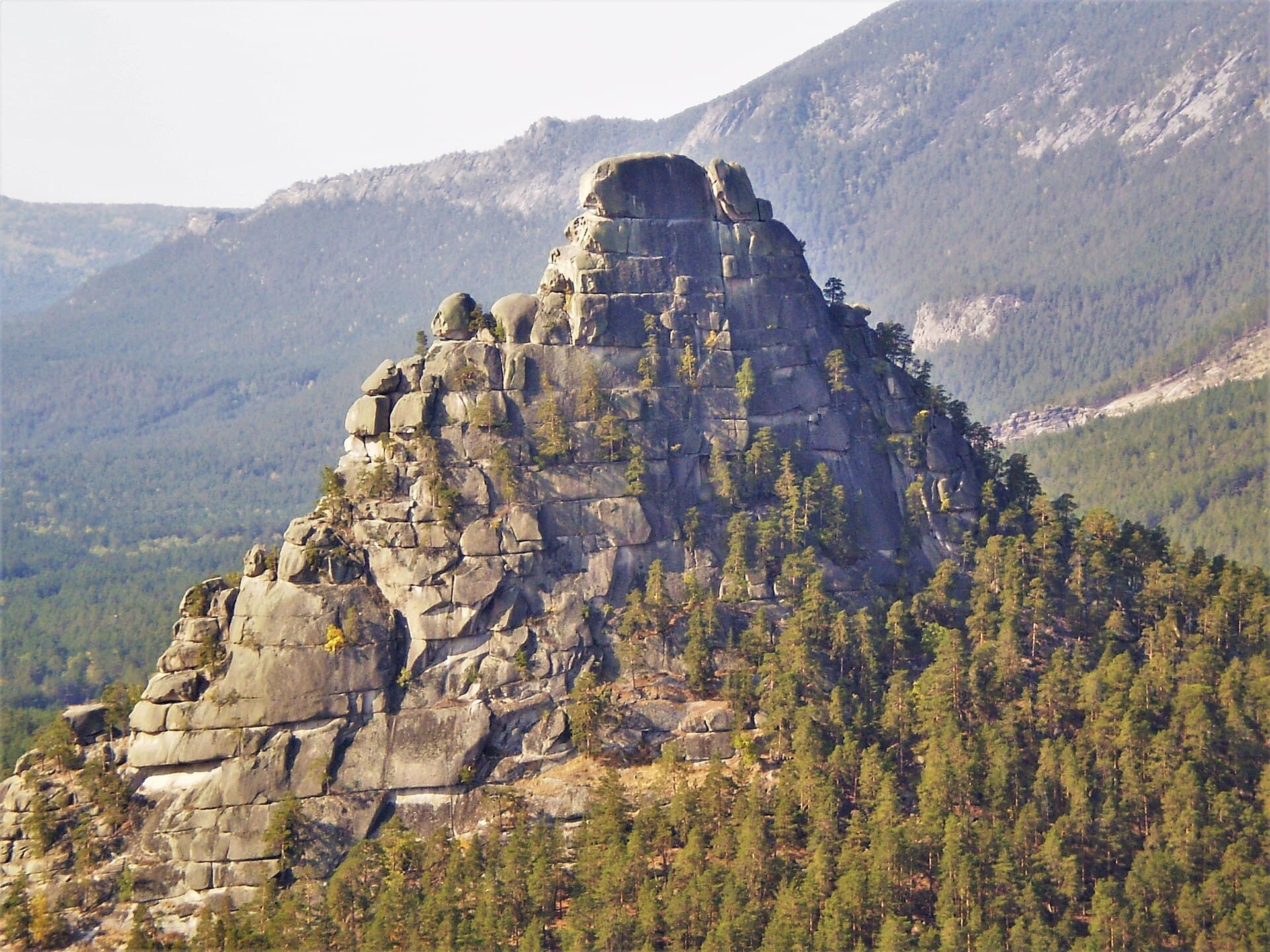
A national park covering some 130,000 hectares of forest, lakes and hills in the Kokshetau uplands of northern Kazakhstan. It began as a state forest in 1898, became a spa town in 1920, a nature reserve in 1935 and a national park in 2000. Its forests are mostly pine and birch, with some 757 plant species and 305 animal species, including deer, wild boar, lynx, wolves and many birds. Clear lakes such as Burabay, Shchuchye and Ulken Shabakty lie scattered among oddly shaped granite rocks. Among its best-known spots is Abylai Khan Glade, a broad meadow with a memorial stele facing Okzhetpes rock, where tradition says Abylai Khan was chosen as ruler. There is also Kenesary Cave, named after Kenesary Khan, Abylai Khan's grandson, and believed to have been his childhood home. Wandering the park is usually free, with small charges for cars at its checkpoints; ask on arrival. The resort town has hotels, spas and a nature museum, and the area is a favourite summer escape for people from Astana.
And its stele.
Among the rocks.
Forests.
Burabay district, Akmola region, northern Kazakhstan
A cave among the rocks named after Kenesary Khan, Abylai Khan's grandson, believed to have been his childhood home; it is one of the park's landmarks.