
The interlocking loops
Two flights curving into each other in neo-baroque and Art Nouveau lines, said to be shaped so that any fall stops at the first bend.
VikiPicture — CC BY-SA 3.0 · Another Believer — CC BY-SA 4.0 · RramazanŞahin — CC BY 4.0 · Yair Haklai — CC BY-SA 4.0
A rich banker, so the story goes, built a staircase so his children could not tumble all the way down on the way to school, and a century and a half later it is one of the most photographed corners of Galata. That is the Camondo Stairs in one sentence: two interlocking flights curling into loops between Bankalar Caddesi, the Ottoman banking street at the bottom, and the lanes climbing towards Galata Tower. They were paid for in the second half of the nineteenth century, usually dated to around 1870-1880, by Abraham Salomon Camondo, head of a Sephardi Jewish family that had come from Venice and ranked among the leading bankers of the Ottoman Empire. He lived in the street above and worked in the street below, and the story goes that the repeated curves were drawn deliberately so that any fall would stop at the first bend. The architecture is an odd, lovely hybrid of neo-baroque lines and early Art Nouveau, in pale stone that stands out against the heavy bank facades along the street. What turned a shortcut into a landmark was a photograph by Henri Cartier-Bresson in 1964, taken on an Istanbul trip on which the Turkish photographer Ara Güler is said to have shown him round the city; photographers have been standing in the same spot ever since. These days it is wedding shoots and Instagram accounts, and on a weekend you may queue for an empty frame. Keep expectations in proportion: the stairs are short, the whole visit is ten to fifteen minutes, and this is a stop on a Galata walk rather than a destination. The good news is that it sits on the route you would take anyway: two or three minutes on foot from the Karaköy stop on tram T1 to Bankalar Caddesi, then a steep five-minute climb over the stairs to the tower. The gradient rules out pushchairs, but walking children enjoy going up one side and down the other. Across the street stands the old Imperial Ottoman Bank, now Salt Galata, a free library and exhibition space open Tuesday to Sunday and closed on Monday, with a small bank museum, a handsome reading room and a cafe. Combine the two and you get a real half hour of Istanbul's financial history before carrying on uphill. The best light and the emptiest steps come early in the morning, before the neighbourhood wakes and before the August heat sets in.
Two flights curving into each other in neo-baroque and Art Nouveau lines, said to be shaped so that any fall stops at the first bend.
The 1964 photograph is what made the place famous, and the same viewpoint is still yours for free.
The old Ottoman Bank is now a free library and exhibition space with a small banking museum and cafe that rounds out the short visit.
Bankalar Caddesi, Karaköy, Beyoğlu
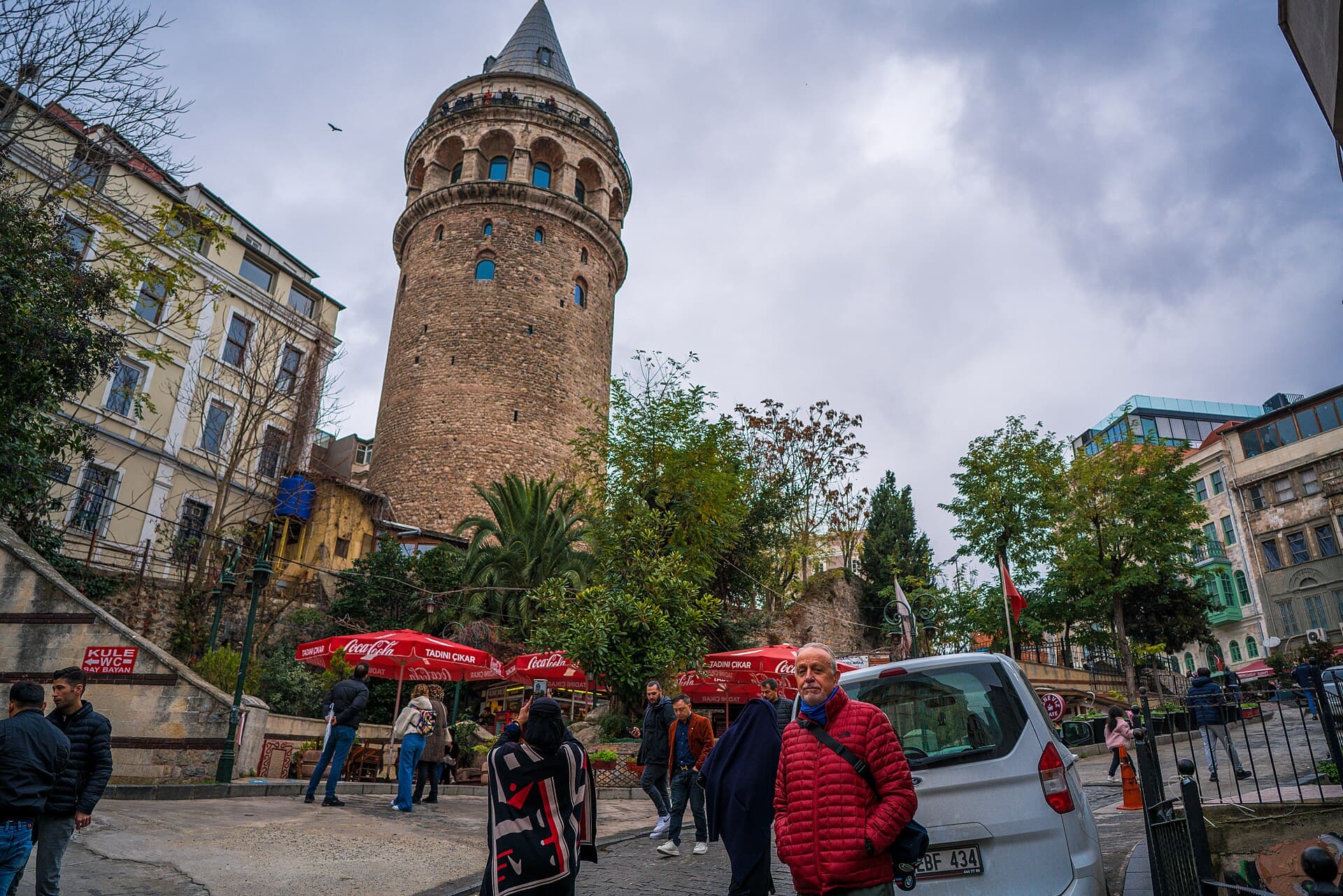 Galata TowerA fourteenth-century stone tower on the Galata hill north of the Golden Horn, am2 min walk4.7
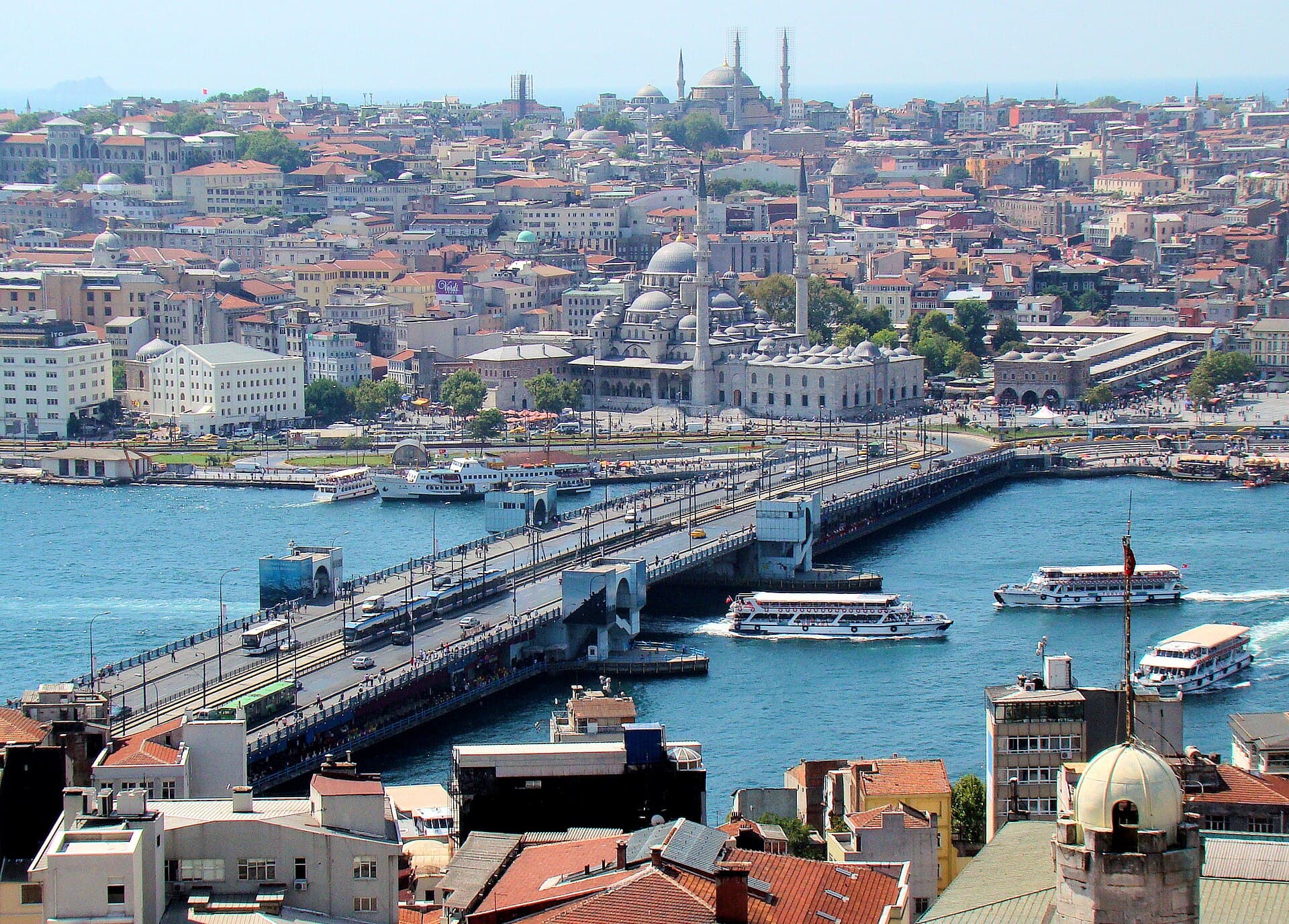 Galata BridgeNobody crosses Galata Bridge because it is a bridge. They cross it because it is6 min walk
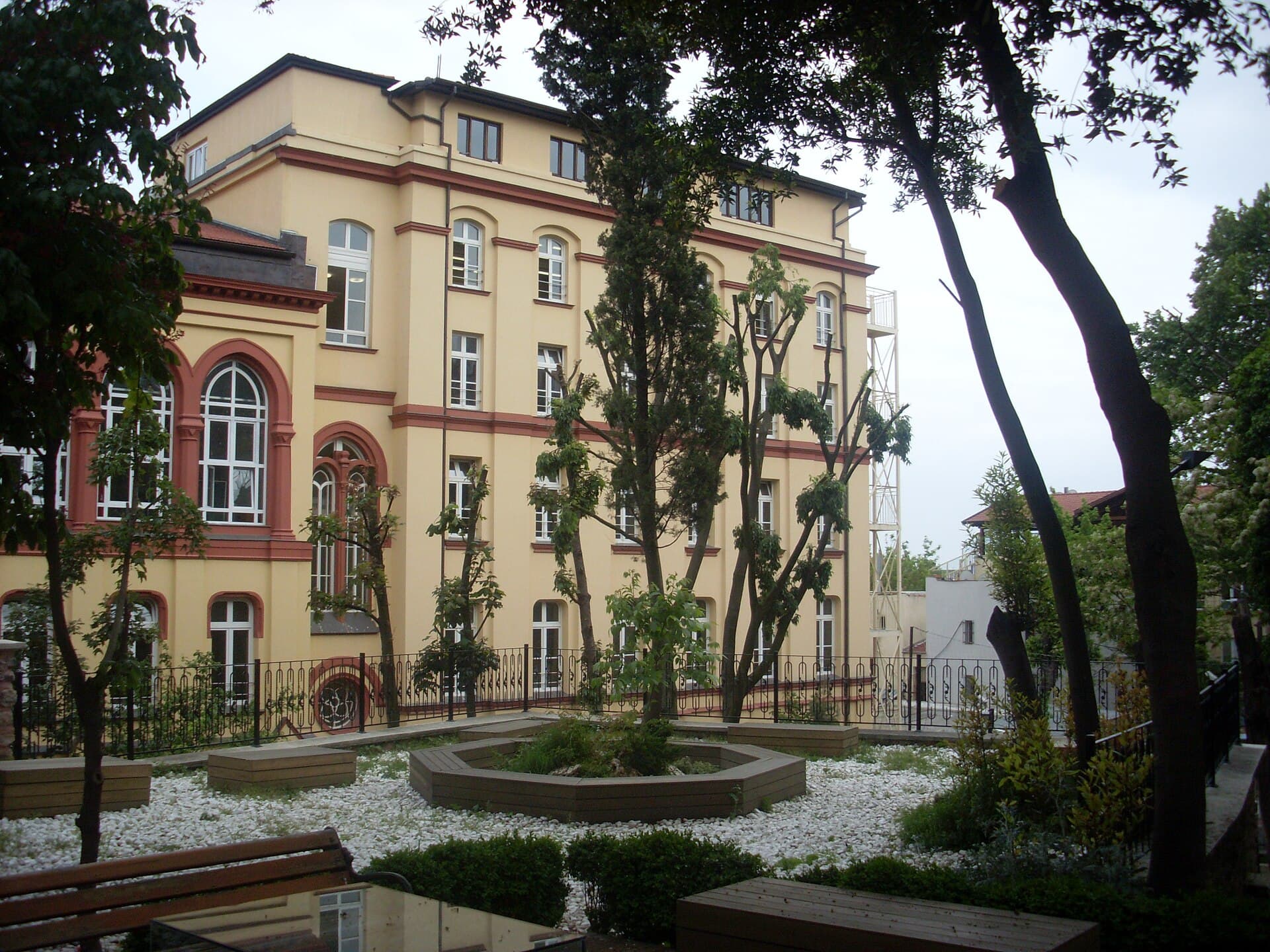 Galata Mevlevi Lodge MuseumOne minute from the Tünel funicular, behind a stone gate you could easily walk p6 min walk
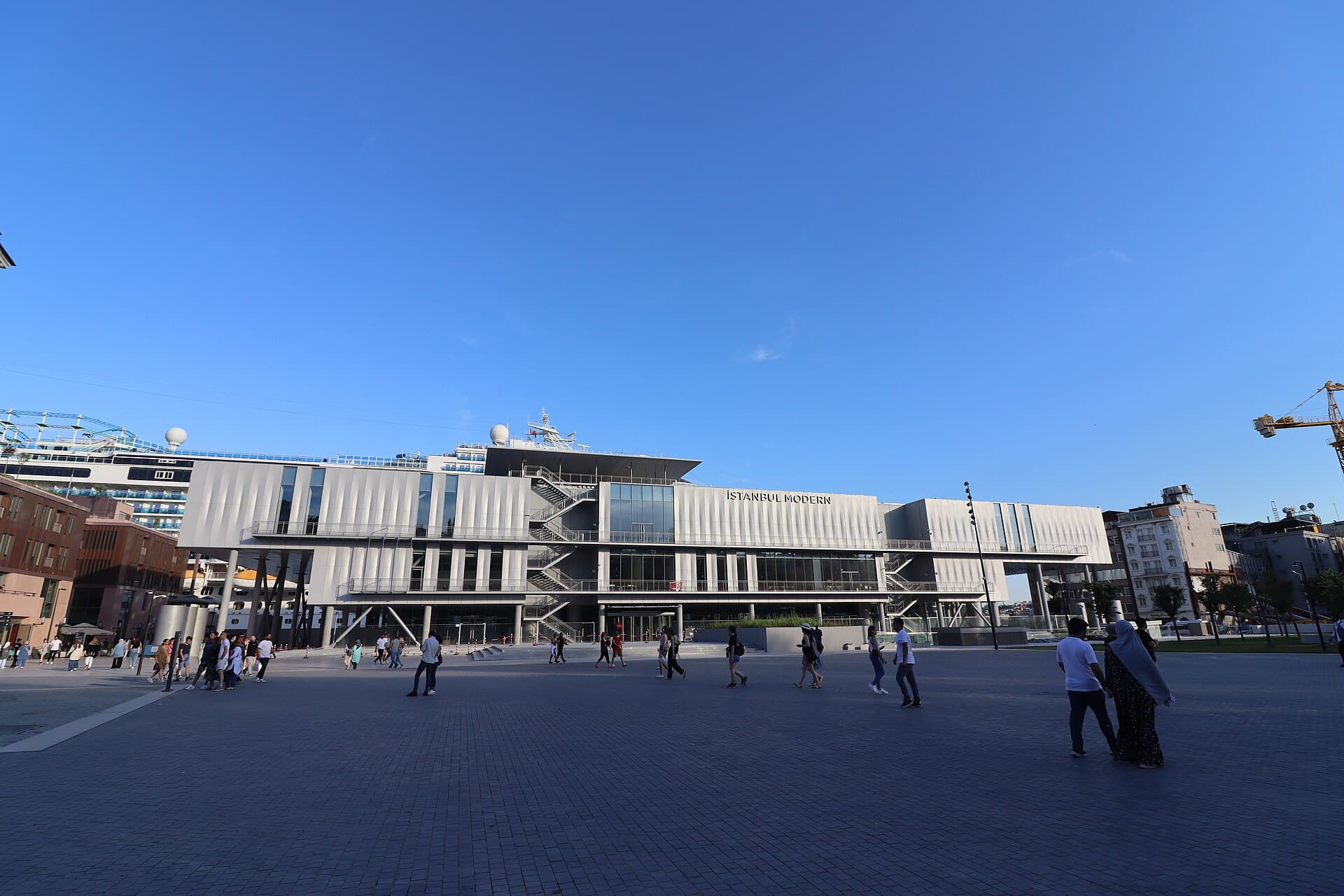 Istanbul ModernThe roof of this building is a shallow sheet of water only a few centimetres dee10 min walk
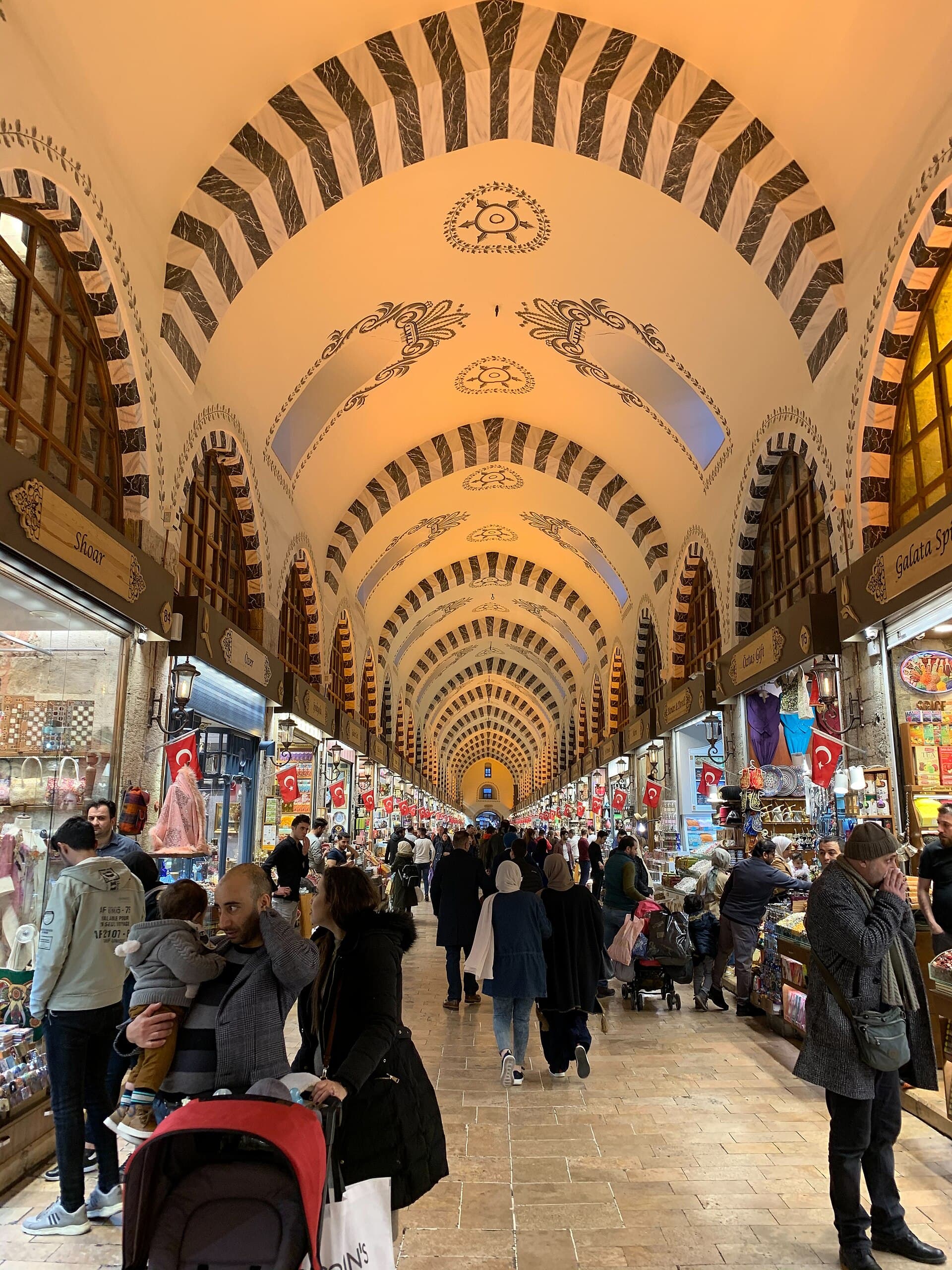 Spice BazaarA seventeenth-century covered market at Eminönü near the waterfront, known in Tu11 min walk4.4
Pass it on the way. It does not justify a separate outing, but it sits exactly between the Karaköy tram stop and the tower, so climb through it instead of the parallel street, give it ten minutes for photos and add Salt Galata opposite if it is open.
Before nine on a weekday morning. From midday and at weekends wedding shoots and tour groups pile in and you may wait several minutes for a clear frame.
Sign in to write your review of this place.
No reviews yet — be the first.