The eclectic front
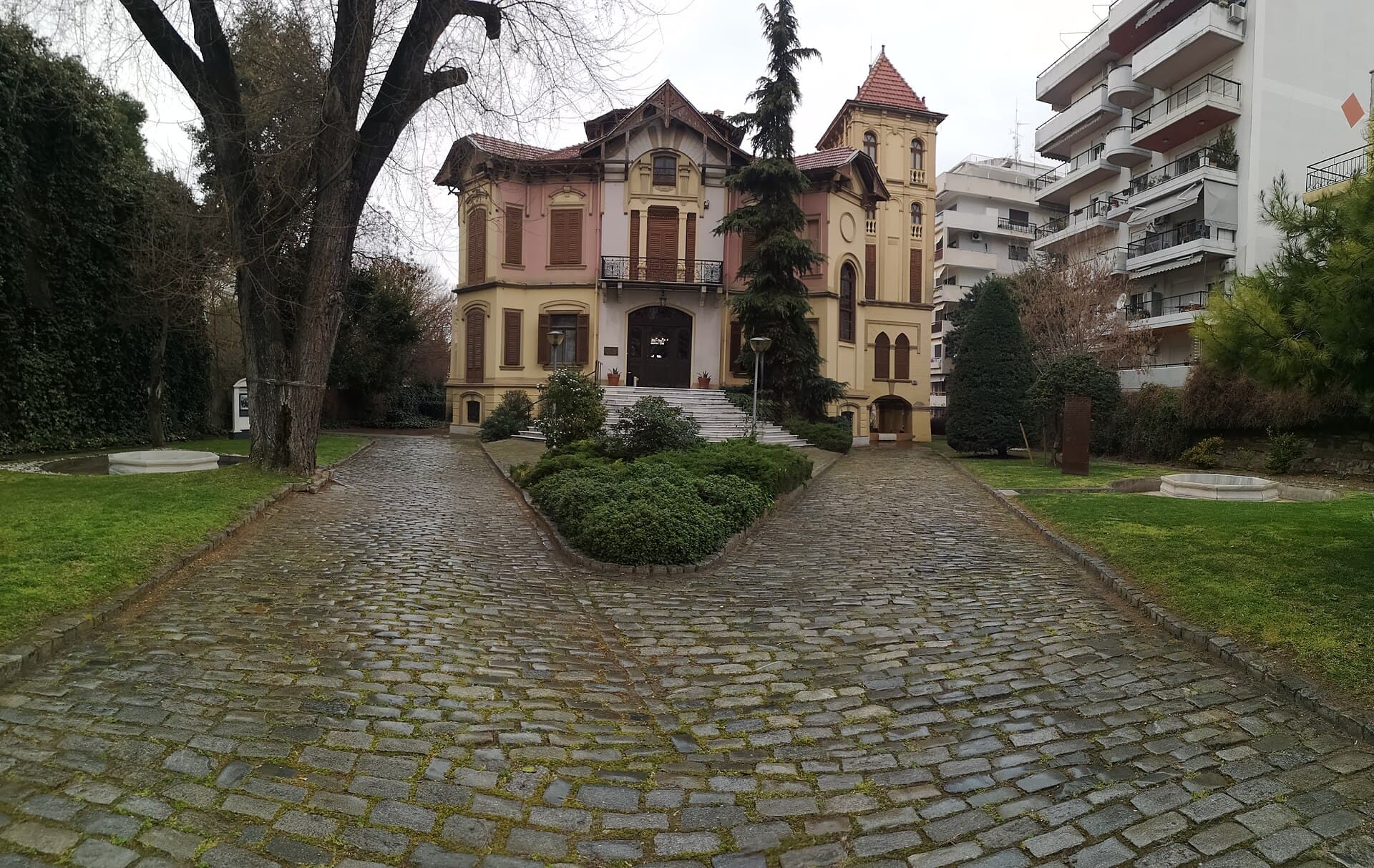
Italian Renaissance, Art Nouveau and little towers together.
Pappasadrian — CC BY-SA 4.0 · Andreas Wolf 01 — CC BY-SA 4.0 · PLAKLE — CC BY-SA 4.0 · Tilemachos Efthimiadis — CC BY 2.0
An elegant white villa of the early twentieth century on **Vasilissis Olgas** street, and the best known survivor of the **villa quarter** that Thessaloniki's wealthy built south of the city before the First World War. It was built in **1911–12** for the wealthy Jewish **Fernandez** family, in a design mixing European **eclectic** styles: elements of the Italian Renaissance and Art Nouveau, with balconies, small towers and plaster ornament. It carries a story the city knows: **Aliki Fernandez**, who was Jewish, married a Greek Christian officer in a match that scandalised its time and crossed the religious boundary between the two communities — and the house's name has been tied to that story since. Before the war this street was a row of villas belonging to Jewish, European and Levantine merchants, most of them since demolished for apartment blocks — so what survives, and this is the most prominent, is a witness to a cosmopolitan city that vanished. Today the villa houses the **municipal art gallery**, with a programme of exhibitions. ⚠ The visit is short, and its value is in **the building** more than the contents.
Italian Renaissance, Art Nouveau and little towers together.
What survives of the pre-war merchants' row.
A marriage across religious lines that scandalised its day.
Vasilissis Olgas 180, 54645 Thessaloniki
Before the First World War, Thessaloniki's wealthy — **Jewish, European, Levantine and Ottoman merchants** — built a row of grand villas along the coast road south of the city, away from the crush of the centre. They were in eclectic European styles, with gardens and a view over the gulf. Most were demolished in the building boom after the Second World War for apartment blocks. What survives is scattered along **Vasilissis Olgas**: Casa Bianca, Villa Mordoch, Villa Allatini and others — some restored and used as museums or institutions. Walking between them makes a good outing, and explains a city that has gone.
**As part of a walk, yes; as a destination in itself, no.** The villa is handsome from outside and the visit is short, and what is inside is the municipal gallery's rotating programme, which may or may not appeal. Better to make it a stop on a **seafront walk**: go south from the White Tower along Nea Paralia, climb to Olgas street and follow the surviving villas, and finish at Casa Bianca. The whole route is enjoyable and free apart from the ticket, and it explains a layer of Thessaloniki's history you don't see in the centre.