The Allatinis
A Sephardic Jewish family among the Ottoman city's wealthiest.
Agence Rol. Agence photographique (commanditaire) — Public domain · Léon Auguste — CC0 · Agence Rol — Public domain · PLAKLE — CC BY-SA 4.0
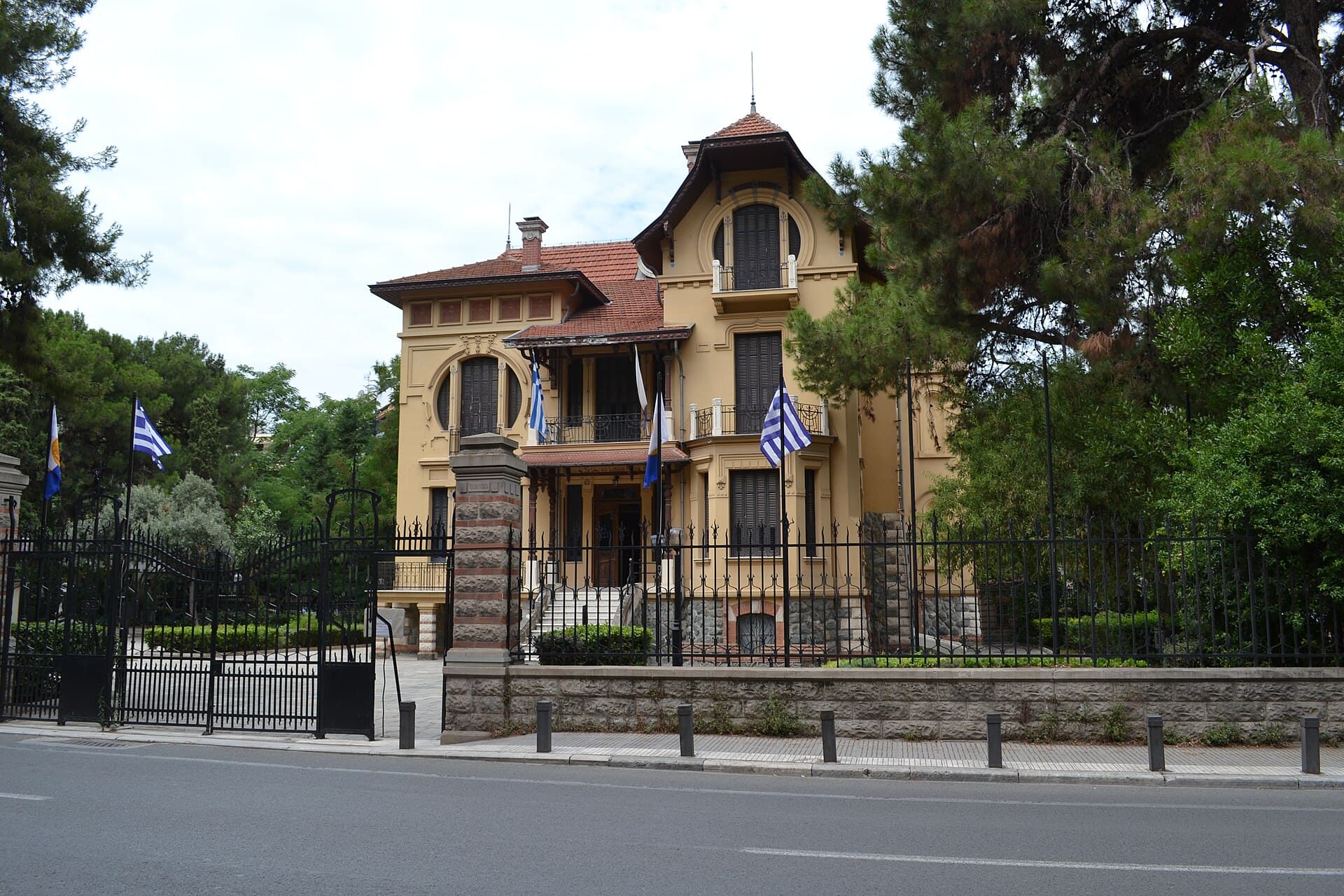
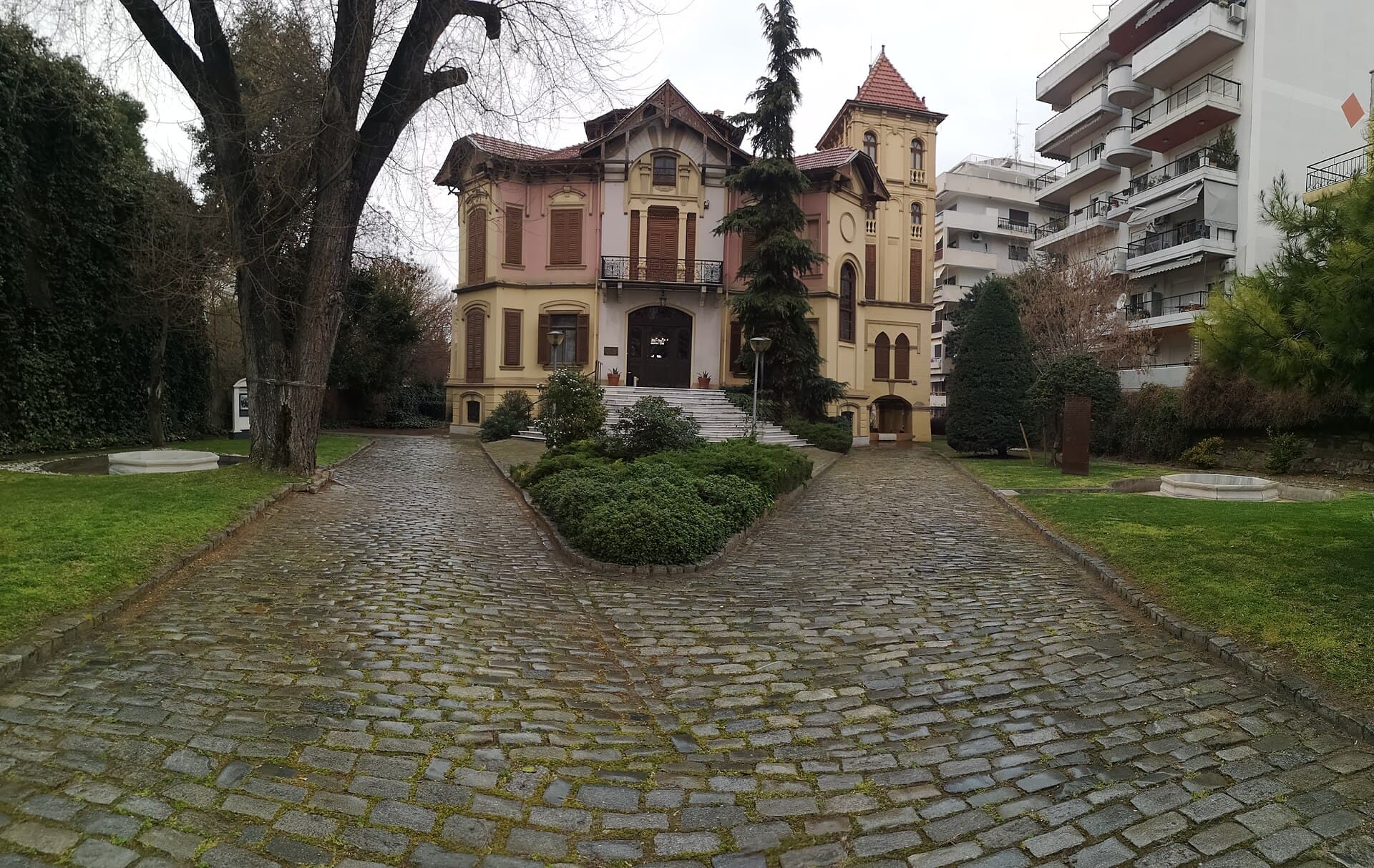
A late nineteenth-century mansion on Vasilissis Olgas avenue, built by the Italian architect Vitaliano Poselli for the Allatini family, and the best known of that avenue's buildings. The Allatinis were a Sephardic Jewish family among Thessaloniki's wealthiest: they owned flour mills, brickworks and banks, and were among the principal engines of the city's economy in the late Ottoman period. The building itself is eclectic: Italian Renaissance elements with eastern detail and Moorish-style ornament, a mixture that marked Poselli's architecture in the city. What makes the villa historically noted is what happened in it: after the Young Turk revolution of 1908 Sultan Abdul Hamid II was deposed and exiled to Thessaloniki, and was confined in this house with his retinue between 1909 and 1912. The last effectively ruling Ottoman sultan spent three years under guard here. The building is in administrative use today and is not visited inside — the facade from the street is the point.
A Sephardic Jewish family among the Ottoman city's wealthiest.
An Italian architect who marked Thessaloniki with several eclectic buildings.
A mixture that marked the whole avenue.
Vasilissis Olgas avenue, south-east of the centre
In the late fifteenth century the city received waves of Sephardic Jews expelled from Spain and Portugal, and over the centuries they became its largest community — Thessaloniki was called the Mother of Israel and its port stopped work on the Sabbath. They spoke Ladino, medieval Spanish written in Hebrew letters. In 1943 the German authorities deported about forty-six thousand of them to Auschwitz, and only a small fraction survived. The community today numbers a few thousand.
In the late Ottoman period this was the avenue of towers, where Thessaloniki's wealthy families — Jewish, Muslim and Christian — built summer mansions in European styles. About twenty survive scattered among modern blocks, among them Villa Kapandji, Villa Mordoch and the Casa Bianca. Walking its full length takes about ninety minutes and reveals a layer of the city's history few visitors see.