The houses are the wall
The outer house walls form the fortification instead of a separate wall.
SANTORINI2017 — CC BY-SA 4.0 · Dietmar Rabich — CC BY-SA 4.0 · Dietmar Rabich — CC BY-SA 4.0 · Dietmar Rabich — CC BY-SA 4.0
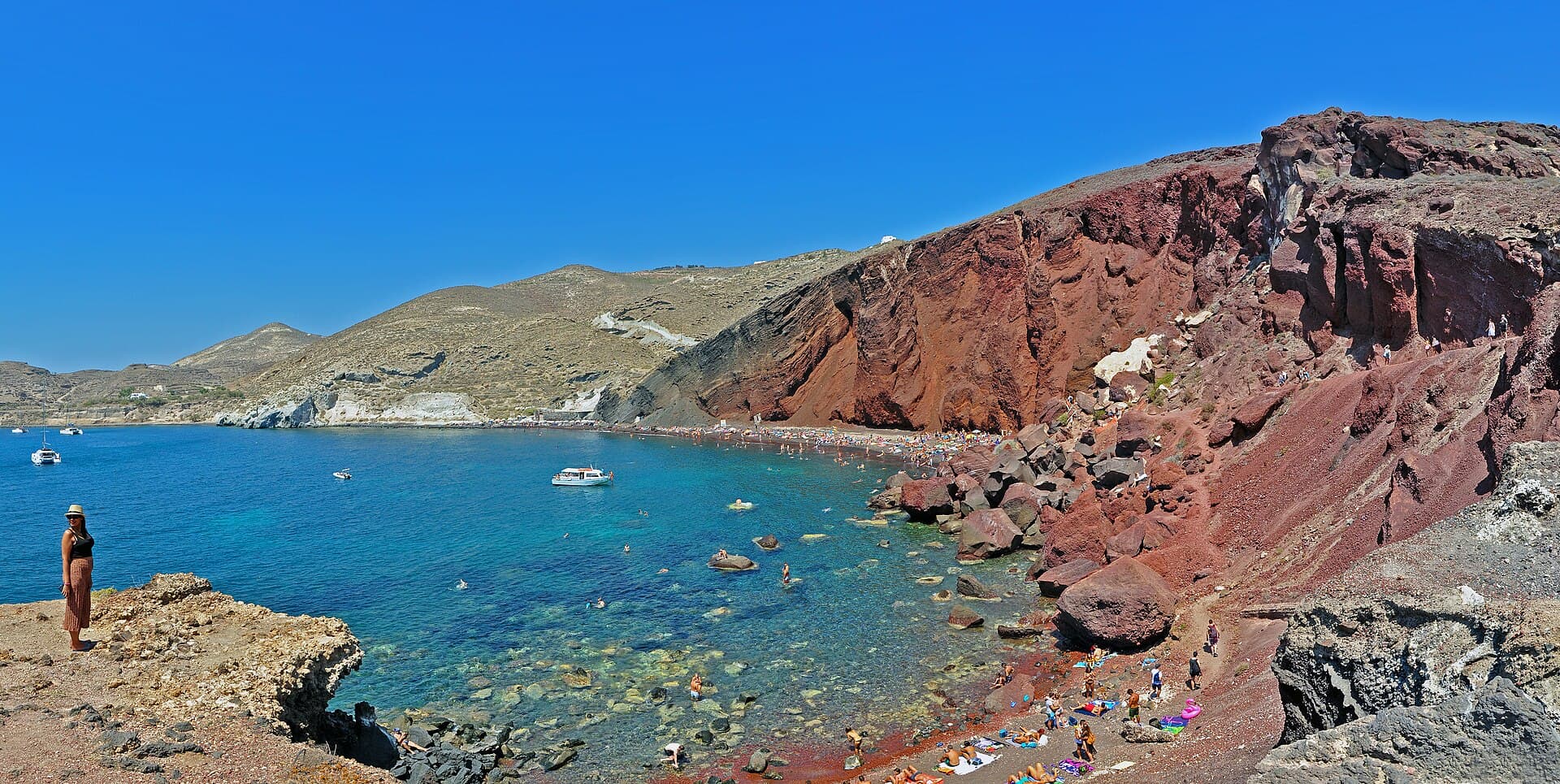
A medieval castle in the village of Akrotiri in south-western Santorini, looking over the sea and the caldera from one of the island's quietest corners. The castle is one of Santorini's five kastelia — the fortified villages built by the island's Venetian rulers in the Middle Ages. The architectural idea is simple and clever: rather than build a wall around the village, the houses themselves are built back to back so that their outer walls form the wall, with only one or two gates left to be closed. This was a defence against pirates, a real daily threat in the Aegean for centuries. What survives today is ruins, arches and narrow lanes threading between inhabited houses — the village is still partly lived in inside the castle. The place is relatively neglected and not run as a tourist site, and that is part of its appeal. The sunset from here bears comparison with Oia's, with none of its crowds.
The outer house walls form the fortification instead of a separate wall.
A real daily threat in the Aegean for centuries.
Comparable to Oia's with none of its throngs.
Akrotiri village, south-western Santorini
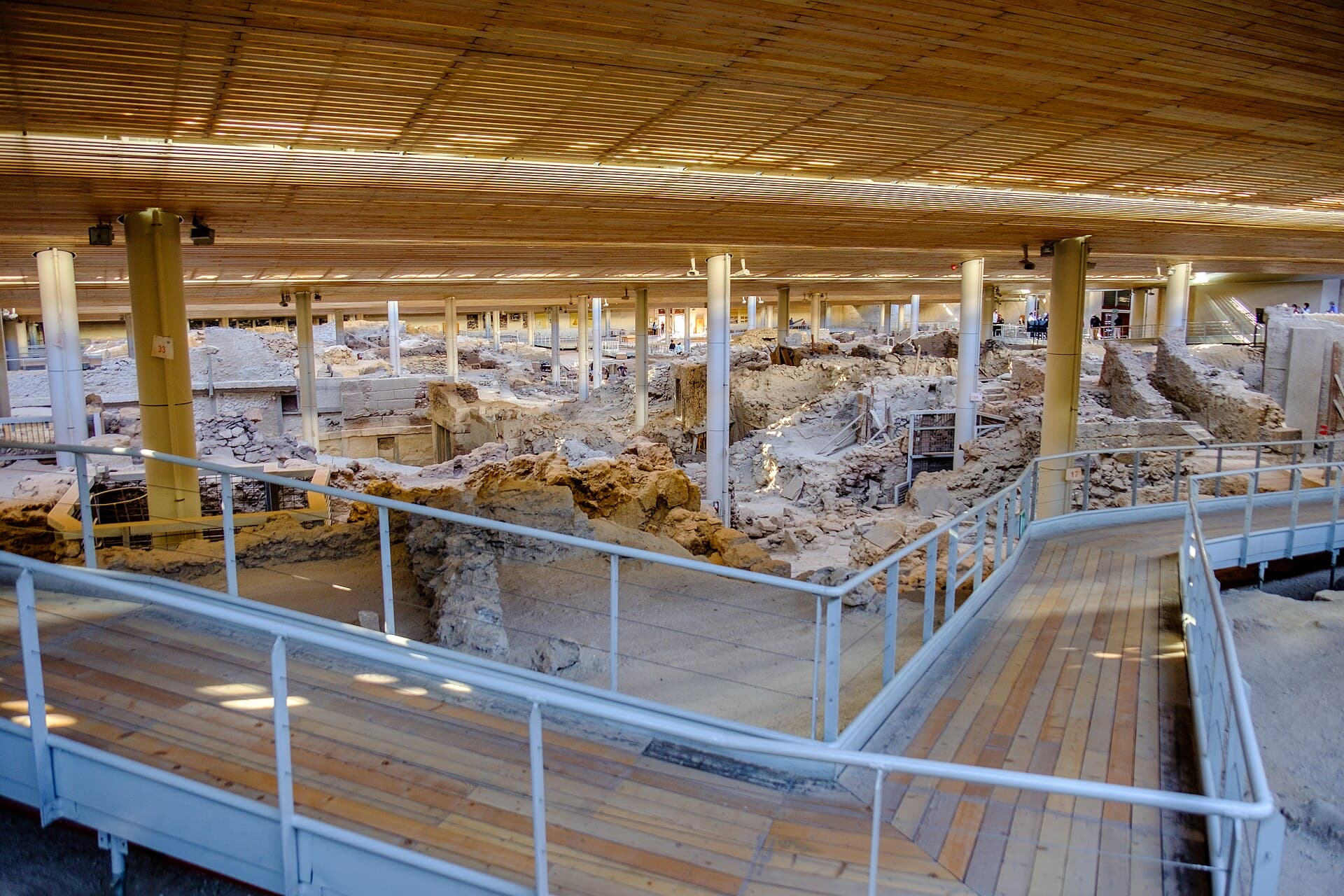
They are entirely different and often confused because of the name. The archaeological site is a Bronze Age town buried by a volcanic eruption around 1600 BC and preserved under the ash with its streets, multi-storey houses and frescoes — sometimes called the Pompeii of the Aegean, it is Santorini's most important antiquity and is visited on a ticket under a protective canopy. The castle is a medieval structure in the modern village above it, free and open.
Oia is the famous spot and is genuinely uncomfortably crowded in season — people stand shoulder to shoulder for an hour beforehand. The real alternatives are this Akrotiri castle, the nearby Akrotiri lighthouse on the southern tip, the village of Imerovigli on the rim, and Fira itself from a café on the caldera. All give much the same view, because the sun sets into the sea west of the whole caldera.