Towers and coloured tile
Roofs that make it the Riviera's most visible building.
Whgler — CC BY-SA 4.0 · Richard Pircher — CC BY-SA 4.0 · Mykola Swarnyk — CC BY-SA 3.0 · Traumrune — CC BY-SA 3.0
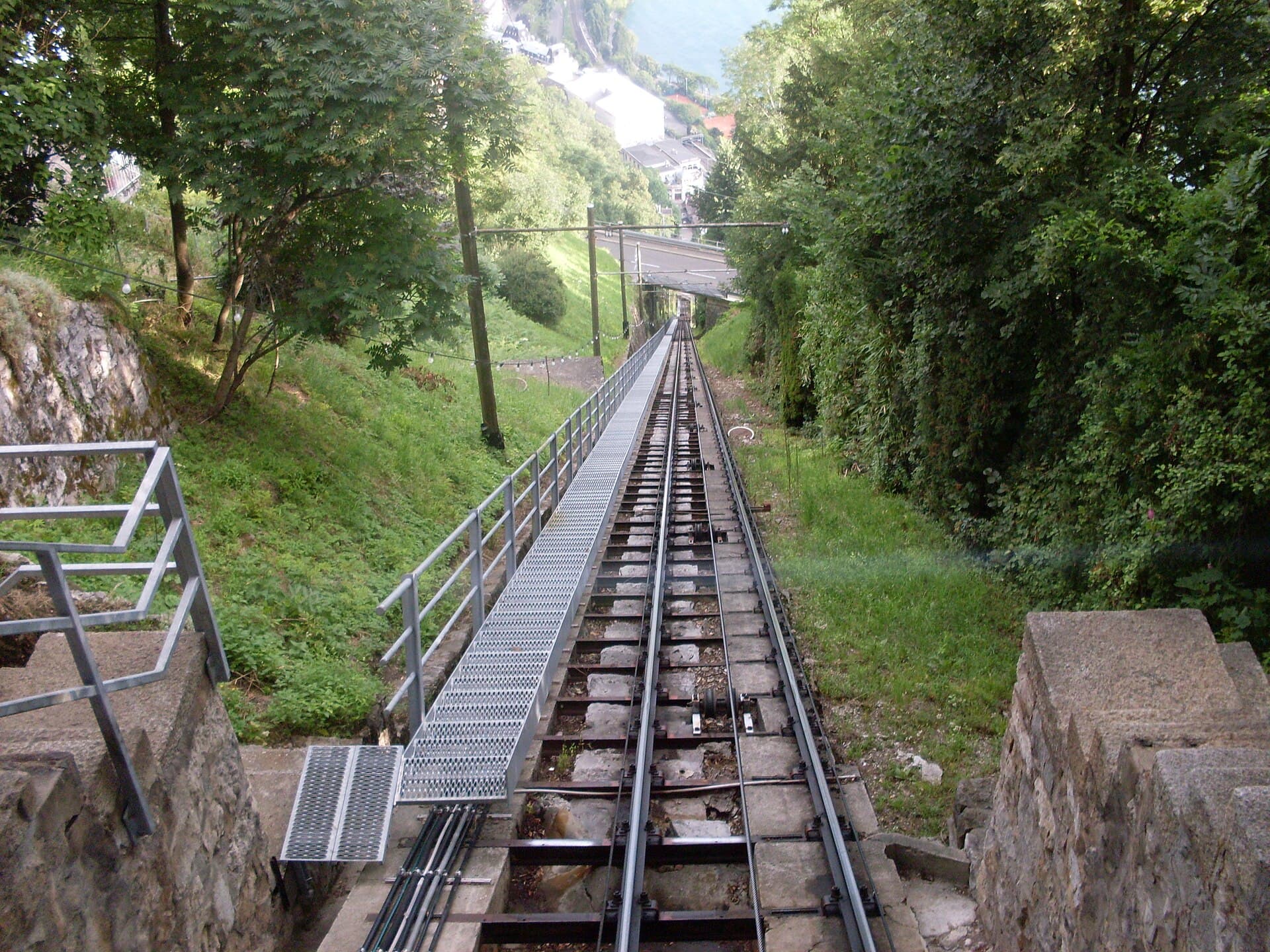
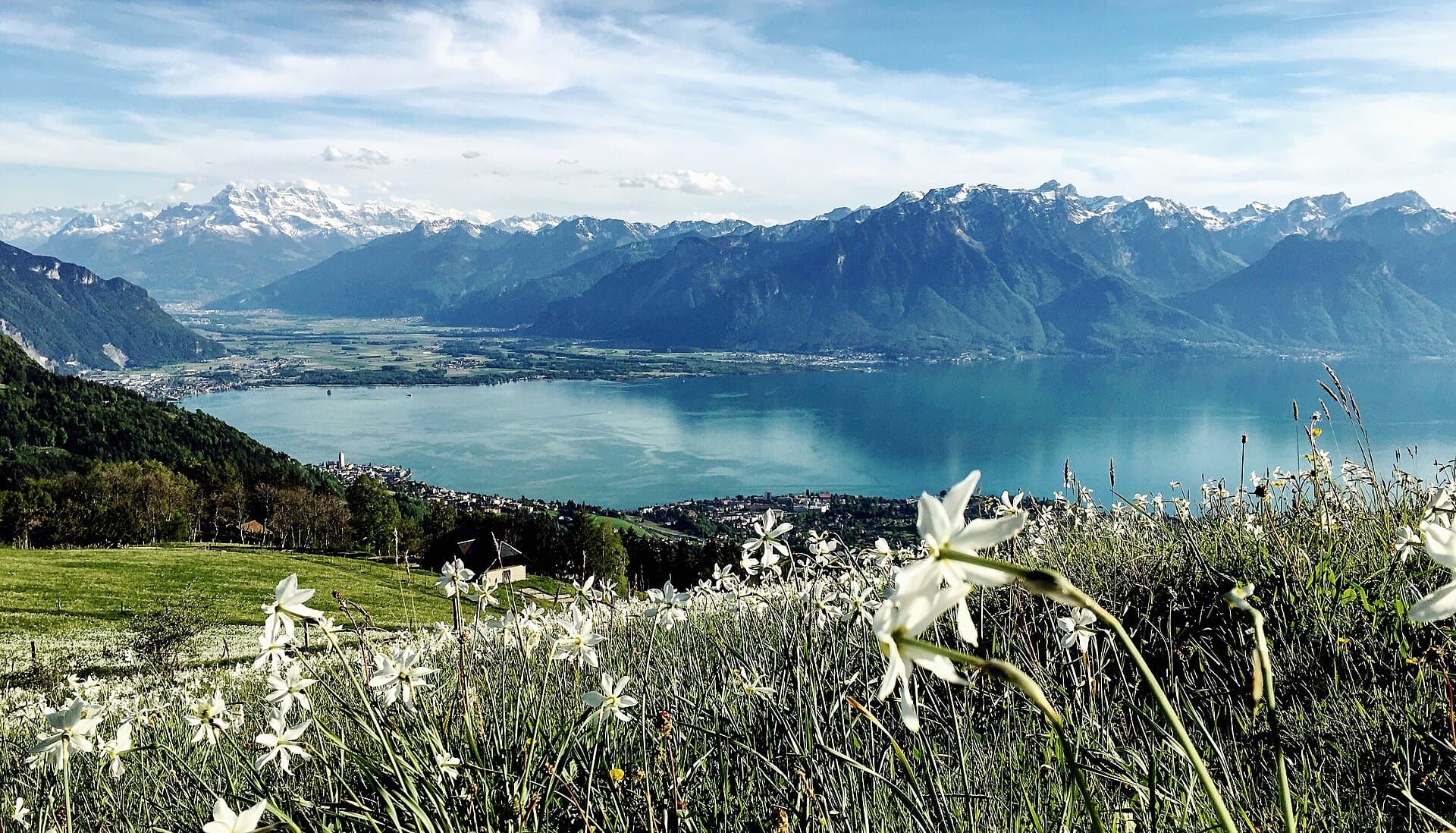
Despite the name, the Caux Palace is no royal residence but a **Belle Époque grand hotel**, built by the Swiss architect Eugène Jost on the mountain above Montreux at an altitude of a thousand metres and opened in 1902, standing on an artificial terrace some four hundred metres long. Its towers and coloured tile make it the most conspicuous building in the Swiss Riviera landscape: stand on the lakeshore and there it hangs above you. Its real value lies in what became of it once the age of the grand hotels ended: it closed through the First World War, sheltered refugees and interned Allied airmen in the last months of the Second, and in 1946 was bought by Swiss families who sold their own possessions to fund the purchase, turning it into a conference centre for post-war reconciliation. Between 1946 and 1950 thousands came from dozens of countries, among them French and German delegations meeting when reconciliation between the two was still a difficult idea. Scenes of the Swiss series *Winter Palace* were filmed in its halls. ⚠ But it is **not an open tourist sight**: it houses the Initiatives of Change foundation and its summer conferences, and the Swiss Hotel Management School during term, and you get inside only on a pre-booked guided tour, run on request through the season (roughly April–June and August–December), or by booking one of the historic guest rooms the conference centre still lets to its seminar guests. Everyone else stays outside — which may be enough: the cog railway reaches Caux in about twenty minutes, and the view from there over Lake Geneva to the Savoy Alps is free and superb.
Roofs that make it the Riviera's most visible building.
One of the finest interiors, seen only on the guided tour.
A bankrupt hotel turned centre of European reconciliation.
Rue du Panorama 2, 1824 Caux (Montreux)
Not on its own, unless you have booked a guided tour — otherwise you will not get inside and will simply look at the façade. Make it part of a wider day instead: Caux is a stop on the cog railway that climbs from Montreux to the **Rochers-de-Naye** terminus at about 1,970 m, just below the 2,042 m summit, so break the journey there for twenty minutes to photograph the building and the lake. Or walk down from Caux towards Glion and take the train on to Montreux — a fine descent between April and October, with narcissus fields above Caux flowering in May, though the waymarking is patchy, so carry a map on your phone.
The names are alike; the places are not. The **Fairmont Le Montreux Palace** is a working hotel on the lakefront in the middle of Montreux, and you can walk into its lobby and cafés and see Belle Époque interiors without staying there. The **Caux Palace** stopped operating as a grand hotel decades ago and is now a conference centre and a school that still rents a few rooms, entered only on a pre-booked guided tour. If you want grand interiors with no advance booking, go to the Montreux Palace; if you want the story and the view from a thousand metres, go up to Caux.