The porcelain cabinet
A room lined floor to ceiling with thousands of pieces of Chinese porcelain. The palace's most famous room.
abbilder — CC BY 4.0 · Michael.F.H.Barth — CC BY-SA 4.0 · Michielverbeek — CC BY 4.0 · Michielverbeek — CC BY 4.0
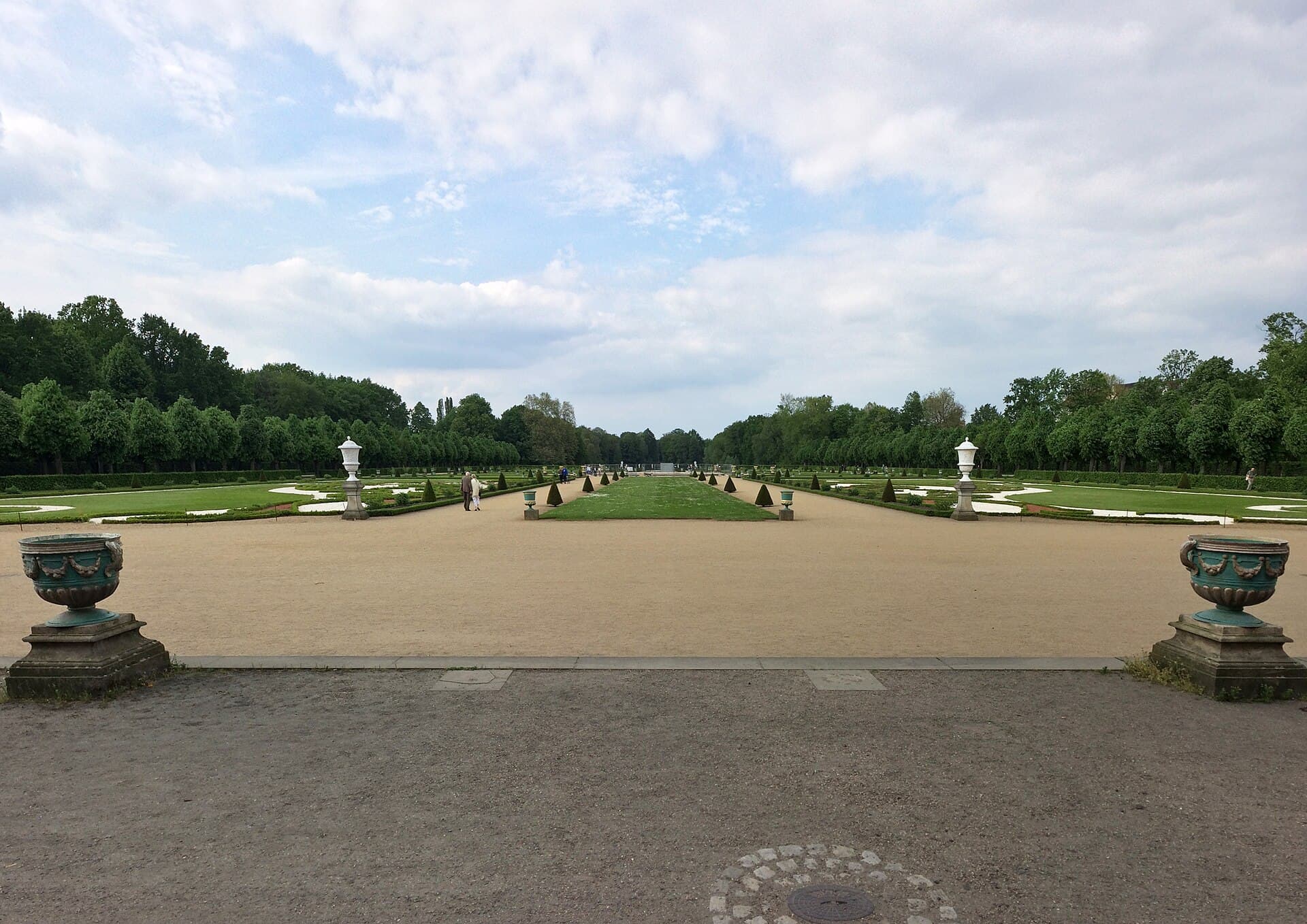
Charlottenburg is the largest surviving palace in Berlin, west of the city centre. It was built in the late seventeenth century as a summer house for Queen Sophie Charlotte, then extended repeatedly over a century until it reached this size. Inside it splits into two wings with separate tickets: the Old Palace, holding the earlier baroque rooms and the famous porcelain cabinet lined with thousands of Chinese pieces; and the New Wing, with eighteenth-century rococo rooms and a golden gallery. The palace was badly damaged in the Second World War and nearly demolished, but was restored over decades. Some rooms are original and others rebuilt. The garden behind is large and free — formal French near the building, then looser English parkland further out, with a small lake and outbuildings.
A room lined floor to ceiling with thousands of pieces of Chinese porcelain. The palace's most famous room.
A rococo hall of gilded ornament and mirrors in the New Wing.
Large and free: formal French near the building, looser English parkland beyond.
A small building in the garden holding royal tombs — quiet, and often missed.
Spandauer Damm 10-22, 14059 Berlin
The Old Palace for the porcelain cabinet and the earlier baroque rooms — the more popular choice. The New Wing if you prefer rococo and the Golden Gallery. The combined ticket is better value for both.
Yes. Large, free and open, with a lake and long paths. Plenty of Berliners come to walk it without entering the palace at all.
Partly. It was badly damaged in the war and restored over decades, so some rooms are original and others carefully rebuilt. This is common among Berlin's palaces.