
The blue dome
From 1980.
BeshevI — CC BY-SA 4.0 · Enric — CC BY 4.0 · Zoirovna — CC BY-SA 4.0 · ElenaLitera — CC BY-SA 4.0 · Jean Housen — CC BY-SA 4.0 · Jean Housen — CC BY-SA 4.0 · Jean Housen — CC BY-SA 4.0 · ElenaLitera — CC BY-SA 4.0
Tashkent's best-known bazaar and the largest in the old city, its name Persian for «crossroads» or «four streams». It sits beneath a huge round blue-domed hall built in 1980, a landmark of Soviet modernist architecture, facing the entrance to Chorsu metro station. In July 2026 the building was inscribed on the UNESCO World Heritage List as part of «Tashkent Modernist Architecture», ten buildings and sites that also include the Kosmonavtlar metro station and the State Museum of History. Under the dome sit pyramids of spices, dried fruit, nuts and sweets; the surrounding halls sell round non bread, meat, cheese and vegetables, alongside sections for crafts, fabrics and traditional skullcaps. It is a living picture of the city's everyday life. Entry is free; the bazaar starts early and quietens by late afternoon. Prices are negotiable, cash in som is the norm, and the Kukeldash Madrasa is a few steps away.
From 1980.
Under the dome.
Round and fresh.
Chorsu Square, old city, Tashkent
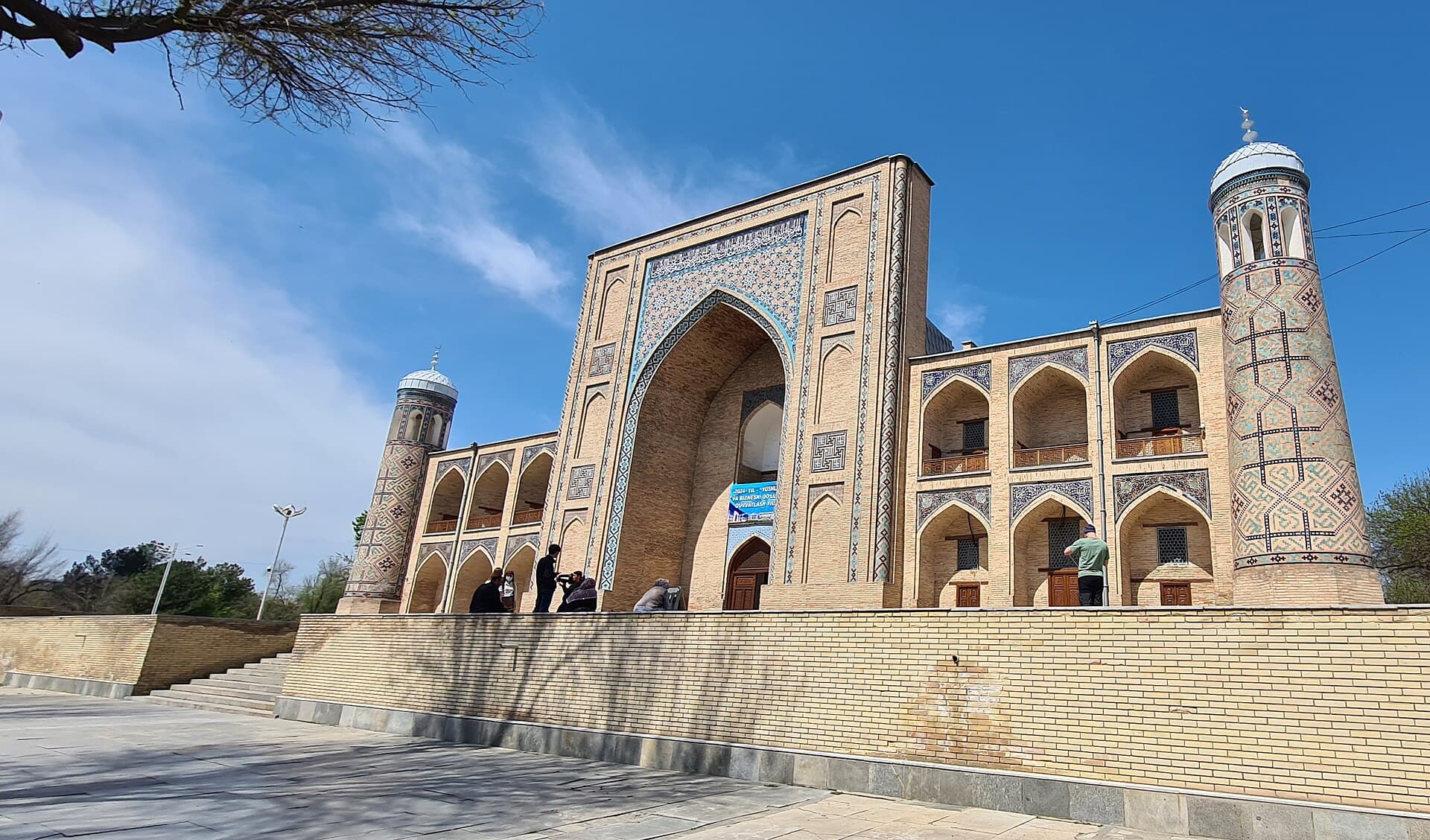 Kukeldash Madrasa, TashkentOne of Tashkent's oldest surviving madrasas, built around 1570 by the Shaybanid 5 minutes walk
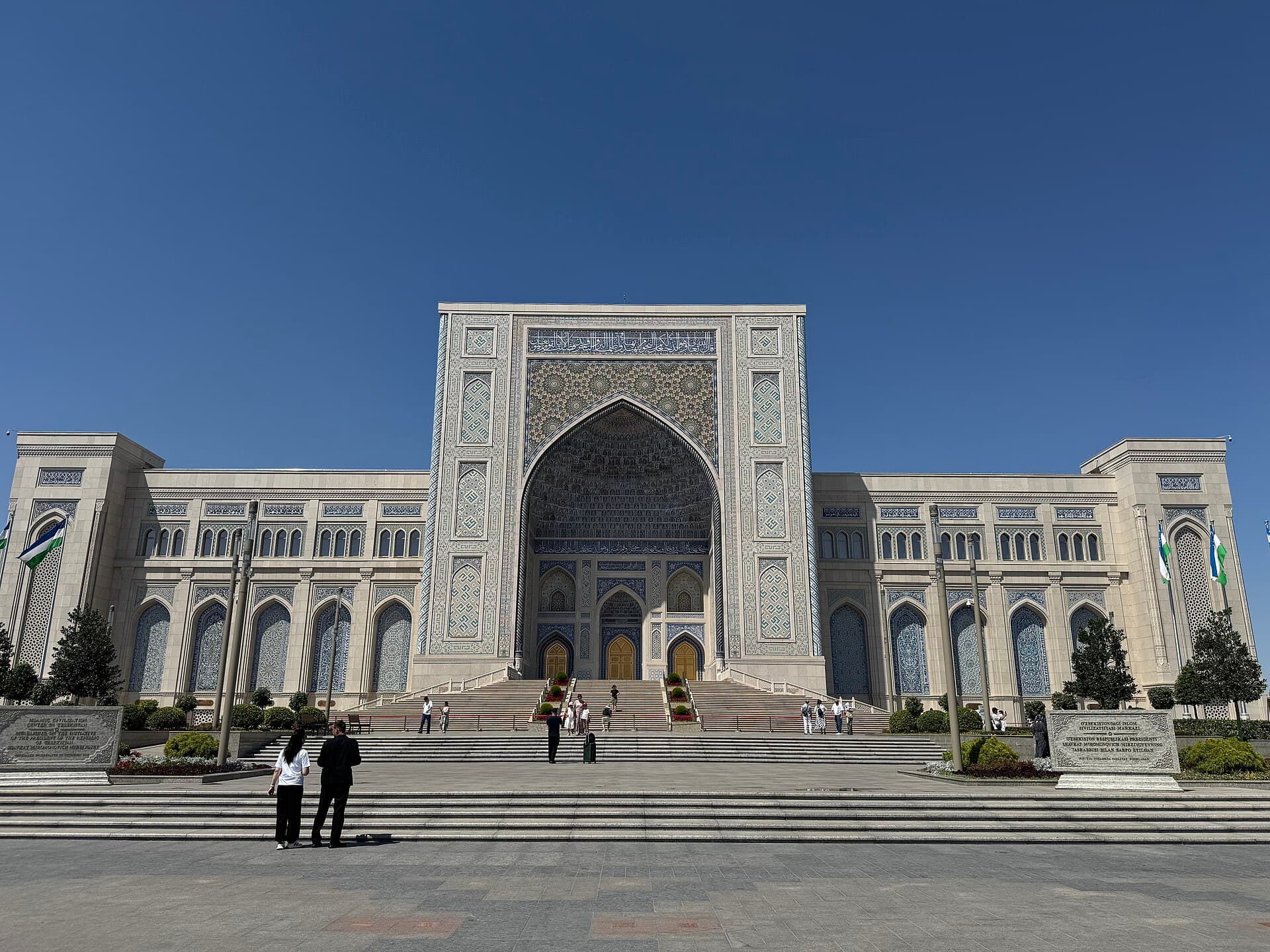 Center for Islamic CivilizationA vast cultural complex opened in March 2026 beside the Hazrati Imam ensemble, c13 minutes walk
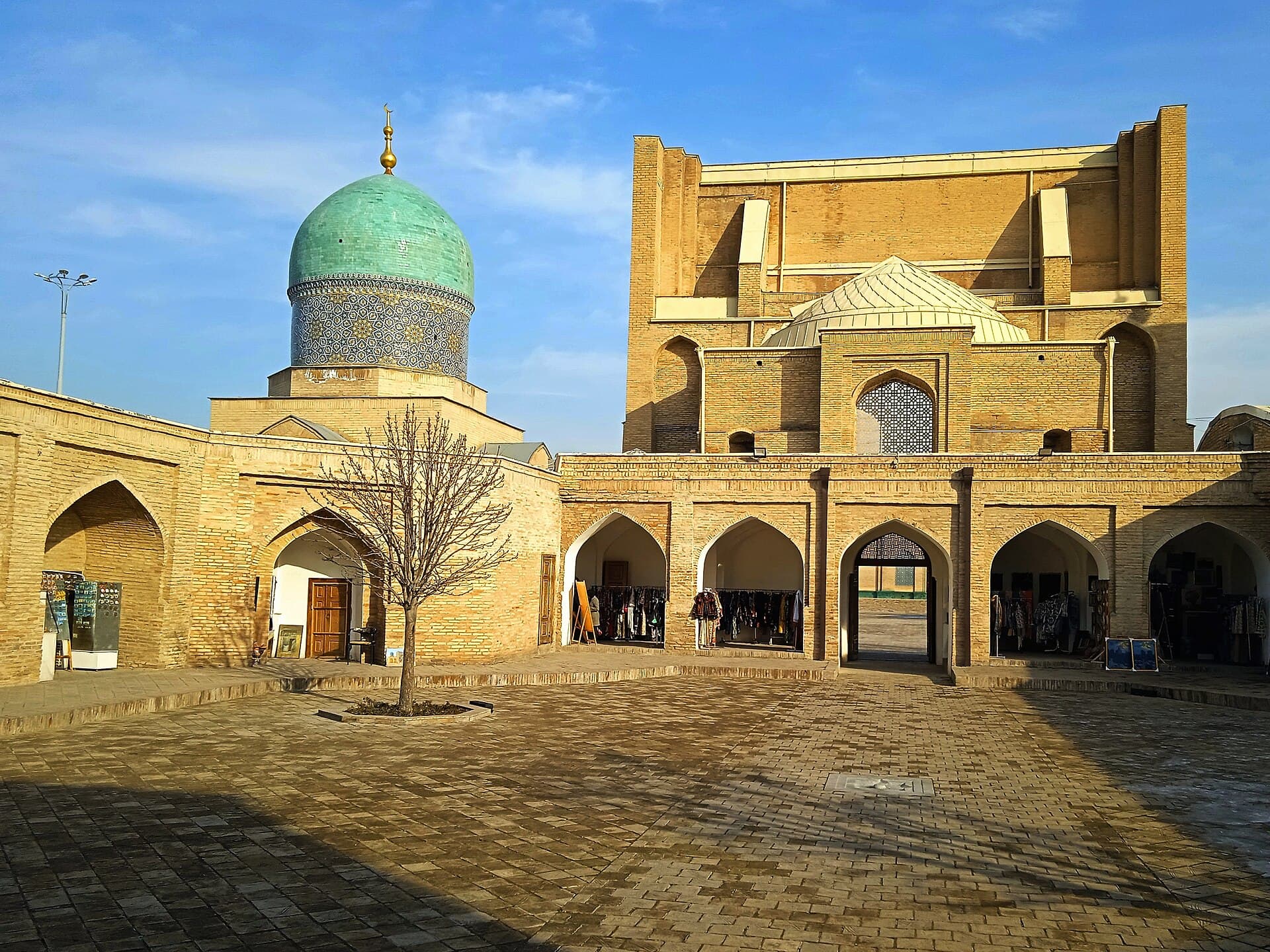 Hazrati Imam ComplexThe religious heart of Tashkent's old city: a group of mosques, madrasas and mau15 minutes walk
Yes, UNESCO inscribed its blue-domed hall in July 2026 as part of «Tashkent Modernist Architecture»; entry is free.