
The portal
20 m high.
BeshevI — CC BY-SA 4.0 · :ru:User:(WT-ru) Digr — CC BY-SA 3.0 · Bobyrr — CC BY-SA 4.0 · Alpasli — CC BY-SA 4.0 · Murodbek Yusupov — CC BY-SA 4.0 · Alpasli — CC BY-SA 4.0 · Erik Albers — CC BY-SA 4.0 · Nikolai Bulykin — CC BY-SA 4.0
One of Tashkent's oldest surviving madrasas, built around 1570 by the Shaybanid ruler Dervish Sultan beside what is now Chorsu Bazaar. It follows the classic square plan in yellow brick, with student cells around an inner courtyard and a 20 m portal flanked by two towers. It has lived many lives: a caravanserai in the 18th century, then a fortress, and in 1830-1831 part of it was pulled down and its bricks reused for the nearby Beklarbegi Madrasa. Damaged by the 1868 earthquake, it was rebuilt in 1902-1903 and restored again in the 1950s. It was among the few religious buildings to survive the devastating 1966 Tashkent earthquake. In Soviet times it became a museum, first of atheism and then of folk music, before returning to use as a madrasa in the 1990s. It is still a working madrasa; visitors can usually enter the courtyard for a fee of about 20,000 som in cash, per visitor guides. Modest dress is expected, and it pairs easily with Chorsu Bazaar next door.
20 m high.
Student cells.
It survived.
Next to Chorsu Bazaar, old city, Tashkent
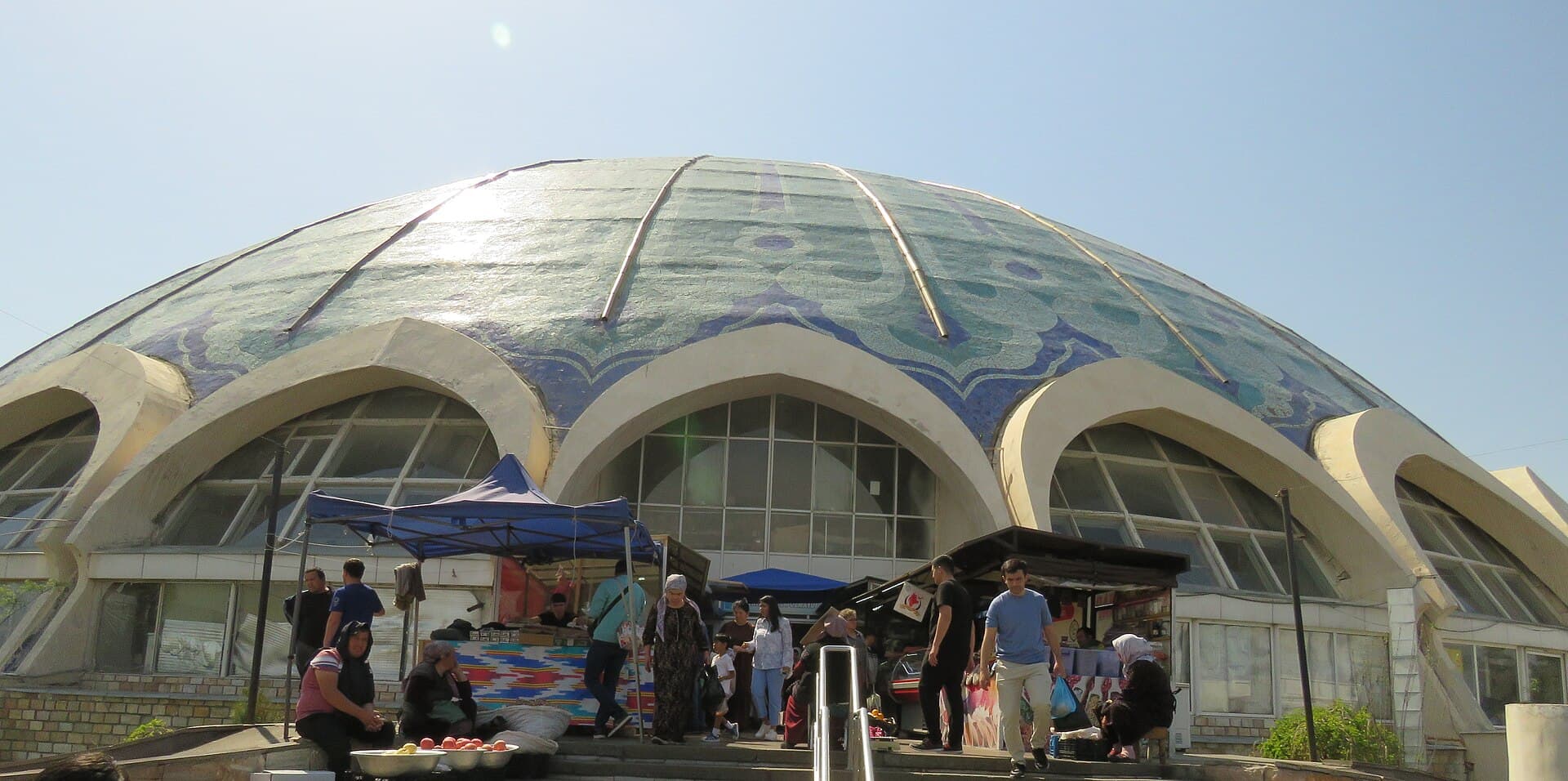 Chorsu BazaarTashkent's best-known bazaar and the largest in the old city, its name Persian f5 minutes walk
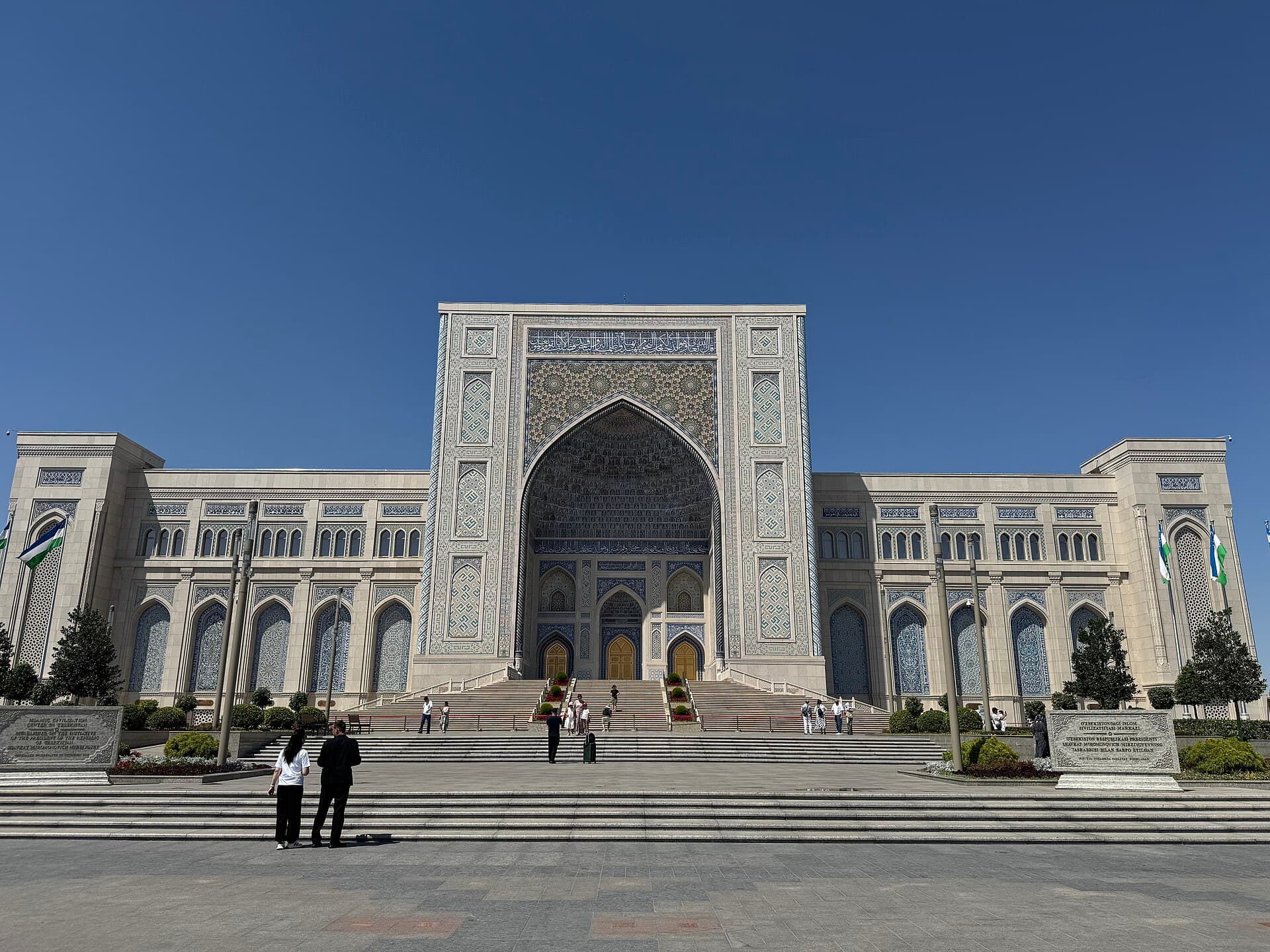 Center for Islamic CivilizationA vast cultural complex opened in March 2026 beside the Hazrati Imam ensemble, c17 minutes walk
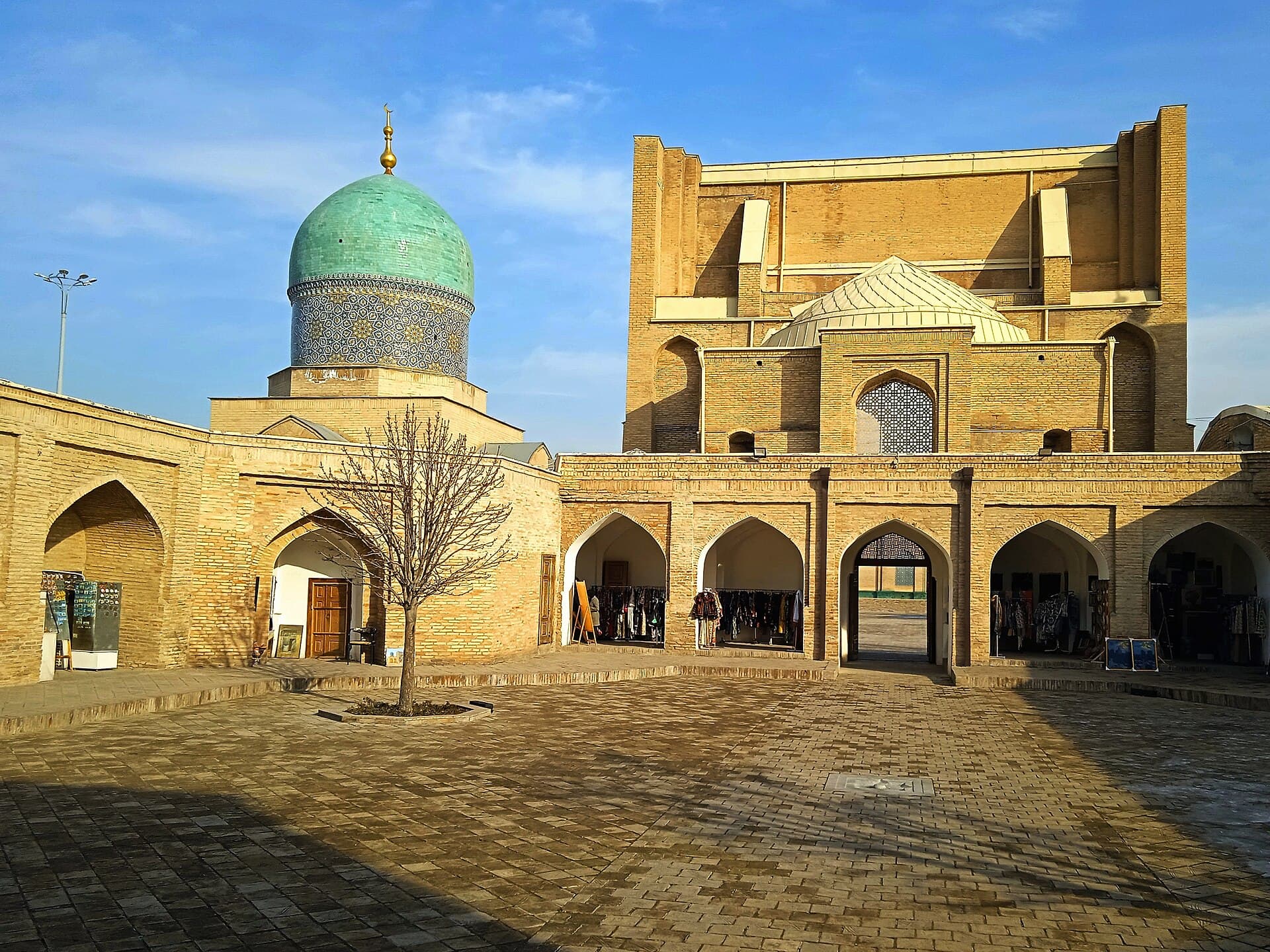 Hazrati Imam ComplexThe religious heart of Tashkent's old city: a group of mosques, madrasas and mau19 minutes walk
Yes, the courtyard is usually open for about 20,000 som in cash, per visitor guides; dress modestly, as it is a working madrasa.