Mother trees
On a cliff ledge.
rheins — CC BY 3.0 · Windmemories — CC BY-SA 4.0 · Zhangzhugang — CC BY-SA 3.0 · Lennartbj — CC BY-SA 4.0 · Zhangzhugang — CC BY-SA 3.0 · Zhangzhugang — CC BY-SA 3.0 · Zhangzhugang — CC BY-SA 3.0 · Hemanshu — CC BY-SA 3.0
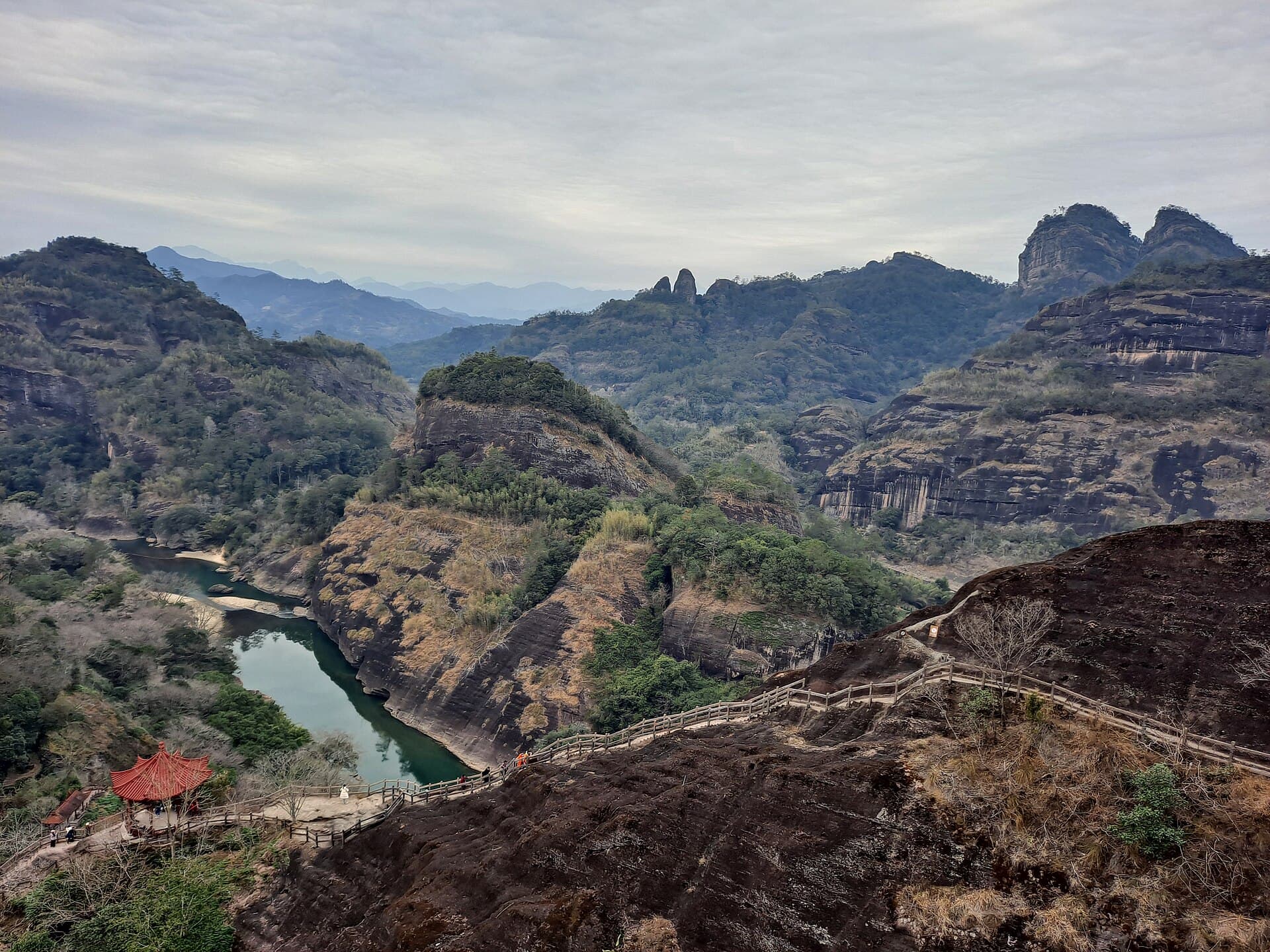
Six ancient tea bushes growing on a small ledge in the cliff of Jiulongke, the «Nine Dragons Gorge»; they are the mother trees of Da Hong Pao, «Big Red Robe», the most famous of the Wuyi «rock teas», which the Chinese call the «King of Tea» for its orchid-like fragrance and long sweet aftertaste. It is so rare that twenty grams of tea from these trees sold for 208,000 yuan in 2005; in 2006 the city government insured them for one hundred million yuan and banned picking their leaves, and the Palace Museum in Beijing keeps one of their last batches. Visitors reach them on a lovely path between cliffs and terraced tea gardens, passing Shuilian Dong, the «Water Curtain Cave», where water spills over the rim of the cliff, with teahouses along the way offering tastings of the local rock tea; in the Yuan dynasty an imperial tea garden supplying the court stood by the fourth bend of the river. The area is part of the main section, free to enter since 2025 with booking together with the compulsory park bus at CNY 70 for one day, per visitor guides. Late spring, when the tea leaves are picked, is the loveliest season.
On a cliff ledge.
On the way.
For rock-tea tastings.
Jiulongke gorge, Shuilian Dong-Da Hong Pao area, Wuyi Mountains
No: picking their leaves has been banned since 2006, and the tea sold as Da Hong Pao comes mostly from bushes propagated from them, which you can taste in the teahouses along the path.