Bai houses
White and painted.
Liuxingy — CC BY-SA 4.0 · Kcx36 — CC BY-SA 4.0 · Brücke-Osteuropa — Public domain · Alexander Savin — CC BY 2.0 · Brücke-Osteuropa — Public domain · Pavel Špindler — CC BY 3.0 · Brücke-Osteuropa — Public domain · Brücke-Osteuropa — Public domain
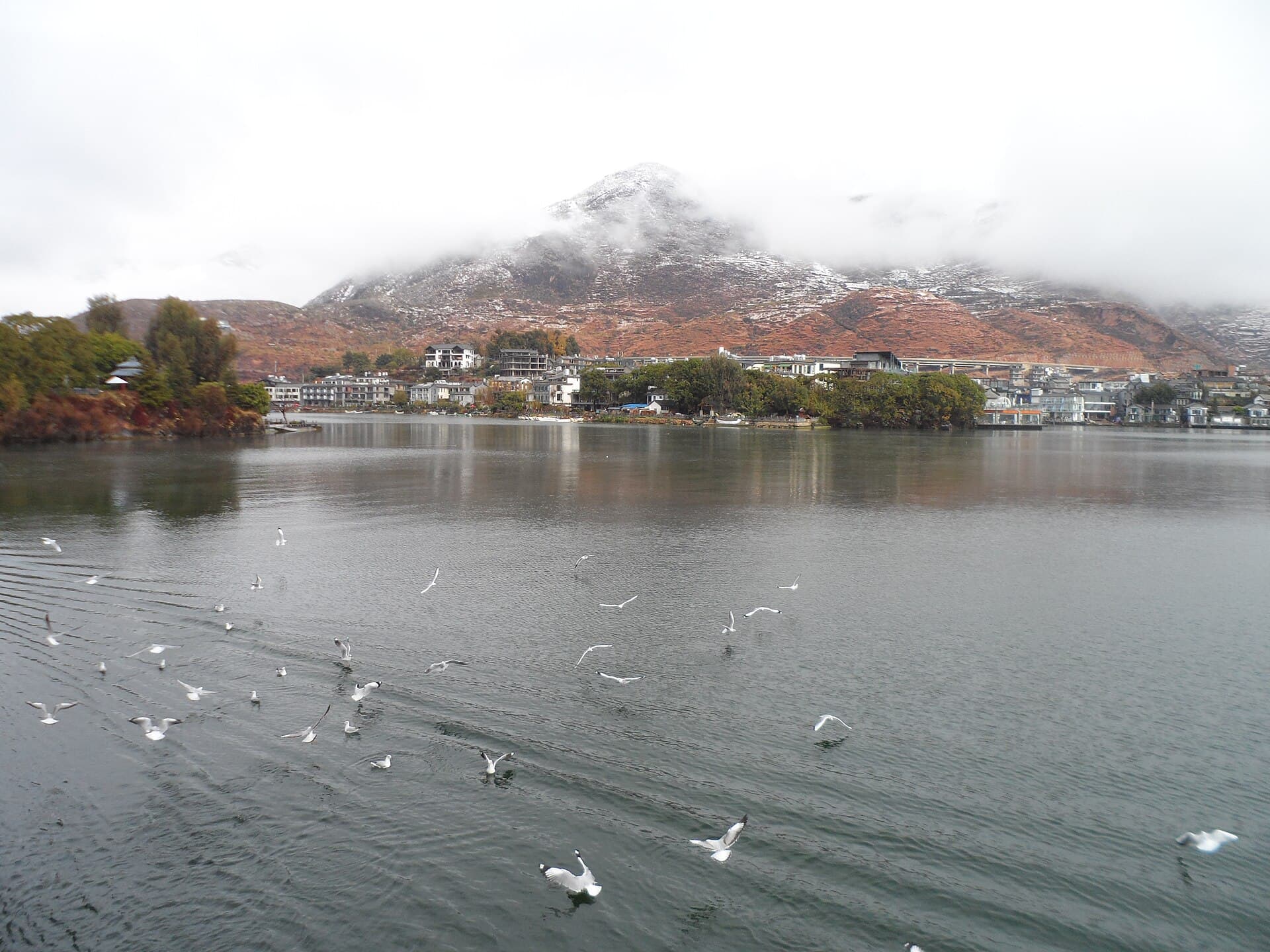
A historic walled town between the Cangshan mountains and Erhai Lake in western Yunnan; the Bai people settled the area about three thousand years ago, and it was the capital of the Nanzhao and Dali kingdoms for centuries, at a crossroads of trade between Tibet, China, Burma and Southeast Asia. Its present walls were built under the Ming, about 1,850 m long and 1,500 m wide, with four towered gates and the Wuhua drum tower at its heart; its flagstone streets cross in a chessboard grid between white Bai houses with grey roofs and painted walls. In the mid-nineteenth century Dali became the seat of a state founded by the Muslim leader Du Wenxiu during what is known as the Muslim uprising in Yunnan against the Qing (1856–1872); he repaired its main mosque and built new mosques and religious schools, and many Hui Muslims still live in the area. Wandering the town is free for independent visitors, with token fees for some sights inside, per visitor guides. Evenings are loveliest, when the streets light up; you'll find halal restaurants run by Hui Muslims, while many others serve pork.
White and painted.
At the heart.
Historic.
Between Cangshan and Erhai Lake, Yunnan
Yes, the area has many Hui Muslims, and the old town has halal restaurants they run, while many others serve pork.