Jahangir's tomb
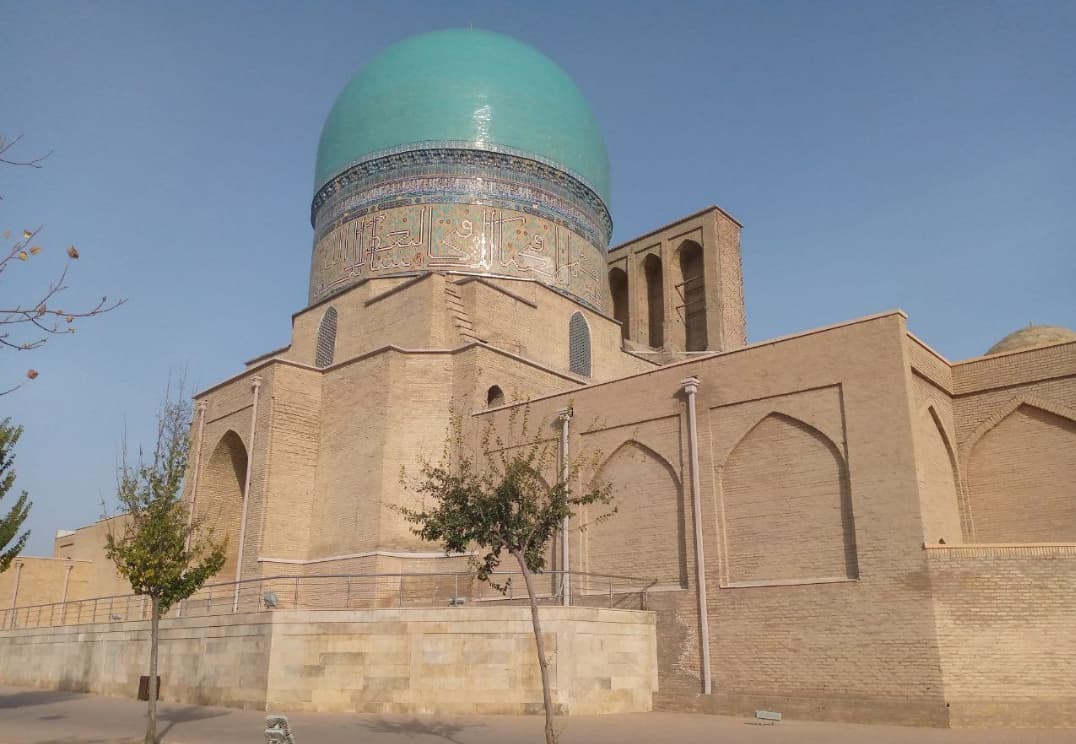
Conical dome.
Davide Mauro — CC BY-SA 4.0 · Jean Housen — CC BY-SA 4.0 · Jean Housen — CC BY-SA 4.0 · Mushtariy15 — CC BY-SA 4.0 · Faqscl — CC BY-SA 3.0 · Faqscl — CC BY-SA 3.0 · Faqscl — CC BY-SA 3.0 · Jean Housen — CC BY-SA 4.0
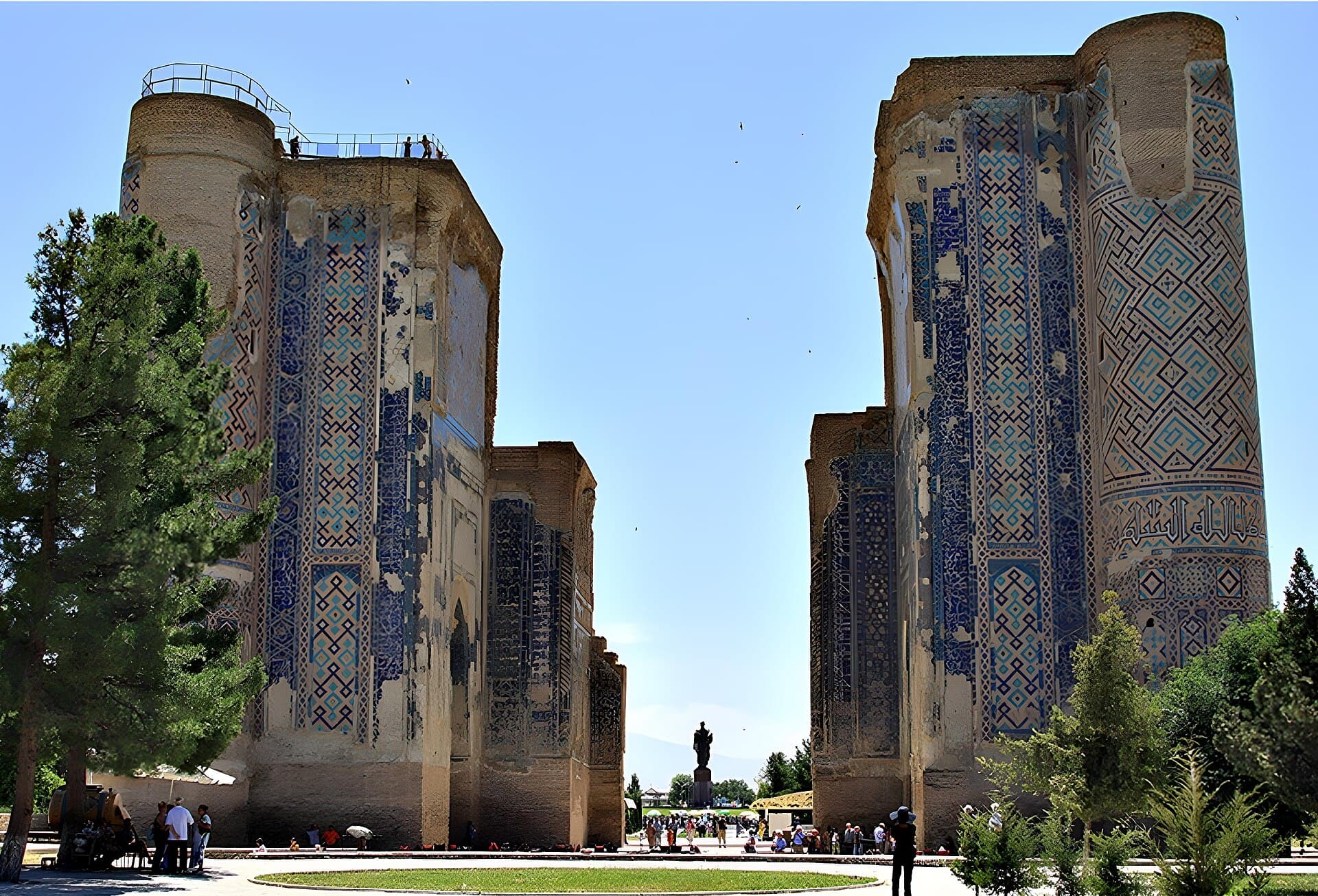
The memorial complex Timur intended as his family's burial place in his home town; its name means «seat of power and might». Its chief survivor is the soaring brick mausoleum of Jahangir, Timur's eldest and favourite son, who died young in 1376, crowned by a conical dome. Beside it stands the Hazrati Imam Mosque. The most intriguing find, though, is an underground crypt discovered by archaeologists in 1943, almost filled by a single stone coffin whose inscriptions show it was meant for Timur himself. Yet Timur died in 1405 on campaign towards China and was buried in the Gur-e Amir in Samarkand, not here; tradition says snow had closed the mountain road to Shahrisabz. The crypt was found to hold two unidentified bodies. Tickets are about 30,000 som, per visitor guides, and the crypt is reached through a door behind the mosque. The complex lies about 200 m east of Dorut Tilavat, so the two share one visit.
Conical dome.
Stone coffin.
On the walls.
East of Dorut Tilavat, historic centre, Shahrisabz
No; a crypt was prepared for him at Dor us-Siyodat, found in 1943, but he was buried in the Gur-e Amir in Samarkand after his death in 1405.