
The Glico sign
Osaka's icon.
Sakai Yayoi — CC0 · Tokumeigakarinoaoshima — CC0 · Tokumeigakarinoaoshima — CC BY-SA 4.0 · dconvertini — CC BY-SA 2.0 · The original uploader was SElephant at Chinese Wikipedia. — CC BY-SA 3.0 · Sakai Yayoi — CC0 · DXR — CC BY-SA 4.0 · Joli Rumi — CC BY-SA 4.0
Osaka's best-known nightlife and entertainment district, running along the Dōtonbori canal in Namba. Its story begins in 1612, when the canal was dug; it was long the theatre district and is now a quarter of lights and restaurants, with huge illuminated signs and a lively atmosphere. Its most famous sign is the glowing billboard of the confectioner Glico, a runner crossing the finishing line with arms raised, an icon of Osaka across Japan; visitors pose in front of it on Ebisubashi bridge. Giant restaurant figures line the shopfronts, among them a huge crab and an octopus. Osaka is nicknamed «Japan's kitchen», and Dōtonbori is the heart of its street food, famous for takoyaki and okonomiyaki. A promenade runs along both banks of the canal, where sightseeing boats pass. Walking around is free. It is at its best in the evening, when the signs light up and reflect in the water, and very crowded at weekends. Many street dishes contain meat or seafood, so ask about ingredients if you follow a special diet.
Osaka's icon.
Crab and octopus.
Evening on the water.
Namba, Chūō ward, on the Dōtonbori canal
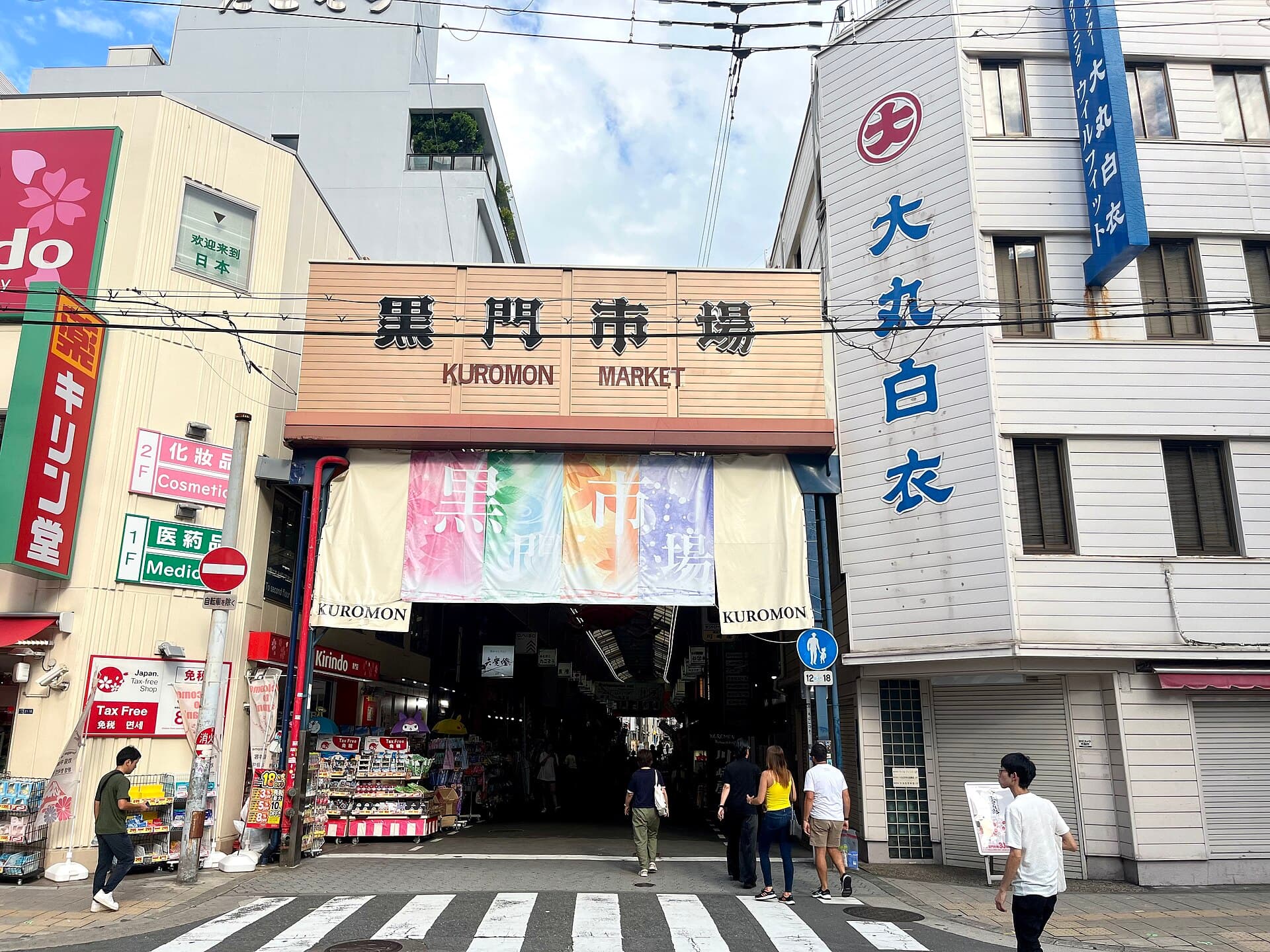 Kuromon MarketA popular covered market in Nipponbashi near Namba, known locally as «Osaka's ki8 minutes walk4.2
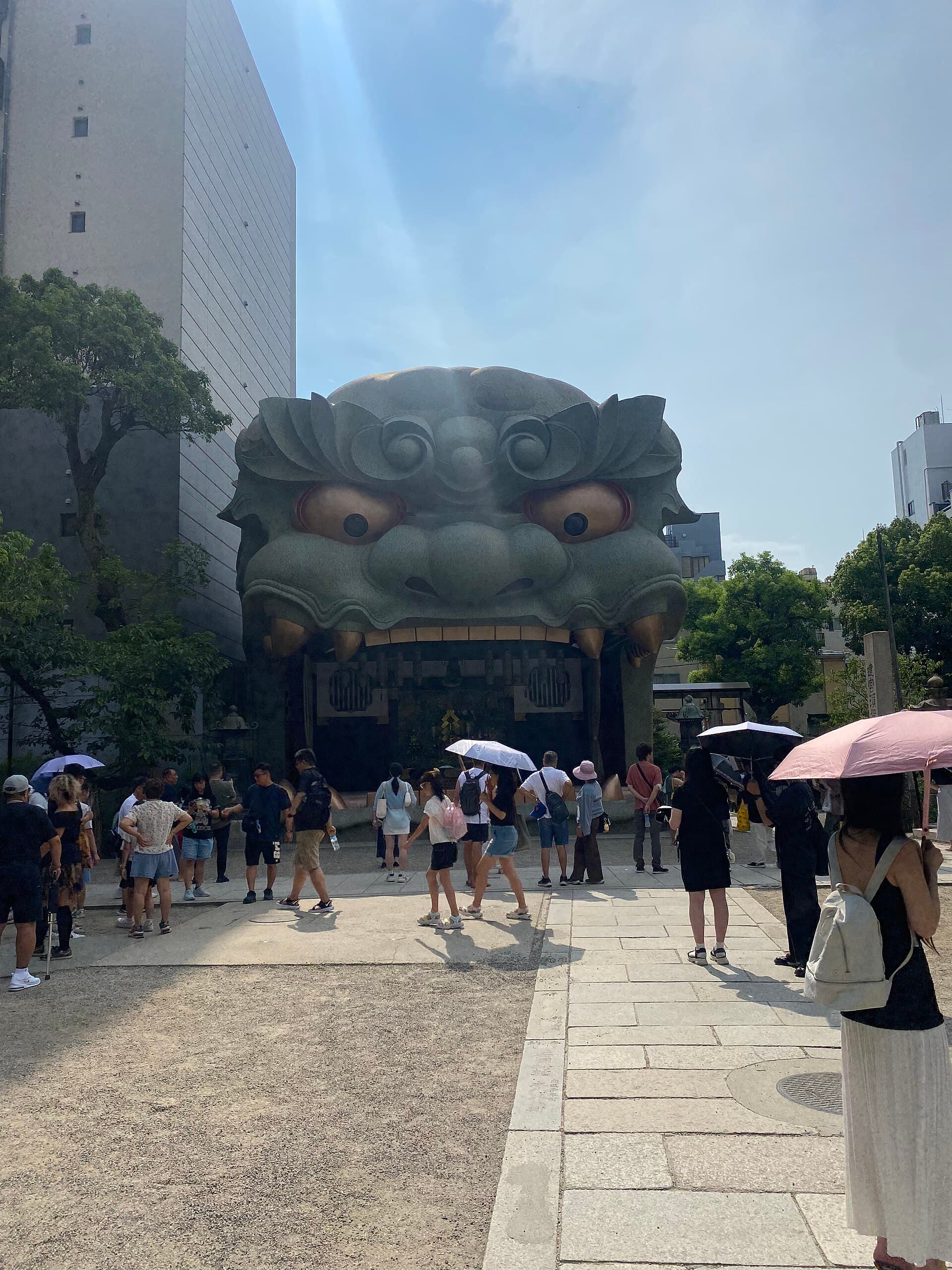 Namba Yasaka Shrine and its Lion HeadA small Shinto shrine near Namba, famous for one extraordinary building: a stage11 minutes walk4.4
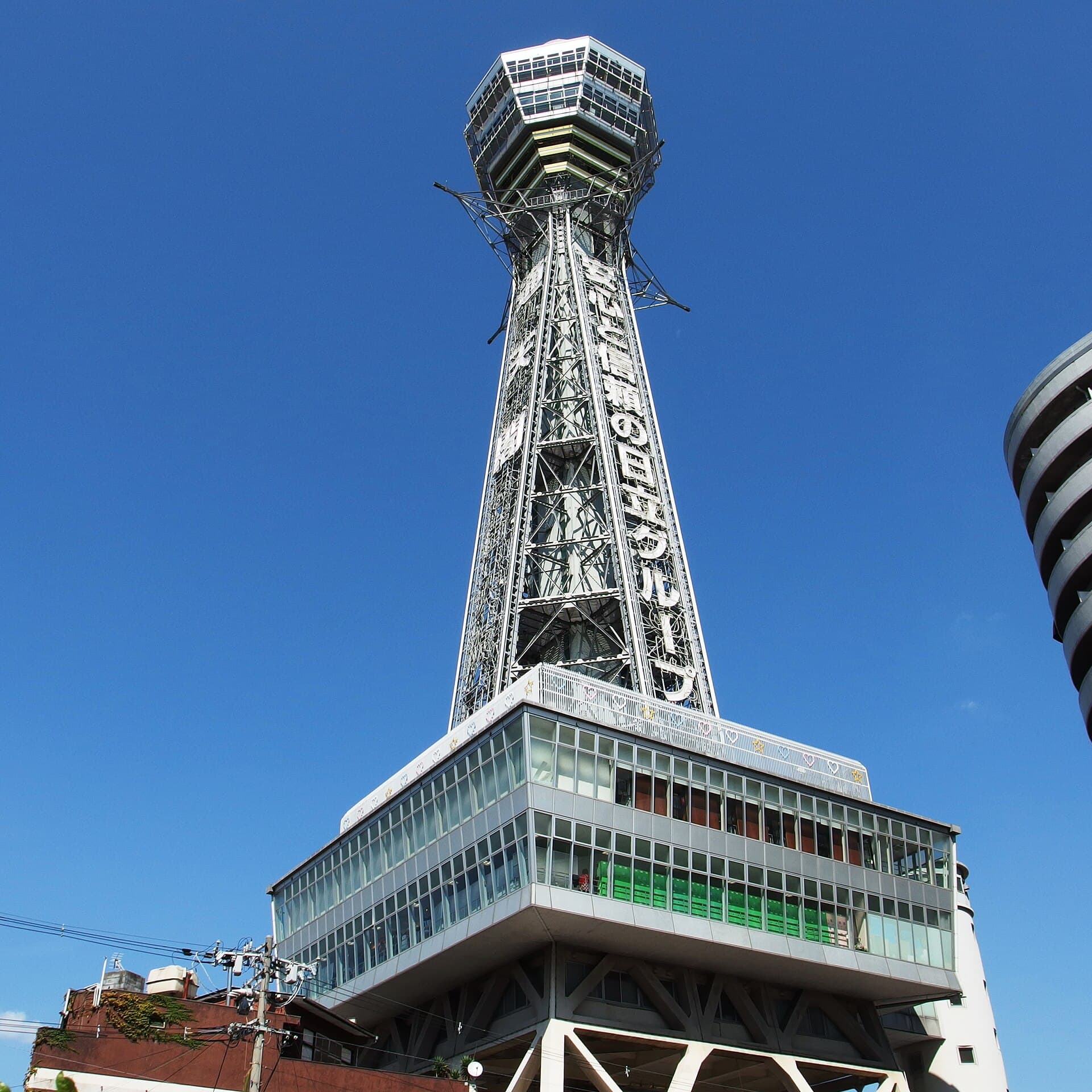 Tsūtenkaku Tower and ShinsekaiA tower and Osaka landmark in the Shinsekai district, its name meaning «Tower Re24 minutes walk4.0
The evening, when the signs light up and reflect in the canal; walking around is free, but it is very crowded at weekends.