
Drinking elephant
On the river.
Sentinel7 at English Wikipedia — Public domain · vlk807 — CC BY 3.0 · luchangjiang~鲁昌江 — CC BY-SA 3.0 · S5A-0043 — CC BY 4.0 · 吴稼文 — CC BY-SA 3.0 · G41rn8 — CC BY-SA 4.0 · lienyuan lee — CC BY 3.0 · xiquinhosilva — CC BY 2.0
The symbol and official emblem of Guilin, a limestone hill where the Li River meets the Taohua River that looks exactly like a giant elephant dipping its trunk into the water to drink; it's the city's most famous sight. Between the «trunk» and the «body» is a wide rock arch known as Water-Moon Cave, through which the river flows; on moonlit nights the moon's reflection under the arch seems to float on the surface and lie in the depths at once, and halfway up the hill another opening looks like the elephant's eye. A small old stone pagoda, the Puxian Pagoda, crowns the hill, with steps up both sides to a top overlooking the city and the river; boats leave from its banks, and with the nearby lakes it forms one of China's top-rated scenic areas. The scenic area costs about CNY 55, per visitor guides, and you can see the hill for free from the opposite bank of the Taohua River and from the city's bridges. Sunset and after dark are best, when the hill is lit up and the night cruises pass by.
On the river.
A rock arch.
Over the city.
Binjiang Road, where the Li and Taohua rivers meet, Guilin
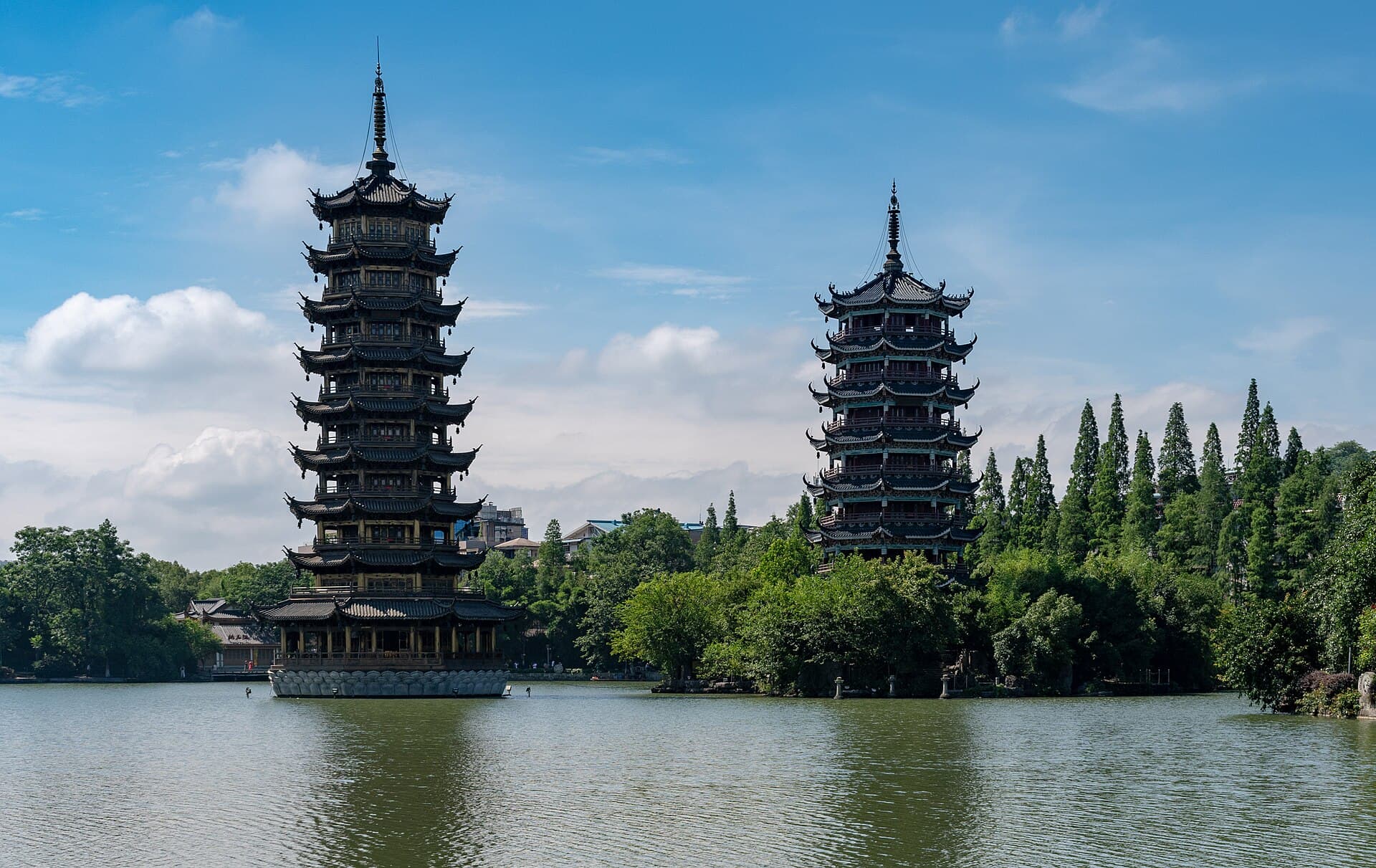 Two Rivers and Four LakesA waterway network in the heart of Guilin that links the Li and Taohua rivers wi6 minutes walk4.8
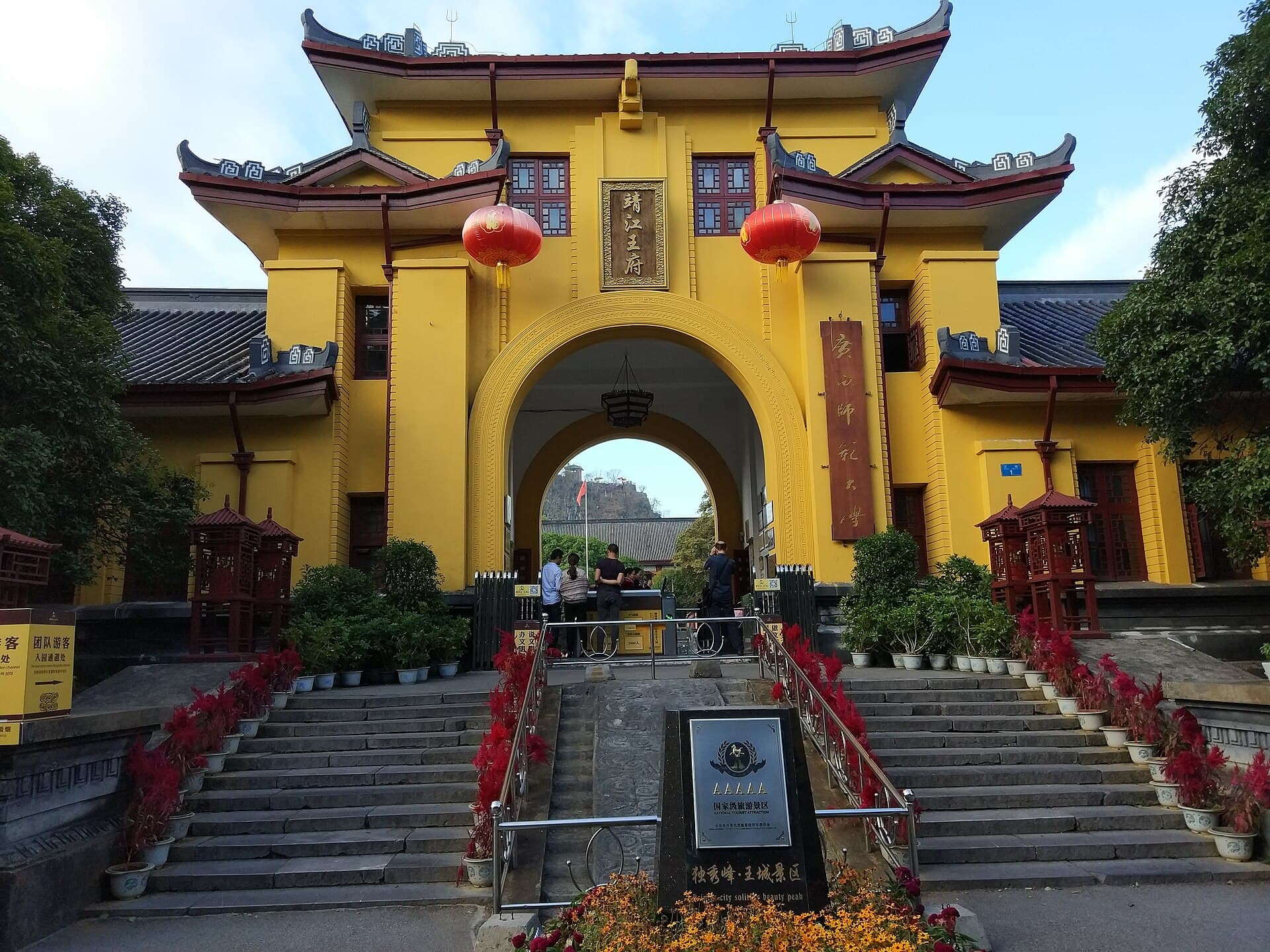 Jingjiang Princes' City and Solitary Beauty PeakA walled Ming-dynasty palace in the heart of Guilin, begun in 1372 as the seat o21 minutes walk4.4
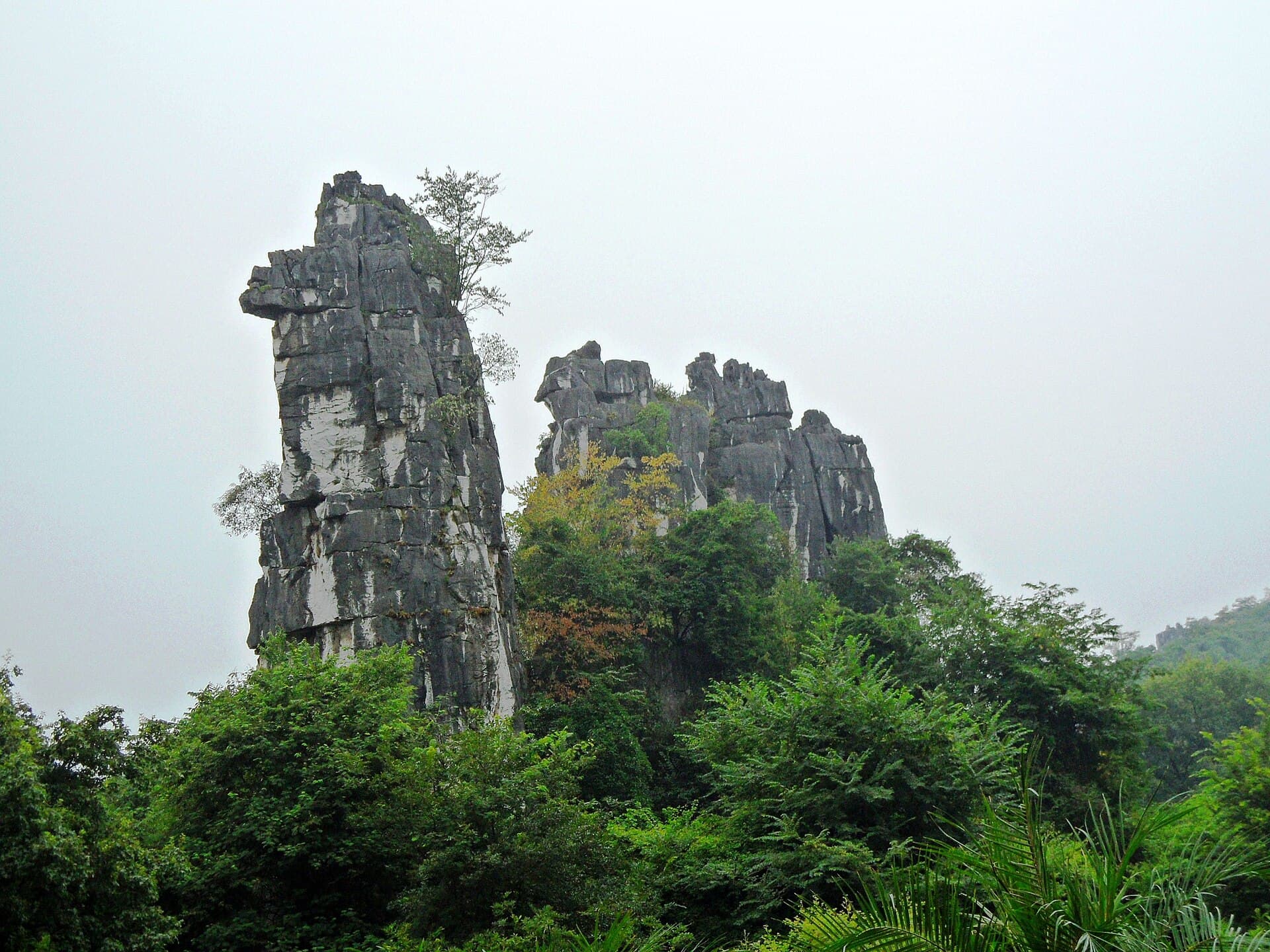 Seven Star ParkGuilin's largest park, on the east bank of the Li River, covering about 137 hect22 minutes walk4.0
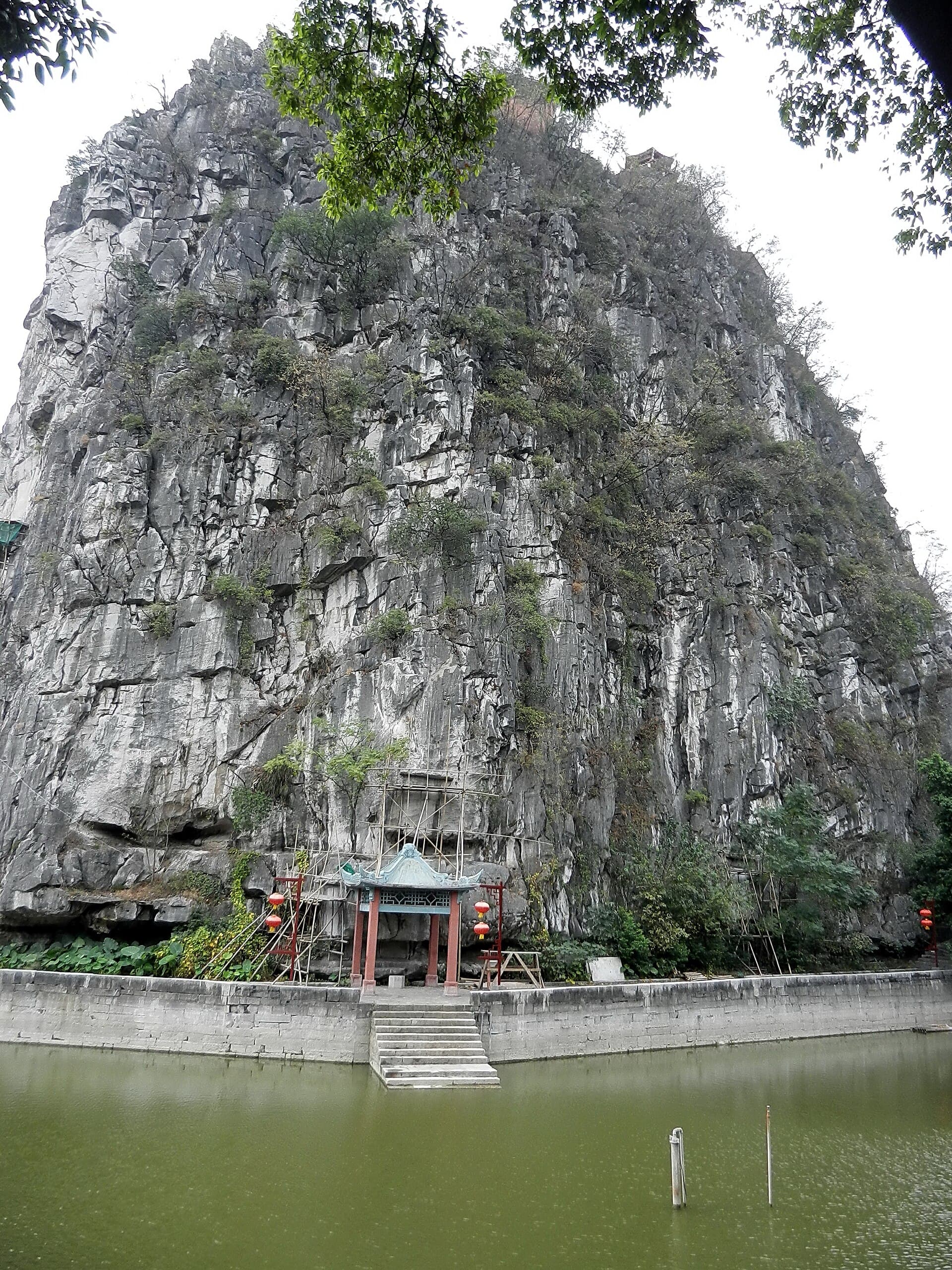 Fubo HillA solitary rock hill on the west bank of the Li River in central Guilin, half on25 minutes walk4.2
Yes, clearly from the opposite bank of the Taohua River and from the city's bridges; entering the scenic area costs about CNY 55, per visitor guides.