Built in 1579
Classical Ottoman design.
Kondephy — CC BY-SA 4.0 · Aleksandra Đuričić — CC BY 4.0 · Zmajoliki — CC BY-SA 3.0 · Petar Milošević — CC BY-SA 4.0 · Emin Tarahija — CC0
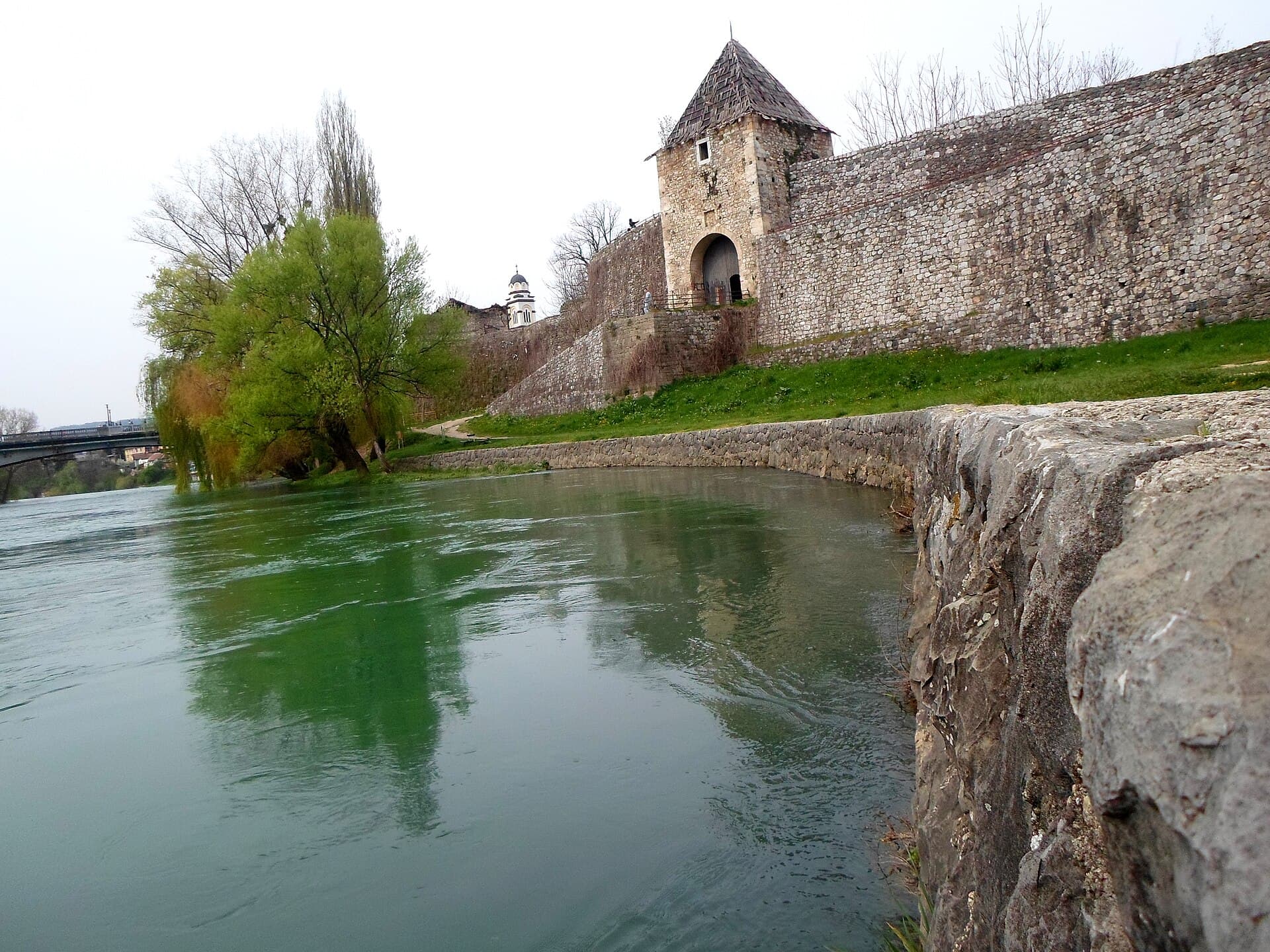
Banja Luka's finest and best-known mosque, built in 1579 by Ferhad Pasha Sokolović, governor of Bosnia, in classical Ottoman style with a great dome and a tall, graceful minaret; it was a masterpiece of Ottoman architecture in the Balkans and a listed national monument. In 1993, during the Bosnian war, the mosque was blown up and razed together with the city's other mosques, its rubble carted off to a landfill and a nearby river. After the war scholars and craftsmen recovered the original stones, and the mosque was faithfully rebuilt on its old foundations, using original stone wherever possible, reopening in 2016 as a symbol of resilience and memory for Bosnia's Muslims. Inside, the dome carries delicate, colourful floral painting restored as it was, with a stone mihrab and minbar. Entry is free; modest dress is expected, women cover their hair, and visits are outside prayer times. Banja Luka is Bosnia's second city, about four hours by car from Sarajevo, and the mosque is a few minutes' walk from Kastel fortress.
Classical Ottoman design.
After it was blown up in 1993.
Delicate floral decoration.
Central Banja Luka, northern Bosnia
It was blown up in 1993 during the war; its original stones were recovered and it was rebuilt on its foundations, reopening in 2016.