
The Gothic façade
Stone lace with statues on Hoogpoort.
44penguins (Angela M. Arnold, Berlin — CC BY-SA 3.0 · Dennis G. Jarvis — CC BY-SA 2.0 · LBM1948 — CC BY-SA 4.0 · Pierre Goiffon — CC BY-SA 4.0
Ghent's City Hall is an architecture lesson on one façade: its northern half (on Hoogpoort) is dazzling Flamboyant Gothic of 1519 like stone lace, with statues and worked windows — begun by the cathedral's architects with great ambition; then the money ran out in the religious troubles, and when building resumed in 1580 taste had changed, so the other half (on the Botermarkt) came out severe Renaissance with classical columns — one house with two faces from two eras. The interior is visited on limited tours (via the tourist office) including the "Pacification Hall" where the "Pacification of Ghent" (1576) uniting the provinces against Spain was signed, the throne room and the wedding hall with its maze floor. But the two façades from outside are the essential visit — compare them as you walk around the building. On the Botermarkt between the Belfry and the Korenmarkt — a short architectural stop on the route.
Stone lace with statues on Hoogpoort.
Severe classical columns on the Botermarkt.
Where the Pacification of Ghent was signed in 1576.
Botermarkt 1, 9000 Ghent
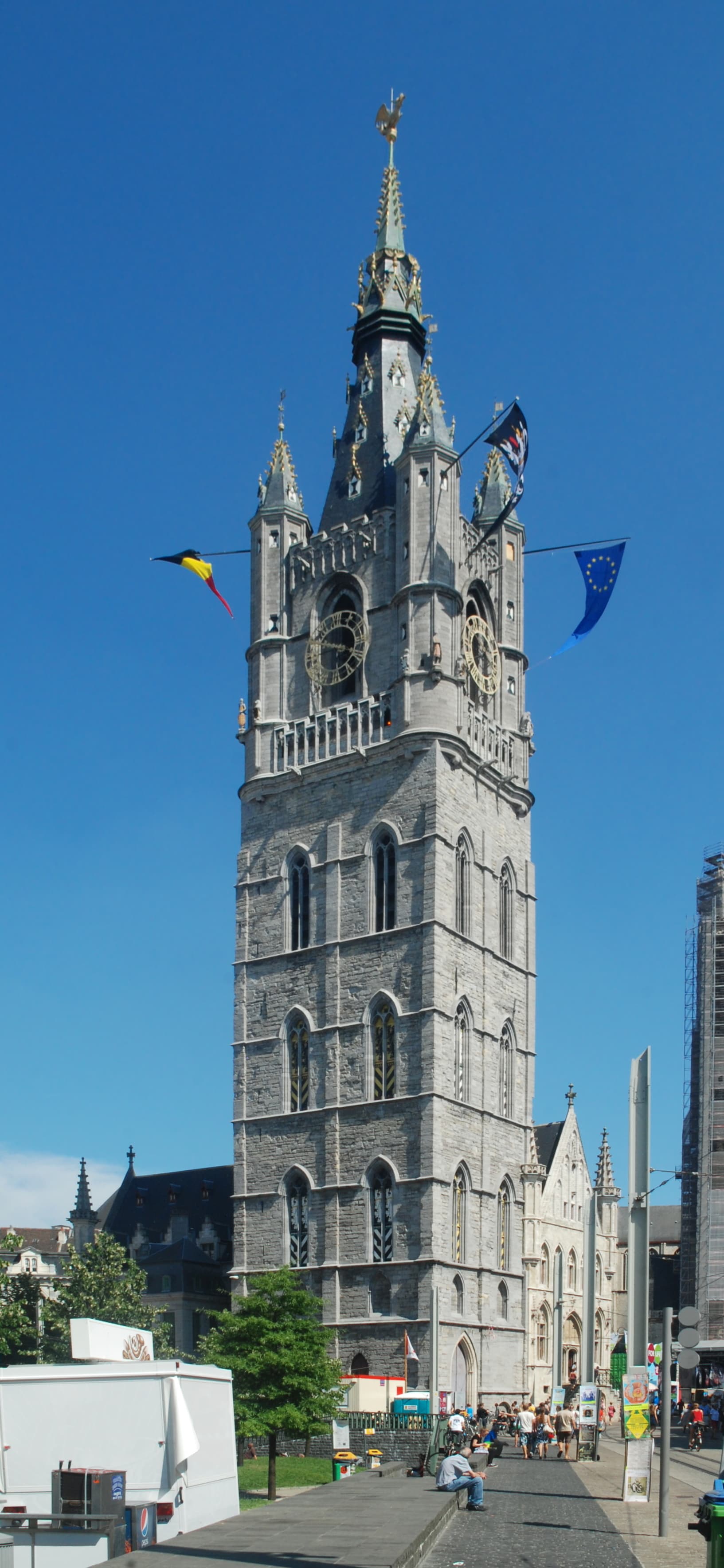 Belfry of GhentGhent's Belfry is the middle and most symbolic of the three towers: a fourteenth1 minute walk4.5
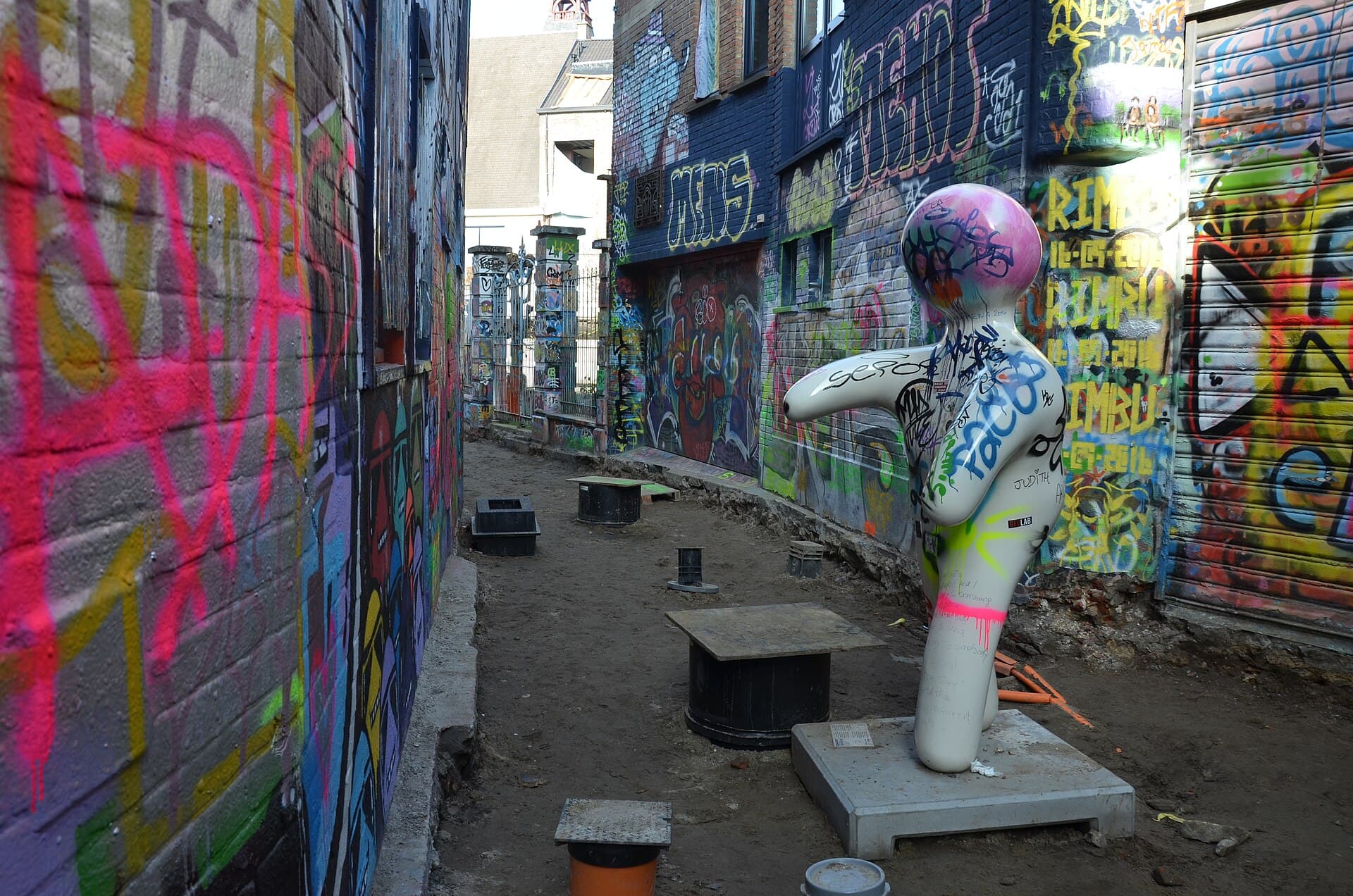 Graffiti Street (Werregarenstraat)Graffiti Street is a narrow, crooked alley in the heart of old Ghent turned into1 minute walk4.3
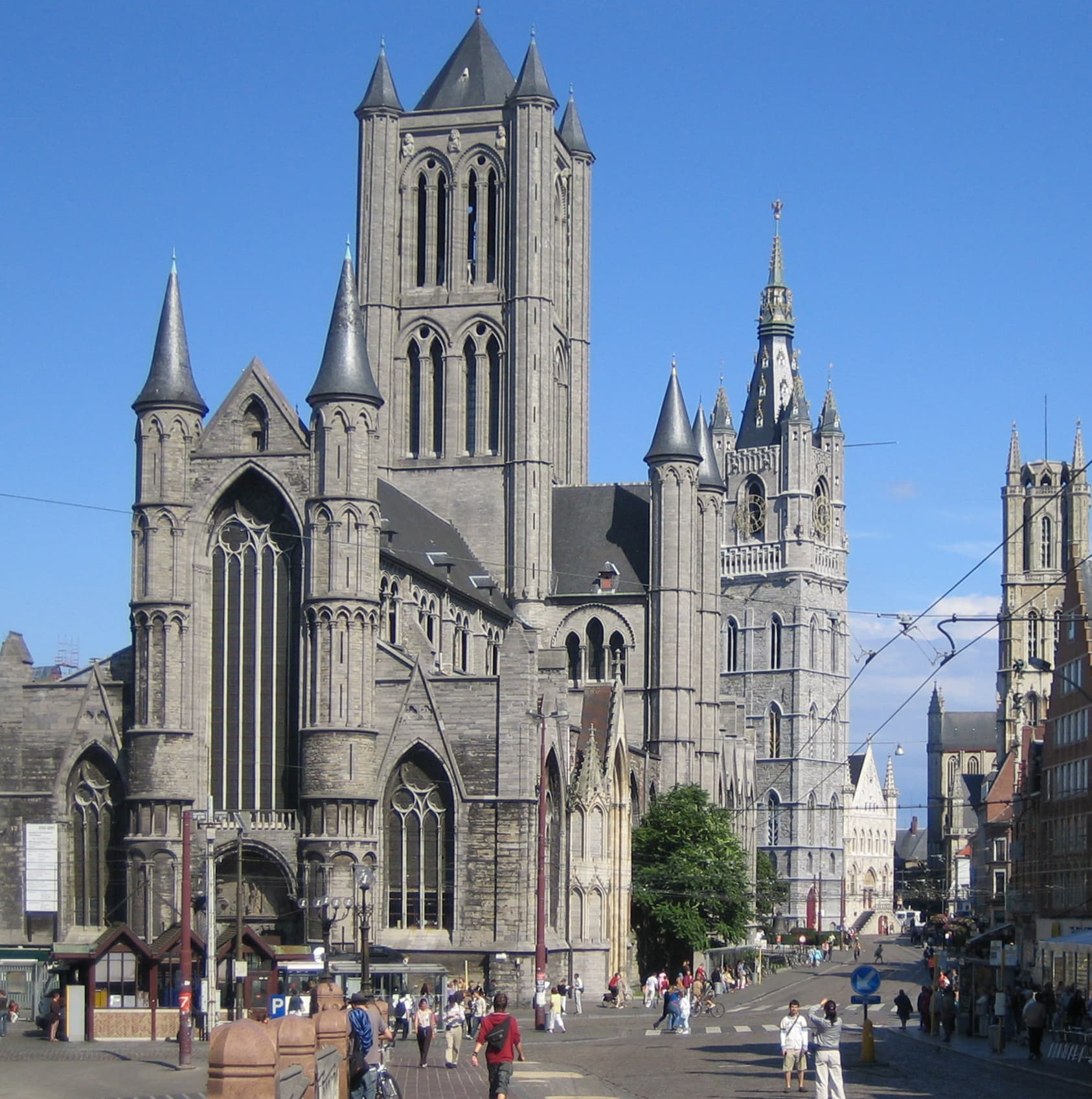 St Nicholas' ChurchSt Nicholas' Church is the first of the three towers from the quays and the olde2 minutes walk4.7
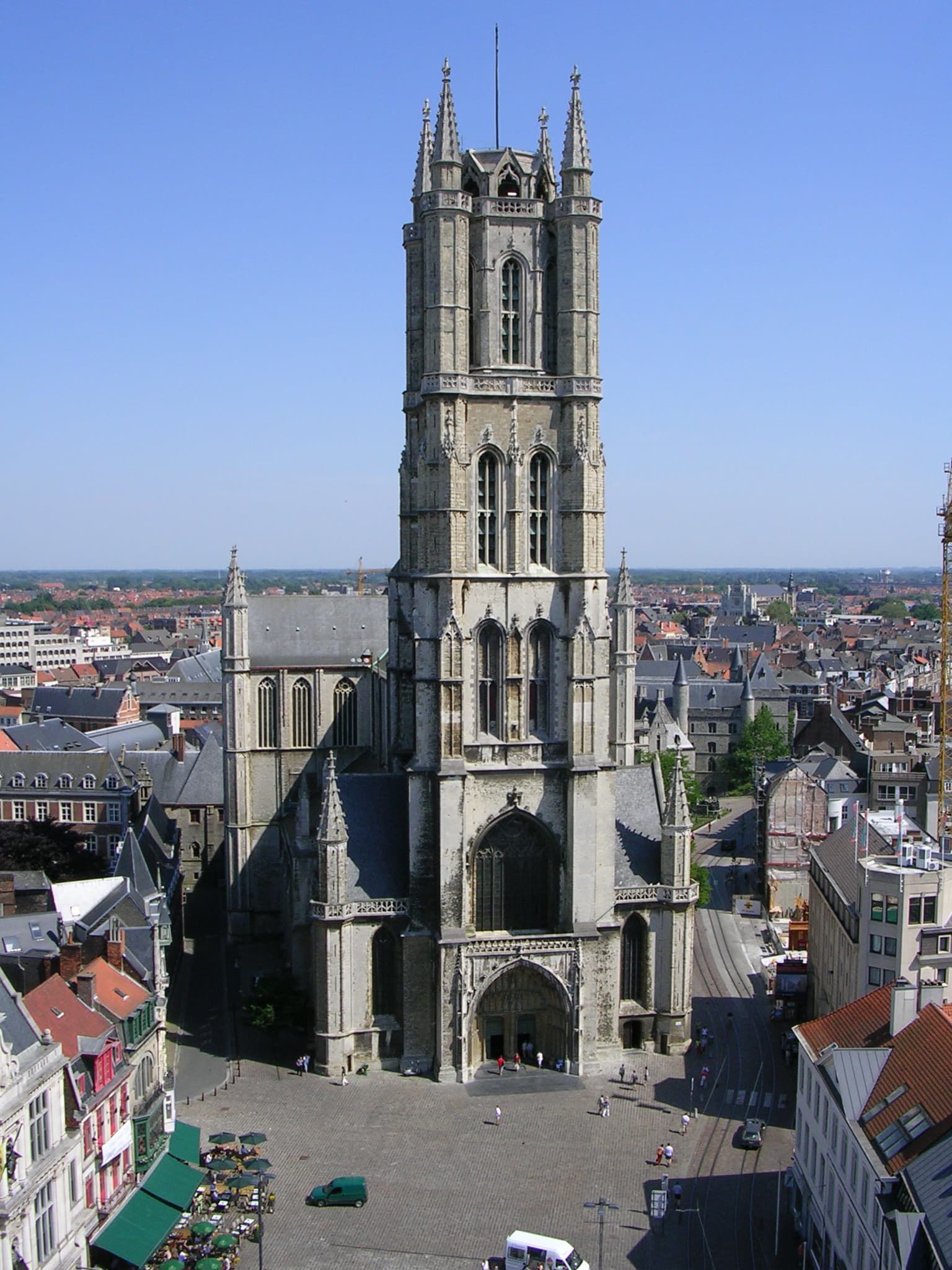 St Bavo's CathedralSt Bavo's Cathedral is home to Belgium's most famous painting and one of the mos3 minutes walk4.8
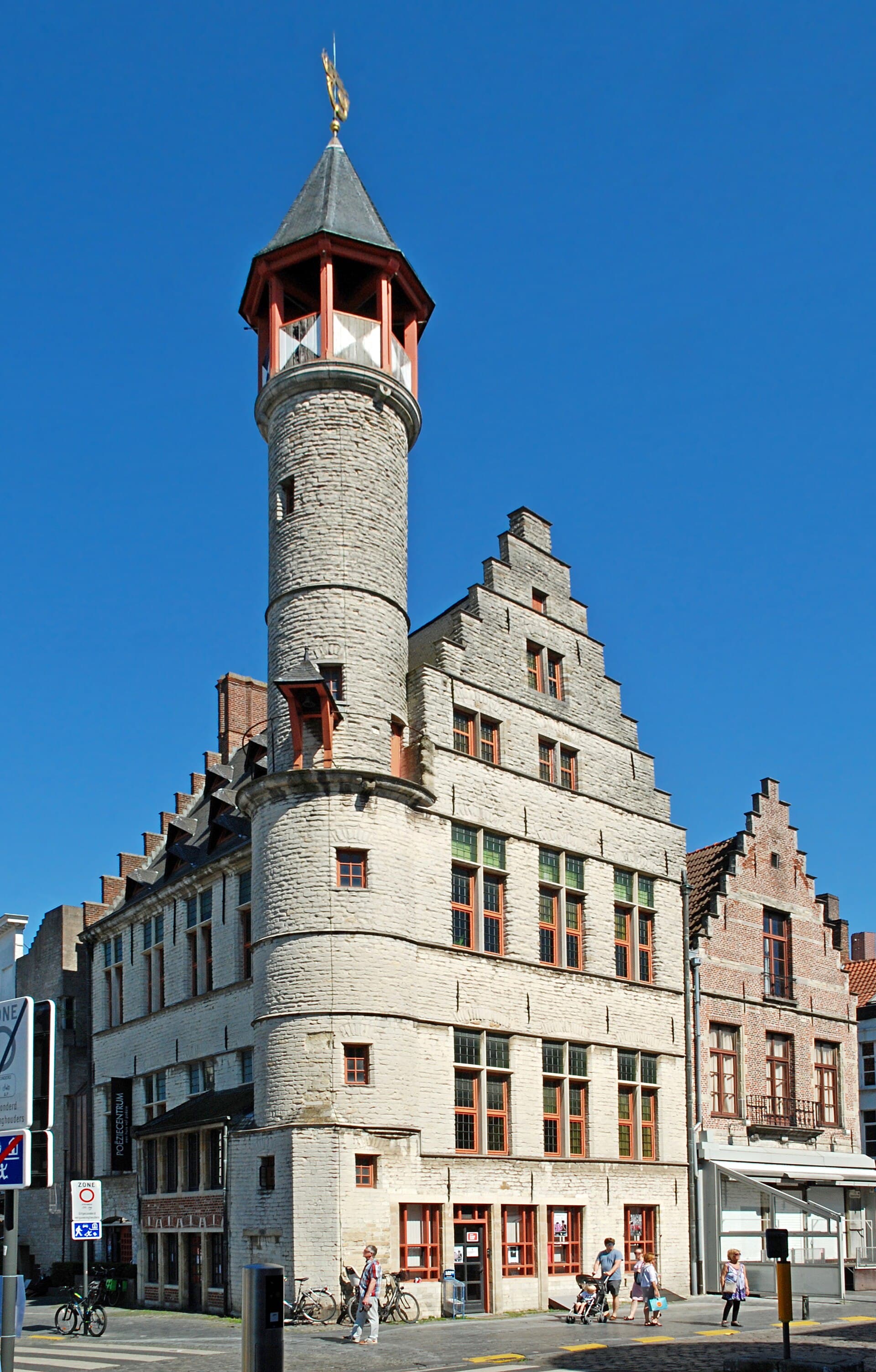 Het TorekenA fifteenth-century building with a small tower on the Vrijdagmarkt, formerly th3 minutes walk4.5
Time and money: begun with Gothic ambition in 1519, then the religious troubles and bankruptcy halted building for sixty years; when it resumed in 1580 the Italian Renaissance had prevailed, so it was completed in the new style without any attempt to match. The result is a rare lesson in changing architectural taste on a single building.