
Oldest Chinese temple
In all of Penang.
Christophe95 — CC BY-SA 4.0 · Foryou42686 — CC0 · Gryffindor — Public domain · User: (WT-shared) Shoestring at wts wikivoyage — CC BY-SA 4.0 · Foryou42686 — CC0
Penang's oldest Chinese temple, built in 1800 and known locally as Kuan Yin Teng. It is dedicated to Guan Yin, the goddess of mercy in Chinese Buddhist belief, though it was originally devoted to Mazu, the sea goddess worshipped by seafarers from Fujian. In the nineteenth century the temple was not only a place of worship but a council for the Chinese community, settling disputes between the rival Cantonese and Hokkien groups before that role passed to the Chinese Town Hall. The building is simple in the southern Chinese style, with a tiled roof crowned by dragons and ceramic figures, and in front is a wide courtyard where incense smoke rises and pigeons circle. It is very busy on Guan Yin's feast days three times a year and at Chinese New Year, when hundreds of red lanterns are hung. Entry is free; it is a working place of worship, so keep your voice down and ask before photographing worshippers. It stands on the Street of Harmony between St George's Church and the Sri Mahamariamman Temple.
In all of Penang.
At Chinese New Year.
Colourful ceramic figures.
Jalan Masjid Kapitan Keling, George Town
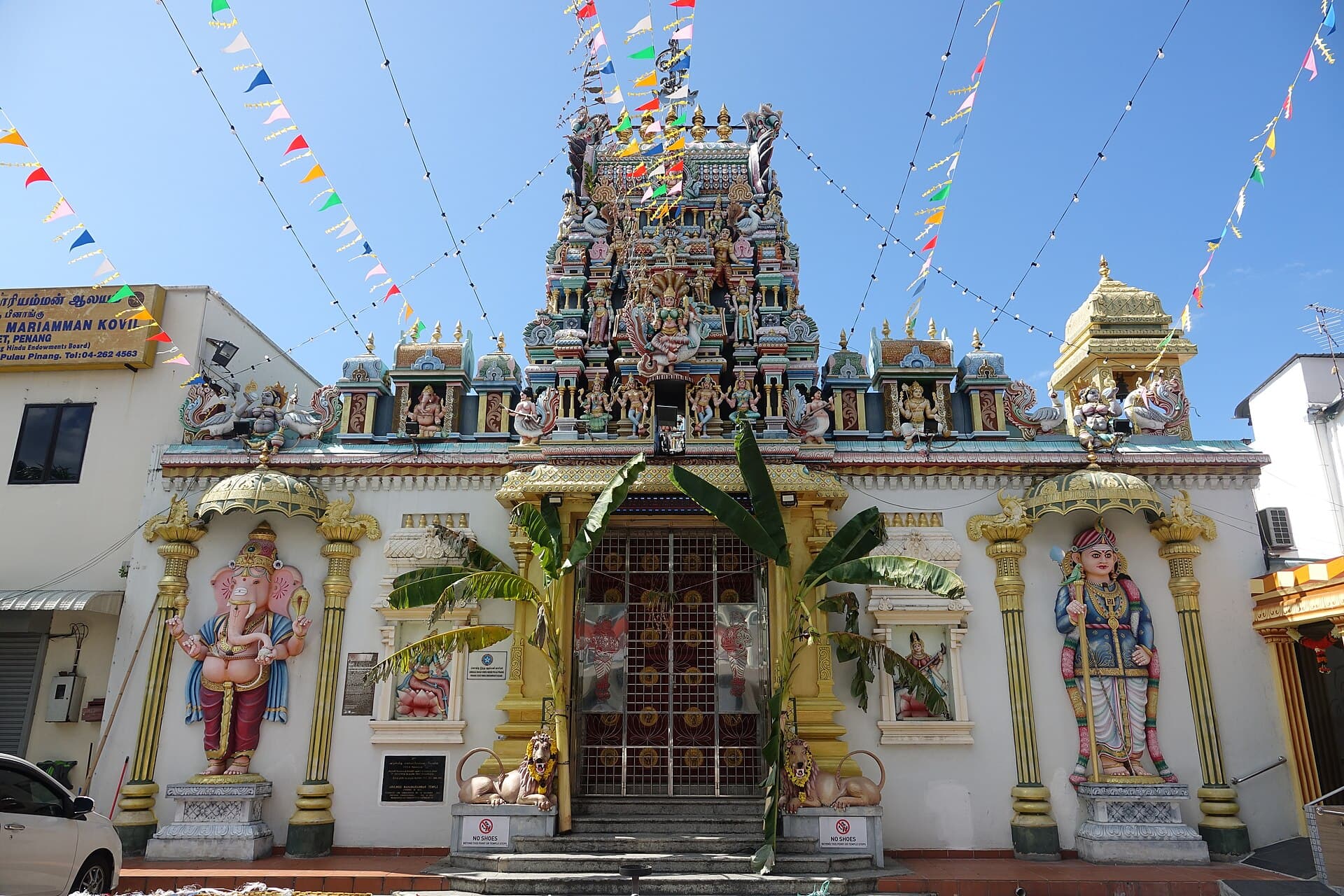 Sri Mahamariamman TempleThe oldest Hindu temple in the state of Penang, at the heart of George Town's Li2 minutes walk
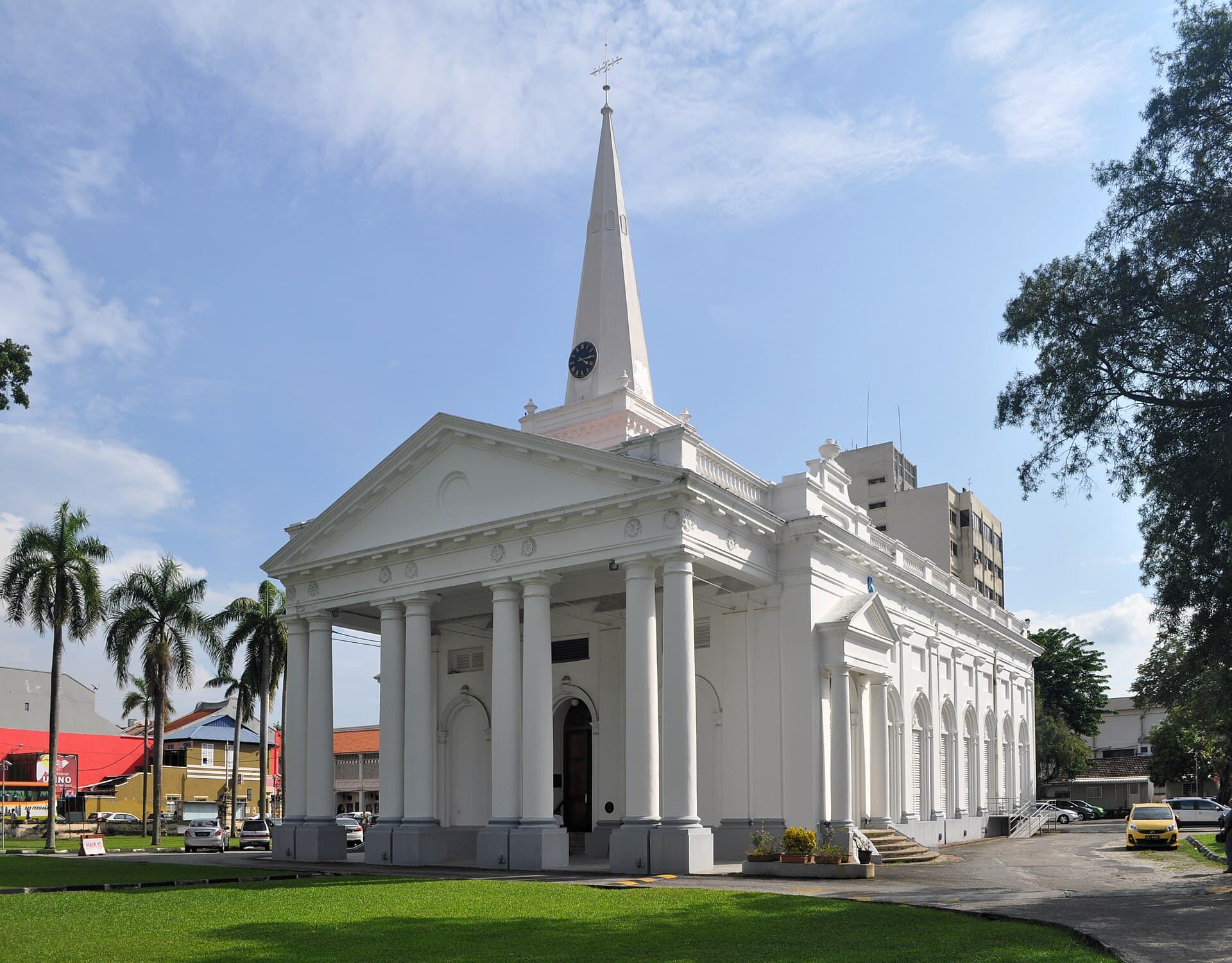 St George's ChurchThe oldest purpose-built Anglican church in Southeast Asia, built between 1817 a2 minutes walk
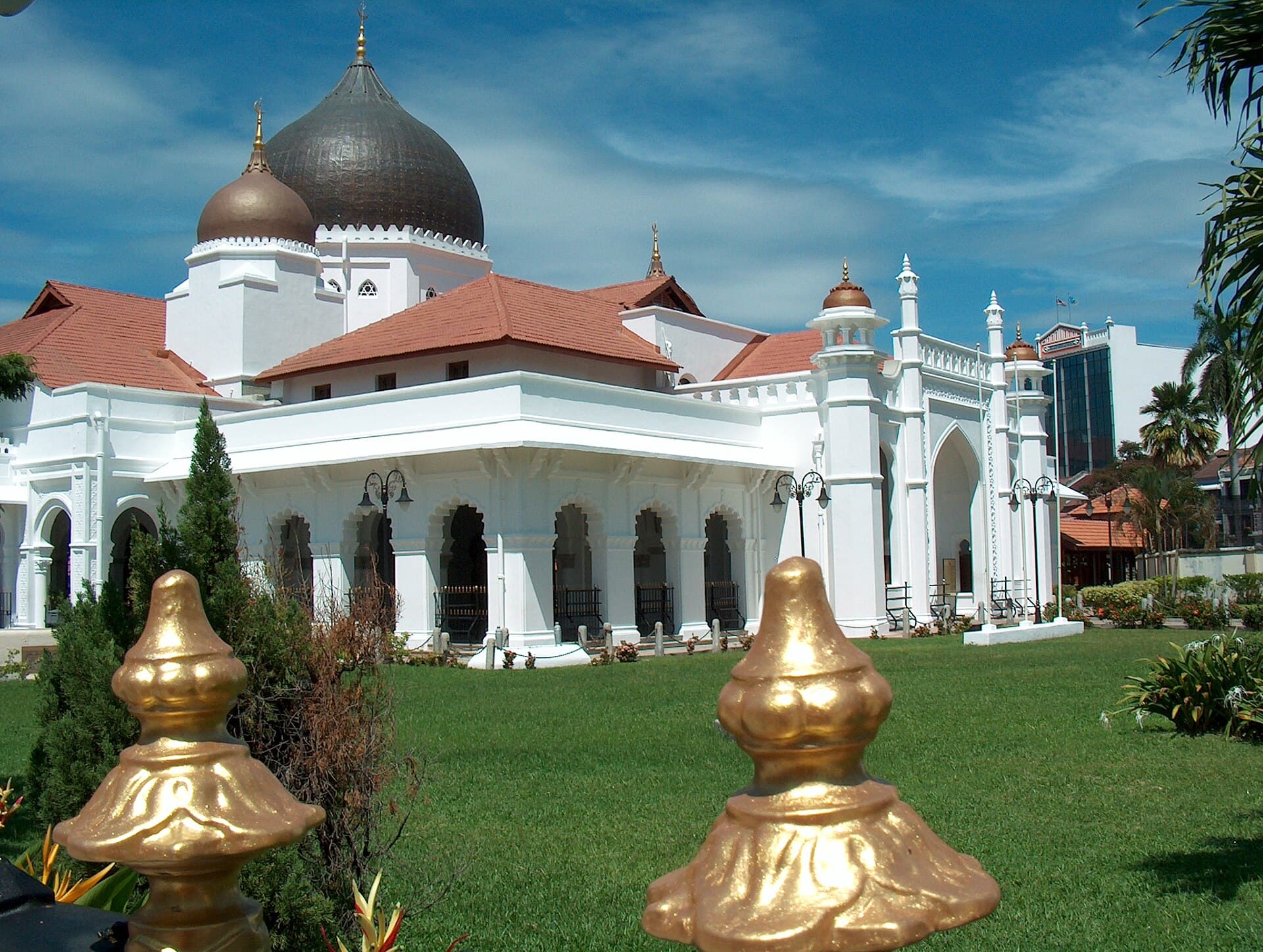 Kapitan Keling MosqueFounded by Muslim traders from South India in the early nineteenth century, a fe3 minutes walk4.7
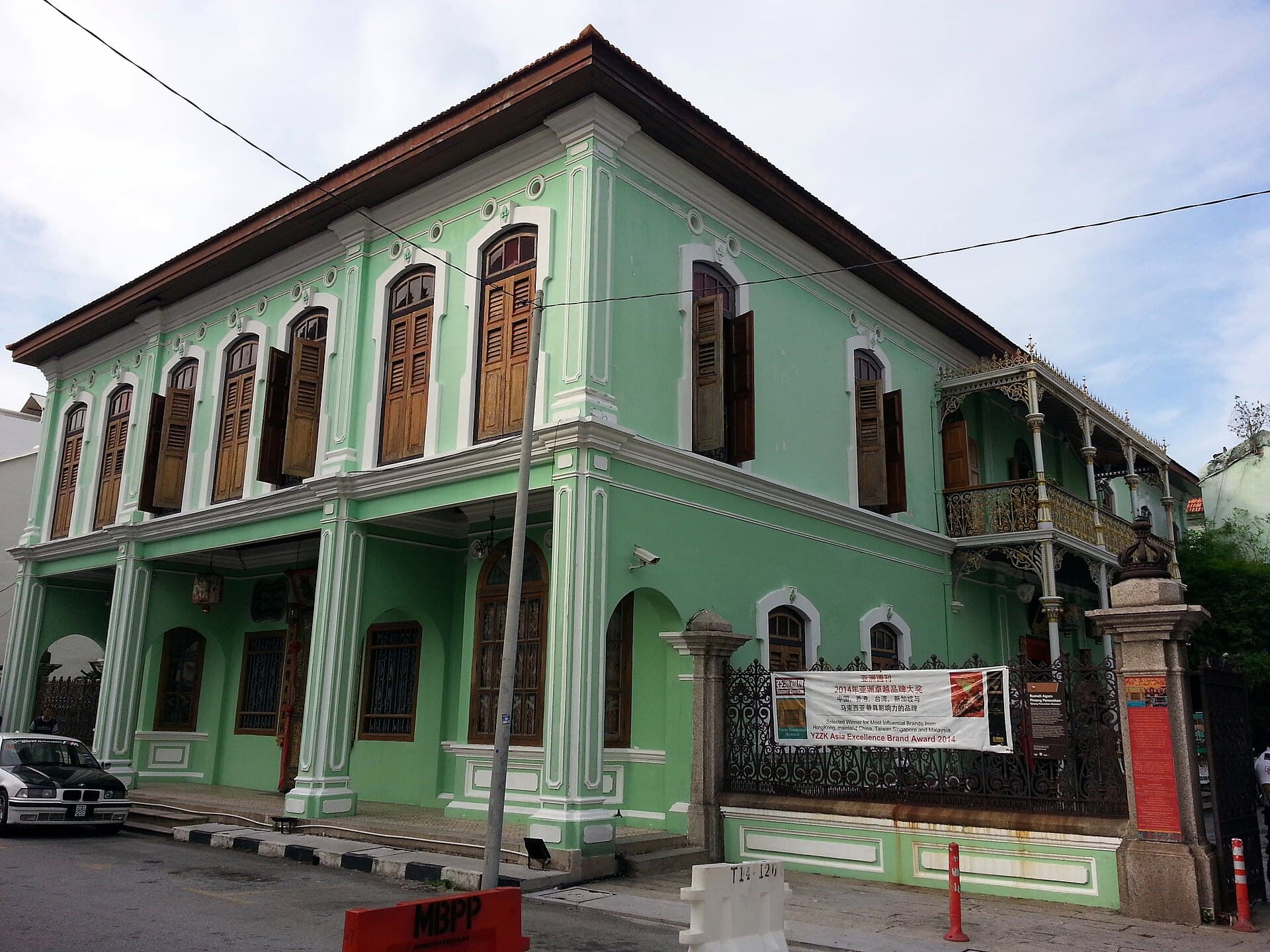 Pinang Peranakan MansionA green mansion on Church Street built in the late nineteenth century by Chung K3 minutes walk4.6
 Little India, George TownA lively quarter in the heart of George Town, fragrant with spices and incense a4 minutes walk
At Chinese New Year and on Guan Yin's feast days three times a year, when it fills with worshippers and incense, and very large crowds.