Acoustics
The echoing clap.
Ritwick Sanyal — CC BY-SA 3.0 · Rajeshodayanchal — CC BY-SA 4.0 · Tarunsamanta — CC BY-SA 4.0 · Sailko — CC BY 3.0 · Rajeshodayanchal — CC BY-SA 4.0 · This picture has been taken by Oleg Yunakov. Contact e-mail: yunakovgmail.com. Image can be used in accordance with the terms of the СС-BY-SA license. Other photos can be seen here. — CC BY-SA 4.0 · Rangan Datta Wiki — CC BY-SA 4.0 · Tarunsamanta — CC BY-SA 4.0
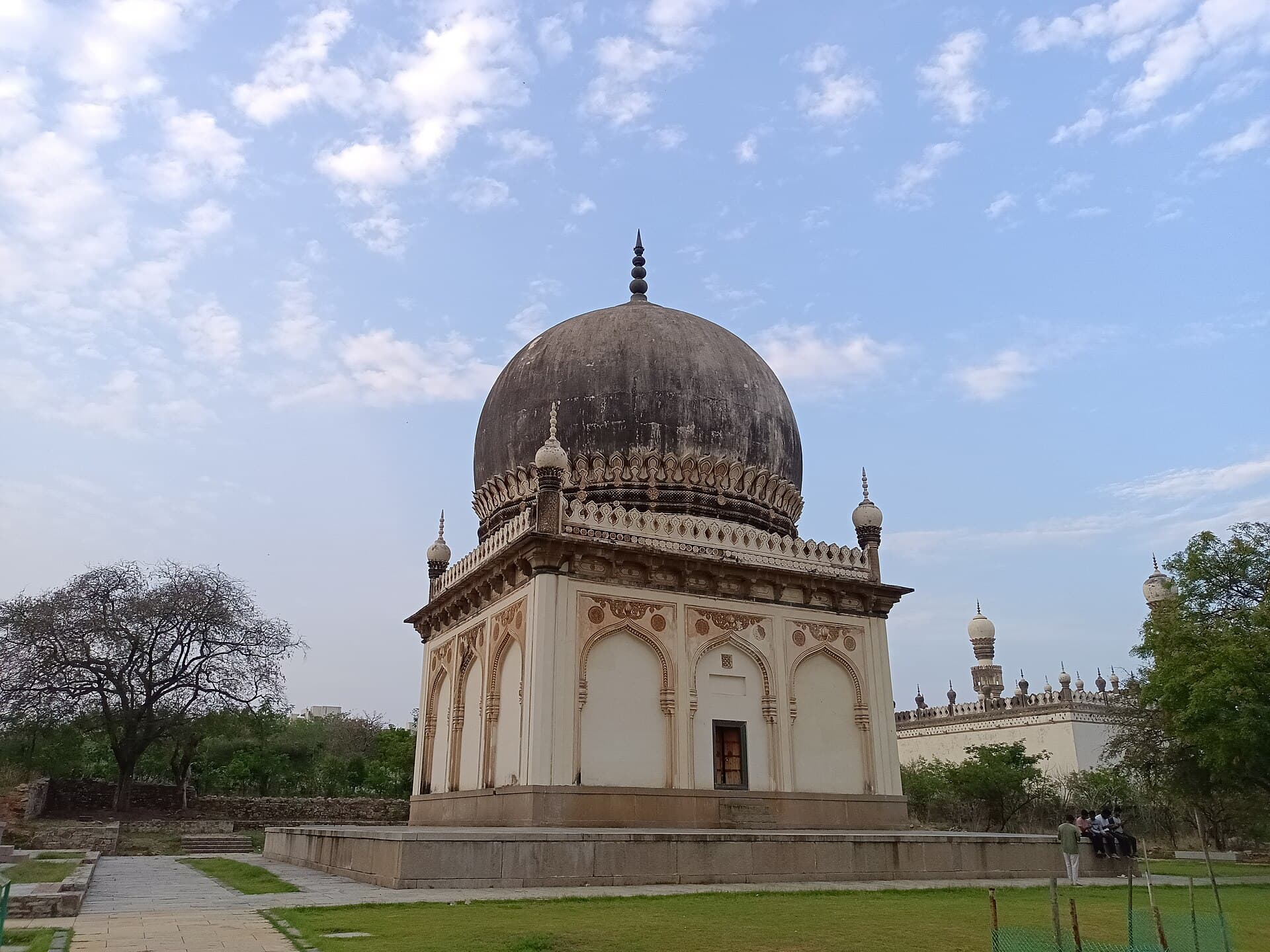
A mighty fortified citadel and ruined city on a granite hill on Hyderabad's western edge; first built of mud in the eleventh century, it was fortified by Sultan Quli Qutb Shah as the capital of the Golconda Sultanate and became one of the strongest forts in the Deccan. Golconda was famous for centuries for its diamond trade, and legendary stones such as the Koh-i-Noor came from the mines of its region. Long walls and bastions ring it, enclosing ruined palaces, mosques, halls, stores, water tanks and an ingenious system for raising water. Its best-known trick is its acoustics: a clap at the Fateh Darwaza gate can be heard at the top of the fort about a kilometre away, once used as an alarm. Visitors climb about 400 steps to the summit for a wide view over the city. Foreign visitors pay about ₹300, per visitor guides, and there's an evening sound-and-light show whose first show is in English. The climb is hard work in the heat, so come in the morning or before sunset, and combine it with the nearby Qutb Shahi tombs.
The echoing clap.
City views.
A rich past.
Western outskirts of Hyderabad
The fort was built so that a clap at the Fateh Darwaza gate can be heard at its top about a kilometre away, once used as an alarm.