The two minarets
White above the city.
Scastellsf — CC BY-SA 3.0 · lelebella — CC BY 2.0 · Rick McCharles — CC BY 2.0
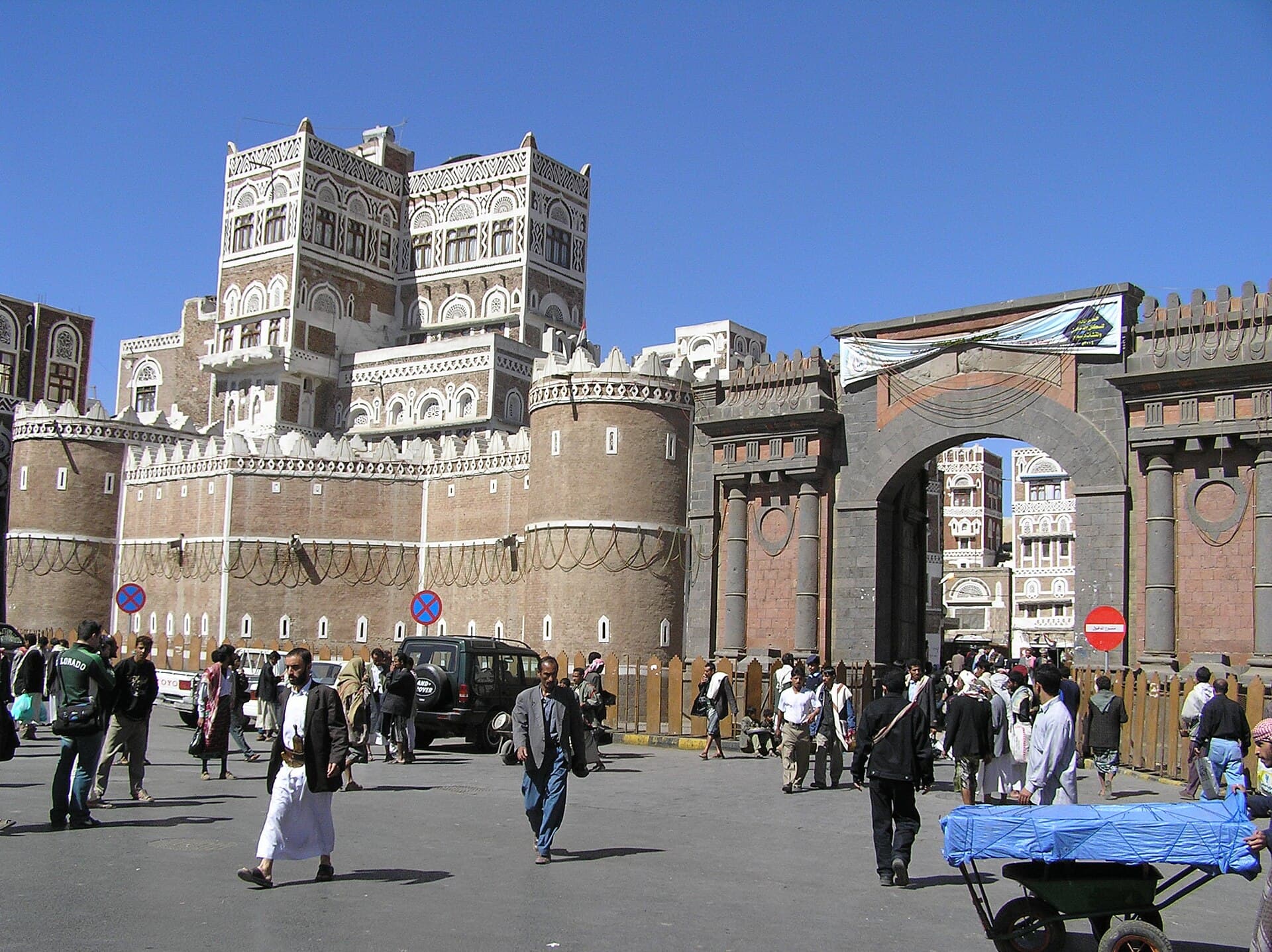
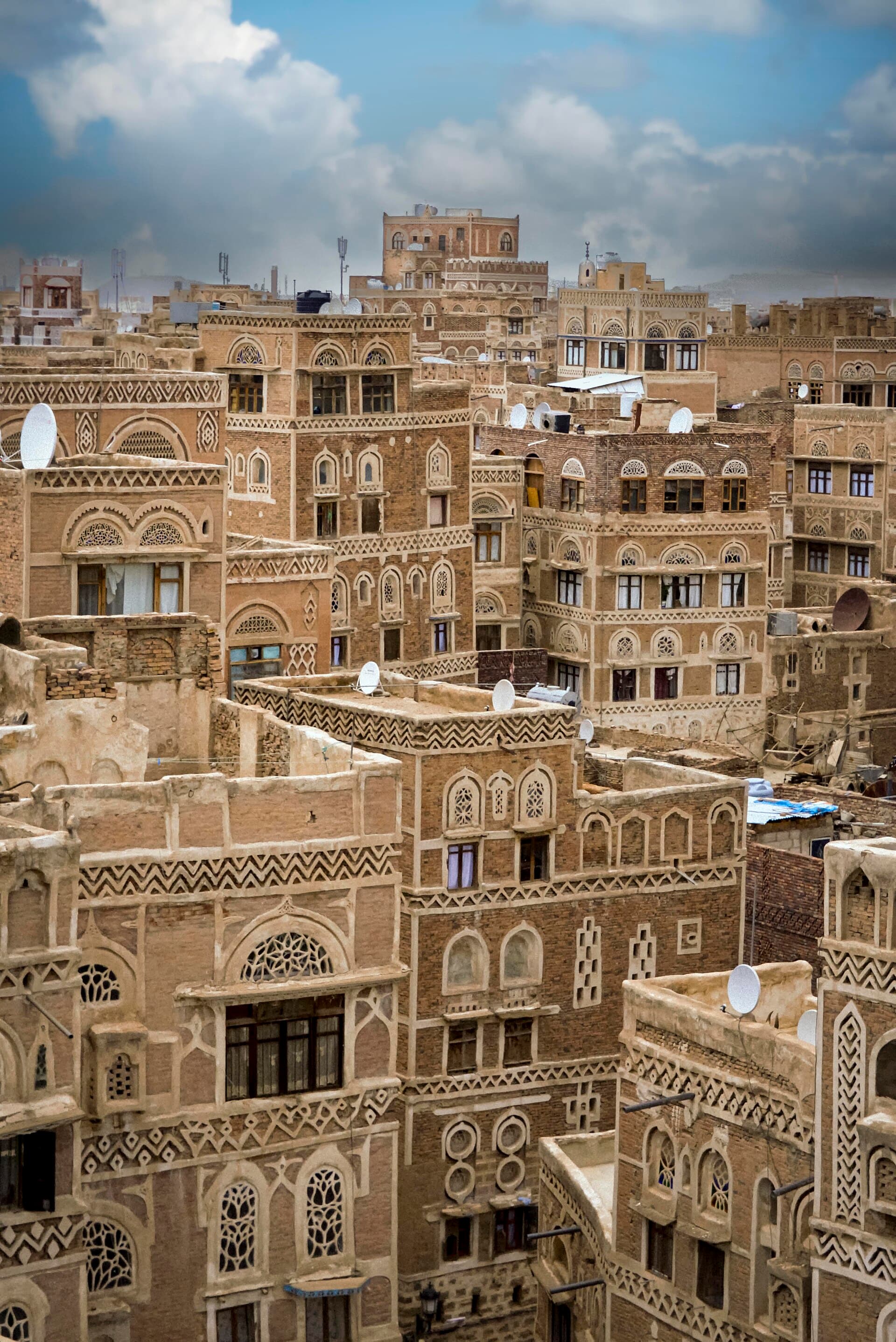
The Great Mosque of Sanaa is among the oldest mosques in the world, at the heart of the Old City of Sanaa, and the largest and most notable of its more than one hundred mosques. It is said to have been founded in the early Islamic period, perhaps in 633. It is part of the World Heritage Site, and it remains a working place of prayer and learning, not just an old monument. Its exact date is unknown, but the earliest recorded renovations came under Caliph al-Walid I in the early 8th century, which implies an earlier origin. Sources say it was built in part with stone from the Himyarite Ghumdan Palace and the Church of al-Qalis. It was renovated in the 13th century and in the Ottoman period. During restoration in 1972 the famous Sanaa manuscript was found here. From nearby rooftops you see the long block of the mosque and its two white minarets among the tall houses. Inside are a broad courtyard and arcades with old columns, and light falls through decorated windows onto red carpets. This is a place of worship first of all, and entry may be limited to Muslims, which you should respect. It is about 200 m in a straight line from Bab al-Yaman, deep in the lanes. Dress modestly, take off your shoes on entering and avoid prayer times if you are only visiting. Ask before taking photos. The UK Foreign Office currently advises against all travel to the whole of Yemen and tells anyone there to leave, so check official guidance before making any plans.
White above the city.
Old columns round the court.
Light on red carpets.
Old City, Sanaa, Yemen
Entry may be limited to Muslims, so ask at the door and follow the instructions of the staff.
An early Quranic manuscript found during restoration of the mosque in 1972.