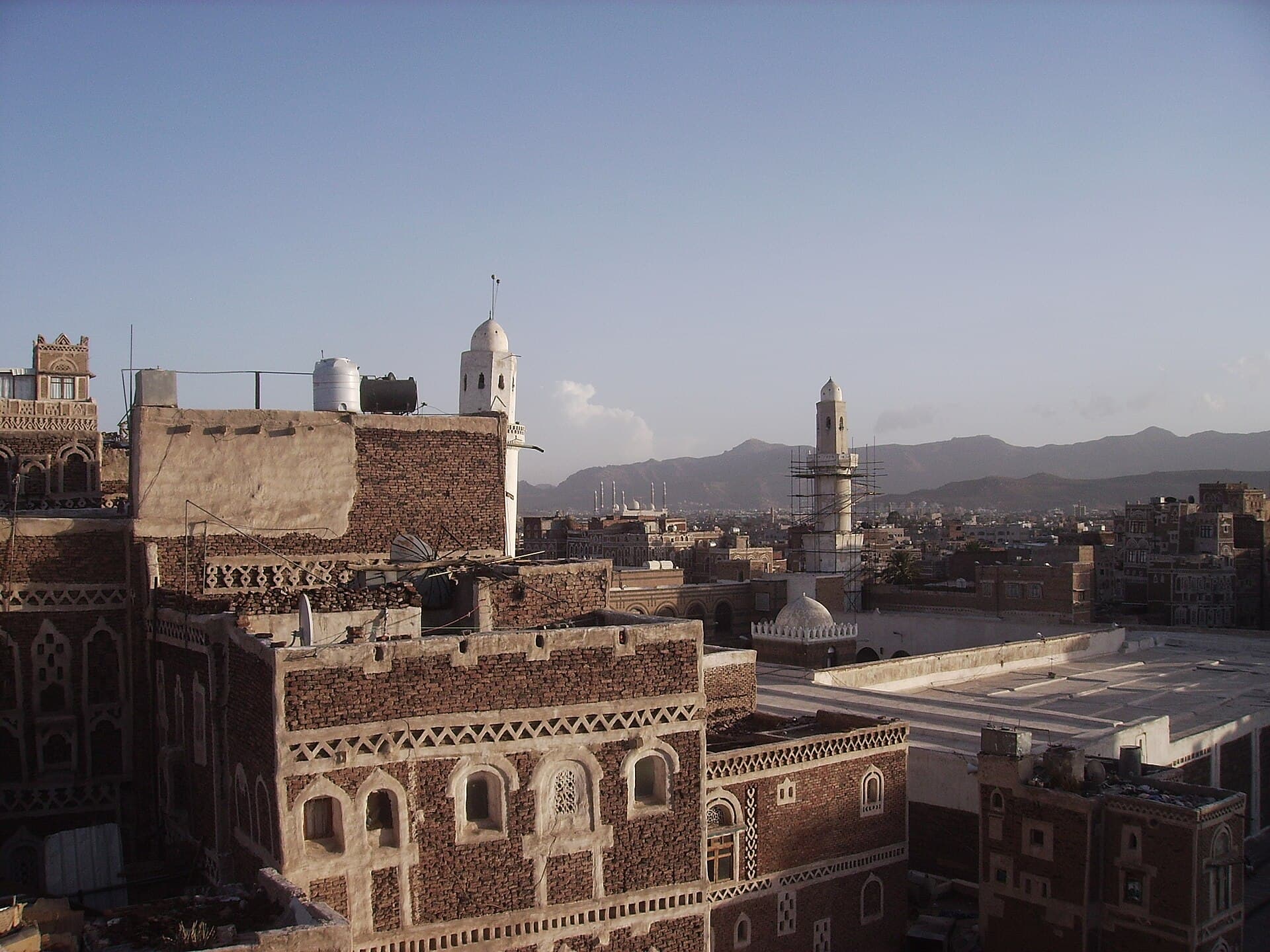
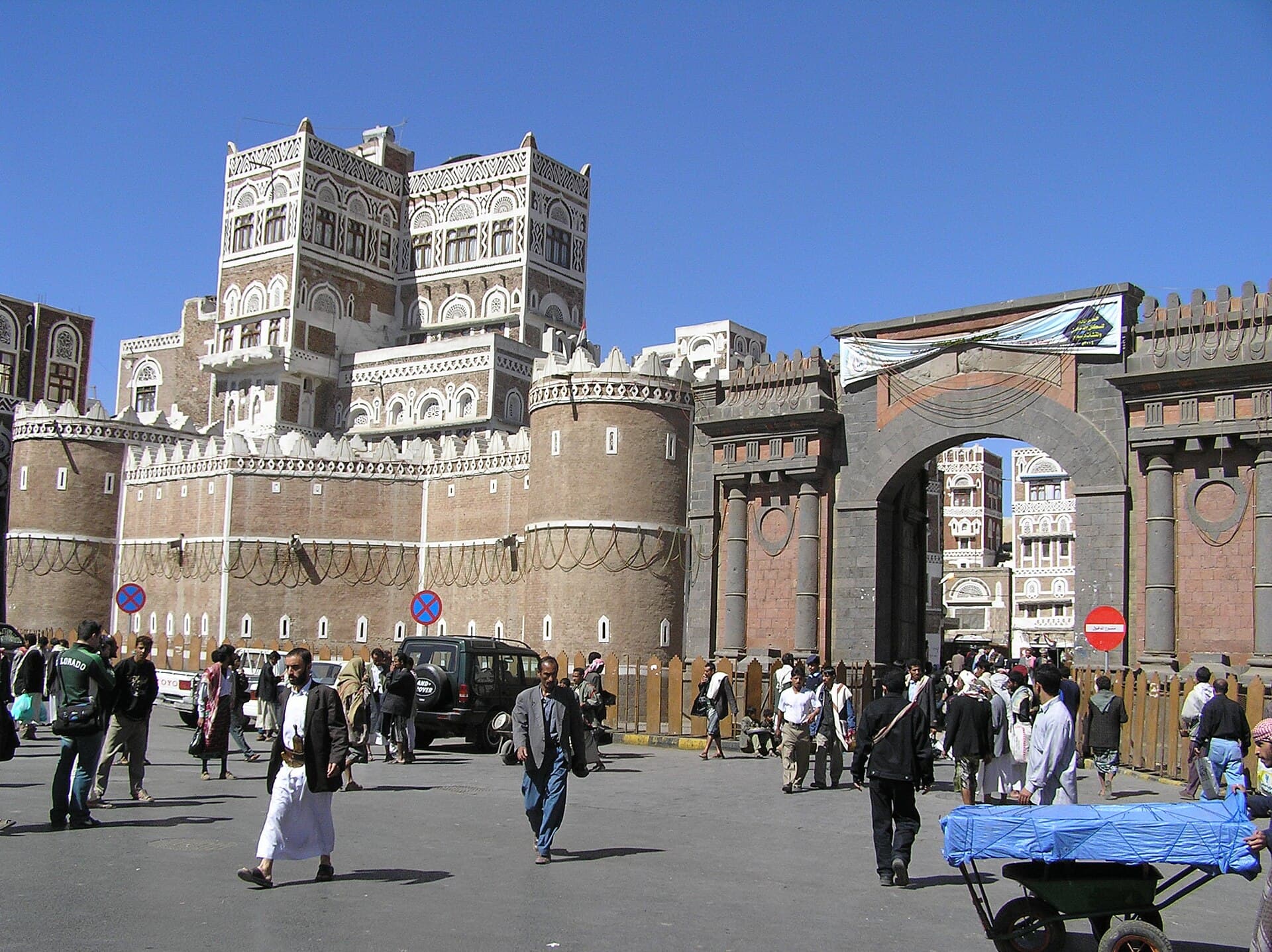
The tower houses
Brick and white patterns.
Rod Waddington — CC BY-SA 2.0 · Rod Waddington from Kergunyah, Australia — CC BY-SA 2.0 · Rod Waddington — CC BY-SA 2.0 · Rod Waddington from Kergunyah, Australia — CC BY-SA 2.0 · Rod Waddington from Kergunyah, Australia — CC BY-SA 2.0
The Old City of Sanaa is the historic heart of the Yemeni capital, at about 2,300 m, listed by UNESCO as a World Heritage Site in 1986. It is famous for its multi-storey tower houses, decorated with white geometric patterns over brick. The view of its rooftops and minarets resembles no other city in the world, and that alone explains its fame. UNESCO says the site has been inhabited for more than 2,500 years and was an important centre for spreading Islam in its early centuries. It records more than 100 mosques, 14 bathhouses and about 6,000 houses built before the 11th century. The city has been on the List of World Heritage in Danger since 2015, and some houses have suffered floods and damage in recent years. You walk narrow lanes between towers of red brick, with qamariya windows of plaster and coloured glass, and then reach Souq al-Milh, with passages full of spices, fabrics and curved daggers. The finest views come from rooftops at sunset, when the windows glow and the minarets rise over the city. Most visitors enter by Bab al-Yaman, about 400 m in a straight line from the middle of the district. Dress modestly and ask before photographing people, above all women. Do not photograph official buildings or checkpoints. The UK Foreign Office currently advises against all travel to the whole of Yemen and tells anyone there to leave, so check official guidance before making any plans.
Brick and white patterns.
Plaster and coloured glass.
Spices, fabrics, daggers.
Central Sanaa, Yemen
UNESCO placed it there in 2015 because of threats to its historic buildings.
Check official guidance first, as the UK Foreign Office advises against all travel to Yemen.