
The Karlsturm view
River, lake and Alps from atop Zurich's signature.
Ilya Hirschberg (Kreecher) — CC BY-SA 4.0 · VasuVR — CC BY-SA 4.0 · Desiderius Severus — CC BY-SA 4.0 · Andrew Bossi — CC BY-SA 2.5
The Grossmünster's twin domed towers sign every Zurich skyline — a twelfth-century Romanesque church legend says Charlemagne founded where his horse knelt at the graves of city patrons Felix and Regula. From here Zwingli changed Europe: from its pulpit in 1519 he launched the Swiss Reformation with a severity that stripped every ornament — so today's interior is bare, imposing stone pierced by one colour: Giacometti's modern windows, and Sigmar Polke's glowing agate-slice panes. The climb is the visit's star: 187 steps up the Karlsturm to the city's best view — river, lake and rooftops, the Alps a wall in clear air. Five francs is Zurich's best scenery bargain.
River, lake and Alps from atop Zurich's signature.
Real glowing agate slices — Polke's glass without equal.
Where the Swiss Reformation began in 1519 — a chair that shook the continent.
Grossmünsterplatz, 8001 Zurich
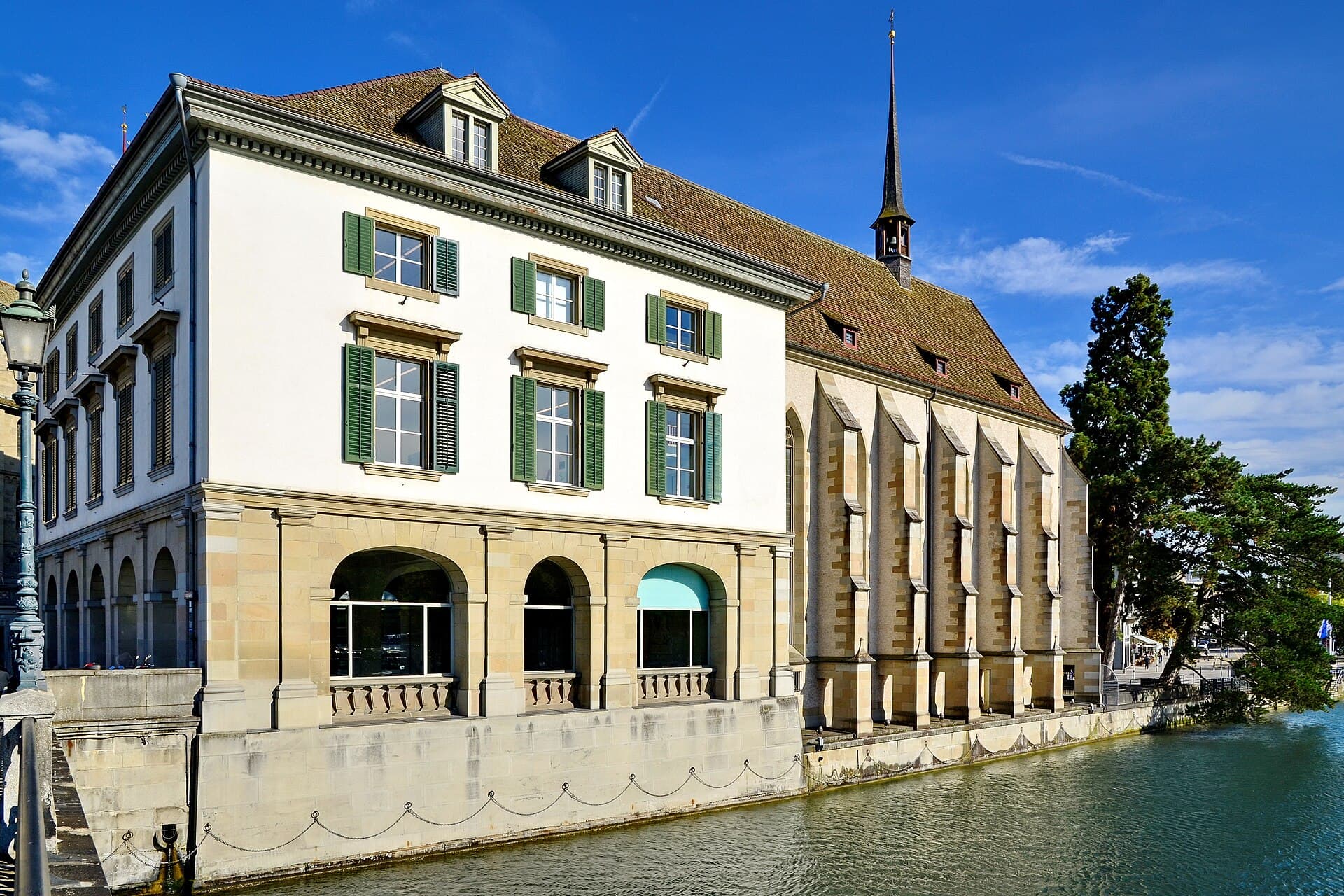 Wasserkirche (Water Church)A small late-Gothic church on the bank of the Limmat between the Grossmünster an1 minute walk4.5
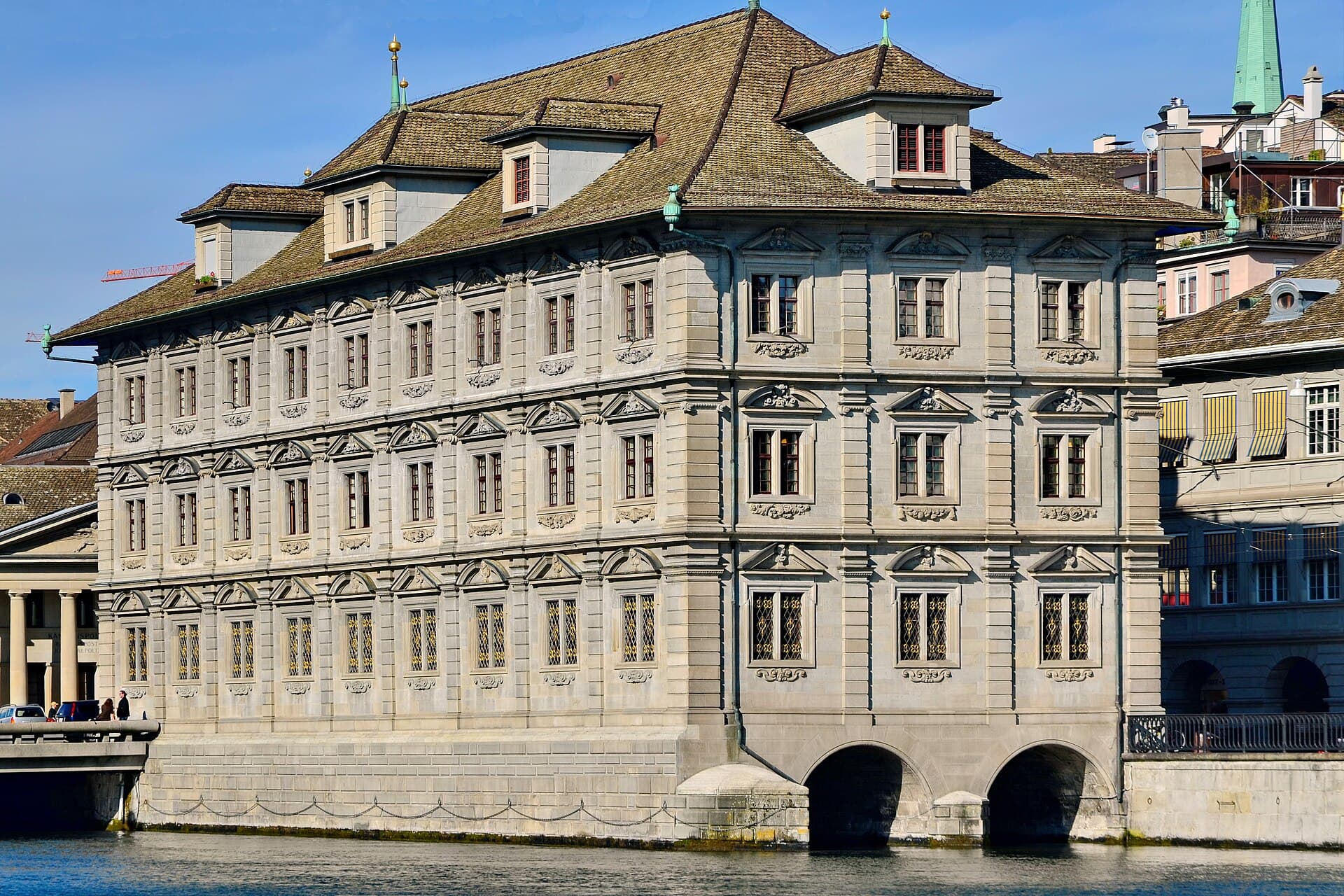 Zurich Town Hall (Rathaus)The Rathaus is a restrained baroque building put up between **1694 and 1698** in2 minutes walk4.5
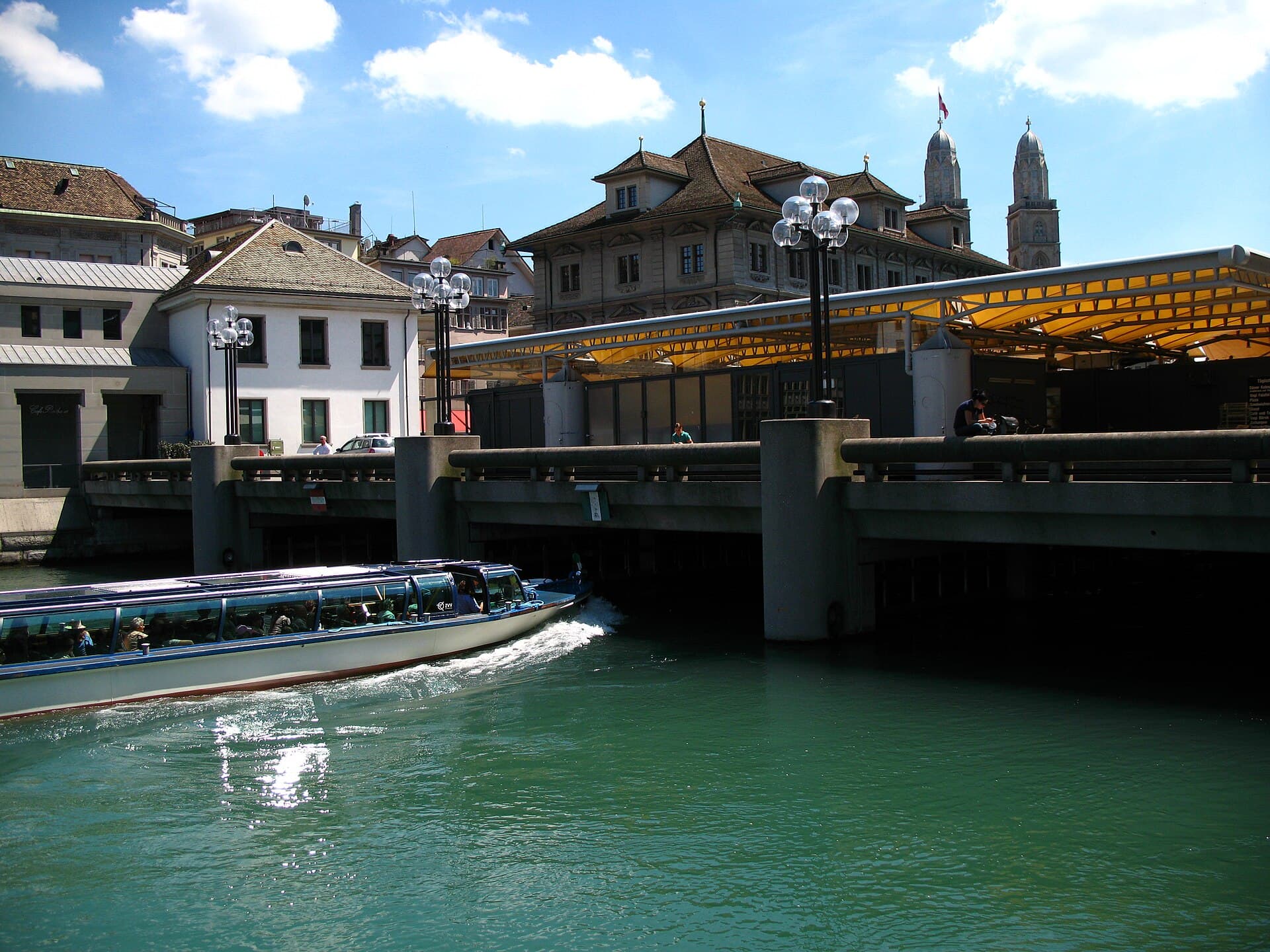 Rathausbrücke (the Vegetable Bridge)A short, unusually wide bridge over the Limmat between Zurich's town hall and th3 minutes walk4.8
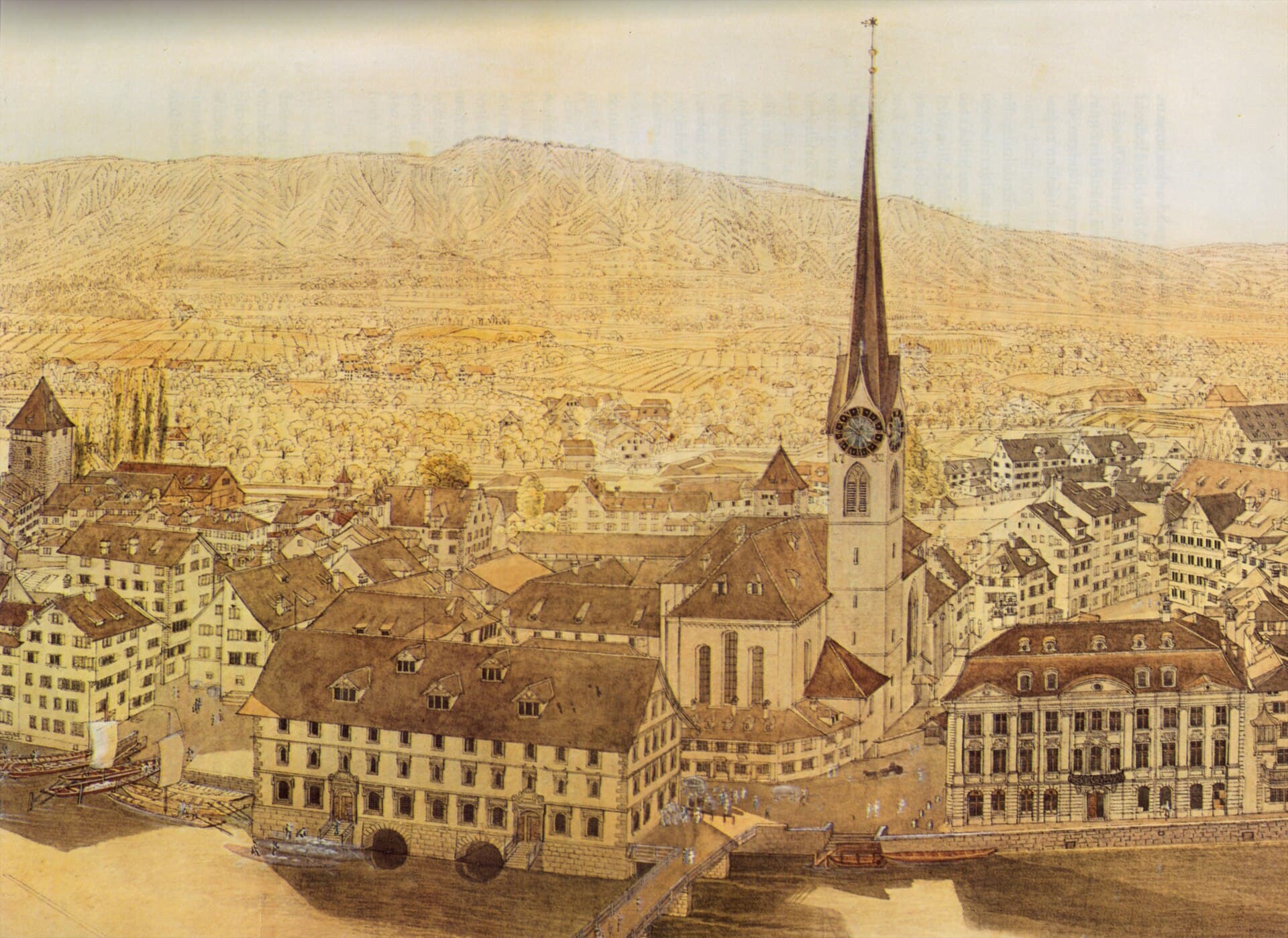 FraumünsterIts slim green spire is one of the best-known shapes on Zurich's skyline, but it3 minutes walk4.6
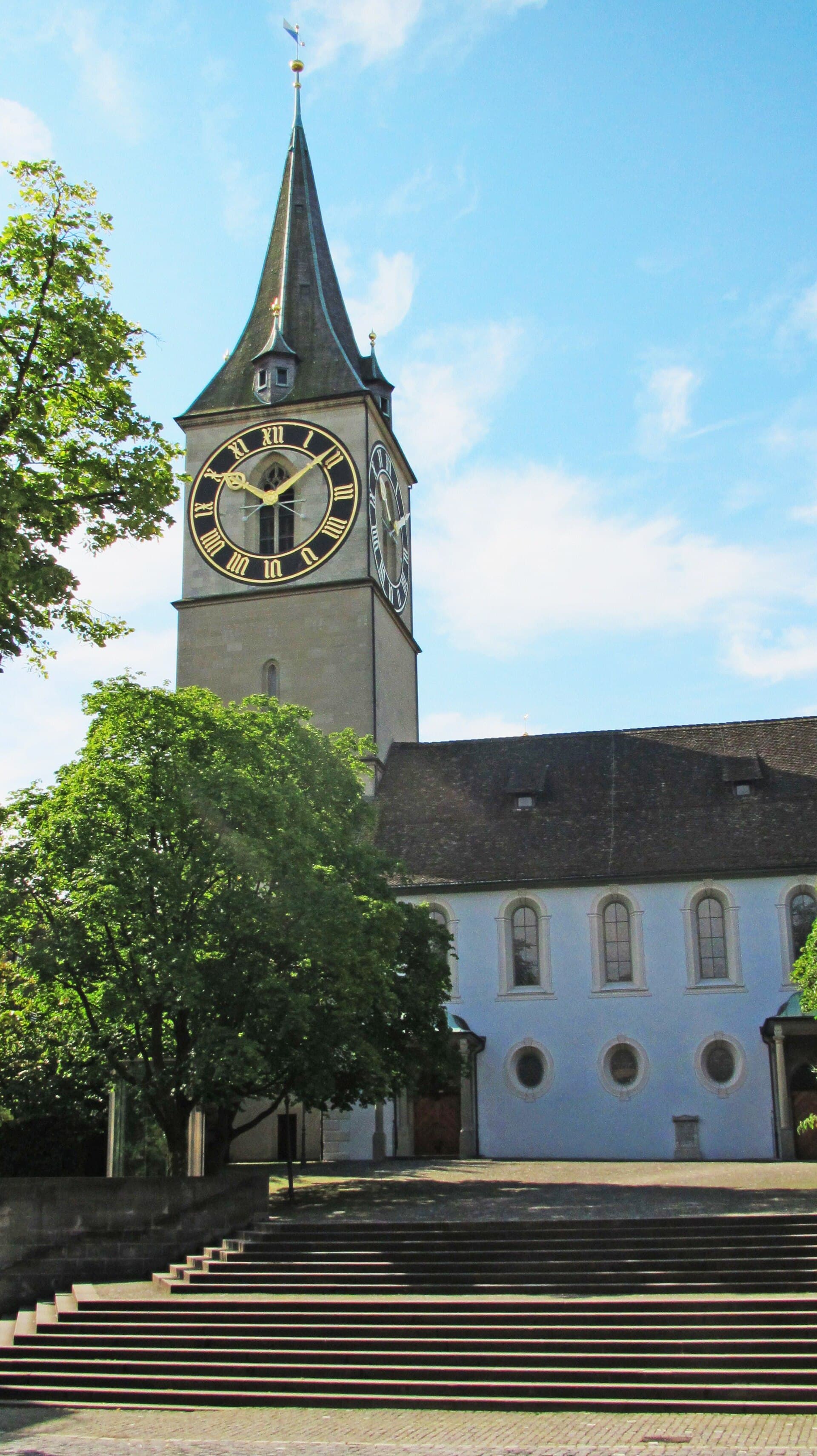 St. Peter's ChurchThis is Zurich's oldest parish church site: excavations beneath the choir have t3 minutes walk4.6
The Grossmünster's priest who declared from its pulpit that scripture alone ruled — abolishing mass, images and monasteries in Zurich while many had barely heard of Luther, and dying in a confessional battle in 1531. Protestant Switzerland — famous work ethic included — began from these stones.
Because the Reformation carried out every image, statue and organ in a documented 1524 'cleansing' — deeming them worship's distraction. The bareness is itself the historic relic, which is why the modern agate windows strike doubly: the only colour admitted.
Grossmünster for tower and history; Fraumünster opposite for the five famous Chagall windows (small fee); St Peter for Europe's largest clock face. All three in a ten-minute triangle round the river — one route, best towards evening.