
The Giacometti windows
Three stained-glass choir windows from 1942.
Roland zh — CC BY-SA 3.0 · Roland zh — CC BY-SA 4.0 · Крізь час — CC BY-SA 4.0 · Roland zh — CC BY-SA 3.0
A small late-Gothic church on the bank of the Limmat between the Grossmünster and the Fraumünster, originally built on **a rocky island in the middle of the river** — the spot where old tradition places the execution of the city's patron saints, Felix and Regula. The present building was finished around 1486, and before the Reformation it was held to be among Zurich's holiest sites. Then its fate turned completely. After the Reformation it was stripped of religious status and in **1634 became Zurich's first public library** — the "Gemeine Bürger-Bücherei", a scholarly collection opened to the townspeople. The library merged into the Zentralbibliothek in 1917 and the building served as a store; it returned to use as a church only after archaeological excavation and restoration between 1940 and 1942. From that restoration come the **three stained-glass choir windows by Augusto Giacometti (1942)**, which set the life of Christ against the life of modern man. It is no longer an island: the channel was filled in 1839 when the Limmatquai was laid out, joining it to the bank and to the neighbouring Helmhaus. In front stands the bronze **statue of the reformer Huldrych Zwingli** (Heinrich Natter, 1885), Bible in one hand and sword in the other. Entry is free, but the hours are very short — twenty minutes added to a Grossmünster walk, not a visit in its own right.
Three stained-glass choir windows from 1942.
An 1885 bronze outside: Bible and sword.
Excavations and old foundations, included in the visit.
Limmatquai 31, 8001 Zurich
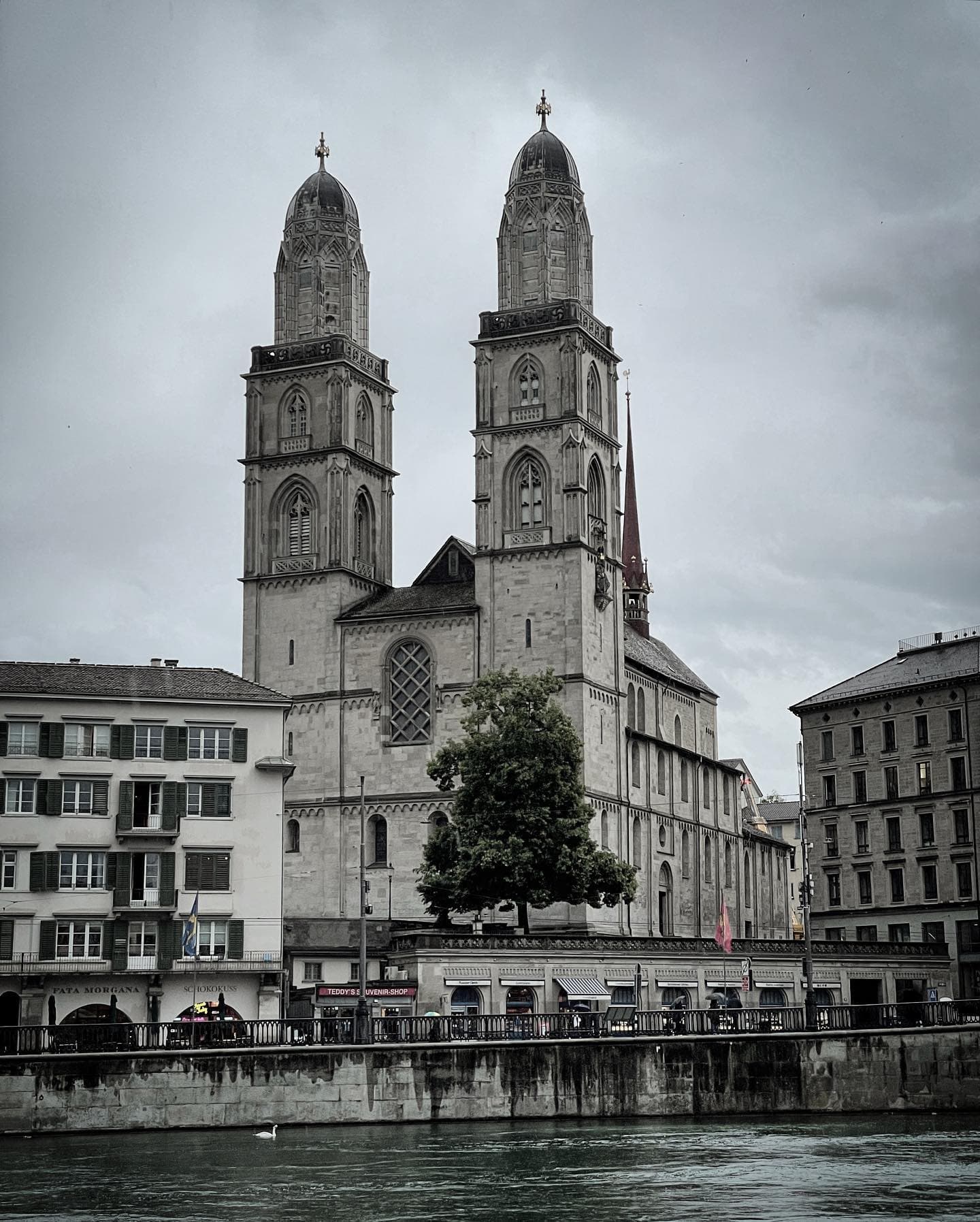 GrossmünsterThe Grossmünster's twin domed towers sign every Zurich skyline — a twelfth-centu1 minute walk4.4
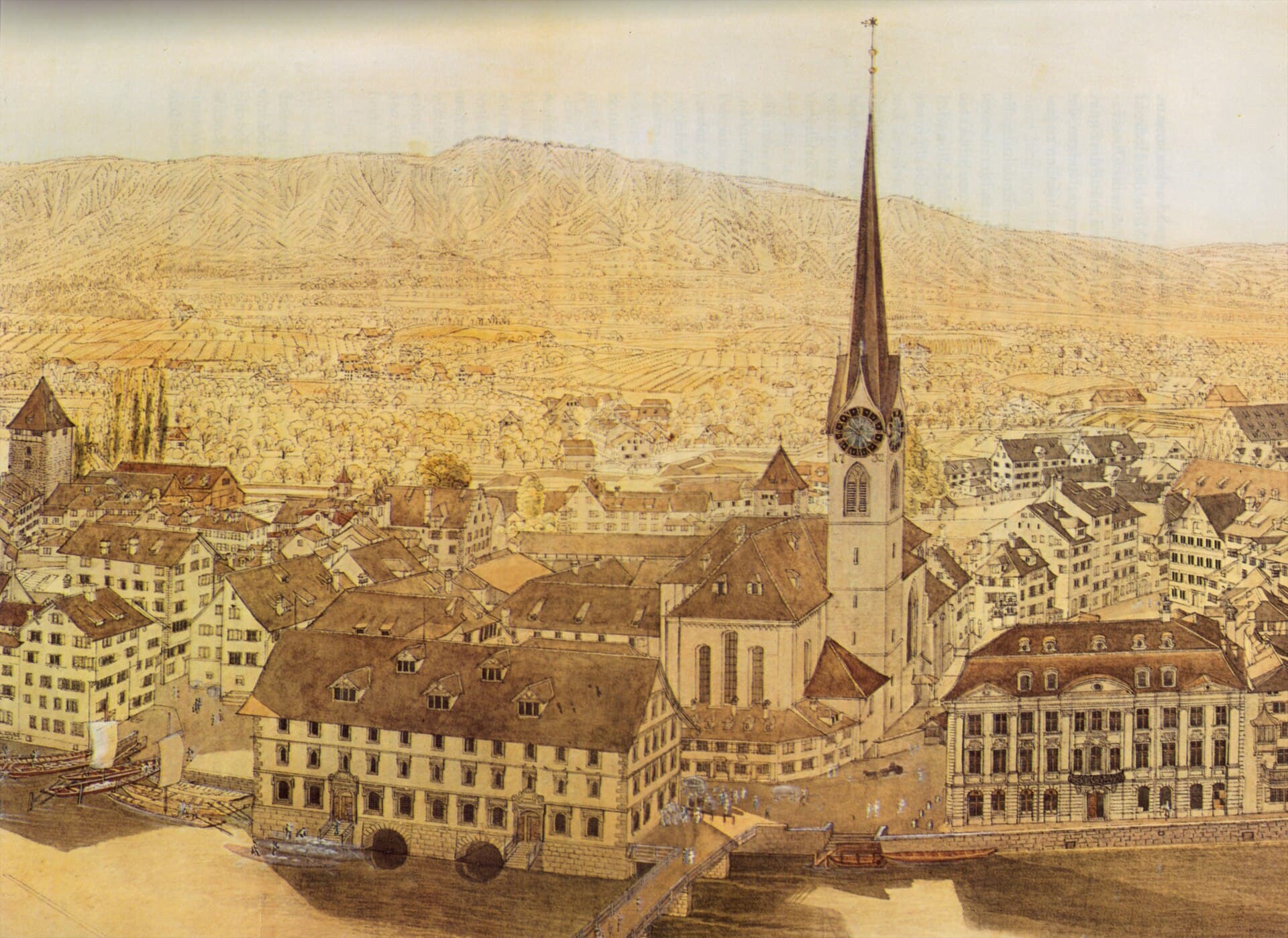 FraumünsterIts slim green spire is one of the best-known shapes on Zurich's skyline, but it2 minutes walk4.6
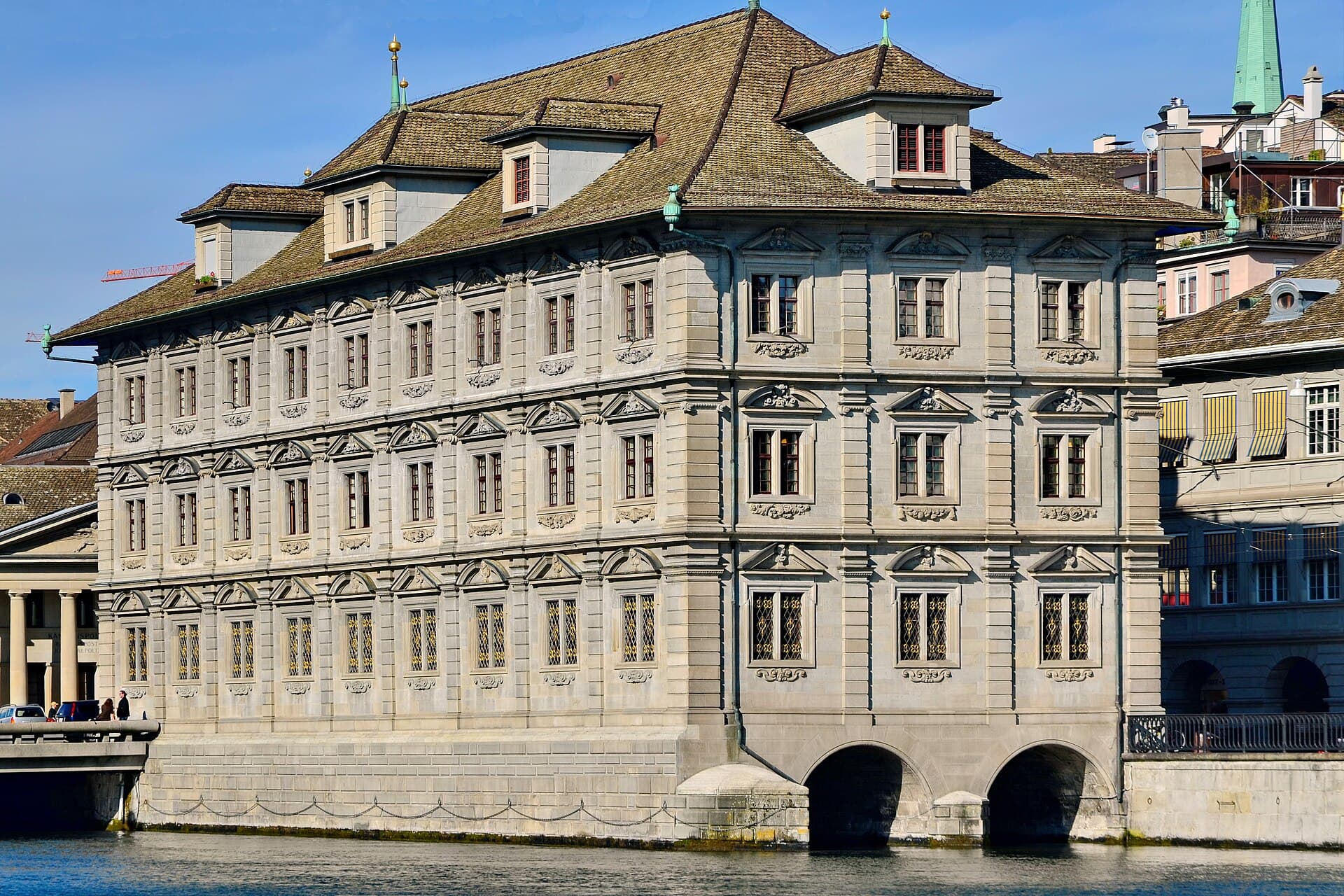 Zurich Town Hall (Rathaus)The Rathaus is a restrained baroque building put up between **1694 and 1698** in3 minutes walk4.5
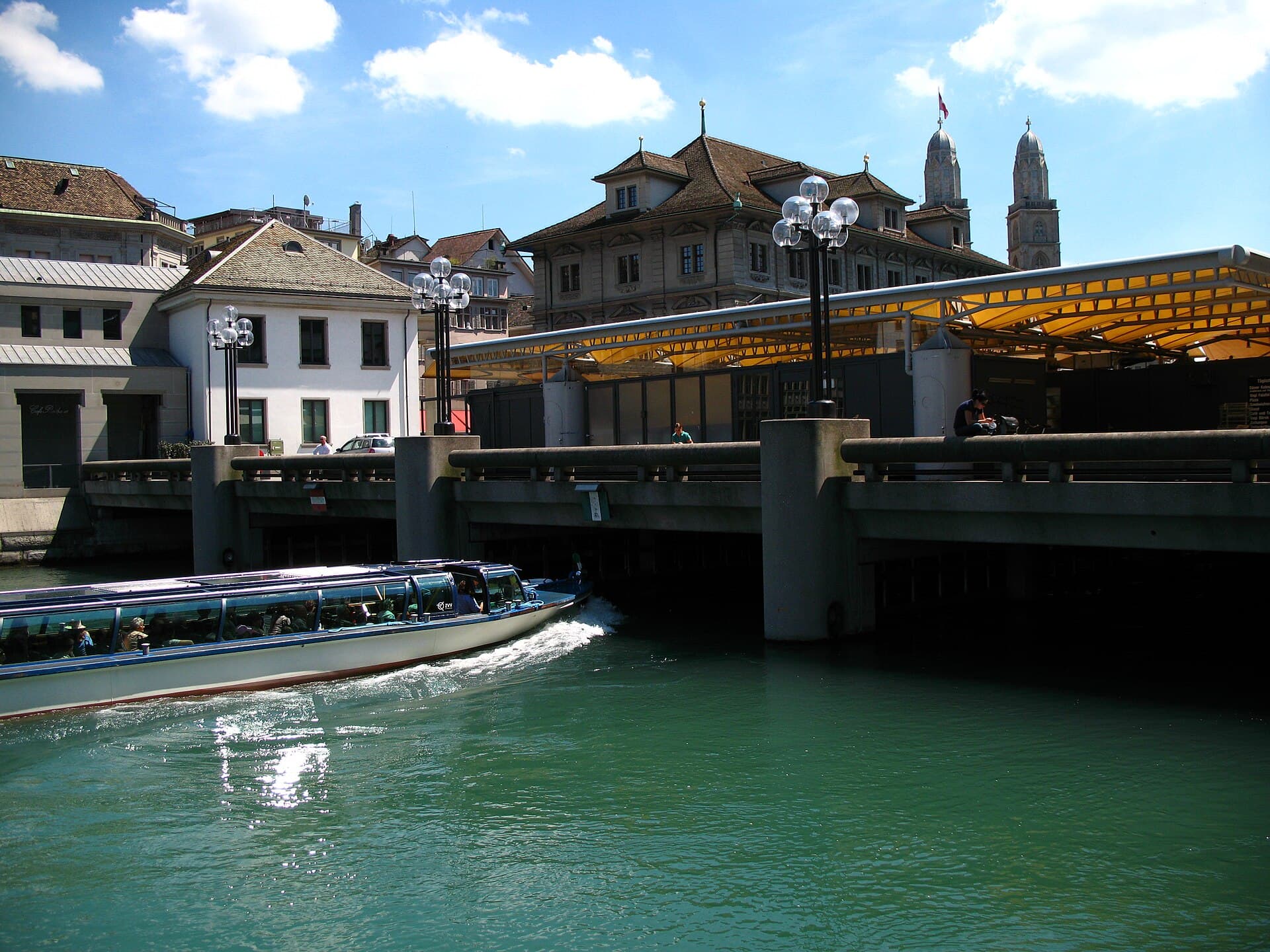 Rathausbrücke (the Vegetable Bridge)A short, unusually wide bridge over the Limmat between Zurich's town hall and th3 minutes walk4.8
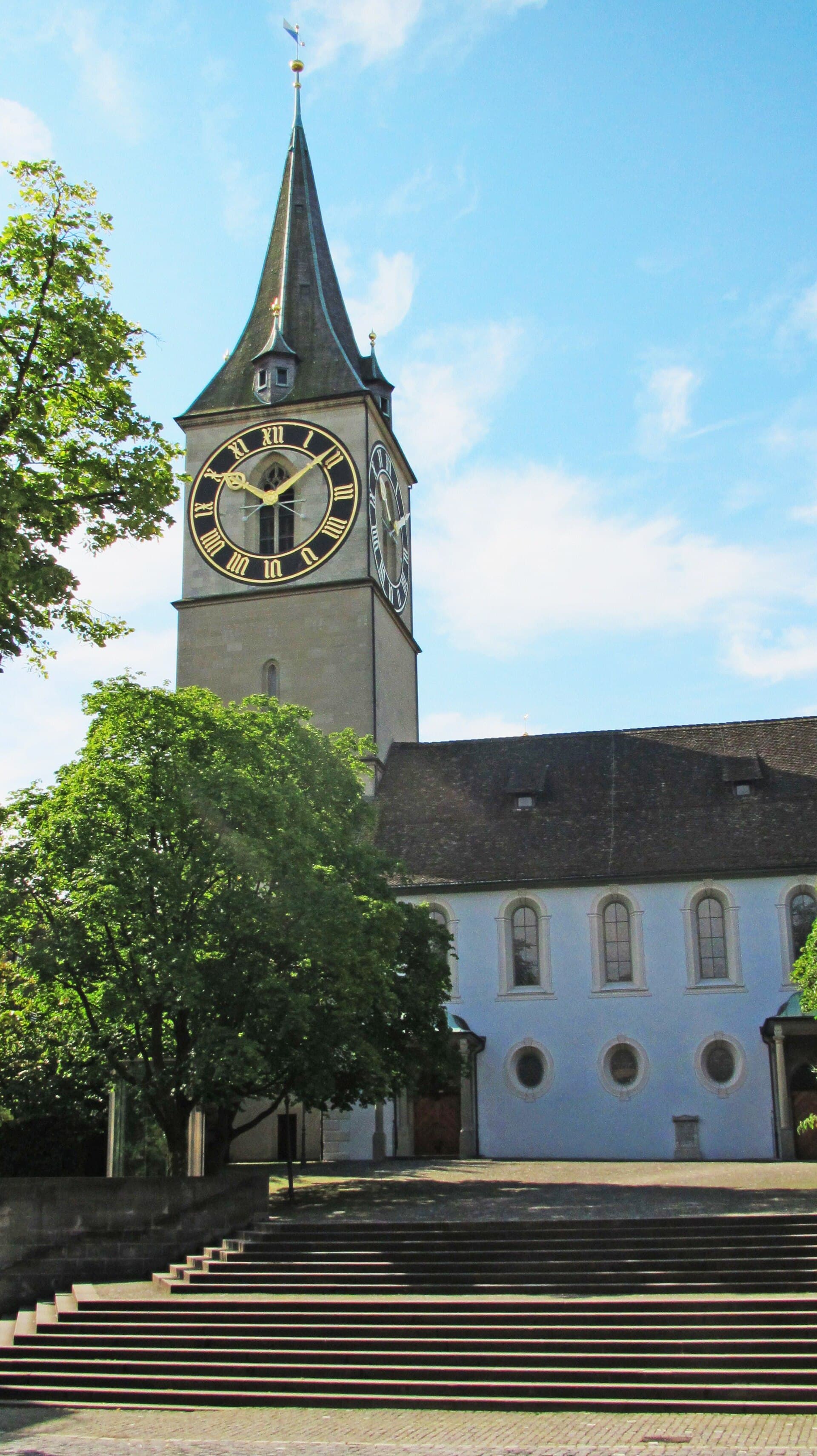 St. Peter's ChurchThis is Zurich's oldest parish church site: excavations beneath the choir have t3 minutes walk4.6
The answer is practical rather than aesthetic: if you find it open — afternoons, Tuesday to Sunday — go in, since it costs nothing and twenty minutes is plenty, and the three windows reward a pause. If it is shut, do not rearrange your day for it: the river façade and the Zwingli statue in front are always there for free, and the Grossmünster two minutes away is heavier historically and open far longer.
Because it really was built in the water: on a small rocky island in the Limmat reached by a bridge, and it stayed that way for centuries. In 1839 the dividing channel was filled in when the Limmatquai was laid out, welding it to the bank, so today it looks like an ordinary church on a quay. Nothing of its origin survives above ground but the name — and the foundations visible down in the crypt.