Arcaded lanes
A new town, old style.
Taloubant — CC BY-SA 4.0 · Taloubant — CC BY-SA 4.0 · Badr Outal — CC BY 3.0 · إيان — CC BY-SA 4.0 · Ahlamine — CC BY-SA 4.0 · User: (WT-shared) Radouane at wts wikivoyage — Public domain · Turdyfirst — CC BY-SA 4.0 · Omalihy — CC BY-SA 4.0
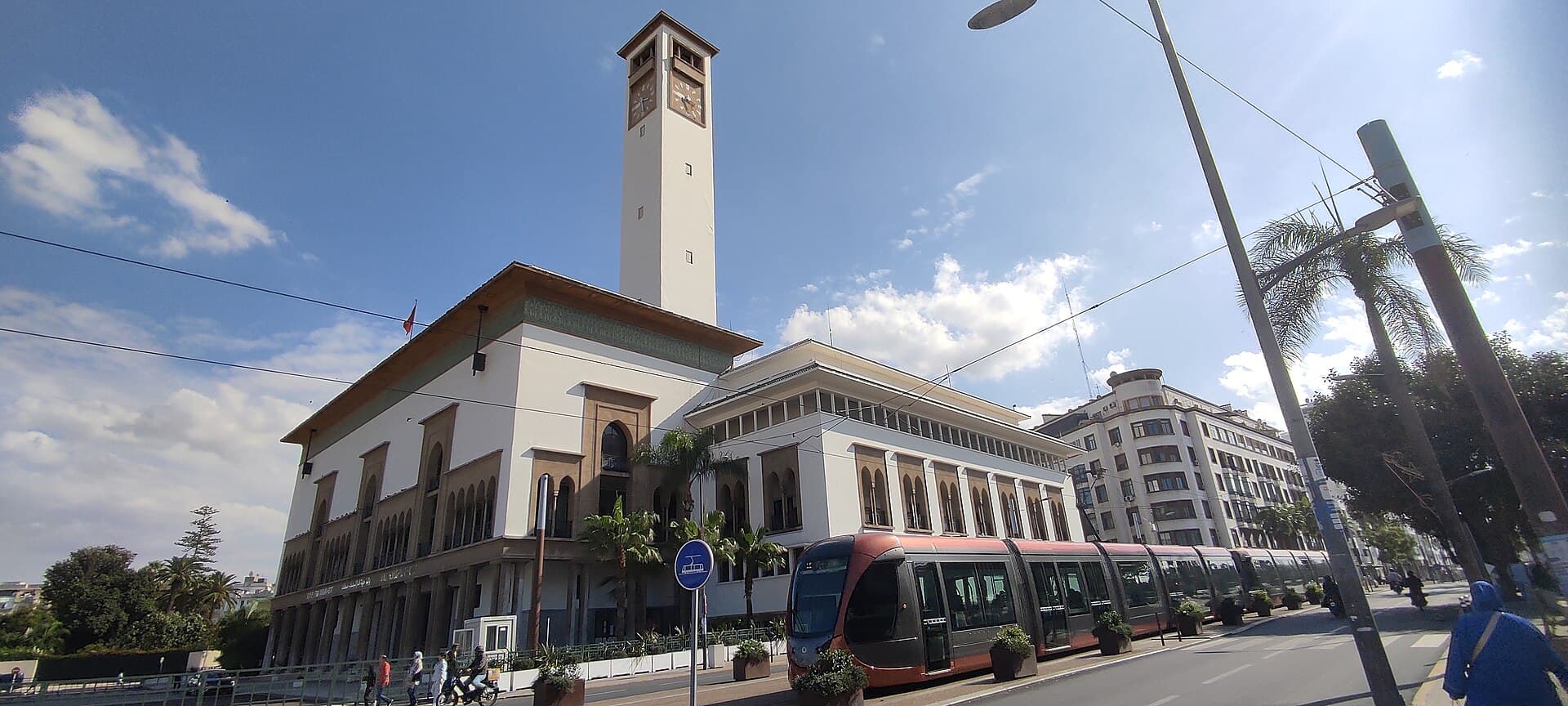
One of the oldest districts of modern Casablanca, built from 1916 at the start of the French Protectorate as a new town for Moroccans in traditional style, with lanes, arcades, squares and souks echoing the old medinas but on an orderly plan. Its name comes from the habous, religious endowments, and the Ministry of Habous and Islamic Affairs is based here. You wander arcaded lanes of white arches among shops selling brassware, djellabas, babouches and carpets, bookshops of Moroccan and Arab publishers that give the quarter a cultural air, the olive souk, and pastry shops selling traditional Moroccan sweets such as gazelle horns and chebakia. Its finest building is the Mahkama du Pacha, built in 1941 and 1942 by traditional methods, brick by brick, with carved stucco, cedarwood and zellij across dozens of rooms and courtyards; it served as courthouse and the pasha's residence and opens to visitors only occasionally. Beside it stands the Mohammedi Mosque with its minaret, and the Royal Palace of Casablanca adjoins the quarter. Wandering the quarter is free, and prices are reasonable compared with tourist souks, with the usual bargaining. It is calmer than the old medina and suits half a day of shopping and strolling.
A new town, old style.
Arab publishers.
Gazelle horns, chebakia.
Hay al-Ahbass, south-east of central Casablanca
Yes, it has traditional crafts at calmer prices than tourist souks and a less crowded feel, with the usual bargaining.