Neo-Moorish style
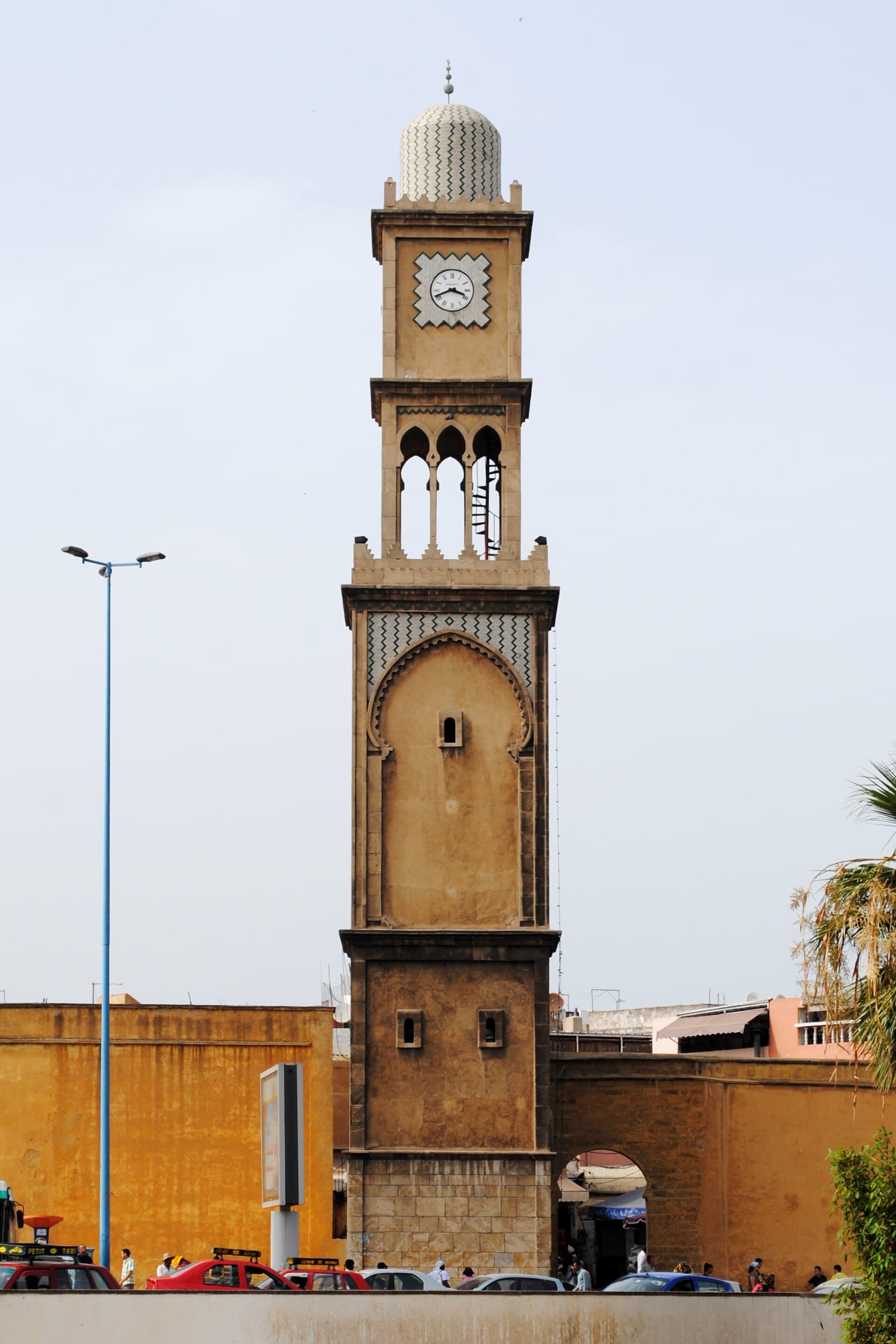
Grand public buildings.
O.alaoui — CC BY-SA 4.0 · angelius1979 — CC BY-SA 3.0 · Sandra Cohen-Rose and Colin Rose from Montreal, Canada — CC BY-SA 2.0 · mustapha ennaimi from casablanca, maroc — CC BY 2.0 · Elgaard — CC BY-SA 4.0 · Reda benkhadra — CC BY-SA 4.0 · رشيدة رقي — CC BY-SA 4.0 · יאיר ליברמן — CC BY-SA 4.0
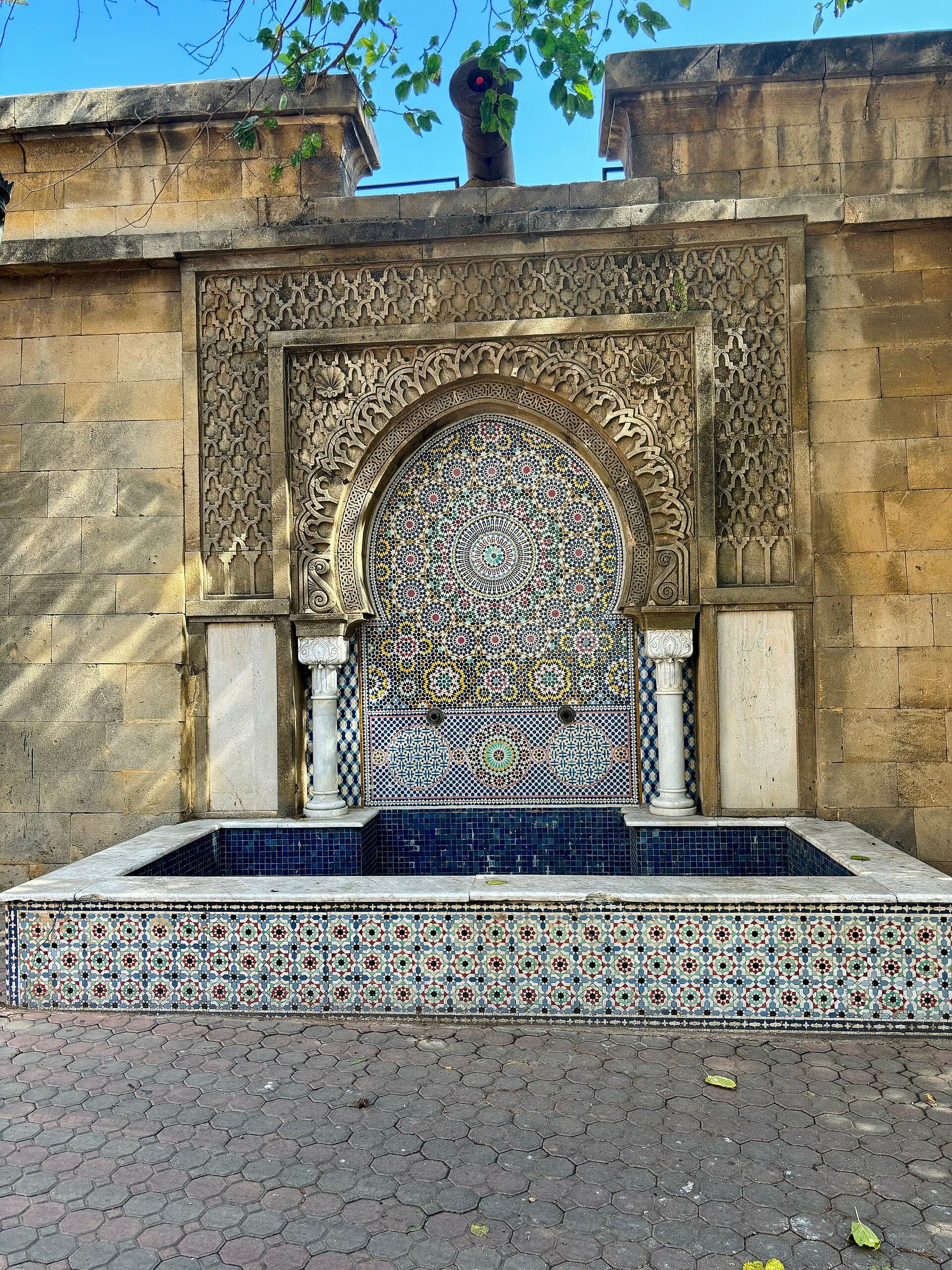
The main square of modern central Casablanca, laid out in 1916 at the start of the Protectorate to a design by the architects Henri Prost and Joseph Marrast and named after King Mohammed V. Locals call it Pigeons' Square for the flocks that settle here and that people feed. The square is ringed by grand administrative buildings in a style blending European architecture with Moroccan decoration, known as neo-Moorish: the Wilaya with its tall clock tower, the Palace of Justice, Bank Al-Maghrib and the Central Post Office with its facade in blue zellij. Facing them stands the modern building of the Grand Theatre of Casablanca. At its centre is a broad open space with a fountain and palms, the tram runs alongside, and close by are the Arab League Park and the former Sacred Heart Cathedral, an Art Deco church now used as a cultural space. The square is open and free, and suits a walk through the twentieth-century architecture that defines Casablanca; the administrative buildings are seen from outside only.
Grand public buildings.
A blue zellij facade.
Close by.
Central Casablanca
The Arab League Park, the former Sacred Heart Cathedral and the downtown streets with their buildings from the 1920s and 1930s.