
Memorial column
And its reliefs.
Tlrmq — CC BY-SA 3.0 · 董辰兴 — CC BY-SA 4.0 · EditQ — CC BY-SA 4.0 · Hehua — CC BY 4.0 · cammy8888 — CC BY-SA 2.0 · ping lin — CC BY-SA 3.0 · Ting Chen — CC BY-SA 2.0 · EditQ — CC BY-SA 4.0
A landmark on the bank of the Songhua River right at the end of Central Street, a memorial column ringed by a semicircular colonnade, raised after Harbin's people held back a huge flood in 1957 by building dykes; completed in 1958, it has become a symbol of the city. Statues of flood fighters top the column and reliefs of the work on the dykes wind around it; Russian president Boris Yeltsin visited in 1997 to honour the thousands of Harbin Russians who helped fight the flood. On either side stretches Stalin Park, a long riverside promenade among trees and old buildings where people walk and cycle in summer; in winter the river freezes and fills with sledges and horse- and dog-drawn rides. The site is free and always open, per visitor guides. The cable car and boats to Sun Island on the far bank leave from the promenade, and sunset is the loveliest time.
And its reliefs.
A riverside promenade.
Winter fun.
End of Central Street on the Songhua riverbank, Harbin
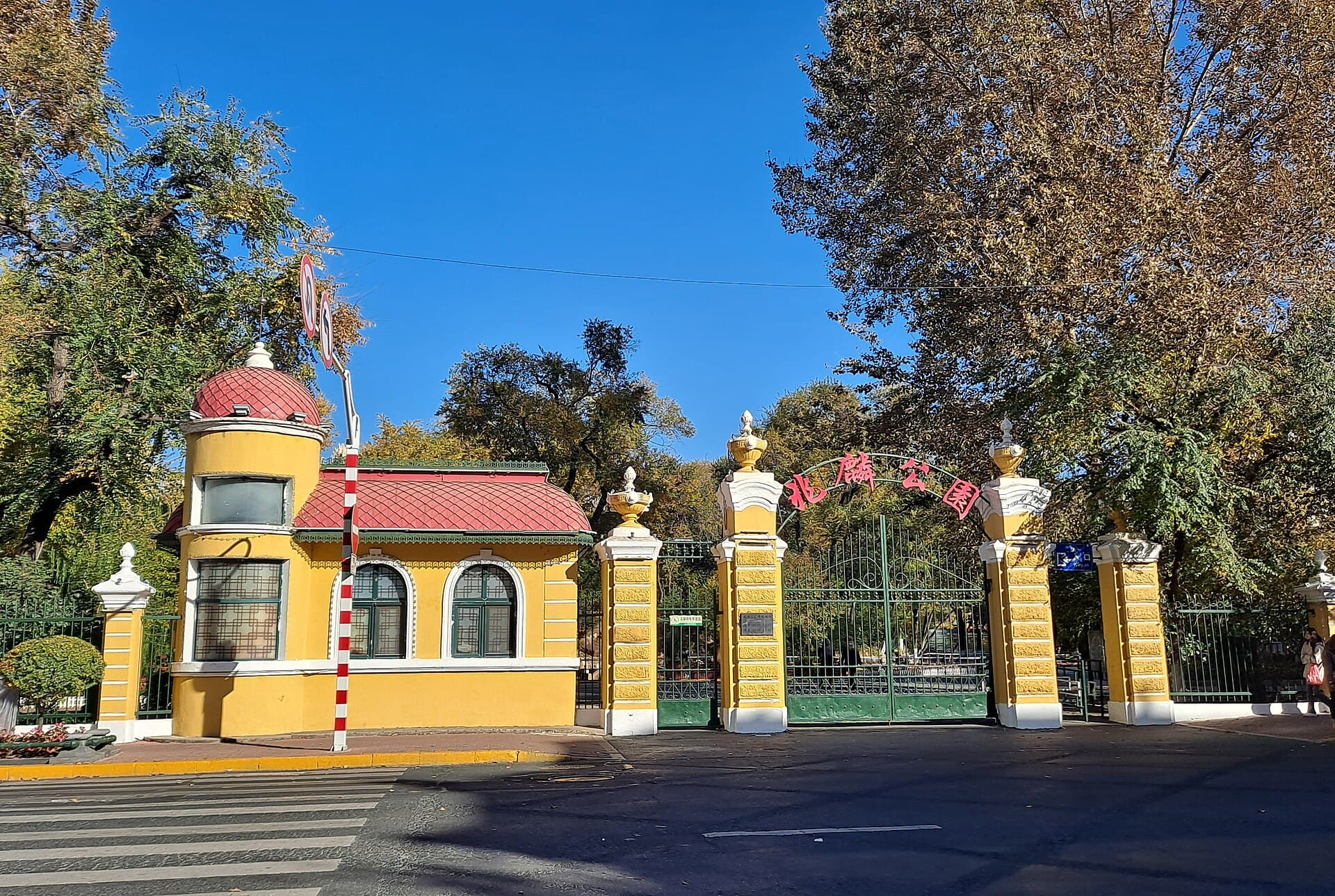 Zhaolin ParkHarbin's oldest park, laid out by the Chinese Eastern Railway administration in 7 minutes walk4.1
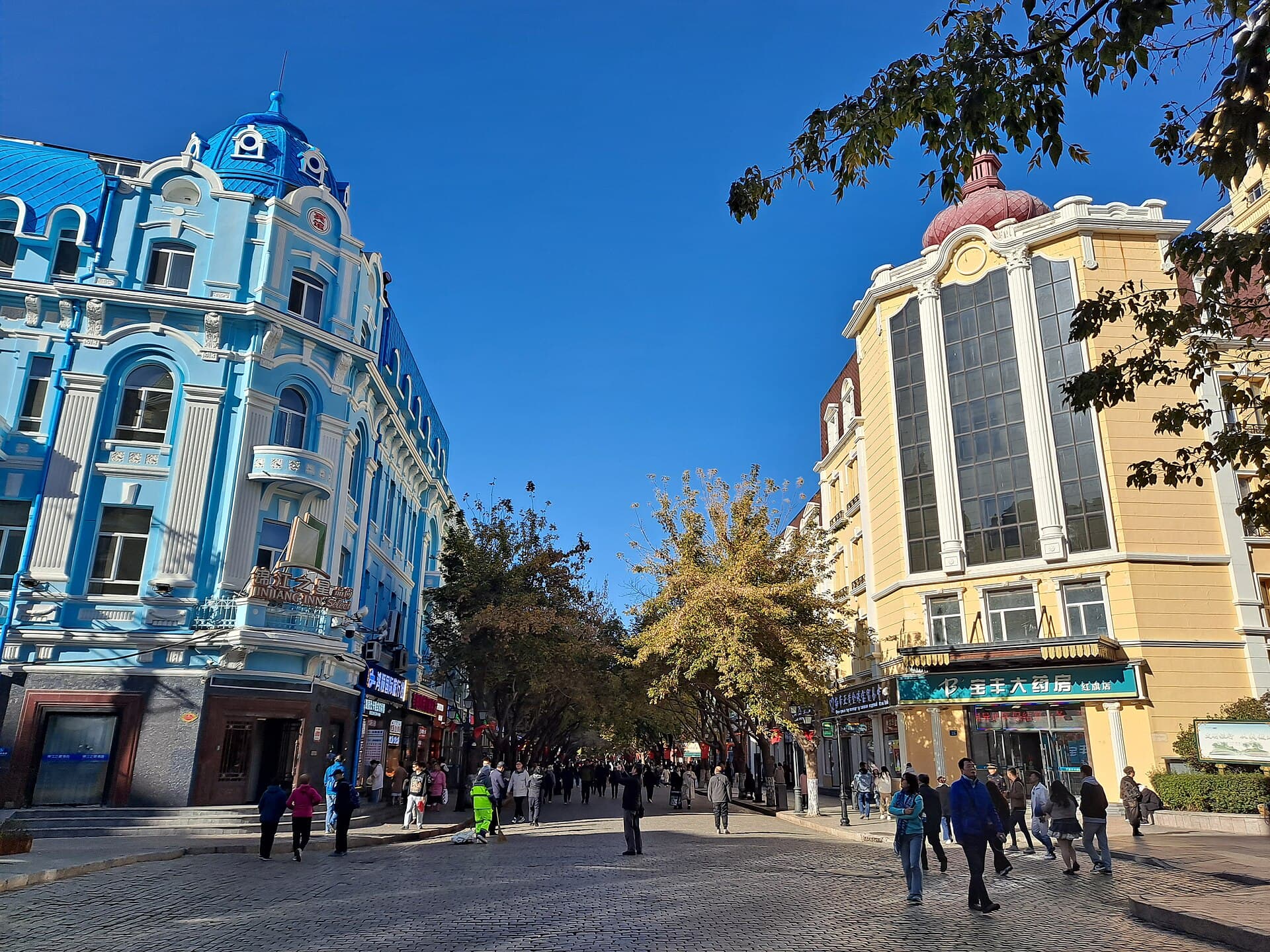 Central Street (Zhongyang Street)Harbin's best-known street, a cobbled pedestrian street 1,450 metres long runnin10 minutes walk4.4
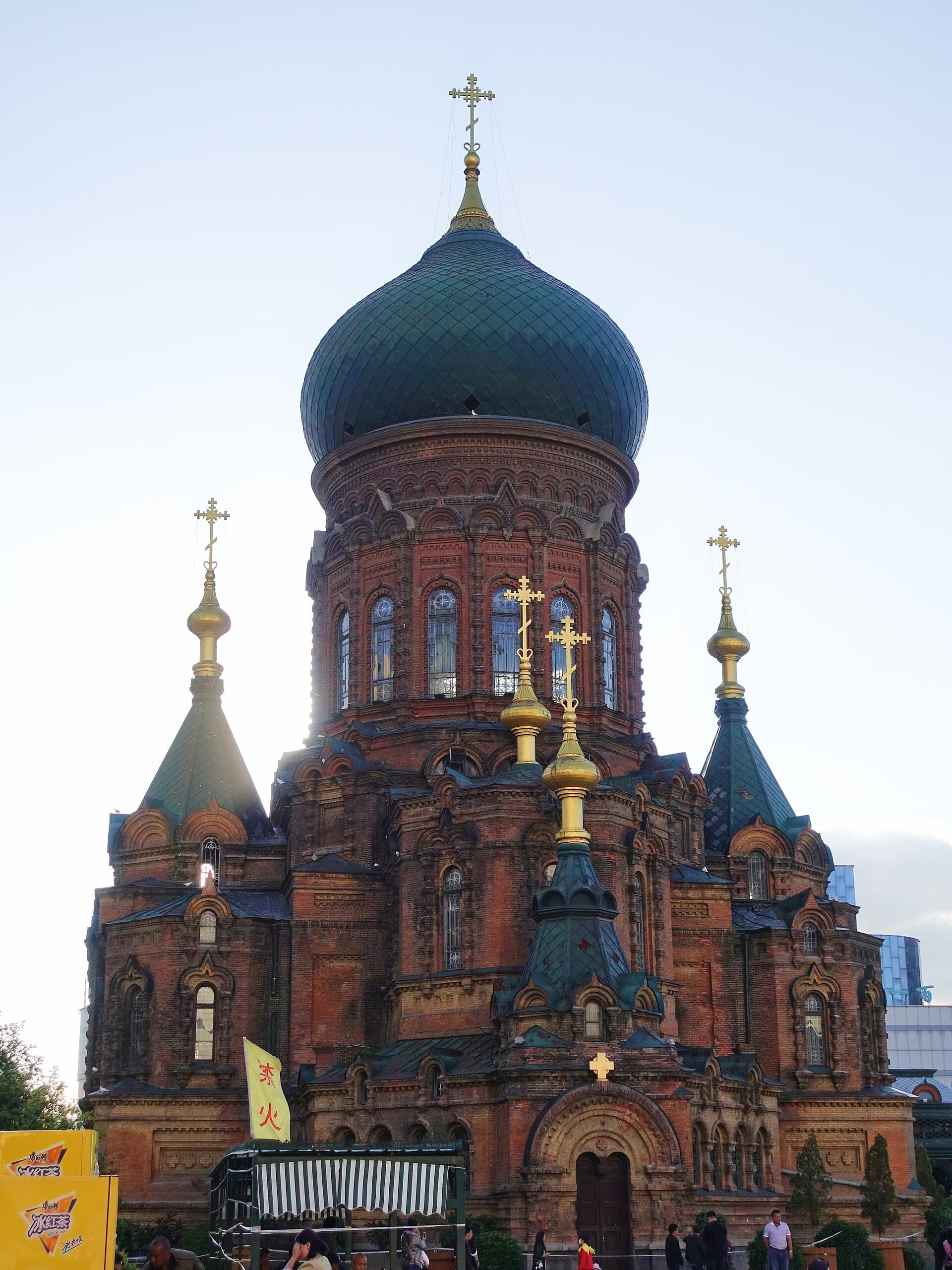 Saint Sophia Cathedral, HarbinHarbin's best-known landmark, a former Russian Orthodox church crowned by a huge18 minutes walk4.6
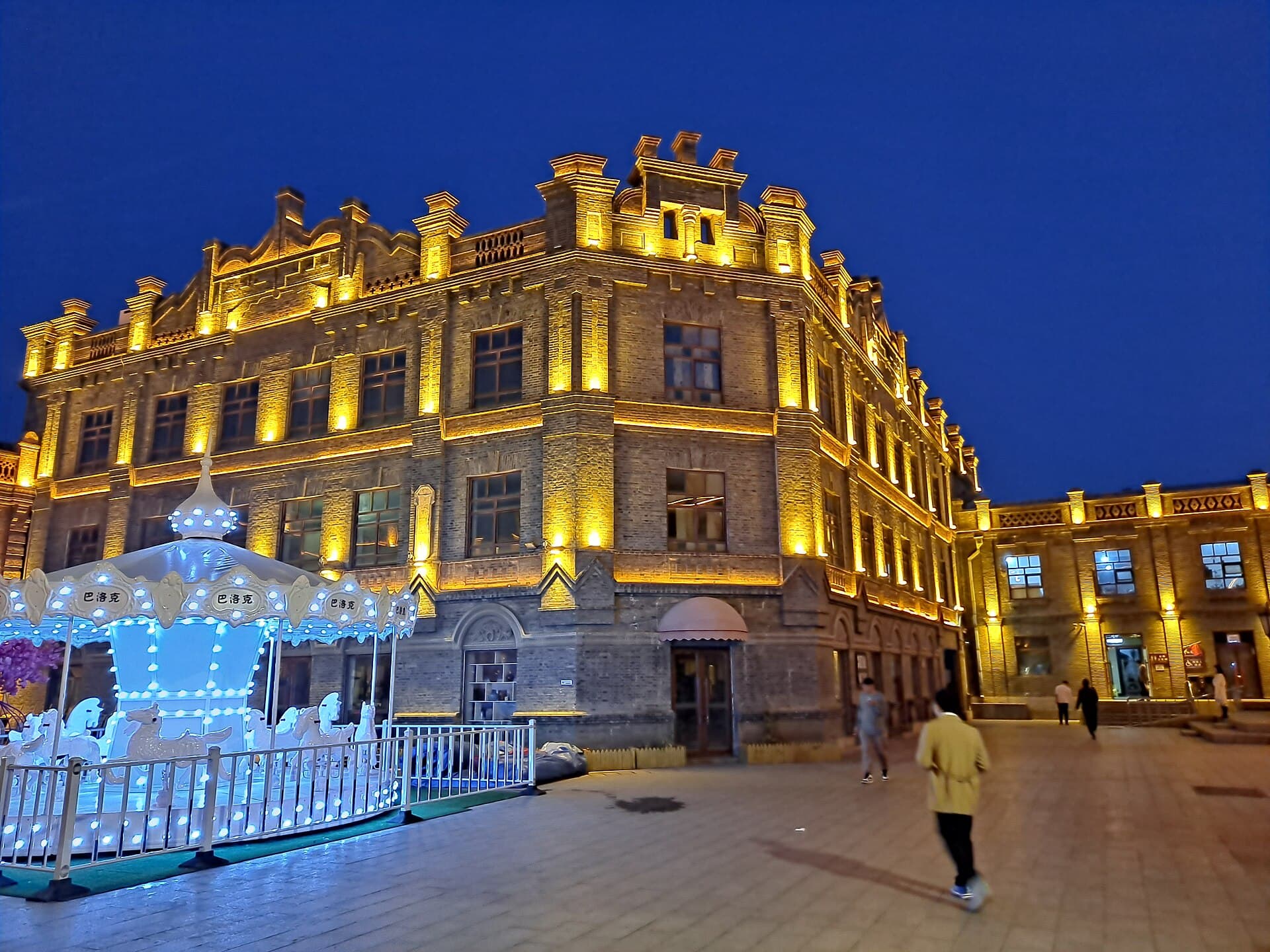 Laodaowai Chinese Baroque QuarterHarbin's old Chinese quarter, where Chinese residents lived in the 1920s apart f23 minutes walk4.3
It honours Harbin's successful fight against the huge Songhua River flood of 1957, when residents built dykes; it was completed in 1958 at the end of Central Street, and the site is free, per visitor guides.