The theatre reliefs
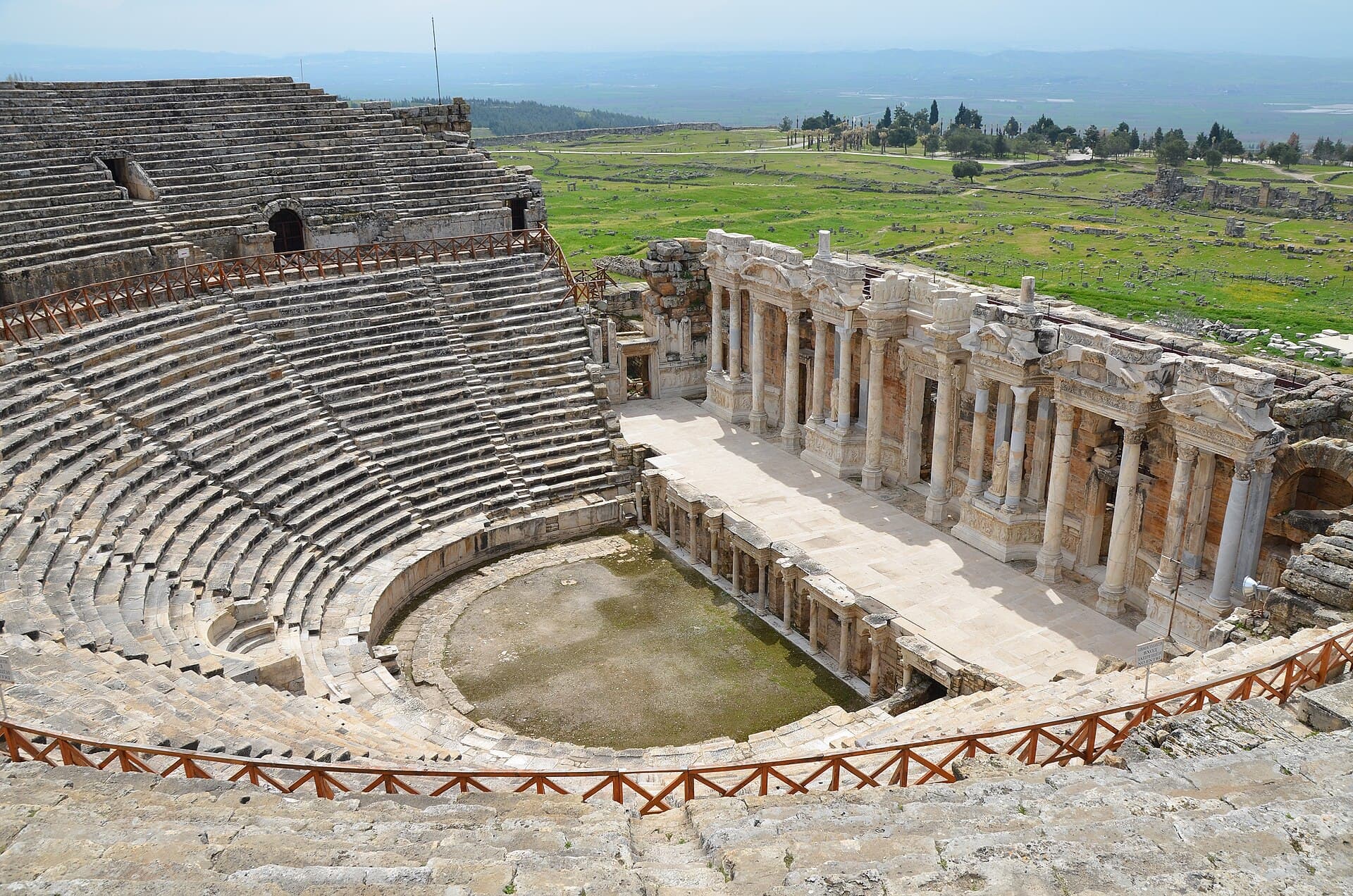
The stage-front panels of the Hierapolis theatre, Apollo and Artemis among them, shown at eye level in a hall of their own.
Biologg — CC BY-SA 4.0 · Biologg — CC BY-SA 4.0 · Biologg — CC BY-SA 4.0 · Biologg — CC BY-SA 4.0
The building is the biggest exhibit: a vaulted 2nd-century Roman bath complex, its walls thick enough to keep out the Denizli sun, standing a few steps from the Antique Pool and the south gate of Hierapolis. You enter through an open courtyard where marble sarcophagi and column capitals bake in the light, then pass into three cool halls holding the finds of the city and its neighbours Laodicea and Tripolis. The museum opened in 1984 and reopened after a refit in 2000. The first hall is tombs and statues, the pick of the vast Hierapolis necropolis: carefully carved sarcophagi, portrait statues of the city's worthies and its gods, and pieces from nearby Laodicea. The second is small finds, pottery, glass, jewellery, lamps and clay idols, with a run of coins that starts in the 6th century BC and only stops with the Ottomans. The third is the one that matters: the relief panels that once fronted the stage of the Hierapolis theatre, with Apollo, Artemis and imperial scenes, brought indoors to be seen at eye level rather than weathering in place. Be honest with yourself: it is small. Half an hour is enough, forty-five minutes generous, and it does not justify a trip to Pamukkale on its own. But it is included in the Hierapolis-Pamukkale ticket (30 EUR for foreign visitors) and it sits on the path between the Antique Pool and the theatre, so skipping it is a loss for no saving. In August its vaulted rooms are among the coolest spots on the whole site, which makes it the natural family pause between the barefoot walk on the travertines and the climb to the theatre. The halls are level, though the courtyard paving is uneven. The south gate is the nearest entrance; if you drive in that way, the museum is one of the first things you meet, next to the pool. Official summer hours are 08:00-20:30 with the ticket desk closing at 20:00, shorter in winter.
The stage-front panels of the Hierapolis theatre, Apollo and Artemis among them, shown at eye level in a hall of their own.
The vaulted 2nd-century halls are an exhibit in their own right, and among the coolest places on the site in high summer.
Marble sarcophagi and column capitals in the open air, a good photo stop before the halls.
Hierapolis archaeological site, south gate, Pamukkale, Denizli
If it is a choice between the museum and the travertines or the theatre, no, those come first. But it is on the same ticket, sits beside the Antique Pool and needs only half an hour, so treat it as a cool break on the way rather than a stop in its own right.
Not for the museum; the Hierapolis-Pamukkale site ticket (30 EUR for foreigners) covers it. Swimming in the Antique Pool (Cleopatra's Pool) is an extra charge paid at the pool entrance, though walking in to look at it costs nothing.
Sign in to write your review of this place.
No reviews yet — be the first.