Covered souks
Pottery, silver, rugs.
Chesdovi — CC BY 2.5 · Antonio Cioffi — CC BY 3.0 · Cheima fezzani — CC BY-SA 4.0
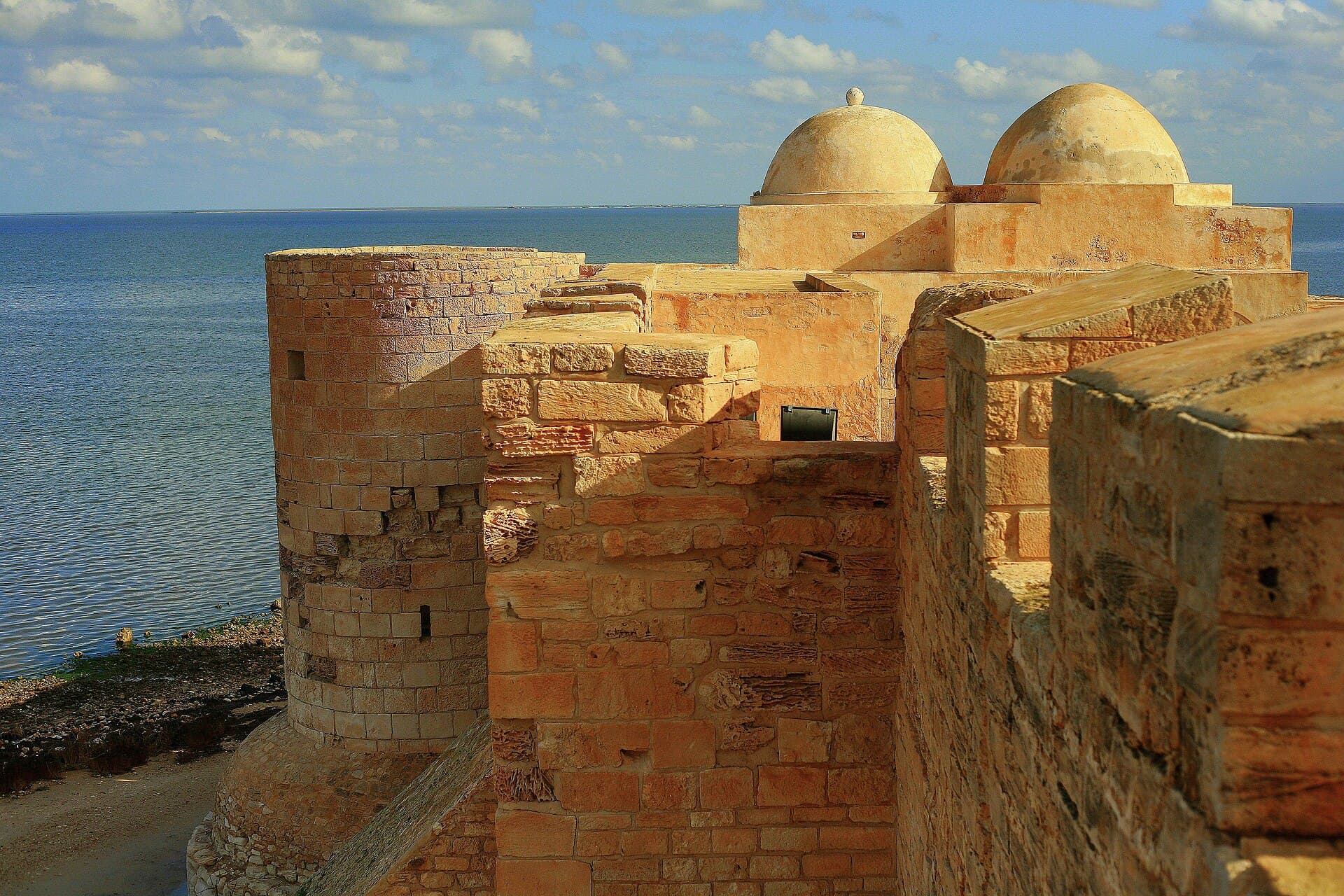
The main town of Djerba and its great market, its name meaning the market quarter. It grew over the site of an ancient Roman town called Gerba or Girba, which gave its name to the whole island, and which was the birthplace of two Roman emperors, Trebonianus Gallus and his son Volusianus. Its heart is a maze of covered souks and small tree-shaded squares selling pottery, rugs, silver, spices and traditional clothes, ringed by cafés where islanders sit and talk. Around them lie white houses with blue doors and old fondouks, inns where caravans once stopped around open courtyards. The town's Museum of Traditional Heritage shows the island's costumes, jewellery, crafts and wedding customs, and closes on Fridays. In the mornings the fish market holds auctions, the seller perched on a high chair calling out the catch. North of town are the harbour and the Borj el Kebir (Borj Ghazi Mustapha) by the sea. Wandering is free, and mornings are the liveliest time in the souks.
Pottery, silver, rugs.
Caravan courtyards.
Djerba costumes and jewellery.
North coast of Djerba island
Guellala pottery, silver and traditional jewellery, rugs and woollen blankets, and spices.