
The cellars
Interrogation and solitary cells left as they were — the hardest part of the museum and the most affecting.
Derzsi Elekes Andor — CC BY-SA 3.0 · Ank Kumar — CC BY-SA 4.0 · Ank Kumar — CC BY-SA 4.0 · Ank Kumar — CC BY-SA 4.0
The address is the story: Andrássy út 60 was the headquarters of the fascist Arrow Cross militia in 1944-45, and then, immediately after the war, the headquarters of the communist secret police. The same building, the same cellars, the same cells — used by two successive regimes for the same purpose, and that succession is the museum's entire subject. It opened in 2002, and its design is deliberately unsettling: a black metal frieze projects from the roof and casts the word TERROR as a shadow on the façade, a Soviet tank sits in the entrance hall, and a wall of victims' photographs rises two storeys. The exhibition takes you gradually down from the upper floors to the cellars, where the interrogation and solitary cells remain as they were. The museum is contested inside Hungary: critics argue it equates Nazism and communism in a way that serves a contemporary political reading; defenders say it documents two eras of repression that were suppressed for decades. Go knowing that — the museum is itself part of Hungary's argument with its past rather than a neutral account of it. Captions are primarily in Hungarian with English sheets in each room; take the audio guide.
Interrogation and solitary cells left as they were — the hardest part of the museum and the most affecting.
Black-and-white photographs rising two storeys on the inner façade — every face with a name and a story.
A black metal edge that casts the word TERROR as a shadow on the façade in sunlight — visible free from the street.
A section on the Hungarian revolution and its crushing by Soviet tanks — the event that explains Hungary's relationship with Russia to this day.
Andrássy út 60, Pest 1062
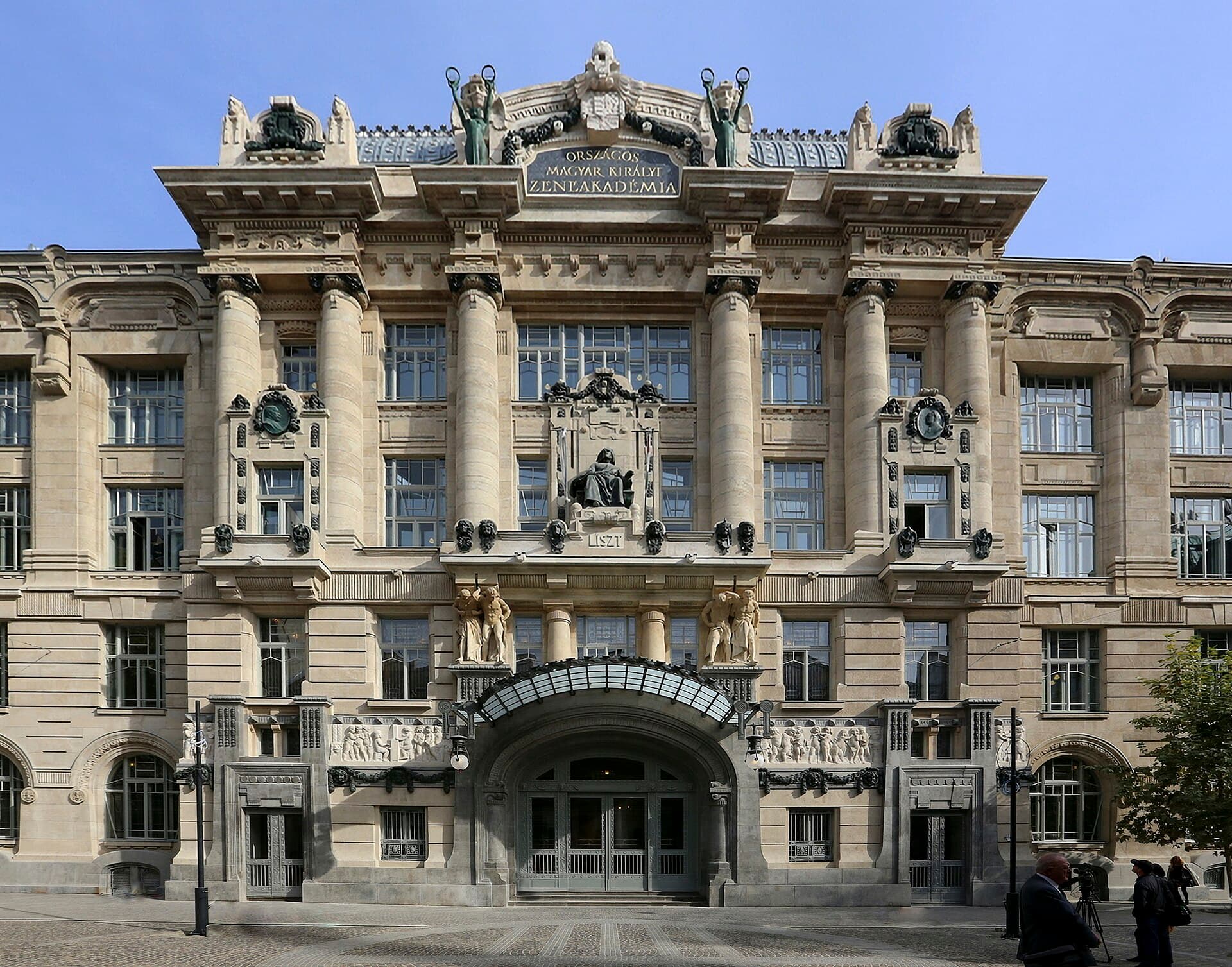 Franz Liszt Academy of MusicThe Liszt Academy is both a teaching institution and a concert hall, and it is a5 minutes walk4.6
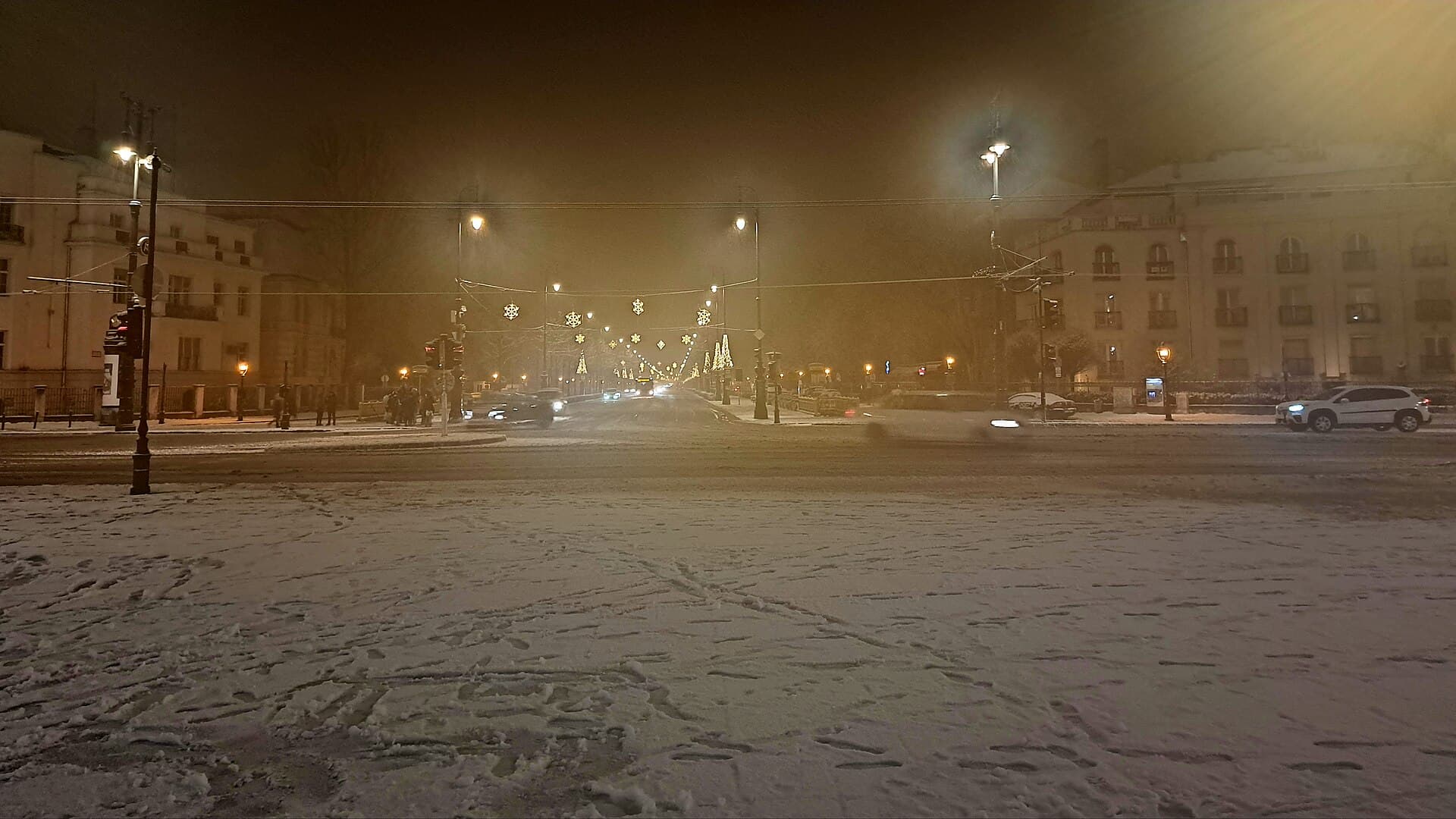 Andrássy útAndrássy Avenue is Budapest's ceremonial street: two and a half kilometres of pa8 minutes walk4.7
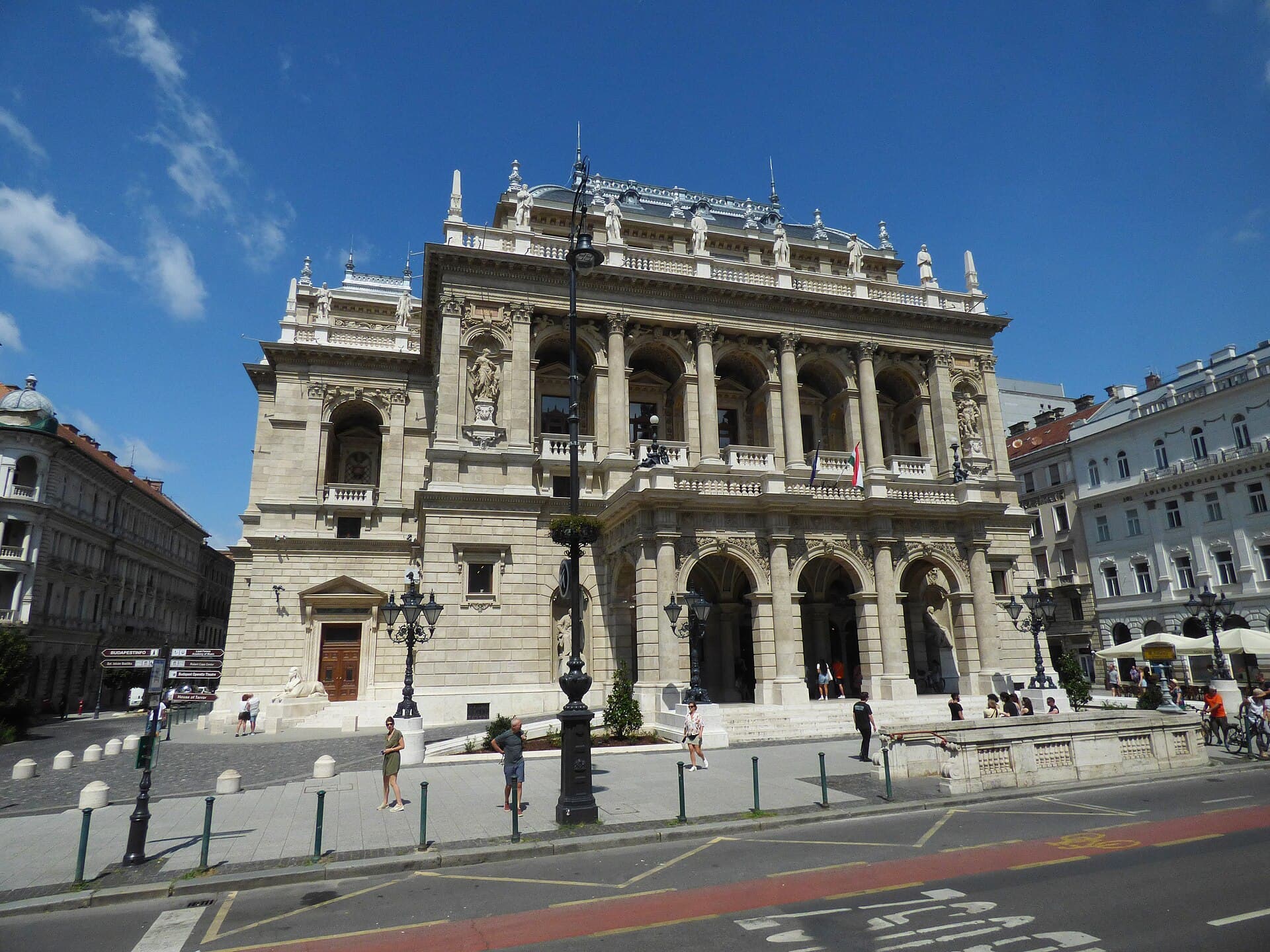 Hungarian State Opera HouseThe Hungarian State Opera is among the most beautiful opera houses in Europe and9 minutes walk4.6
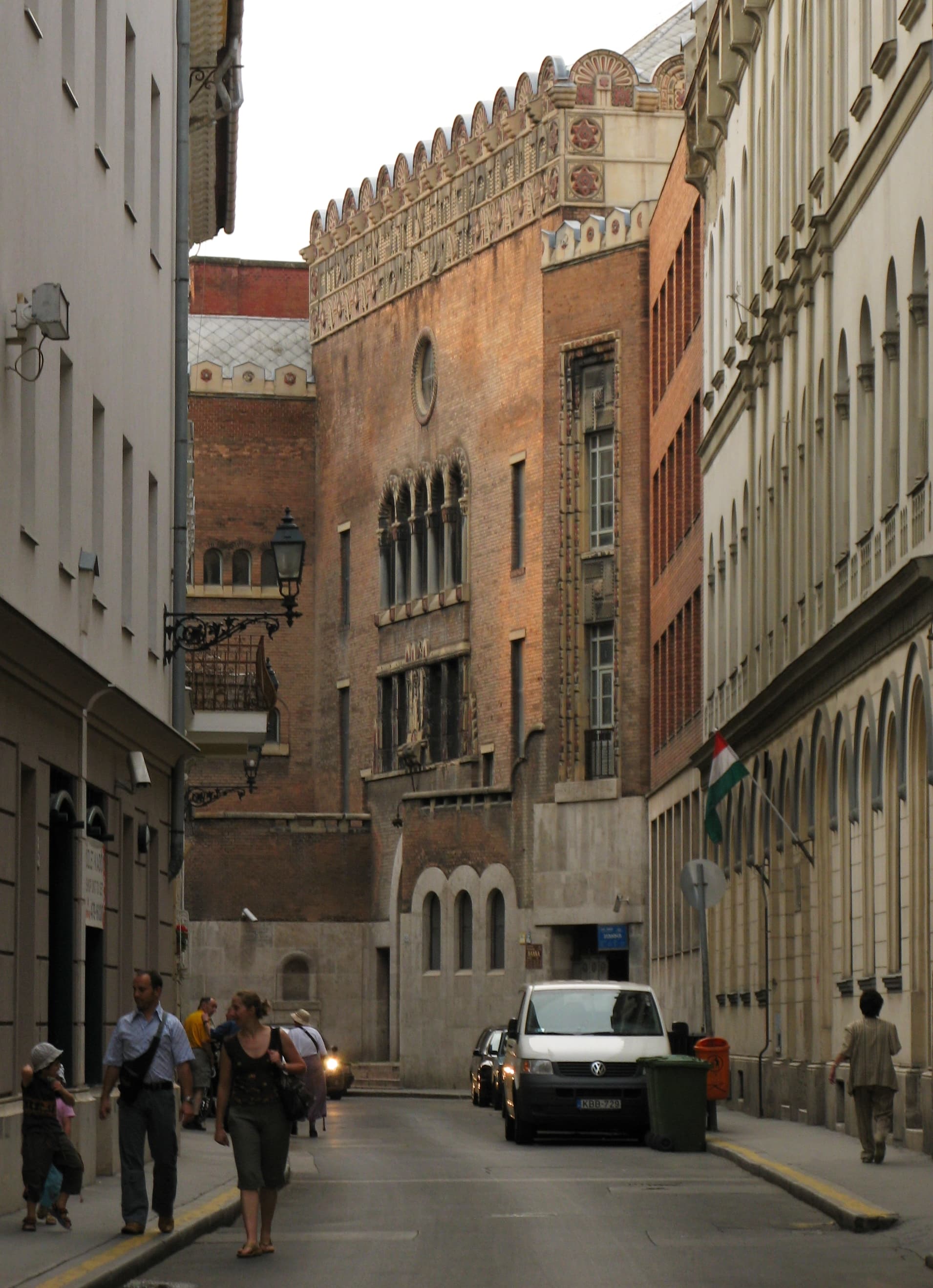 Kazinczy Street SynagogueThe Kazinczy Street Synagogue is the Orthodox synagogue of District VII, and the12 minutes walk4.5
 St. Stephen's BasilicaSt Stephen's Basilica is the largest church in Budapest and the most recognisabl13 minutes walk4.6
Because historians disagree about its balance: far more space goes to the communist era than to the fascist one, although the latter produced a genocide, and critics argue that serves a contemporary political reading. The material displayed is documented, but the arrangement and emphasis are editorial choices — read it as a viewpoint rather than a final account.
From about fourteen upwards. The cellars, interrogation cells and torture material are severe, and the museum itself does not recommend young children. For families with younger ones, Memento Park is the lighter option, explaining the communist era through statues in the open air.
Not on its own. The wall panels are mainly Hungarian, with brief English take-away sheets in each room. The audio guide is the real solution and is worth its extra fee. There is no Arabic material.
The Shoes on the Danube Bank and the Holocaust Memorial Center for the fascist era, and Memento Park for the communist one. The four together give you Hungary's 20th century from different angles.