
The squeezed façade
A large central arch with coloured plant ornament between two apartment blocks — visible only from directly in front.
Diana — CC BY 2.0 · FOTO:Fortepan — ID 104693: Adományozó/Donor: Hámori Gyula. — CC BY-SA 3.0 · FOTO:Fortepan — ID 104751: Adományozó/Donor: Hámori Gyula. archive copy at the Wayback Machine — CC BY-SA 3.0 · FOTO:Fortepan — ID 104913: Adományozó/Donor: Hámori Gyula. — CC BY-SA 3.0
The Kazinczy Street Synagogue is the Orthodox synagogue of District VII, and the third side of the triangle that explains Hungarian Jewry: Dohány for the reform current, Rumbach for the conservative, and Kazinczy for the Orthodox, who rejected modernisation and insisted on strict observance. It was built between 1912 and 1913 to a design by the brothers Béla and Sándor Löffler in Hungarian Art Nouveau — not Moorish this time. The façade is squeezed between two apartment blocks and is only visible from directly in front: a large central arch with coloured plant ornament and curved glass. Inside is a tall hall with plant decoration and columns, in quieter colours than Rumbach and with more modern lines. What distinguishes it is that it is the only one of the three still functioning as a working synagogue on a regular basis: it has an active Orthodox congregation, daily prayers, a kosher kitchen and community facilities in its courtyard. It is not a museum but a working religious institution that receives visitors at set times. In practice that means narrower visiting hours and more care required: prayer times are not open to visitors, photography may be restricted, and the visit is shorter.
A large central arch with coloured plant ornament between two apartment blocks — visible only from directly in front.
Plant ornament and modern lines instead of Moorish Revival — a wholly different idiom from its two neighbours.
The only one of the three still holding daily prayers — you feel the difference the moment you step in.
A kosher kitchen, restaurant and community rooms — the Jewish quarter as lived rather than displayed.
Kazinczy utca 29-31, District VII, Pest 1075
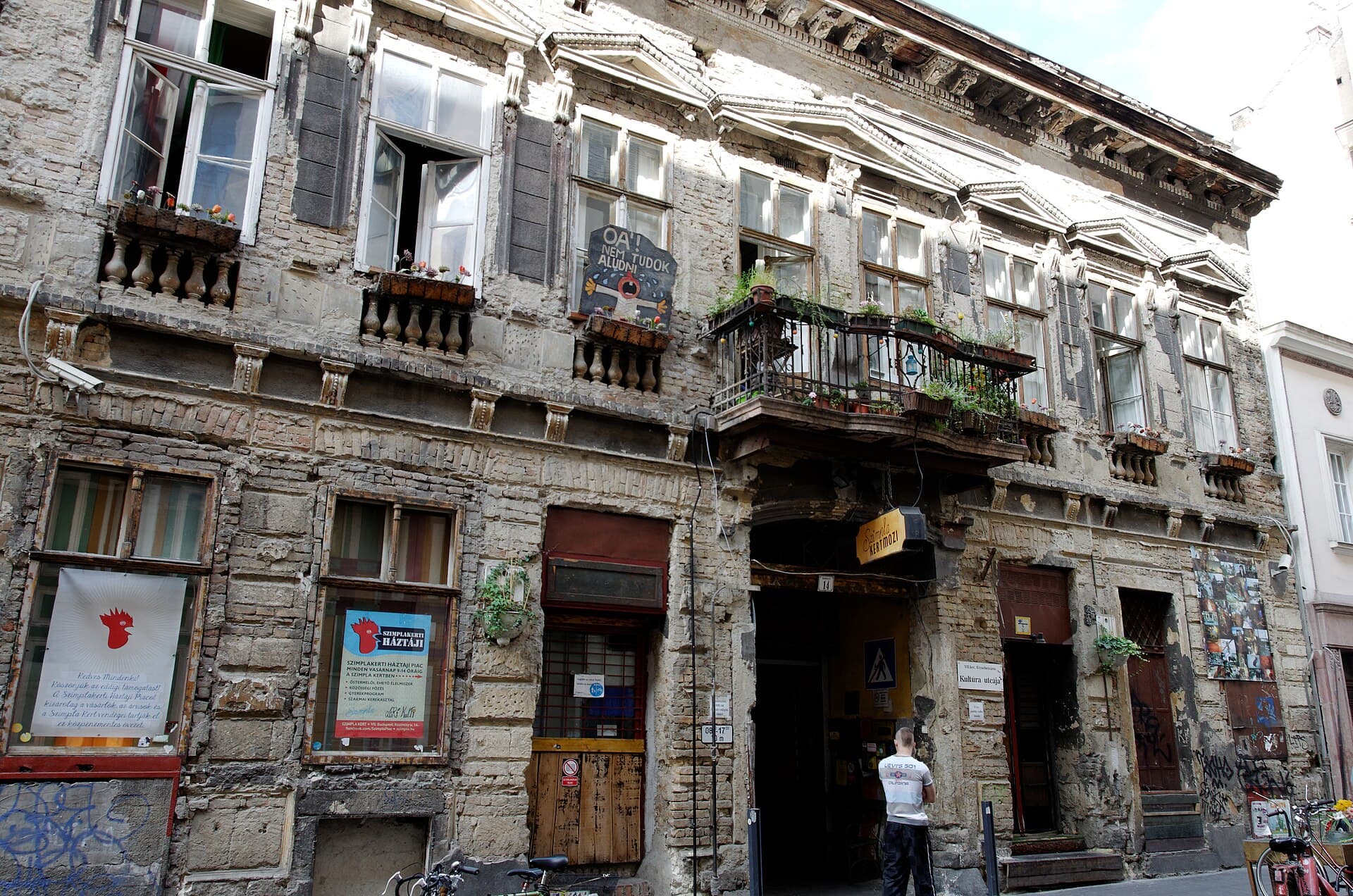 Szimpla Kert (Ruin Bar)The place that invented the "ruin bar": Szimpla Kert opened in 2002 in an abando2 minutes walk4.5
 Raoul Wallenberg Memorial ParkA memorial garden behind Budapest's Great Synagogue, dedicated to the victims of3 minutes walk4.5
 Rumbach Street synagogueThe Rumbach Street Synagogue is smaller than the nearby Dohány and far less know3 minutes walk4.4
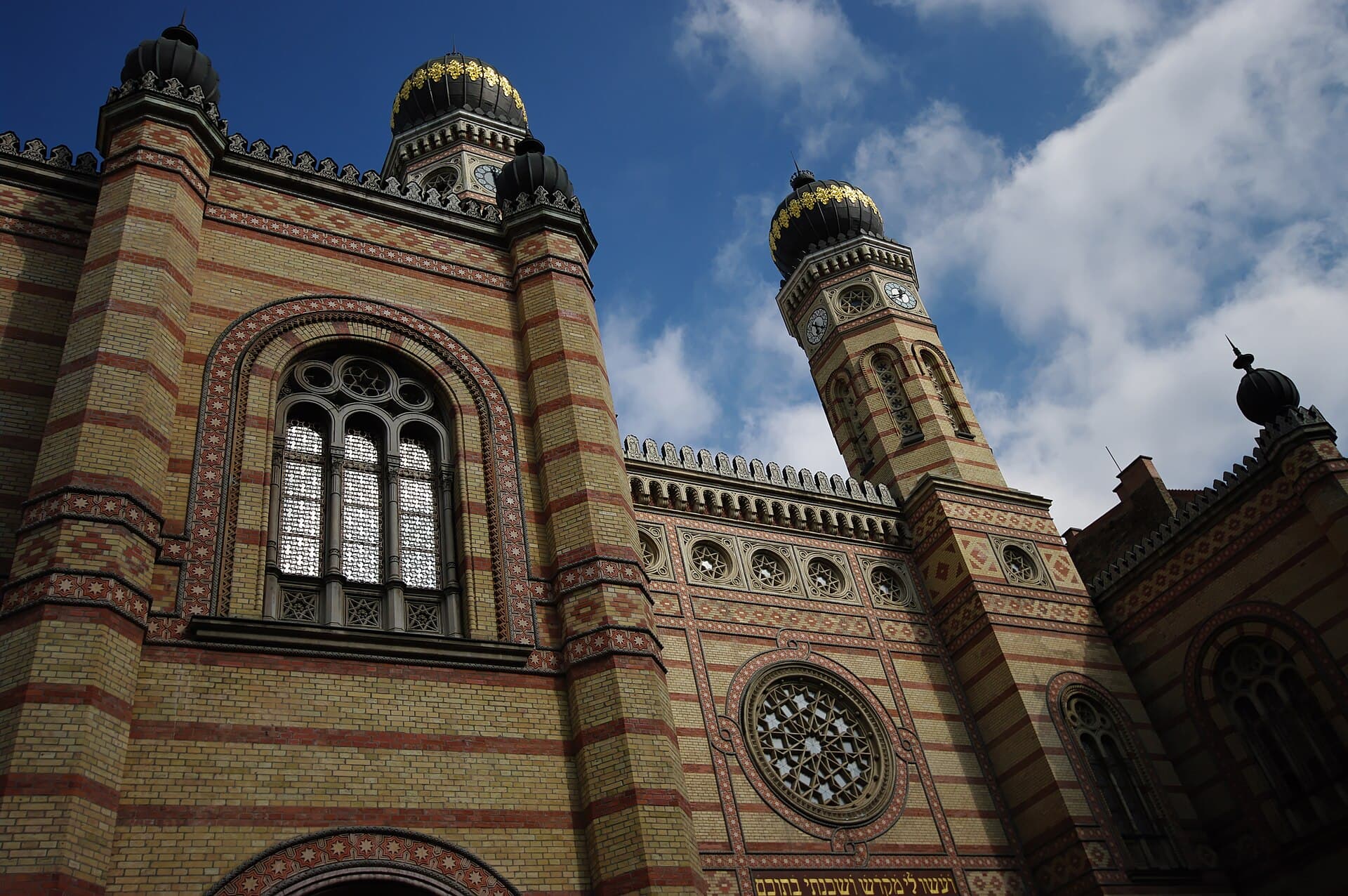 Dohány Street SynagogueThe Dohány Street Synagogue is the largest synagogue in Europe and the second la4 minutes walk4.2
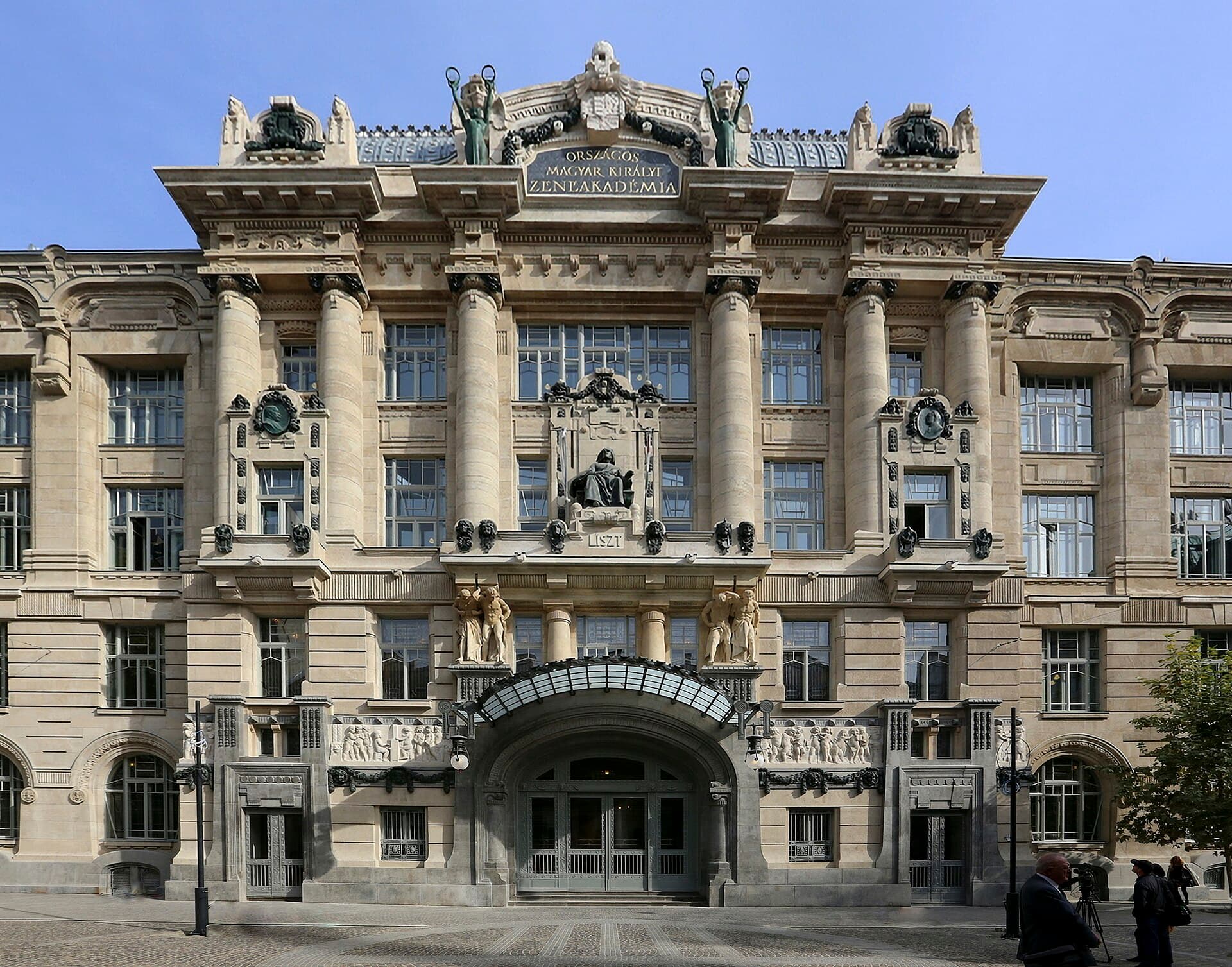 Franz Liszt Academy of MusicThe Liszt Academy is both a teaching institution and a concert hall, and it is a7 minutes walk4.6
Dohány served the reform current and is the largest and grandest; Rumbach the conservative one and has the finest interior; Kazinczy the Orthodox and is the only one still working with a daily congregation. Visiting them in that order explains Hungarian Jewish history clearly.
Yes — kosher restaurants and bakeries around the synagogue serve the Orthodox community. Kosher is not automatically halal in the Islamic sense; the slaughter rules are close but not identical, so check if that matters to you.
It may be restricted, because the place works as a synagogue rather than a museum. Ask at the entrance, and never photograph worshippers. Discretion matters more here than at the museum sites.
If you have the time, yes — only half an hour, and it completes the picture with something the other two lack: a synagogue still alive. If time is tight, Dohány and Rumbach are enough.