Jaivana cannon
One of the largest.
Rabe! — CC BY-SA 4.0 · Anupamg — CC BY-SA 4.0 · Rabe! — CC BY-SA 4.0 · wonker from London, United Kingdom — CC BY 2.0 · Gerd Eichmann — CC BY 4.0 · Noon Plastic — CC BY 4.0 · Noon Plastic — CC BY 4.0 · Swapnil.Karambelkar — CC BY-SA 4.0
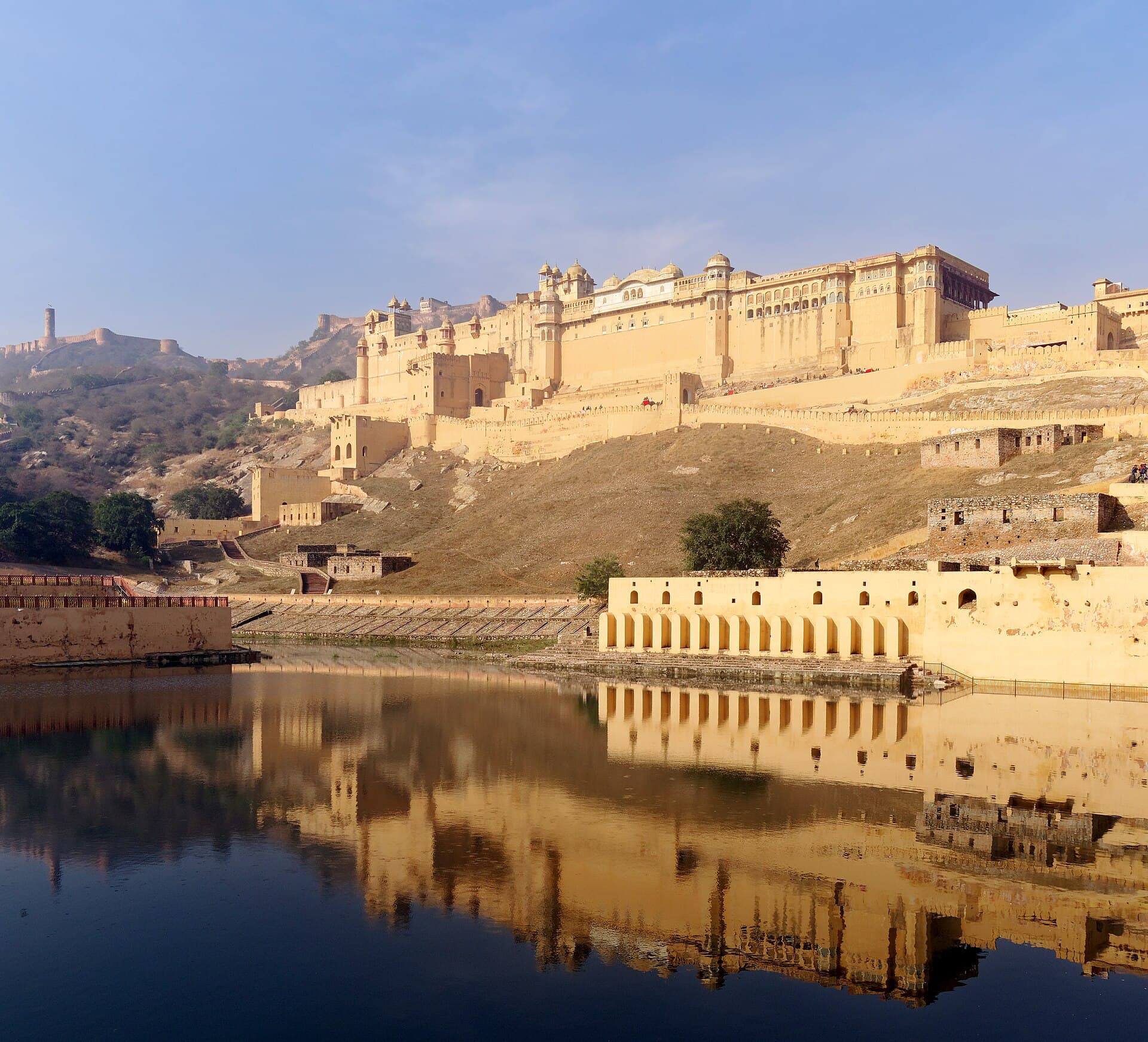
A massive stone fort on the Cheel ka Teela, the «Hill of Eagles», in the Aravalli range, looking straight down on Amber Fort and Maota Lake; begun in the eleventh century, it was enlarged by later rulers including Maharaja Jai Singh II, who added palace apartments, and is also known as the Victory Fort. The fort runs about 3 km from north to south, with strong walls and towers and huge water tanks; it guarded Amber, housed a cannon foundry, and is linked to Amber Fort by secret passages. Its best-known exhibit is the Jaivana cannon, made in 1720 and one of the largest cannons on wheels in the world, along with an arms museum and wide views from its towers over Amber and the surrounding hills. Foreign visitors pay about ₹200, per visitor guides, and it isn't on the composite ticket. You can walk up from Amber Fort on a tiring climb or drive up by the back road.
One of the largest.
3 km long.
From above.
Hill of Eagles, above Amber Fort, Jaipur
The Jaivana cannon of 1720, one of the largest cannons on wheels in the world, and the view down over Amber Fort.