The Japanese quarter
In the seventeenth century.
กสิณธร ราชโอรส — CC BY-SA 4.0 · กสิณธร ราชโอรส — CC BY-SA 4.0 · Athulvis — CC BY-SA 4.0 · Athulvis — CC BY-SA 4.0 · Athulvis — CC BY-SA 4.0
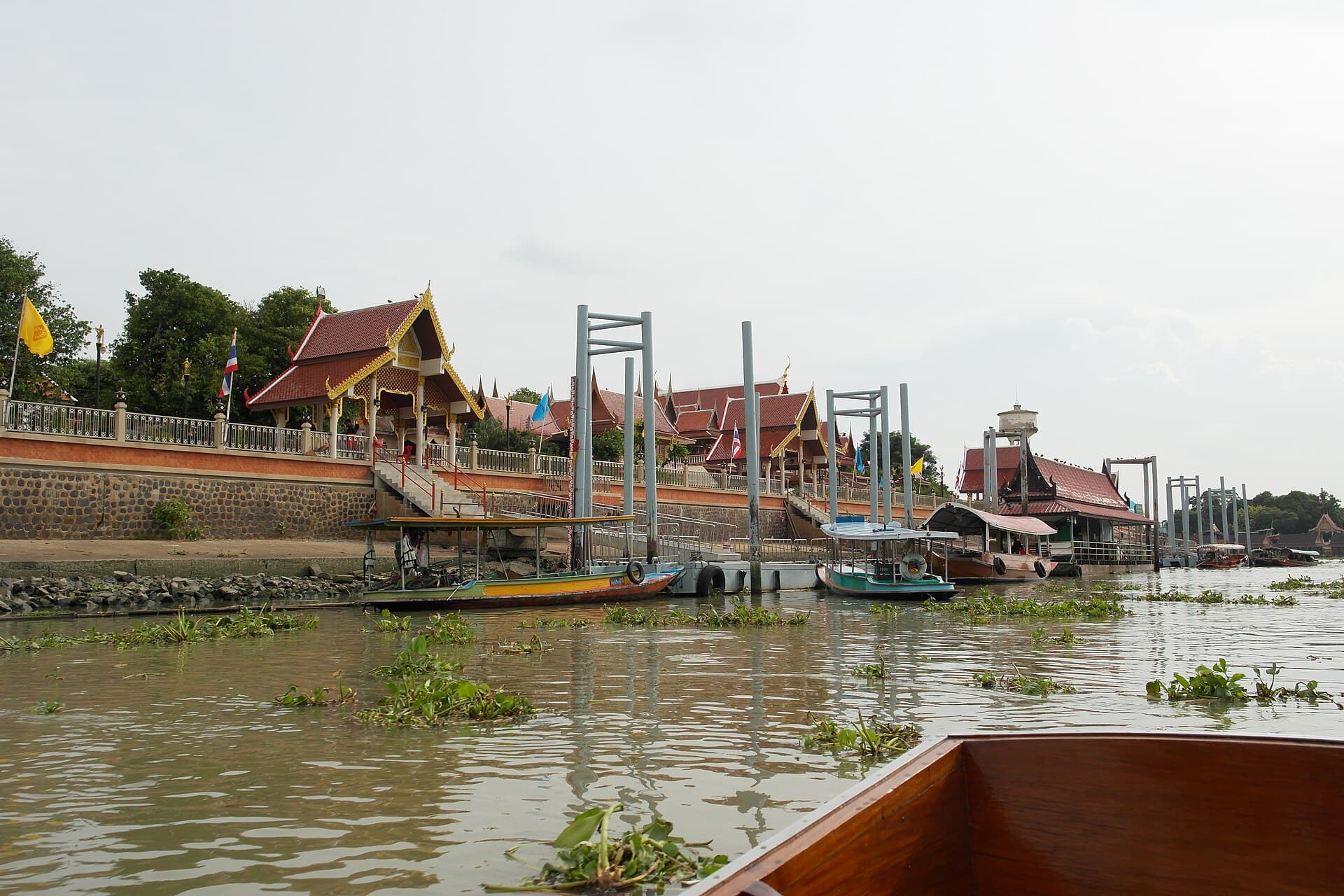
The site of Ayutthaya's old Japanese quarter, on the river's east bank south of the island, where some fifteen hundred Japanese lived in the seventeenth century: traders, mercenaries and Christians fleeing persecution in Japan. Ayutthaya was then one of Asia's great ports, ringed by Portuguese, Dutch, Persian and Japanese quarters. The village is tied to the story of Yamada Nagamasa, the Japanese adventurer who became a military commander and noble at the Ayutthaya court, and of Maria Guyomar, a daughter of the village of Japanese-Portuguese descent said to have brought Portuguese egg-yolk sweets into Thai cooking. Today the site has a quiet Japanese garden with a pond, a memorial, and a small museum using models and films to show Ayutthaya's trade with the world and its goods of hides and ceramics. A small entry fee is charged, and it opens from morning until about five. The museum is air-conditioned and quiet, a good break from the heat of the ruins. It suits those who enjoy history stories more than temples. It is near Wat Phanan Choeng, so pair them on the same round, or stop by on a river boat trip.
In the seventeenth century.
An adventurer turned noble.
Ayutthaya's trade with Asia and Europe.
East bank of the Chao Phraya, south of Ayutthaya island
A Japanese garden, a memorial and a small air-conditioned museum on Ayutthaya's trade and the Japanese community.