
Luang Pho To
A seated Buddha about 19 metres high.
Nord794ub — CC BY-SA 4.0 · Nord794ub — CC BY-SA 4.0 · Nord794ub — CC BY-SA 4.0 · Nawit science — CC BY-SA 4.0 · Nord794ub — CC BY-SA 4.0
A living temple where the two rivers meet, south-east of Ayutthaya island, older than the city itself: records mention its great statue in 1324, about a quarter of a century before Ayutthaya became the capital. It survived the Burmese sack of 1767, so it stayed a working temple while the island's temples fell to ruin. Its tall hall holds Luang Pho To, a gilded seated Buddha about nineteen metres high that almost fills the hall to the roof, revered by Thais and Chinese alike and wrapped in long orange cloths on festival days. In the grounds stands a colourful Chinese shrine to Princess Soi Dok Mak, who legend says came from China to marry a Siamese king, making the temple a pilgrimage place for Thailand's Chinese community. A token fee is charged to foreigners at the entrance, and it opens from morning until about five. Modest dress is expected: shoulders and knees covered, and shoes off inside the halls. On holidays and Chinese festivals it is packed with worshippers and incense. It lies just off the island, so make it the start of a boat trip around Ayutthaya; many boats stop at its pier.
A seated Buddha about 19 metres high.
Recorded in 1324.
To Princess Soi Dok Mak.
At the meeting of the Chao Phraya and Pa Sak rivers, south-east of Ayutthaya island
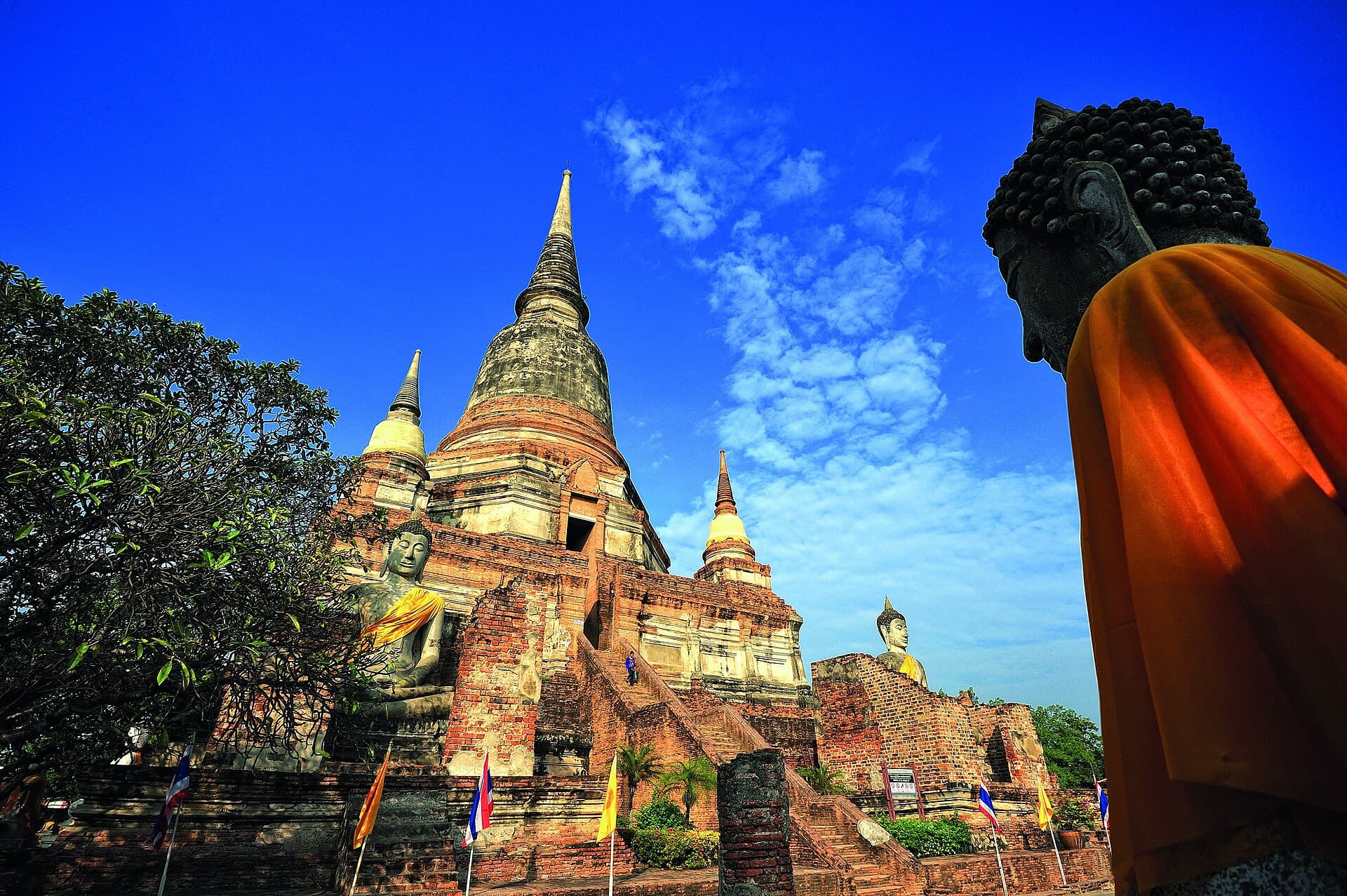 Wat Yai Chai MongkhonAn old temple east of Ayutthaya's island, still a working temple where monks liv19 minutes walk
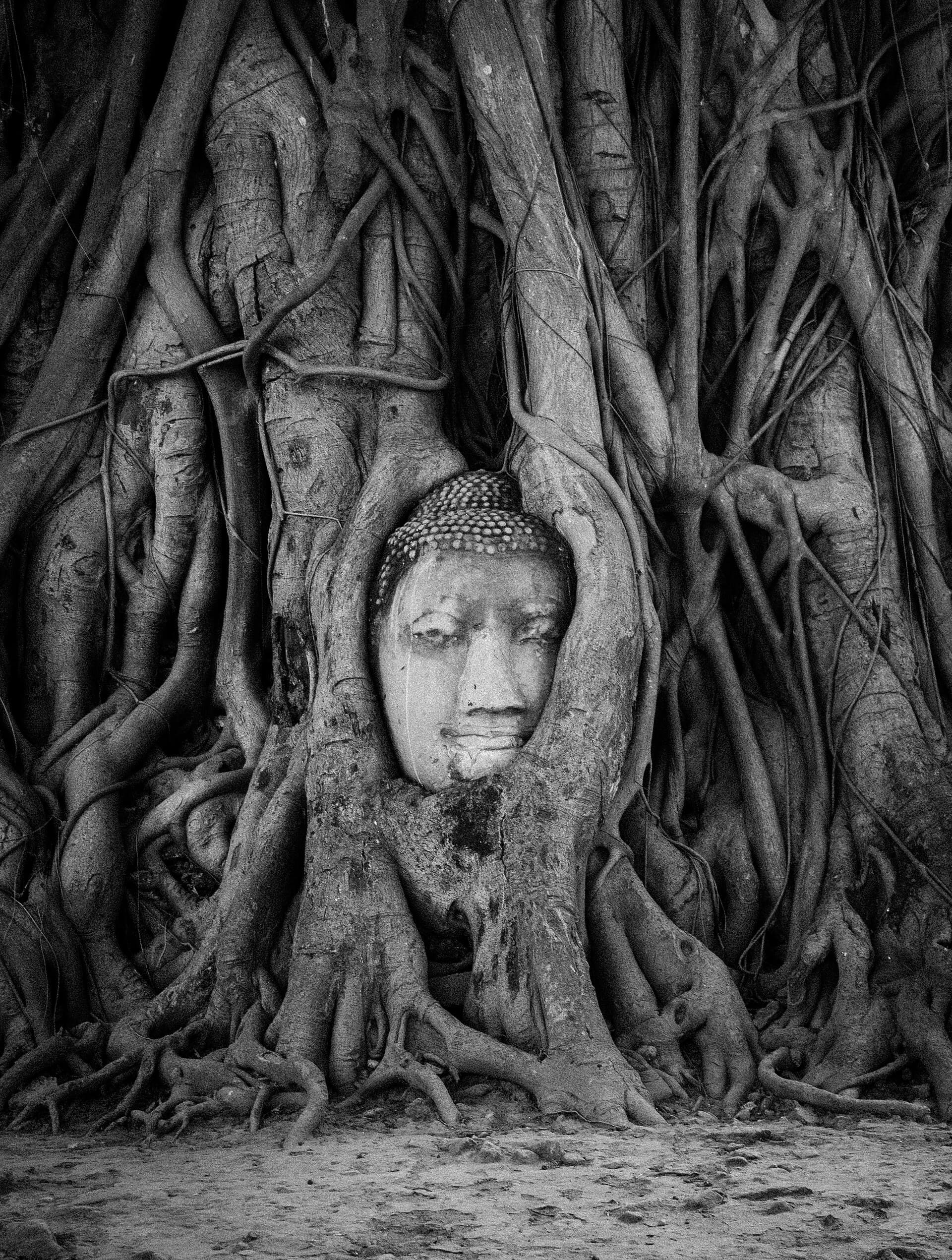 Wat Mahathat (Buddha Head in the Tree Roots)One of Ayutthaya's most important ruins; Ayutthaya was the capital of the Siames23 minutes walk
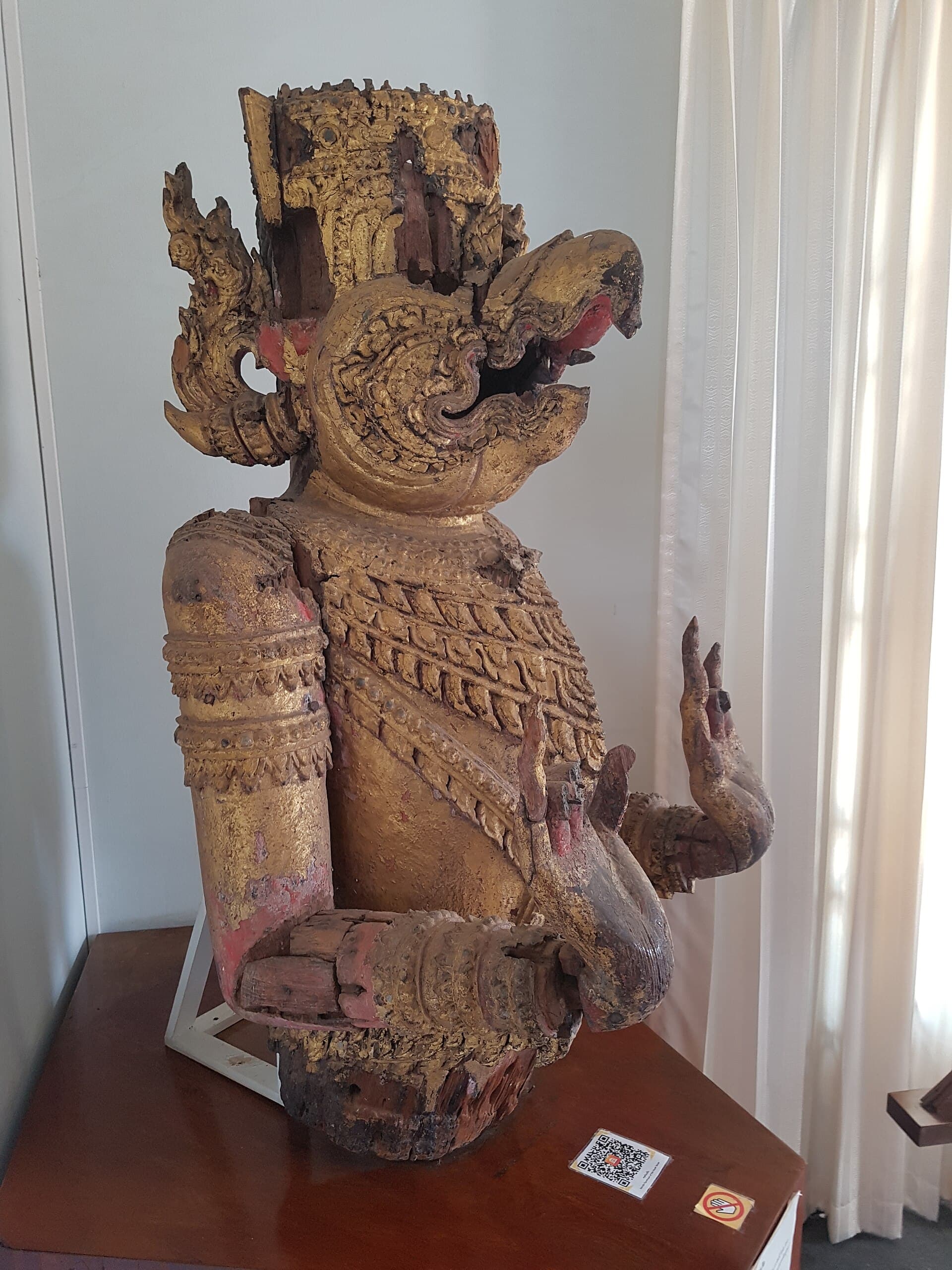 Chao Sam Phraya National MuseumAyutthaya's most important museum, holding treasures found in the city's ruins, 25 minutes walk
For the shrine of Princess Soi Dok Mak, who legend says came from China to marry a Siamese king.