The POW hut
Bamboo with wooden bunks.
Horiuchi — Public domain · BrokenSphere — CC BY-SA 3.0 · BrokenSphere — CC BY-SA 3.0 · Macopedia — CC BY-SA 4.0 · Macopedia — CC BY-SA 4.0
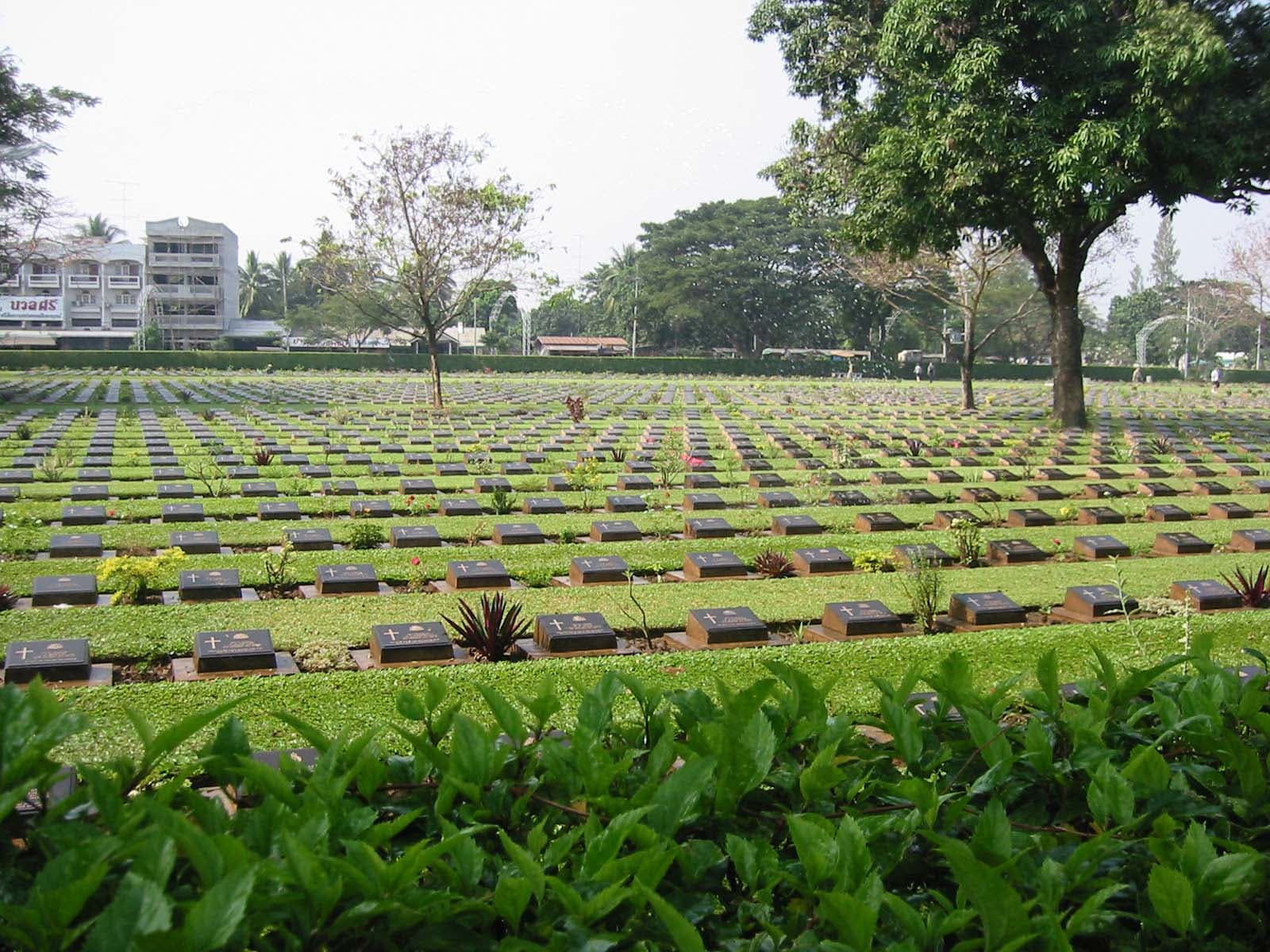
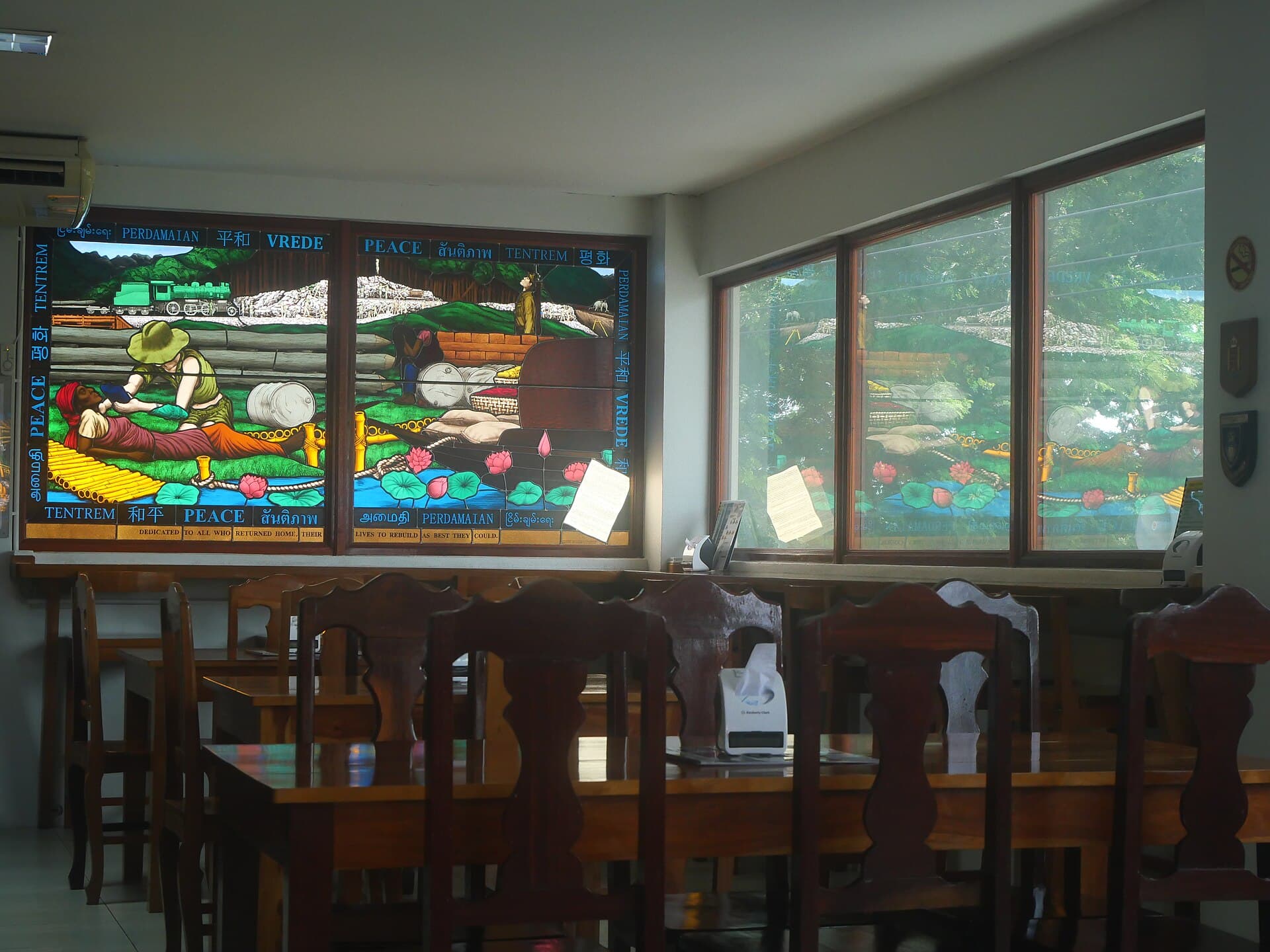
A small riverside museum in the grounds of Wat Chai Chumphon south of Kanchanaburi, founded by the temple's abbot in 1977 to keep the memory of the prisoners of war who built the Death Railway between Thailand and Burma in the Second World War. Its name gathers the initials of the prisoners' and soldiers' nations: Japan, England, Australia, America, Thailand and Holland. Its best-known exhibit is a bamboo hut built like those the prisoners lived in at the camps, with narrow wooden bunks along both sides, and walls hung with photographs and drawings by the prisoners themselves showing hunger, disease and brutal labour. The next hall holds tools, weapons and bomb fragments found in the area. The fee is about fifty baht, and it opens from about half past eight until half past four. The displays are simple and lightly explained compared with the Thailand–Burma Railway Centre in town, but the hut gives a direct sense of the prisoners' lives. Some pictures are harsh for small children. Combine it with the Bridge on the River Kwai and the war cemetery in one day, and start at the Railway Centre to understand the whole story.
Bamboo with wooden bunks.
Testimony in their own hands.
A Second World War story.
Wat Chai Chumphon, on the Mae Klong river, south of Kanchanaburi town
Japan, England, Australia, America, Thailand and Holland, the nations of those who worked and suffered building the railway.